

Industrial production relies heavily on virgin resource extraction, creating extensive material flows that end in landfills or incineration plants. According to data from the Eurostat waste statistics database, manufacturing activities across the European Union generated 166 million tonnes of waste excluding major mineral waste in 2022, while 1,223 million tonnes of the 1,992 million tonnes of waste treated in the EU were recovered. Globally, the UNEP Global Waste Management Outlook indicates that municipal solid waste generation is estimated at 2.1 billion tonnes in 2023, with expectations to reach 3.8 billion tonnes by 2050. The EPA's Guide for Industrial Waste Management estimates that industrial facilities generate approximately 7.6 billion tons of non-hazardous industrial solid waste every year in the United States alone.
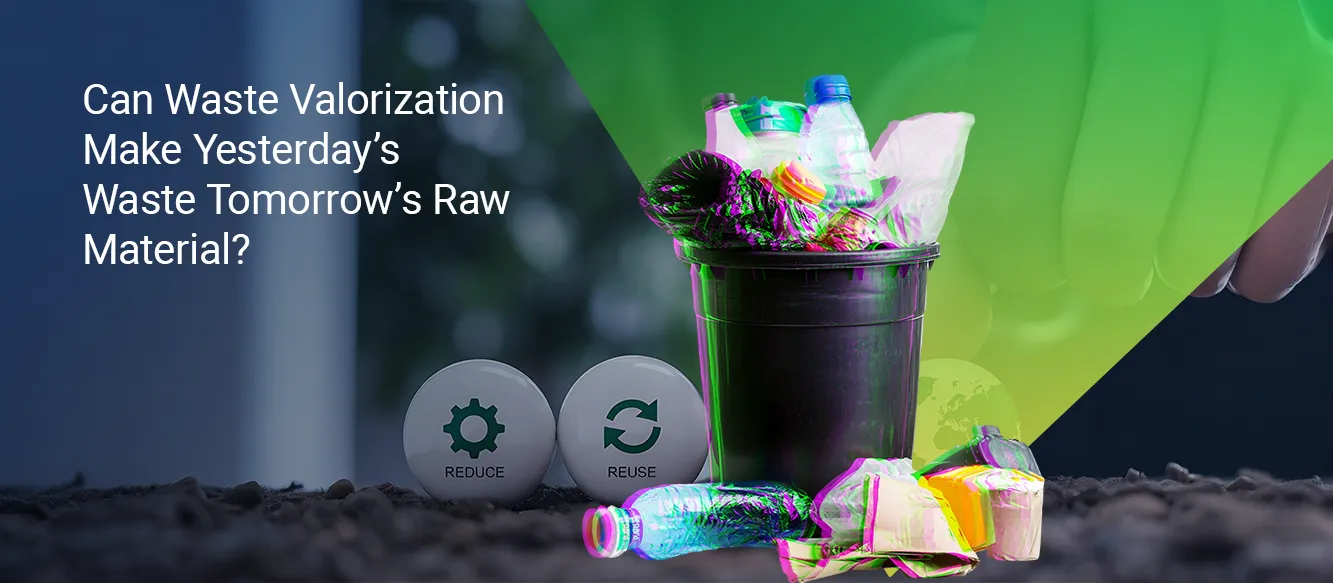
Waste valorization changes this linear trajectory by treating industrial, agricultural, and municipal byproducts as valuable secondary feedstocks. Based on Kings Research data, the global waste valorization market was worth USD 110.18 billion in 2025 and is projected to climb to USD 151.60 billion by 2033, advancing at a 4.12% CAGR from 2026 to 2033. By converting low-value residues into energy, chemicals, and intermediate materials, industrial systems decrease environmental liabilities while establishing circular supply channels.
What Does It Mean for Waste to Become an Industrial Input?
Waste valorization refers to the process of converting residual materials, industrial byproducts, and organic waste streams into commercial products, including bio-based chemicals, synthetic fuels, materials, and energy.
Transitioning to a waste-as-input framework requires replacing raw resource extraction with industrial byproduct utilization. Rather than managing end-of-life disposal, manufacturing facilities integrate refining technologies directly into their supply networks. Historically, manufacturing operations operated on an open-loop model: raw feedstocks entered the facility, underwent chemical or physical alterations, and generated end-market products alongside substantial volumes of solid, liquid, or gaseous effluent. The disposal of these byproducts represented an operational expense, managed through tipping fees, sewer charges, or specialized hazardous treatment contracts.
The shift toward input substitution fundamentally alters this balance. In an input substitution framework, residual streams are redirected to serve as secondary inputs for adjacent or downstream industrial processes. Liquid organic waste from food processing becomes the raw material for anaerobic digestion systems; plastic scraps convert into chemical building blocks; and carbon dioxide from industrial chimneys becomes the carbon source for synthetic chemical synthesis. This operational transition requires re-engineering supply chain architecture, moving away from linear material purchasing toward closed-loop resource integration.
How Valorization Differs from Traditional Recycling and Recovery
Understanding the distinction between valorization, mechanical recycling, and energy recovery is essential for establishing effective material strategies:
- Mechanical Recycling: Mechanical recycling focuses on preserving original material structures through physical reprocessing, such as sorting, washing, shredding, and re-melting glass, aluminum, or polymers. While mechanical recycling conserves embodied energy, it is often subject to downcycling. Repeated thermal processing cycles degrade polymer chain lengths, limiting the number of times materials can cycle through mechanical loops before losing structural integrity.
- Energy Recovery: Basic energy recovery captures heat energy through direct incineration. Waste-to-energy facilities combust mixed solid waste streams to generate high-pressure steam, which drives turbines to produce electricity. Although energy recovery prevents landfill accumulation and recovers a fraction of the thermal energy stored within the waste, it completely destroys the physical and chemical structures of the feedstocks, preventing further material reuse.
- Waste Valorization: Valorization expands beyond these physical limits by applying chemical, biological, and thermal pathways to alter material compositions, generating higher-value secondary outputs. Rather than merely preserving polymer shapes or burning materials for low-efficiency electricity, valorization breaks down complex molecules into fundamental chemical constituents. Pyrolysis, gasification, enzymatic hydrolysis, and anaerobic digestion allow industrial operators to produce virgin-equivalent chemical monomers, drop-in synthetic fuels, bio-based lubricants, and high-value soil nutrients.
Why Are Industries Rethinking Raw Material Dependency Now?
Global manufacturing faces severe supply vulnerabilities caused by localized material scarcity, rapid price fluctuations, and geographic concentration of critical minerals. Data published by the World Bank from 2020 show that high-income countries generate the most waste per person, producing over 1.5 kilograms of waste a day, compared to about 0.4 kilograms in low-income countries, creating immense local disposal burdens. Concurrently, primary resource extraction faces physical and environmental boundaries. Mine tailings volumes, water stress in extraction zones, and increasing stripping ratios raise the financial expense of securing virgin minerals and petrochemicals. Addressing these mineral constraints is a growing focus; in fact, companies listed in the Kings Research report, such as Umicore and Sims Limited, are key players involved with metal waste.
Fossil Feedstock Risks Accelerating the Transition
Petrochemical reliance leaves manufacturers exposed to global market shifts, geopolitical tensions, and regulatory costs associated with carbon emissions. Industrial entities adopt waste-derived inputs to establish price stability and fulfill strict corporate decarbonization mandates.
Petrochemical steam crackers rely on steady supplies of virgin naphtha or ethane derived from fossil fuel extraction. Variations in crude oil pricing directly impact downstream polymer synthesis, specialty chemical manufacturing, and synthetic fiber production. By implementing advanced chemical conversion technologies, industrial operators process waste plastics and captured industrial carbon off-gases into substitute feedstocks. Converting organic waste and industrial off-gases into chemical inputs decouples chemical manufacturing from crude oil extraction, providing a hedge against market volatility.
Furthermore, regulatory bodies worldwide continue raising carbon costs and landfill charges. According to European Environment Agency, landfill bans and taxes are among the policies proven successful in reducing landfilling across European Member States. Facilities that continue relying on linear disposal methods face rising disposal costs, whereas facilities implementing valorization technologies eliminate disposal liabilities while securing low-carbon secondary inputs.
How Are Different Waste Streams Being Converted into Industrial Feedstocks?
How is waste converted into industrial inputs? Industries execute this conversion through a structured four-stage process:
- Feedstock Collection and Sorting: Primary industrial residues, municipal organics, or plastic wastes are collected and separated to eliminate contaminants. Advanced optical sorting, magnetic separation, and density isolation technologies ensure high-purity feedstock fractions.
- Pre-treatment and Processing: Materials undergo mechanical shredding, drying, pelletization, or enzymatic breakdown to prepare them for thermochemical or biological processing. Pre-treatment stabilizes moisture levels and ensures uniform particle sizing.
- Conversion Reaction: Advanced systems apply thermochemical heat (pyrolysis, gasification) or bio-catalytic pathways (anaerobic digestion, fermentation) to break down complex molecules into simpler molecular fractions.
- Refining and Purification: Intermediate outputs are purified through distillation, catalytic upgrading, or gas scrubbing into drop-in synthetic fuels, industrial chemicals, or high-grade fertilizers ready for commercial integration.
Different industrial residues require tailored processing methods based on their chemical composition:
- Lignocellulosic Biomass: Agricultural residues, forestry thinnings, and sawmilling waste contain complex cellulose, hemicellulose, and lignin polymers. Thermal and biochemical pathways yield cellulosic sugars, biochar, specialty aromatic chemicals, and synthesis gas.
- Post-Consumer and Industrial Plastics: Mixed polyolefins, polyethylene, and polypropylene convert into pyrolysis oil via thermal cracking, replacing virgin naphtha in steam crackers to produce virgin-grade plastics.
- Organic Municipal and Food Waste: High-moisture food processing residues and urban organic waste undergo bio-conversion via specialized microbial consortia to generate renewable natural gas and organic soil conditioners.
- Industrial Carbon Off-Gases: Flue gases rich in carbon dioxide and carbon monoxide from heavy steel, cement, and refining operations undergo gas fermentation to form ethanol, synthetic building blocks, and polymer precursors.
Cross-Sector Feedstock Applications
Connecting waste-producing sectors with resource-consuming industries creates cross-sector symbiotic linkages. The matrix below details key feedstock flows across core industrial domains:
|
Waste Origin Sector |
Target Feedstock Stream |
Conversion Pathway |
Final Output Material |
Primary Industrial Consumer |
|
Agriculture & Forestry |
Crop residues, wood chips, bagasse |
Gasification / Fast Pyrolysis |
Syngas, Bio-oil, Biochar |
Power generation, Chemical synthesis, Soil amendment |
|
Food & Beverage Processing |
High-COD wastewater, organic solid waste |
Anaerobic Digestion |
Methane, High-nutrient Digestate |
Thermal utilities, Commercial agriculture |
|
Chemical Manufacturing |
Mixed polyolefin fractions |
Advanced Chemical Recycling |
Monomers, Synthetic Crude |
Polymer producers, Packaging manufacturers |
|
Heavy Industry & Steel |
CO2 / CO Flue Gases |
Carbon Capture & Fermentation |
Ethanol, polymer precursors |
Automotive, Consumer goods packaging |
|
Pulp & Paper Industry |
Black liquor, lignin residues |
Hydrothermal Liquefaction |
Bio-crude, Phenolic derivatives |
Marine transport, Specialty resin production |
|
Municipal Services |
Sewage sludge, organic fractions |
Hydrothermal Carbonization |
Hydrochar |
Industrial heating, Cement kilns |
|
Electronics & Manufacturing |
Metal waste and scrap |
Advanced Metallurgical Recovery |
Secondary metals, refined alloys |
Electronics, Automotive, Construction |
Source: Compiled industry feedstock mappings and Kings Research data.
Which Technologies Enable Waste Valorization at Scale?
Scalable industrial valorization relies on three main technical pathways: thermal, chemical, and biological processing. Each technology operates under distinct thermodynamic, catalytic, or biological parameters, making them suitable for specific waste fractions.
Thermochemical and Biological Process Differences
- Pyrolysis: Pyrolysis operates in complete oxygen-free environments at elevated temperatures ranging between 400°C and 800°C. High thermal energy cleaves long-chain polymer structures or lignocellulosic polymers into lighter liquid hydrocarbons, non-condensable synthetic gases, and solid carbonaceous char. Liquid pyrolysis oil undergoes hydrotreating to remove heteroatoms, yielding a direct substitute for crude oil naphtha in traditional steam crackers.
- Gasification: Gasification employs controlled, low-oxygen thermal reactions at temperatures exceeding 800°C. Rather than liquid hydrocarbons, gasification breaks solid carbonaceous matter down into synthesis gas, a clean mixture composed predominantly of carbon monoxide and hydrogen. Synthesis gas serves as a highly versatile intermediate building block, which can be catalytically reconfigured via Fischer-Tropsch synthesis into synthetic fuels, bio-methanol, or renewable chemical inputs.
- Advanced Chemical Recycling: Chemical and enzymatic depolymerization breaks down mixed plastics into fundamental monomers, offering a purely chemical pathway distinct from thermal processes to recover virgin-grade molecular building blocks.
- Fermentation & Digestion: Biological conversion pathways employ specialized microbial strains or enzymatic biocatalysts at ambient or moderate temperatures (35°C to 55°C). Anaerobic digestion degrades complex organic compounds in liquid sludges to yield biomethane. Gas fermentation systems utilize specialized acetogenic bacteria to feed directly on carbon monoxide and carbon dioxide off-gases, converting gaseous industrial emissions directly into liquid fuels and chemical precursors.
Additionally, hydrothermal technologies, such as Hydrothermal Liquefaction and Hydrothermal Carbonization, utilize heat and high pressure in wet environments to convert sludges and black liquor into bio-crude and hydrochar, respectively.
How Is Waste Valorization Altering Energy and Fuel Production?
The transport, aviation, and maritime sectors rely on liquid fuels with high energy density. Liquid bio-derived fuels provide clean alternatives without requiring full engine modifications or regional pipeline rebuilds.
- Renewable Natural Gas (RNG): Upgraded biomethane produced via anaerobic digestion, as well as recovered landfill gas, replaces conventional fossil gas in industrial boilers, chemical furnaces, and heavy transit fleets. AgSTAR, a joint EPA and USDA programme, documents significant expansion in agricultural RNG projects, converting livestock manure and food processing residues into pipeline-quality natural gas.
- Sustainable Aviation Fuel (SAF): Fischer-Tropsch synthesis and Alcohol-to-Jet processing convert gasified solid waste and ethanol into jet-fuel hydrocarbons. SAF reduces life-cycle aviation carbon emissions significantly compared to conventional jet fuel, meeting strict international aviation fuel standards.
- Bio-Methanol: Gasified municipal residues form bio-methanol, serving as a primary feedstock for marine transport and chemical synthesis. International maritime carriers are expanding bio-methanol dual-fuel container vessel fleets to meet stringent global shipping emission rules. For example, in July 2023, BP invested USD 10 million in WasteFuel to support the scale-up of bio-methanol production.
In January 2025, the U.S. Department of Energy's Bioenergy Technologies Office (BETO) and Vehicle Technologies Office (VTO) announced USD 6.9 million in funding for nine projects across six states, aimed at converting food waste, municipal wastewater sludge and solid waste, and manure into low-carbon biofuels for transportation. Furthermore, the DOE Bioenergy Technologies Office manages extensive funding programs designed to scale biorefinery demonstration plants, validating thermochemical performance under commercial operating conditions.
How Is the Chemical Industry Turning Waste into High-Value Molecules?
Chemical producers use gasification, advanced pyrolysis, and enzymatic depolymerization to convert waste streams into fundamental chemical building blocks. For instance, in June 2026, Encina and BASF announced a collaboration on Encina's first US Gulf Coast circular chemicals plant.
Replacing Petrochemical Feedstocks
Synthetic chemistry allows industries to process waste plastics into virgin-grade resins suitable for sensitive medical and food-contact applications. Mechanical recycling often leaves trace chemical residues, making recycled polymers unsuitable for pharmaceutical or food packaging applications under strict health regulations. Advanced chemical conversion returns polymers to monomeric states, allowing full distillation and purification that matches the specs of virgin petrochemicals.
Carbon capture and utilization (CCU) systems collect flue gas emissions from steel mills, using gas fermentation to produce ethanol, which is subsequently converted into polyethylene. LanzaTech is a prime example of this application; in October 2024, the company received USD 3 million from the Department of Energy for Project ADAPT to advance its gas fermentation capabilities. These processes replace fossil carbon inputs with recycled atmospheric or industrial off-gas carbon, reducing overall industrial carbon balances.
Industrial chemical facilities are integrating gasification units to turn low-value heavy refinery residues and municipal refuse into syngas. Syngas provides hydrogen for hydro-treating processes while supplying carbon monoxide for oxo-alcohol synthesis, acetic acid production, and synthetic wax manufacturing.
What Economic Value Does Waste Valorization Create for Industries?
Valorization shifts corporate waste management from a direct expense into a predictable revenue stream.
Traditional financial accounting views byproduct streams as liabilities requiring disposal budgets. In fact, UNEP puts the global direct cost of waste management at USD 252 billion in 2020, rising to USD 361 billion once pollution, health, and climate costs are included. Implementing valorization assets changes corporate financial structures:
- Avoided Costs: Eliminates landfill tipping surcharges, hazardous transport fees, and wastewater pre-treatment fees.
- Direct Energy Substitution: Offsets commercial grid power or natural gas purchases through on-site heat and power generation.
- Secondary Revenue Streams: Yields high-purity chemical intermediates, fertilizers, or fuels sold under long-term offtake agreements.
- Regulatory Risk Management: Protects operations against future carbon emissions pricing, landfill bans, and volatile primary commodity price swings.
What Are the Infrastructure and Supply Chain Challenges?
Scaling waste valorization requires addressing major operational hurdles:
- Feedstock Variability: Waste compositions change seasonally, geographically, and daily, requiring adaptive processing equipment and complex pre-treatment systems.
- Logistical Fragmentation: Bulk waste collection involves decentralized transportation networks, increasing operational transport costs compared to point-source fossil extraction.
- Contamination Control: Mixed plastics and municipal waste often contain non-target materials, halogenated compounds, or heavy metals that damage chemical catalysts and foul thermal equipment.
- CapEx Demands: Constructing gasification, pyrolysis, and chemical recycling facilities requires substantial capital investment for high-pressure reactors, synthesis gas cleanup systems, and hydro-treating units.
Overcoming these operational limits requires establishing regional preprocessing hubs. These facilities collect distributed waste streams from municipal and industrial sources, performing optical sorting, drying, and homogenization before delivering standardized bio-crude or solid refuse-derived fuel to centralized conversion facilities.
It is important to note that this industrial transition is inherently slow and infrastructure-paced. The global market is advancing at a steady but modest 4.12% CAGR, with North America growing even slower at 3.97%. The combination of substantial capital requirements, complex logistics, and feedstock inconsistencies means that building closed-loop systems is a steady, long-term operational shift rather than an overnight revolution.
How Are Policies and Regulations Accelerating Industrial Adoption?
Government directives establish compliance timelines that encourage industries to adopt valorization technologies.
The European Union Waste Framework Directive, alongside Directive (EU) 2018/851, establishes legally binding recycling targets, 55% by 2025, 60% by 2030, and 65% by 2035, and mandates that bio-waste be separated at source or collected separately by 31 December 2023, driving substantial investments in anaerobic digestion and composting systems across European Member States.
Furthermore, the EU Landfill Directive restricts the disposal of untreated municipal waste into landfills, requires Member States to make use of economic instruments to incentivise the waste hierarchy, and caps municipal waste sent to landfill at 10 percent or less by 2035, with a five-year postponement available to eligible Member States.
In the U.S., the Resource Conservation and Recovery Act (RCRA) creates the framework for managing hazardous and non-hazardous solid waste, providing regulatory momentum for material recovery. Programs administered by the U.S. EPA, including the Renewable Fuel Standard (RFS), create financial incentives via Renewable Identification Number (RIN) credits for facilities converting bio-waste into transportation fuels.
Simultaneously, state-level legislation, such as California's SB 1383, mandates a 75% reduction in organic waste landfill disposal by 2025, compared to 2014 levels. These regulations compel food processors, municipal services, and industrial operators to divert organic residues toward anaerobic digesters, biomethane upgrading units, and biorefineries.
Which Regions Are Leading the Transition Toward Waste-Based Industrial Systems?
According to Kings Research data, Asia Pacific held a 43.38% market share in 2025, valued at USD 47.79 billion. The region leads global waste volume processing due to high manufacturing density and substantial municipal waste generation; as supporting detail, one development-sector analysis notes that China generates over 15% of global municipal solid waste. Asia Pacific industrial entities invest heavily in large-scale biomass gasification, chemical recycling complexes, and agricultural residue processing plants.
Regional infrastructure investments are largely driven by specific national mandates. In South Korea, the Act on Promotion of Production and Use of Biogas from Organic Waste Resources (Act No. 19151 of 30 December 2022) requires the Minister of Environment to set yearly biogas production targets for public bodies (applicable since January 1, 2025) and private businesses (since January 1, 2026), backed by penalty surcharges for shortfalls. India's Ministry of Petroleum and Natural Gas announced the Compressed Bio-Gas Blending Obligation in November 2023, setting a mandatory blending schedule starting in FY2025-26 and rising to 5% by 2028-29, monitored by a Central Repository Body. In Japan, the Act on Promotion of Resource Circulation for Plastics (Act No. 60 of 2021, in force since April 1, 2022) empowers competent ministers to issue recommendations and orders to businesses generating 250 tonnes or more of plastic waste annually. Furthermore, China's Solid Waste Law (revised April 2020) places a duty on businesses that generate and collect household food waste to hand it to qualified treatment operators, while broadly promoting the comprehensive utilization of solid waste.
Europe maintains high recycling rates, supported by strict landfill restrictions under the EU Landfill Directive and carbon pricing under the EU Emissions Trading System (ETS) for steel, cement, refining, and chemical installations that use waste-derived feedstocks. Municipal waste incineration is currently outside the ETS allowance obligation. Since January 1, 2024, these plants have only been required to monitor and report their emissions, while the European Commission must report by July 31, 2026, on the potential inclusion of these facilities in the ETS from 2028. According to Eurostat data, 61.4% of waste treated in the EU underwent recovery operations in 2022; however, prioritizing material retention means the 40.8% that was recycled is the relevant metric for true valorization, while 14.2% was backfilled and 6.4% was directed to energy recovery. European chemical parks are integrating fast pyrolysis units and anaerobic digestion plants directly into existing chemical manufacturing clusters.
North America excels in advanced thermal conversion research, supported by federal grant programs, private venture funding, and expansive pipeline networks suitable for RNG distribution. The presence of agricultural regions provides steady volumes of livestock manure, crop residues, and food waste suitable for biomethane generation. However, North America is anticipated to grow at a CAGR of 3.97% through the projection period, slightly trailing the global average.
Outside the leading three markets, rapid urban growth across South Asia and Sub-Saharan Africa is projected to drive waste generation increases of 99% and 124%, respectively, by 2050. Consequently, emerging markets across the Middle East & Africa and South America are increasingly exploring localized waste-to-resource frameworks to manage their expanding volumes.
How Are Companies Competing Through Innovation and Partnerships?
Corporate players establish strategic partnerships across supply chains to secure long-term access to waste feedstocks:
- Energy Majors & Waste Handlers: Energy producers form joint ventures with municipal waste management firms like Veolia, Republic Services, Remondis, and FCC Environment to build large-scale anaerobic digesters and biomethane facilities, guaranteeing continuous feedstock access. Additionally, technology innovators are introducing localized solutions. In February 2026, SUEZ and PYREG launched Pyrolis S2B, a system that converts sewage sludge into biochar through pyrolysis.
- Airlines & Refineries: Commercial airlines sign off-take agreements with waste-to-fuel processors such as Darling Ingredients and Reworld to secure future SAF supplies, meeting low-carbon aviation targets.
- Chemical Brands & Recyclers: Consumer packaging companies collaborate with chemical recyclers and circular economy leaders including TerraCycle, Renewi, Kanadevia, Umicore, Sims Limited, and Stericycle to supply high-purity recycled polymers, ensuring compliance with upcoming post-consumer recycled content requirements.
These collaborative models redistribute supply chain risks. Waste management companies obtain long-term tipping stability; conversion technology providers secure reliable feedstock quality; and industrial off-takers guarantee compliant, low-carbon feedstocks necessary for long-term production needs.
What Does the Future Industrial Model Look Like with Waste as Input?
Future industrial parks will operate through integrated industrial symbiosis networks, where residual outputs from one facility serve as primary feedstocks for neighboring plants.
Facilities will combine anaerobic digestion, pyrolysis, and carbon capture into single processing hubs. Heavy industrial facilities emitting waste heat, carbon dioxide off-gases, and organic effluents will colocate alongside specialized refining complexes.
Rather than sending material byproducts away for distant disposal, co-located refineries will instantly process industrial residues. Hydrogen produced via biomass gasification will feed hydro-treating processes; captured carbon dioxide will combine with green hydrogen to produce synthetic e-fuels; and organic digestate will return to surrounding agricultural lands to preserve soil carbon balances. This industrial model reduces reliance on virgin resource extraction, creating resilient production systems built on continuous material reuse.
Frequently Asked Questions
What is waste valorization?
Waste valorization is the process of converting residual waste materials, agricultural byproducts, and industrial emissions into usable, high-value commercial products, including renewable fuels, industrial chemicals, bio-based materials, and energy.
How is waste converted into energy?
Waste is converted into energy through thermal pathways like gasification and pyrolysis, or biological pathways like anaerobic digestion. These processes break down organic matter or polymers to generate methane-rich biogas, synthesis gas, or liquid biofuels.
What industries benefit most from waste valorization?
The chemical manufacturing, energy production, agriculture, aviation, and heavy manufacturing sectors, along with marine shipping, automotive, consumer-goods packaging, and cement kilns, gain major economic advantages by utilizing low-cost waste streams to produce secondary inputs and lower operational expenses.
Is waste valorization economically viable?
Valorization provides financial advantages by eliminating landfill tipping fees, generating new product streams, providing hedge capabilities against raw material price swings, and helping companies fulfill carbon reduction targets, though viability is project-specific: gasification, pyrolysis, and chemical-recycling plants require substantial upfront capital and consistent feedstock quality.
What are the main operational challenges in scaling valorization?
Key operational obstacles include managing variable waste composition, securing clean, uncontaminated feedstocks, handling decentralized supply logistics, and funding initial facility construction costs.
To explore detailed industry analysis and growth projections, view the complete waste valorization industry insights report from Kings Research.