

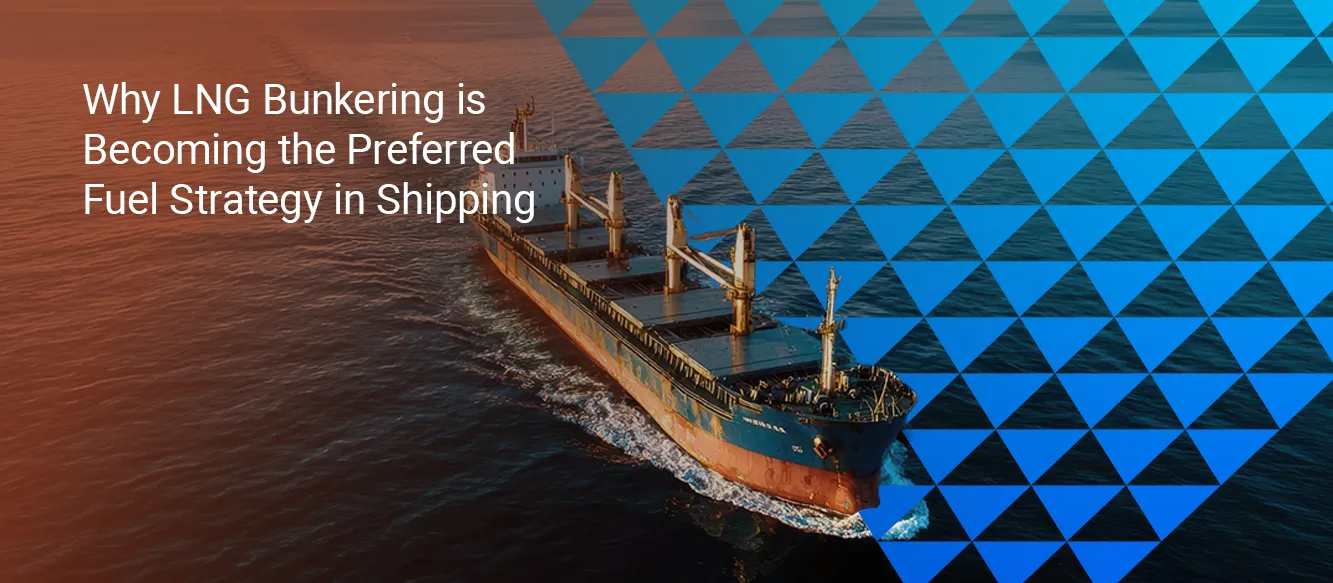
The maritime industry is no longer experimenting with alternative fuels, it is actively restructuring around them. LNG bunkering has moved from a compliance-driven solution to a strategic lever shaping long-term fuel economics, vessel design, and port infrastructure investments. According to Kings Research’s LNG Bunkering Market Report, the global LNG bunkering market was valued at USD 3.49 billion in 2025 and is projected to grow from USD 4.11 billion in 2026 to USD 15.45 billion by 2033. This indicates a compound annual growth rate (CAGR) of 20.81% from 2026 to 2033.
At the center of this shift lies intensifying regulatory pressure. According to the International Energy Agency, international shipping accounted for about 2% of global energy-related CO₂ emissions in 2022, with reduction targets now aligned to net-zero pathways. This is further reinforced by broader estimates that place shipping emissions closer to 3% of global CO2 emissions, underscoring the urgency for cleaner fuels.
For shipping companies, it is about maintaining operational viability in a rapidly tightening regulatory environment. LNG bunkering has emerged as a practical transition solution, offering immediate emissions reductions while aligning with evolving policy frameworks.
What is LNG bunkering?
LNG bunkering is the process of transferring liquefied natural gas (LNG) to a ship for use as fuel. Replacing traditional heavy fuel oils drastically cuts maritime emissions, including sulfur oxides, nitrogen oxides, and particulate matter, making it a cleaner, commercially scalable transition fuel for global shipping operations.
Market Momentum Backed by Strategic Investment
The commercial scale of LNG bunkering is expanding steadily, supported by infrastructure development and fleet modernization. According to the Kings Research LNG Bunkering Market Report, the global market is experiencing strong growth, driven by increasing demand for cleaner marine fuels, the expansion of LNG-compatible vessels, and rising investments in bunkering infrastructure.
The report highlights that ship-to-ship bunkering continues to dominate due to operational flexibility, while regions such as Asia-Pacific and Europe are leading adoption due to regulatory enforcement and port readiness.
This growth reflects a broader ecosystem shift involving shipbuilders, port authorities, fuel suppliers, and logistics providers. LNG bunkering is becoming embedded within long-term capital allocation strategies across the maritime value chain.
Fleet Transformation is Accelerating Faster Than Expected
One of the clearest indicators of LNG bunkering’s momentum is the rapid expansion of LNG-capable vessels. According to the SEA-LNG industry review, there are now 1,369 LNG dual-fuel vessels in operation or on order as of 2025, with continued growth in newbuild orders across container, cruise, tanker, and bulk segments.
When LNG carriers are included, the number exceeds 2,400 vessels globally, representing a significant share of maritime tonnage.
This expansion signals a decisive industry shift. LNG is no longer limited to early adopters; it is being integrated into mainstream fleet strategies by major shipping companies. The implication for businesses is clear: demand for LNG bunkering is structurally tied to fleet growth, making it a long-term opportunity rather than a cyclical trend.
Infrastructure Expansion: Scaling to Meet Demand
The growth of LNG bunkering is closely tied to the expansion of global fueling infrastructure. Ports are no longer treating LNG as an optional capability; they are investing in it as a core service offering.
At a global level, the International Maritime Organization's LNG insights platform highlights a growing network of LNG bunkering points and infrastructure under development, reinforcing LNG's scalability as a marine fuel.
However, infrastructure growth is uneven. While Europe and the Asia-Pacific are advancing rapidly, other regions remain underdeveloped. This creates a dual dynamic: established routes benefit from mature LNG ecosystems, while emerging markets present high-growth opportunities for infrastructure investment.
Supply Dynamics Are Strengthening LNG’s Position
A critical factor supporting the adoption of LNG bunkering is the rapid expansion of global LNG supply capacity. According to the International Energy Agency LNG capacity tracker, more than 420 billion cubic meters (bcm) per year of LNG export capacity reached final investment decisions between 2019 and 2025, more than doubling previous approval levels.
For B2B stakeholders, this is a critical validation point. Supply-side expansion reduces concerns around fuel availability and price volatility, making LNG a more reliable option for long-term fuel strategies.
Regulation: The Primary Engine Behind LNG Adoption
Regulatory frameworks remain the single most influential driver of LNG bunkering adoption. The International Maritime Organization has approved new frameworks introducing mandatory marine fuel standards and greenhouse gas pricing mechanisms, signaling a decisive shift toward decarbonization.
These policies are reshaping fuel economics across the shipping industry. Traditional fuels are becoming increasingly expensive to operate under carbon pricing regimes, while LNG offers a relatively compliant alternative with lower emissions intensity.
For shipping companies, early adoption of LNG bunkering is not just about meeting current regulations; it is about future-proofing operations against increasingly stringent environmental standards.
LNG as a Transitional Fuel in a Multi-Fuel Future
While LNG is gaining traction, it is widely recognized as a transitional fuel rather than a final solution. LNG plays a critical role in reducing emissions in the near term, even as the industry explores zero-carbon alternatives such as ammonia and hydrogen.
This transitional role is strategically important. LNG infrastructure developed today can support bio-LNG and synthetic LNG in the future, enabling a smoother transition to net-zero fuels without rendering current investments obsolete.
This means LNG bunkering is not a short-term bet; it is a foundational layer in the broader energy transition of maritime logistics.
Asia-Pacific: The Center of Gravity for LNG Bunkering Growth
The geographical dynamics of LNG bunkering are shifting, with Asia-Pacific emerging as the dominant growth region. Strong trade volumes, proactive government policies, and large-scale port investments are driving adoption across the region.
Major bunkering hubs such as Singapore are reinforcing their leadership through regulatory support and infrastructure expansion, while China and South Korea are rapidly building LNG-ready port ecosystems.
This regional shift has significant implications for global shipping strategies. Companies operating in Asia-Pacific corridors must align their fuel strategies with regional infrastructure availability, while investors are increasingly targeting the region for LNG-related opportunities.
Challenges That Continue to Shape the Market
Despite its growth, LNG bunkering faces several challenges that cannot be overlooked. Methane emissions, infrastructure costs, and long-term uncertainty around fuel standards remain key concerns for industry stakeholders.
Emissions across the LNG value chain, from production to transportation, require careful management to ensure environmental benefits are realized.
Additionally, LNG infrastructure investments are capital-intensive and require coordinated efforts among governments, port authorities, and private stakeholders. Without such collaboration, infrastructure gaps could slow adoption in certain regions.
The Cost Equation: LNG Bunkering Between Volatility and Long-Term Advantage
While LNG bunkering is often positioned as a cleaner alternative, its economic viability remains a central consideration for shipping companies and fuel suppliers. The cost equation is shaped by multiple variables, including LNG pricing, infrastructure investments, and regulatory costs associated with carbon emissions.
Global gas markets are entering a phase of gradual supply expansion, with LNG supply growing by more than 5% year-on-year in the first nine months of 2025. This increase is expected to stabilize pricing compared to the volatility seen during the 2022–2023 energy crisis.
For shipowners, this creates a more predictable fuel cost environment, which is critical for long-term fleet planning and charter agreements. At the same time, regulatory mechanisms such as carbon pricing and emissions trading systems are expected to increase the cost of conventional marine fuels. This shifts the economic balance in favor of LNG, not necessarily because it is cheaper outright, but because it offers a lower compliance burden.
At-a-Glance: Marine Fuel Comparison
|
Fuel Type |
CO₂ Emission Reduction (vs HFO) |
Infrastructure Maturity |
Cost Predictability |
|
LNG |
~20–25% |
High and growing rapidly |
Moderate |
|
VLSFO |
Minimal |
Very High (Standard) |
High (Oil-linked) |
|
Methanol (Green) |
Up to ~88–90% |
Low (Early stages) |
Low (Supply constrained) |
Note: CO₂ emission reductions reflect mixed measurement bases. LNG values are based on combustion/tank-to-wake emissions, while green methanol values are based on lifecycle/well-to-wake emissions. Sources: DNV (LNG); Wärtsilä, ICCT, and Methanol Institute (green methanol).
Port Competitiveness in the LNG Era: Infrastructure as a Differentiator
As LNG bunkering scales globally, ports are emerging as critical enablers, or bottlenecks, in the transition. The ability to offer reliable, efficient LNG bunkering services is becoming a competitive differentiator among major maritime hubs. The Maritime and Port Authority of Singapore, for instance, has positioned LNG bunkering as a core component of its long-term maritime strategy, supported by licensing frameworks, operational guidelines, and continuous infrastructure investments.
However, the relationship between LNG infrastructure and port competitiveness is more nuanced than it appears. While access to LNG fueling can attract LNG-powered vessels, it does not automatically guarantee increased port traffic. Factors such as turnaround time, digital integration, and hinterland connectivity continue to play a decisive role in port selection. This means LNG bunkering must be integrated into a broader operational excellence strategy rather than treated as a standalone capability.
For port authorities and logistics providers, the challenge lies in aligning fuel infrastructure with overall service efficiency to create a compelling value proposition for shipping lines.
The Strategic Outlook
LNG bunkering is no longer a peripheral development; it is a central component of the maritime industry’s transition strategy. Its ability to balance environmental compliance, operational efficiency, and infrastructure scalability makes it a critical enabler of cleaner shipping.
The opportunity extends beyond fuel supply. It encompasses infrastructure development, vessel design, logistics optimization, and digital integration. Companies that recognize LNG bunkering as part of a broader transformation, rather than a standalone solution, will be better positioned to capture long-term value.
As the industry moves toward net-zero ambitions, LNG will continue to play a pivotal role, not as the end state, but as a bridge that enables the transition to a more sustainable maritime future.
Download the Full LNG Bunkering Market Report
Get comprehensive data on market sizing, regional infrastructure growth, and long-term fuel economics. Enter your email below to download a free sample of the full Kings Research LNG Bunkering Market Report.
Frequently Asked Questions (FAQ)
What is LNG bunkering?
LNG bunkering is the process of supplying a ship with liquefied natural gas (LNG) to use as fuel instead of traditional heavy fuel oils. It is a critical transitional step toward decarbonizing the maritime industry.
How is LNG used as ship fuel?
LNG is stored in specialized cryogenic tanks on the vessel. When needed, it is vaporized and fed into dual-fuel engines that can run on either natural gas or conventional marine fuels, providing operational flexibility while significantly reducing emissions.
What are the challenges of LNG bunkering?
Key challenges include the high capital cost of building bunkering infrastructure, the need to manage "methane slip" (unburned methane emissions from engines), and the uneven global distribution of port readiness.