

Protecting large facilities requires constant vigilance and continuous data collection. Organizations historically relied on fixed surveillance cameras and human patrols to secure expansive perimeters. Traditional methods occasionally leave blind spots or face limitations in covering vast areas quickly. Today, advanced robotic platforms bridge these gaps, serving as dynamic extensions of a facility's security perimeter. According to Kings Research, the global robotic security market was valued at USD 18.21 billion in 2025 and is projected to reach USD 43.58 billion by 2033, expanding at a CAGR of 13.11%. This rapid financial growth highlights a fundamental shift in how infrastructure operators gather contextual data.
The United States Cybersecurity and Infrastructure Security Agency (CISA) identifies 16 distinct critical infrastructure sectors requiring robust physical protection. Protecting these varied environments demands flexible, adaptable tools. A robot becomes a mobile intelligence hub when its sensors, edge processors, communications, and human-facing workflows operate in unison.
What is a Security Robot?
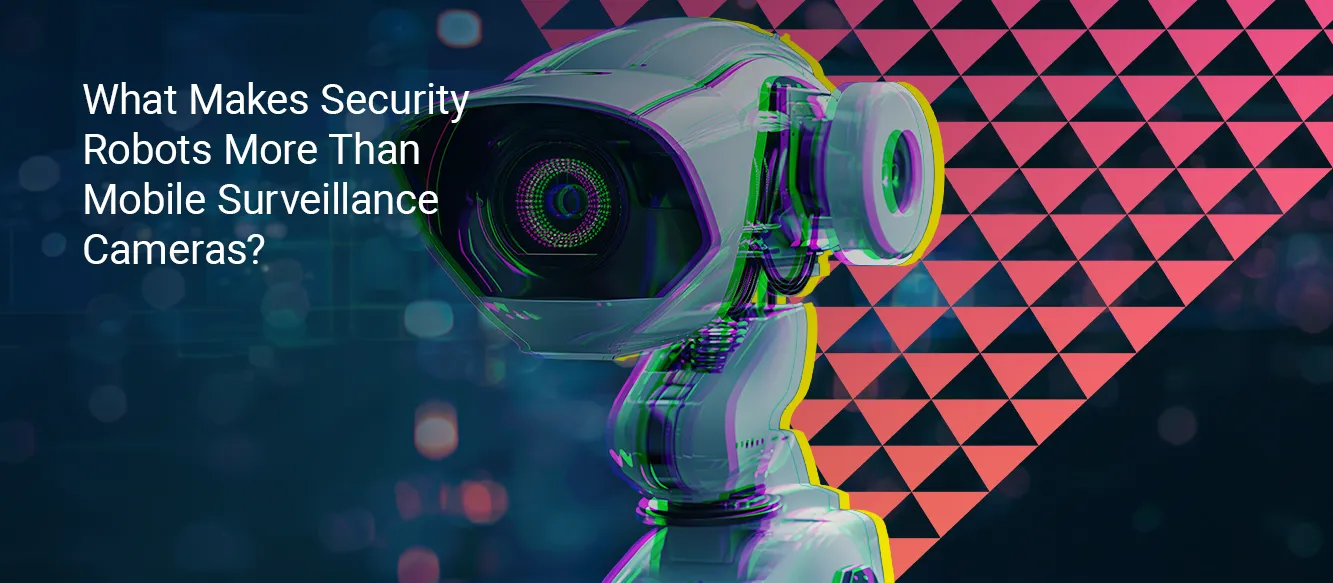
A security robot operates as an automated mobile platform equipped with advanced sensors, edge computing processors, and secure communication modules. Facilities deploy these machines to conduct continuous patrols, monitor physical environments, and collect real-time data across expansive areas. These units combine physical mobility with digital surveillance, navigating predefined routes or responding dynamically to environmental triggers. They serve as automated extensions of physical security teams, gathering high-fidelity video, thermal imagery, and acoustic data to provide comprehensive situational awareness.
The United States Bureau of Labor Statistics (BLS) reported in May 2023 that the country employs 1,202,940 security guards across various industries. Security robots support this massive workforce by handling repetitive patrols and hazardous environment inspections. This integration ensures human operators receive continuous intelligence, optimizing the deployment of physical guard teams across large properties.
What Makes a Security Robot a Mobile Intelligence Hub?
A mobile intelligence hub goes beyond basic video recording. Traditional surveillance captures footage from a single, static vantage point. A robotic platform moves through an environment, gathering dynamic data from multiple angles and under varying conditions. This mobility turns a standard camera into an active data collection system capable of investigating specific areas of interest.
Security planners must understand how mobile machines fit into existing frameworks. The following table contrasts various surveillance systems, demonstrating how each category fulfills distinct operational requirements.
|
System Category |
Core Function |
Primary Data Gathered |
Operational Deployment Role |
Primary Constraint |
|
Fixed Surveillance Cameras |
Continuous observation of specific zones |
Visual and thermal video feeds |
Monitoring permanent chokepoints |
Restricted to a static field of view |
|
Mobile Security Robots |
Dynamic perimeter sensing and patrol |
Visual, thermal, spatial, and acoustic data |
Investigating anomalies across varied terrains |
Dependent on battery life and smooth surfaces |
|
Aerial Drones |
High altitude site tracking |
Overhead visual and thermal imagery |
Rapid response and wide-area overwatch |
Restricted by strict airspace regulations |
|
Centralized Platforms |
Incident management and data aggregation |
System logs and alert feeds |
Command and control for human operators |
Dependent entirely on connected edge devices |
These units combine high-fidelity sensors, edge computing power, and robust communication modules. The onboard processors analyze incoming data locally, filtering out irrelevant events before sending alerts to human operators. The robot handles navigation, obstacle avoidance, and data filtering, while security personnel retain control over incident response and final threat verification.
How Do Security Robots Turn Sensor Readings Into Useful Intelligence?
Data acquisition begins with an array of environmental sensors. These platforms typically carry visible light cameras, thermal imaging units, lidar, and depth sensors. Each instrument plays a specific role. Thermal cameras detect heat signatures in complete darkness, allowing the platform to spot anomalies during night patrols. Lidar maps the surrounding area by bouncing laser pulses off surfaces, creating a three-dimensional understanding of the environment.
Sensor fusion is the process of combining these disparate data streams. A standalone camera might see a shadow, but when combined with thermal data, the system determines if the shadow emits heat. This combined approach significantly reduces false alarms. Edge processing allows the robot to handle this intensive calculation onboard. Sending all raw data to a central server would consume excessive bandwidth. Instead, the local processor analyzes the information and exclusively transmits relevant events.
In July 2025, the Singapore Police Force and the Home Team Science and Technology Agency launched a trial of the GIBSON robot at Changi Airport Terminal 4. The aim behind this development was to enhance police presence and improve officers' mobility indoors. GIBSON utilizes lidar, 3D light detection, cameras, and sonar to navigate safely. The integration of these sensors allows the unit to avoid obstacles and gather reliable data.
How security robots turn sensor data into actionable intelligence:
- Collect: Cameras and environmental sensors capture observations.
- Process: Onboard software filters or analyzes incoming data.
- Interpret: Detection algorithms flag patterns or events that may require attention.
- Communicate: Relevant alerts and supporting information are sent to a monitoring platform.
- Verify: A human operator or an authorized workflow assesses the alert and determines the next step.
How Does Robot-Generated Intelligence Reach Security Teams?
An intelligence hub remains ineffective without reliable communication. Once the edge processor identifies a relevant event, the system transmits an alert to a centralized monitoring platform. These alerts contain rich context, including exact GPS coordinates, timestamps, thermal readings, and high-definition image captures.
Integration with existing security operations centers is a fundamental requirement. These robotic units interface directly with video management systems and access control platforms. When the robot detects an anomaly, the central system logs the event and prompts a human operator to review the data. The operator assesses the situation and assigns follow-up actions to physical guard teams.
Network interruptions present a challenge in industrial environments. Facilities must plan for degraded operations. When connectivity drops, the robotic unit relies on its internal mapping to safely return to a designated base station or pause until the signal returns. The system caches the collected data locally and uploads the files once communication is restored.
In March 2026, Knightscope acquired Event Risk. The company aimed to accelerate its transition to a recurring revenue model and advance its autonomous security force for critical infrastructure, ensuring seamless integration between automated alerts and human response teams.
Where Can Mobile Security Intelligence Change Infrastructure Operations?
Different environments demand unique operational approaches. Airports and transport hubs benefit immensely from mobile patrols. The Transportation Security Administration (TSA) screened over 858 million passengers in 2023, averaging 2.4 million daily passengers across federal checkpoints. The Federal Aviation Administration (FAA) reports that the United States maintains 5,146 public use landing facilities. Monitoring these expansive perimeters while managing massive passenger throughput requires continuous situational awareness.
The GIBSON trial at Changi Airport serves as an excellent example of this operational shift. The GIBSON platform combines autonomous patrol functions with a rideable mode for officers, blending machine sensing with human mobility. Officers summon the unit via an internal application, allowing them to traverse large indoor areas swiftly and improve incident response times.
Energy and industrial sites present harsh conditions. The United States Energy Information Administration (EIA) reported in November 2024 that grid infrastructure investments drove significant increases in utility spending, with capital investment in electricity transmission alone increasing by 11 percent in a single year to reach USD 27.7 billion in 2023, driven by the need to modernize aging delivery systems and integrate new generation sources. The Department of Energy (DOE) also plans to expand long-distance transmission line capacity by 16 percent by 2030, building 7,500 miles of new transmission lines. Robotic systems excel in these sprawling, hazardous zones, conducting routine inspection routes and gathering observations from locations unsafe for human guards.
Ports and border facilities handle massive trade volumes. The Bureau of Transportation Statistics (BTS) recorded North American transborder freight valued at USD 157.6 billion in a single month, July 2026. Securing this economic pipeline demands mobile sensors that cover large logistics yards seamlessly.
What Can Security Robots Detect Reliably, and Where Do They Fall Short?
Understanding technical limitations prevents unrealistic expectations. While sensor fusion provides robust data, environmental factors heavily influence detection quality. Heavy rain, dense fog, or blinding sunlight obscure camera lenses and scatter lidar pulses, reducing the system's effective range.
These systems occasionally register false positives. A passing animal or blowing debris might trigger a perimeter alert, requiring human verification to dismiss the event. Highly sophisticated intrusions might evade detection if the perpetrator understands the sensor limitations and leverages environmental noise to hide. Undetected intrusions remain a risk in highly cluttered environments.
Navigating unfamiliar or dynamic environments introduces further challenges. A facility undergoing construction forces the unit to constantly remap its surroundings, occasionally causing navigation errors or halting the patrol route entirely. Ambiguous events always require a human operator to make the final determination.
How Should Organizations Protect Connected Security Robots?
Connected platforms introduce complex cybersecurity considerations. A compromised robotic unit could provide malicious actors with detailed facility maps and live video streams. Protecting these assets requires strict device authentication and role-based access protocols.
Secure data transmission ensures that intercepted communications remain unreadable. Facilities must implement encrypted connections for both video streaming and routine software updates. Network segmentation isolates the robotic fleet from critical enterprise networks. This architecture prevents a vulnerability in the robotic subsystem from compromising the facility's central databases. Secure handling of credentials ensures the system resists unauthorized manipulation.
How Can Facilities Use Security Robots Without Overlooking Privacy?
Deploying advanced surveillance requires careful privacy governance. Organizations must define authorized surveillance zones clearly. Cameras should exclusively record within the facility boundaries, avoiding adjacent public spaces or neighboring properties where individuals possess a reasonable expectation of privacy.
Limiting data collection to essential operations protects individuals. The system should gather information relevant exclusively to the stated facility security purpose. Establishing strict access permissions ensures only authorized personnel view the recorded footage.
Transparency remains crucial for workforce acceptance. Facilities should clearly communicate the purpose of the robotic patrols to employees, outlining exactly what data the machines collect.
How Should Organizations Evaluate Security Robots Before Deployment?
Procurement decisions require a structured evaluation process. Facility managers must define the specific operational task and the exact environment the machine will handle. A unit designed for smooth indoor data centers will struggle on a gravel perimeter at an energy substation.
Evaluation teams must test detection quality and false alarm rates under representative environmental conditions. Assessing patrol coverage, battery endurance, and system availability provides a realistic view of operational uptime. The NIST standard test methods offer a reliable reference for measuring these specific parameters, providing quantitative ways to measure capability such as distance traversed within specific environmental conditions across its 50 published test protocols.
Communication reliability testing ensures the unit maintains contact with the security operations center throughout its entire route. Facilities must also evaluate integration requirements, ensuring the new hardware communicates flawlessly with legacy systems. Finally, managers must assess human oversight requirements, maintenance burdens, and lifecycle costs against clear performance acceptance criteria.
What Will Determine the Next Phase of Security Robot Adoption?
The future of this sector depends on enhanced integration. Ground units, aerial platforms, and fixed sensors will increasingly operate as a unified, self-coordinating network.
More reliable contextual interpretation of events will reduce the burden on human operators. Future software iterations will better distinguish between routine environmental changes and genuine security events. Greater interoperability with centralized security systems will streamline how operators interface with these diverse data sources, placing all insights onto a single dashboard.
Conclusion
The value of security robots lies in the full intelligence workflow: observing environments, interpreting complex data accurately, communicating insights securely, and supporting human decisions. By transitioning from simple mobile cameras to advanced sensing platforms, these systems offer critical infrastructure operators a dynamic tool for site protection.
As facilities across aviation, energy, and logistics expand their physical footprints, the demand for adaptable, mobile sensors continues to grow. Successful deployments require careful evaluation, strict cybersecurity measures, and clear privacy governance to ensure the technology serves its intended purpose safely. Embracing this shift allows organizations to maintain continuous situational awareness across demanding environments.
To explore further, readers can review the security robots market report by Kings Research for details on sizing, segmentation, regional trends, and competitive developments.
FAQs
What are security robots used for in critical infrastructure?
Security robots support critical infrastructure protection by conducting mobile patrols, collecting visual and environmental data, monitoring designated areas, and transmitting observations to security teams. Depending on their configuration, they supplement fixed cameras and human guards at airports, industrial facilities, data centers, ports, and energy installations.
What is the difference between security robots and fixed surveillance cameras?
Security robots gather observations from multiple locations while patrolling designated areas. Fixed surveillance cameras capture information exclusively from a static position, limiting their field of view to a single vantage point.
How can organizations evaluate security robot performance?
Organizations evaluate security robots against defined operational tasks and realistic environmental conditions. Key measures include detection accuracy, false alarm rates, patrol coverage, communication reliability, endurance, system availability, integration performance, and operator workload. A controlled pilot helps determine whether the system meets documented acceptance criteria before wider deployment.