

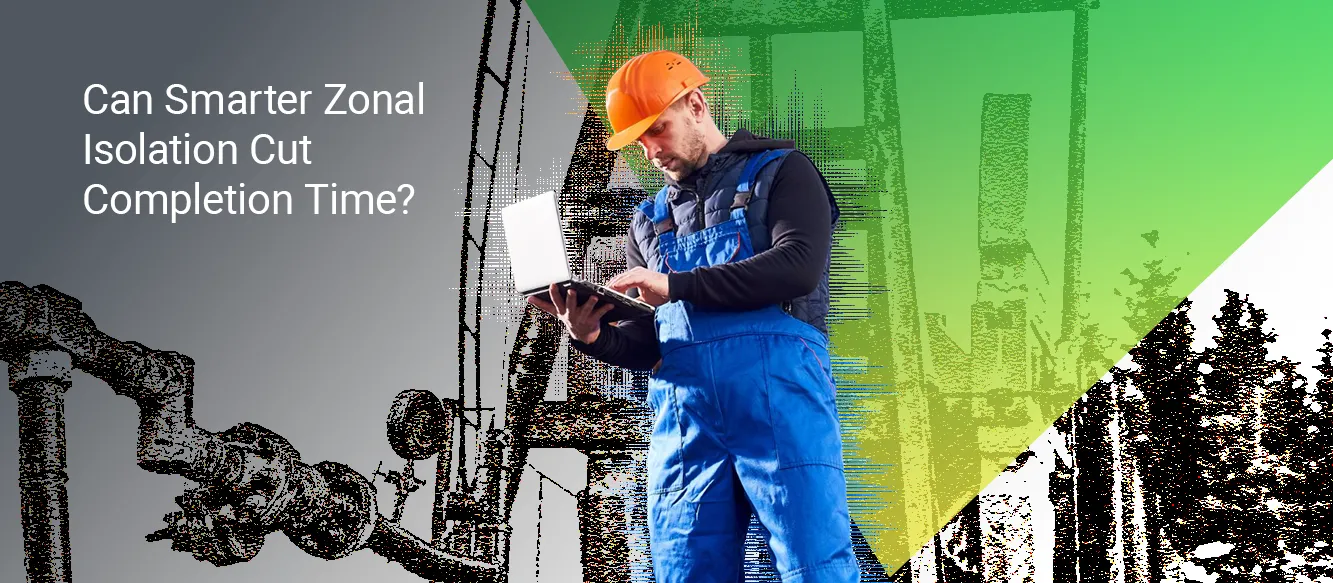
As horizontal wells become longer, zonal isolation becomes increasingly important for managing multistage completions. The U.S. Energy Information Administration reported that the average lateral length of new horizontal wells in the Permian region increased by 77%, from 6,149 feet in 2015 to 10,867 feet in 2025. This increase in lateral length allows a horizontal well to contact a longer section of the reservoir, demanding highly reliable physical barriers between intervals. Operators require robust solutions to manage fluid flow across these extreme distances.
What is zonal isolation in multistage well completions? Zonal isolation in multistage well completions is the process of separating selected intervals within a wellbore so that stimulation or production operations target designated reservoir zones. Packers and associated completion tools create barriers between intervals, helping control fluid communication and support the planned sequence of treatment stages.
As a precise way to understand the sector scale, the global zonal isolation market was valued at USD 25.93 billion in 2025 and is projected to grow to USD 39.01 billion by 2033, exhibiting a 5.24% CAGR during the forecast period, according to a recent Kings Research analysis. By effectively separating sections of the annulus, operators ensure treatment fluids reach the intended targets, preventing valuable stimulation chemicals from bypassing the designed zones.
How Does Zonal Isolation Support Multistage Well Completion Design?
Completion architecture depends entirely on controlling fluid flow within the subterranean environment. The space between the casing or liner and the formation wall, known as the annulus, requires sturdy barriers to stop fluids from traveling longitudinally along the outside of the pipe. When engineers design a multistage completion, they must segment this annulus into discrete, pressure-tight compartments. This segmentation allows operators to apply immense hydraulic pressure to a specific rock section without bleeding energy into adjacent, previously stimulated areas. The U.S. Energy Information Administration reported that horizontal wells accounted for 94% of crude oil production and 92% of natural gas production across the Lower 48 states in December 2024. Together, these figures highlight the importance of reliable horizontal completion designs.
How Packers Separate Individual Treatment Intervals
Packers serve as the primary barriers along the lateral section. Deployed at predetermined depths, these tools expand or swell to seal the annular space completely. This segmentation guarantees that hydraulic pressure applied from the surface acts exclusively on the targeted rock face. Absent these barriers, pressurized fluids would simply take the path of least resistance, flowing uncontrollably along the wellbore and failing to initiate the necessary fractures in the reservoir rock. The mechanical integrity of these seals directly dictates the success of the entire fracturing operation.
How Isolation Works with Sleeves and Perforation Systems
Once packers establish discrete segments, operators use stage-access devices to selectively open the production or injection conduit. Sliding sleeves shift open, or specific casing sections receive perforations using specialized explosive charges. The packer prevents fluid from migrating behind the pipe, forcing the stimulation treatment directly into the exposed formation through the open sleeve or perforation cluster. This cooperative relationship between packers and access ports forms the foundation of modern horizontal well stimulation, giving engineers absolute control over fluid placement.
Which Advanced Zonal Isolation Technologies Are Used in Multistage Completions?
Engineers select from several packer categories based on borehole conditions and completion objectives. Each tool possesses a specific operating principle suited to distinct downhole environments, allowing customization for virtually any reservoir challenge. Recent industry advancements underscore this capability. For instance, SLB's Annular Zonal Isolation Packers use expandable steel technology for zonal isolation in openhole and cased-hole wells. Certain AZIP models are rated up to 15,000 psi and 320°F and qualified to API Spec 19OH V1, while the feedthrough model accommodates hydraulic and electric lines and has a published rating of up to 5,000 psi and 257°F.
Mechanical-Set Packers for Controlled Downhole Setting
These packers use applied force, such as hydraulic pressure or physical pipe manipulation, to compress an elastomeric element against the casing or openhole wall. The compression forces the elastomer to bulge outward, creating a tight mechanical seal. As hydraulic pressure or mechanical force is applied, cones drive under the slips, forcing them outward to bite into the casing wall. Operators favor mechanical packers when they require immediate confirmation of a secure barrier before proceeding with the operation. They anchor the tool firmly against the immense differential pressures generated during hydraulic fracturing.
Swellable Packers for Conforming to the Surrounding Annulus
Swellable packers feature an elastomer bonded to a base pipe that expands upon contact with specific wellbore fluids, such as hydrocarbons or water. These tools are effective for multistage fracturing in irregular openhole environments because the swelling element conforms naturally to the changing wellbore diameter over a period of several days. Oil-swelling elastomers operate on the principle of thermodynamic absorption, where the polymer matrix absorbs hydrocarbons and swells. Water-swelling elastomers typically rely on osmotic gradients, using incorporated superabsorbent polymers to draw water in, expanding the element. This process functions independently of moving parts.
Expandable Metal Packers for Demanding Borehole Geometries
Expandable steel packers utilize hydraulic pressure to permanently deform a metal sleeve outward until it contacts the borehole wall. These expandable steel packers are used for isolation in both open and cased holes, providing high-pressure sealing capabilities in challenging, high-temperature environments where traditional elastomers may degrade. The hydroforming process involves pumping high-pressure fluid into the tool, exceeding the yield strength of the metal sleeve, which undergoes plastic deformation and expands outward. The metal-to-rock contact creates an extremely durable seal capable of withstanding severe operational life cycles.
Retrievable and Straddle Packers for Selective Treatment and Intervention
For operations requiring temporary barriers, such as diagnostic testing or targeted restimulation, engineers deploy retrievable or straddle packers. These tools allow operators to isolate a single zone, pump the required treatment, and then release the packer to move to another depth or pull the assembly completely out of the well. They are essential for well intervention tasks, enabling operators to troubleshoot specific sections of the lateral while leaving the primary completion architecture intact.
Comparison Table: Advanced zonal isolation technologies
|
Technology |
Setting mechanism |
Suitable completion context |
Key advantages |
Design considerations |
|
Mechanical-set packers |
Hydraulic pressure or mechanical pipe manipulation |
Cased-hole or uniform openhole completions |
Immediate seal verification, high pressure ratings |
Requires mechanical moving parts, slip engagement needed |
|
Swellable packers |
Thermodynamic absorption or osmosis of wellbore fluids |
Irregular openhole horizontal laterals |
Zero moving parts, conforms to uneven rock faces |
Requires curing time to achieve full pressure rating |
|
Expandable metal packers |
Hydroforming (hydraulic expansion of steel sleeve) |
High-temperature, high-pressure (HTHP) environments |
Extremely durable metal seal, immune to elastomer degradation |
Permanent installation, requires specific activation pressures |
|
Retrievable packers |
Wireline or tubing conveyed, releasable slips |
Temporary interventions and diagnostic testing |
Removable, reusable across multiple zones |
Lower differential pressure limits compared to permanent tools |
|
Straddle packers |
Dual-packer assembly set via mechanical/hydraulic means |
Targeted restimulation of specific intervals |
Isolates a highly specific localized area |
Outer clearance limitations during deployment |
How Do Isolation Systems Improve Stimulation Placement and Stage Execution?
Successfully stimulating a horizontal well requires a systematic approach to treating individual sections. How do zonal isolation systems support multistage stimulation? The process follows a structured sequence:
- Isolate the target interval using packers or bridge plugs.
- Access the target interval by opening a sliding sleeve or detonating perforating guns.
- Deliver the high-pressure treatment fluid directly into the newly accessed rock formation.
- Progress to the next stage by setting a fresh barrier or dropping an actuation ball.
To further improve these processes, industry providers have introduced advanced remote management capabilities. In April 2026, Halliburton launched the Volta all-electric control system as part of its SmartWell intelligent completions portfolio. The system provides precise, bidirectional zonal control, real-time reservoir management, and continuous well-condition monitoring, helping operators optimize production and improve well performance.
Ball-Activated Sleeves and Plug-And-Perf Workflows
In plug-and-perf completions, operators run a wireline tool string to set a composite bridge plug and perforate the casing above it. The plug protects the previously fractured stage from the upcoming treatment. Alternatively, continuous pumping operations utilize ball-activated sliding sleeves. Operators drop progressively larger spheres from the surface, which seat in designated sleeves, isolating the lower sections and shifting the sleeve open to expose the next zone. Both methods rely on precise barrier placement to ensure the stimulation energy fractures the correct rock section.
Continuous Pumping and Single-Trip Completion Approaches
Single-trip completion systems allow operators to run the entire completion string, including all packers and sleeves, in one deployment. This method bypasses the requirement for repeated wireline runs between every stage. Once the string reaches total depth and the packers actuate, the stimulation sequence proceeds continuously. This seamless execution saves days of operational time on the rig, accelerating the transition from drilling to production while minimizing the risk of tools getting stuck during multiple trips into the wellbore.
What Engineering Factors Determine Packer Selection and Placement?
Designing a multistage completion involves balancing complex downhole conditions with rigorous operational requirements. Engineers must evaluate multiple variables to select the correct barrier technology. The scale and complexity of these operations make equipment integrity critical.
Matching Packer Specifications to Downhole Conditions
Wellbore diameter, ambient temperature, and maximum anticipated differential pressure heavily influence tool selection. Elastomer elements have specific temperature limits; exceeding these limits causes the rubber to degrade, compromising the seal. In high-pressure, high-temperature environments, engineers often specify expandable metal packers to circumvent elastomer degradation entirely. Furthermore, fluid compatibility is crucial for swellable packers, which require a compatible fluid composition to activate within the specified timeframe. Sour gas environments also demand specialized metallurgical choices to prevent hydrogen sulfide from degrading the completion string.
Aligning Isolation Design with Stage Spacing and Reservoir Geometry
Lateral length and formation characteristics determine the total number of stages. A well traversing highly heterogeneous rock requires extremely tight stage spacing, demanding dozens of packers to treat every micro-layer adequately. Engineers must space the packers carefully to avoid placing them across natural faults or washouts where sealing becomes impossible.
What Do Field Case Studies Reveal About Multistage Completion Performance?
Documented field applications demonstrate the tangible benefits of advanced completion architectures. By examining real-world deployment data, engineers gain insights into how specific tools perform under demanding conditions.
Single-Trip Multizone Completion and Rig-Time Savings
Deepwater offshore environments require highly efficient operations due to exceptional daily rig costs. In a documented deepwater Gulf of Mexico case study involving the Lower Tertiary formation, an operator deployed Baker Hughes' multizone, single-trip (MST) completion system to perform three frac-pack treatments in one run. By reducing the need for repeated wellbore trips, the system saved 12 days of rig time and an estimated USD 12 million on the well.
Multistage Stimulation with Selective Access to Reservoir Intervals
In unconventional shale plays, operational speed directly affects overall well economics. A Halliburton case study from the Eagle Ford shale reservoir in South Texas documents the deployment of its RapidStage completion system, incorporating frac sleeves and Swellpacker isolation systems, to stimulate multiple zones without intervention. The completion assembly reached total depth in less than 18 hours, and multiple zones were stimulated in less than two days while maintaining continuous pumping operations. Halliburton reported USD 1 million in savings on the well compared with previous wells in the field.
How Are Completion Providers Advancing Zonal Isolation System Design?
Service companies continuously refine downhole tools to handle longer laterals and increasingly harsh geological conditions. Recent developments highlight a shift toward modularity, enhanced reliability, and smart well integration. In January 2026, Halliburton and Singapore's Agency for Science, Technology and Research (A*STAR) launched the Next-Generation Energy Xccelerator Joint Lab (NEX Lab) to accelerate the development and deployment of advanced well completion technologies. The S$35 million initiative aims to translate innovations into field-ready solutions while strengthening local supplier capabilities and building resilient, high-value energy supply chains.
Integrated Systems Designed to Simplify Deployment
Oilfield service providers offer multistage completion systems that combine frac sleeves with zonal isolation equipment to support stimulation across horizontal and extended-reach wells. Halliburton's RapidStage systems enable operators to perform more than 50 individual stimulation stages in a single reservoir without intervention, helping reduce rig costs and improve treatment placement. SLB's frac packers complement multistage stimulation operations by providing zonal isolation in irregular boreholes. Their expandable steel construction is designed to withstand reciprocation and rotation while passing through doglegs and tight spots, helping minimize nonproductive time and the risk of premature setting.
Adaptable Completion Systems for Changing Well Requirements
SLB has developed expandable annular zonal isolation packers that conform to irregular or oval boreholes to establish reliable seals. Its feedthrough packer configuration includes six ports for hydraulic, electric, or fiber-optic lines, supporting integration with intelligent completion systems. Separately, Baker Hughes' SureCONNECT and SureVIEW offerings support downhole connectivity and monitoring applications. The specific sensing capabilities and their suitability for stimulation monitoring depend on the selected system and deployment configuration. Together, these developments demonstrate how adaptable isolation hardware and downhole monitoring technologies can support more informed completion and stimulation decisions.
Pre-deployment checklist
- Design validation: Confirm that the selected tools are qualified for the anticipated pressure, temperature, and mechanical loads, using the standards applicable to the specific completion configuration.
- Equipment specifications: Verify tool dimensions and clearances against casing restrictions, well trajectory, openhole geometry, and the planned deployment path.
- Material compatibility: Check packer elements, seals, and other exposed materials against the planned stimulation fluids, including acids and chemical additives where applicable.
- Operational readiness: Confirm the setting mechanism, sleeve activation sequence, ball-seat compatibility, and required surface pressure for each stage.
- Post-installation verification: Establish the prescribed pressure-testing and isolation-verification procedures before beginning the main fracturing operation.
Worked example: Illustrative multistage completion workflow
- Inputs: Six stimulation stages, five openhole packers, an openhole sliding-sleeve completion, and a single-trip deployment plan.
- Deployment: The operator runs the lower completion assembly, including the packers and sliding sleeves, into the horizontal well to the planned depth.
- Zonal isolation: The packers are set using the mechanism specified for the selected system. Their placement is designed to divide the lateral into six stimulation intervals, subject to the completion configuration and end-boundary arrangement.
- First stage: The toe sleeve is opened using its specified activation method, which may involve applied pressure in a compatible system. The operator pumps the first stimulation treatment into the designated interval.
- Subsequent stages: In a compatible ball-drop design, a ball is pumped from the surface and lands on the corresponding sleeve seat. Applied pressure shifts the sleeve open, allowing the next interval to be stimulated while the system maintains the required isolation between stages.
- Repeat and verify: The sequence continues for the remaining stages according to the manufacturer's activation design and operating procedure. Operators monitor treating pressure and other available indicators to assess whether the intended stimulation sequence is proceeding as planned.
Conclusion
Advanced packers and related barriers form the absolute foundation of modern multistage well completions. By establishing reliable compartments within the wellbore, these tools give operators precise control over stimulation fluid placement, reducing operational time and improving reservoir access. The decision to deploy mechanical, swellable, or expandable metal barriers depends heavily on the specific wellbore environment, differential pressure requirements, and the overarching completion strategy. Documented field outcomes consistently show that matching the appropriate barrier to the right stage execution method yields substantial rig-time and cost savings.
Explore the zonal isolation market report from Kings Research for further insights into industry developments, technology adoption, and the competitive landscape.
Frequently Asked Questions
Can zonal isolation packers be used in both openhole and cased-hole completions?
Yes, manufacturers design specific packers for both environments. Swellable and expandable metal tools are frequently preferred for irregular openhole geometries, whereas mechanical-set packers are widely deployed inside smooth cased holes.
What determines the number of packers required in a horizontal well?
The number of packers depends entirely on the total lateral length, the desired stage spacing, and the degree of geological heterogeneity along the wellbore trajectory.
How do packers accommodate irregular openhole geometries?
Swellable elastomers expand gradually to fill voids and washouts, while expandable steel systems use hydraulic pressure to permanently deform metal outward until it perfectly conforms to the uneven rock wall.
Can a multistage completion be designed for future restimulation?
Yes, operators deploy retrievable packers or specific sliding sleeve configurations that allow engineers to re-enter the wellbore, isolate specific intervals again, and pump secondary treatments.
What qualification information should operators request from packer manufacturers?
Operators should request the manufacturer's qualification reports, rated pressure and temperature limits, material-compatibility information, and installation requirements. The applicable qualification standard depends on the packer type and completion configuration; operators should verify that the selected tool meets the relevant standard and the well's operating requirements.
How are isolation barriers verified before a stimulation stage begins?
Crews conduct rigorous pressure tests on the casing and completion string to confirm barrier integrity, ensuring the sealed intervals hold the required pressure before pumping the main fracture treatment.