What retailers in the UAE, Saudi Arabia, and South Africa should consider before investing in the next checkout system.
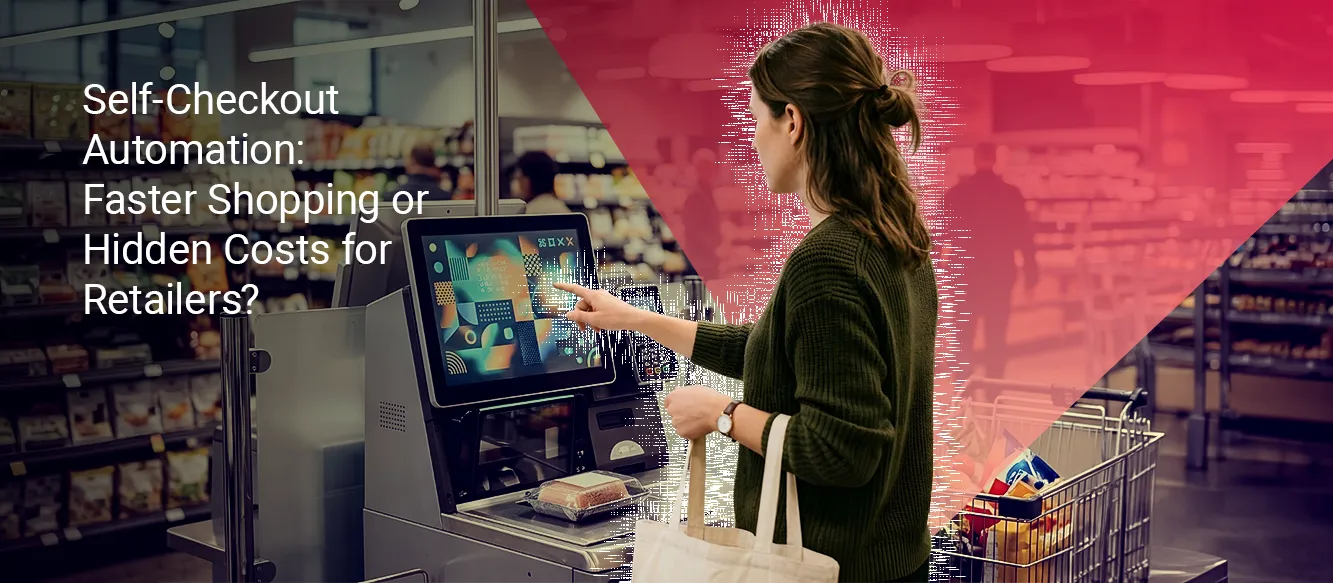
A shopper heads for self-checkout with just four items. It looks like the quickest way out. Then the barcode on a snack won’t scan. A loose vegetable needs to be found on a touchscreen. The machine asks for help with an unexpected bagging alert. A member of staff comes over, taps a code, and moves on to another kiosk.
The shopper gets through eventually. But was the experience really quicker?
That awkward moment captures the problem at the heart of retail automation. Self-checkout can make stores more efficient while leaving customers with more work to do. Kings Research examines this trade-off in The Self-Checkout Paradox, a regional study of checkout technology and its commercial implications in the UAE, Saudi Arabia, and South Africa.
Self-checkout Adoption Is Growing. Satisfaction Is Another Question.
Retailers keep investing in self-service because, when it works well, it can save time. NCR Voyix reported in its 2025 US consumer research that 77% of respondents who preferred self-checkout chose it for faster service, and 36% cited shorter lines. The same research found that 83% of respondents had used self-checkout in the previous six months. These figures are from the United States, not the three markets covered by our report, but they illustrate why speed remains such a powerful selling point.
Now consider what happens when a customer needs to call for help. An age check, an unreadable label, or a promotion that fails to apply can wipe out the time saved by avoiding the cashier queue. A short transaction can feel long when the customer has to solve problems along the way.
This is why the report draws a line between “Fancy Tech” and “Utility Tech.” A system might be impressive in a demonstration and still be frustrating on a busy Saturday afternoon. The useful measure is not how advanced it looks, but whether people can complete their purchases easily, reliably, and without unnecessary effort.
The ROI Calculation Has a Missing Side
For retailers, one employee supervising several kiosks can appear more productive than staffing the same number of cashier lanes. But labor efficiency is only one part of self-checkout return on investment (ROI). Hardware, software, maintenance, downtime, interventions, and inventory loss all affect the result.
A June 2026 University of Leicester study, commissioned by ECR Retail Loss and drawing on 39 participating retailers, offers a sharper view of the risk. It reported that self-checkout accounted for 54% of transactions in the participating retailers’ data, while store losses rose by an average of 22% during the first year after self-checkout introduction. Missed scans appeared in approximately 1% to 4.8% of transactions. The research also found that on-screen prompts led customers to correct errors in more than 80% of cases.
These findings do not mean every store will experience the same losses. They show why shrinkage, whether caused by mistakes or deliberate non-scanning, belongs in the investment calculation. They also suggest that well-designed interventions can recover some of the value at risk.
Kings Research’s “Net Efficiency Gain” framework looks at throughput and labor productivity alongside operating costs and risk. A smaller, well-supported installation may create more value than a larger unattended one if it avoids repeated interruptions and preventable losses. The commercial goal is not maximum automation; it is the best net outcome for a particular store.
Why the UAE, Saudi Arabia and South Africa Need Different Answers
The same checkout system will not necessarily work equally well in every market. Kings Research compares the UAE, Saudi Arabia and South Africa through qualitative assessments of consumer expectations, operating conditions and retail readiness. These are strategic interpretations, not scores from a new cross-country consumer survey.
In the UAE, digital convenience and service quality are important competitive factors. Checkout needs to feel seamless, including payment, loyalty redemption, and promotions. A fast scanner offers limited benefit if shoppers still need an employee to apply a reward or resolve a payment mismatch.
In Saudi Arabia, retail modernization and the growth of connected shopping experiences create opportunities for self-service. The decision should extend beyond kiosk procurement: retailers need to consider how checkout integrates with payments, loyalty systems, store operations, and customers’ preferred ways of shopping.
In South Africa, queue management and productivity matter alongside accessibility, employee support, and loss prevention. Assisted self-checkout or a mix of staffed and self-service lanes may be more practical in some stores than an entirely unattended format.
These differences give retailers a concrete reason to test locally. Basket size, shopper familiarity, store layout, payment preferences, labor deployment and loss-control requirements can all change the business case. The Self-Checkout Paradox study helps retailers translate these market differences into checkout technology comparisons, store-format priorities and investment decisions, rather than assuming one rollout model will suit all three countries.
Will RFID and Cashierless Stores Solve the Problem?
RFID can identify tagged products without requiring shoppers to scan every barcode individually. Decathlon provides a useful example. An AIM Global case study describes a mobile checkout approach using RAIN RFID tags, mobile payment and exit-gate integration, allowing customers to scan, pay and leave without a conventional cashier interaction. The example shows how identification, payment and loss-control systems can work together, rather than merely replacing a scanner.
However, a working demonstration is not proof of universal ROI. Retailers still need to consider tag economics, read accuracy, product suitability, integration costs, and how exceptions are handled. Grocery baskets with unpackaged produce, for example, pose different practical challenges from tagged apparel.
Cashierless stores face the same basic test: removing the visible checkout step is useful only if the system is dependable, understandable, and economically viable. Checkout also needs to connect with loyalty, returns, and customer accounts. A shopper should not have to fix disconnected systems simply because the payment step has been automated.
So How Much Automation Is Enough?
The answer may be a mix of staffed lanes for shoppers who want help, self-checkout for quick baskets, assisted kiosks where support matters, and RFID where the economics are convincing. What matters is how each option performs for the customers and stores it is meant to serve.
The real test of self-checkout automation is not how many machines a retailer installs. It is whether the investment reduces friction for shoppers while creating a measurable, sustainable return for the business.
Interested in finding out how automation is transforming the retail industry? Dive deeper into the retail automation industry with Kings Research’s “The Self-Checkout Paradox” consumer report. The report explores checkout adoption, consumer friction, labor redirection, shrinkage, RFID, and unified commerce, with regional perspectives on the UAE, Saudi Arabia, and South Africa.
Want the same information for a different region or country? Connect with our analysts to get a research report customized to your specific needs.