The war in the Middle East has triggered the largest disruption to global oil and gas markets in history. The U.S.-Iran crisis has had varied effects on the global energy landscape. Loss of export revenues, energy security risks in import-dependent economies, and higher premiums for securing energy supplies are some of the common effects of the Strait of Hormuz closure.
The International Energy Agency (IEA) has played a crucial role in stabilizing the global oil markets since its establishment. The institution has coordinated six collective responses to major oil disruptions since 1991 by bringing additional supplies to the oil market amid major disruptions and turbulence. The IEA announced that its largest-ever collective response in March 2026 was triggered by the Strait of Hormuz closure. IEA members unanimously agreed to make 400 million barrels of oil from emergency reserves available to the market to stabilize and address major disruptions that stemmed from the U.S.-Iran crisis.
Energy security has become a major concern for economies around the world as the Strait of Hormuz disruption has continued. The U.S.-Iran crisis has not yet been resolved, and this has raised questions beyond high oil prices. Analysts at Kings Research are assessing how effectively the global energy industry can maintain supply, protect profitability, and redirect investment when one of its most important export routes becomes unreliable.
Why Is the Strait of Hormuz Critical to the Global Energy Industry?
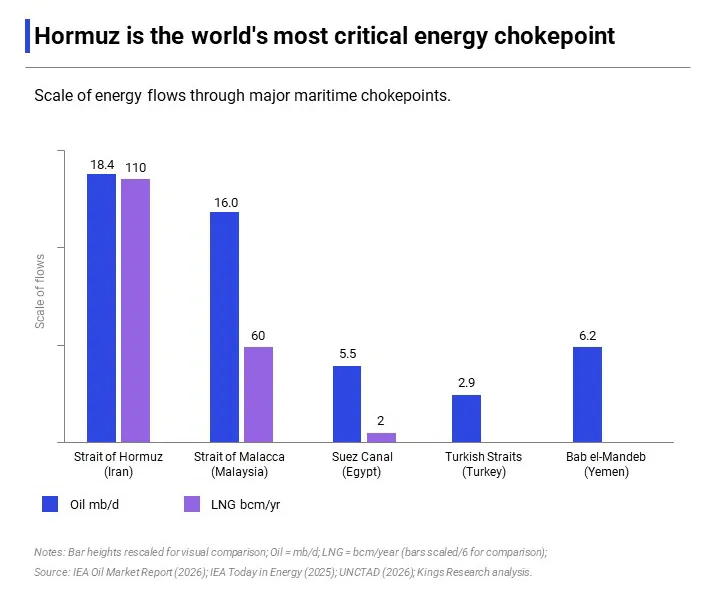
The Strait acts as a primary export and transportation route for Middle Eastern energy producers such as Saudi Arabia, Iran, Iraq, Kuwait, Qatar, Bahrain, and the UAE. An average of 20 million barrels per day (mb/d) of crude oil and oil products passed through the Strait of Hormuz in 2025, as per the IEA. This high concentration of flow through Hormuz makes it vital to the global energy supply chain. Here are the top three factors that make the Strait of Hormuz essential in global energy trade.
- High export concentration: Several major Gulf producers depend on the waterway to deliver crude oil and refined products to international buyers.
- Limited alternative infrastructure: Existing pipelines can redirect only a fraction of normal oil flows, while LNG exports have no comparable alternative maritime-free export route.
- Concentrated destination markets: Approximately 80% of the oil transported through the Strait is destined for Asian markets, making the region particularly exposed to supply disruptions.
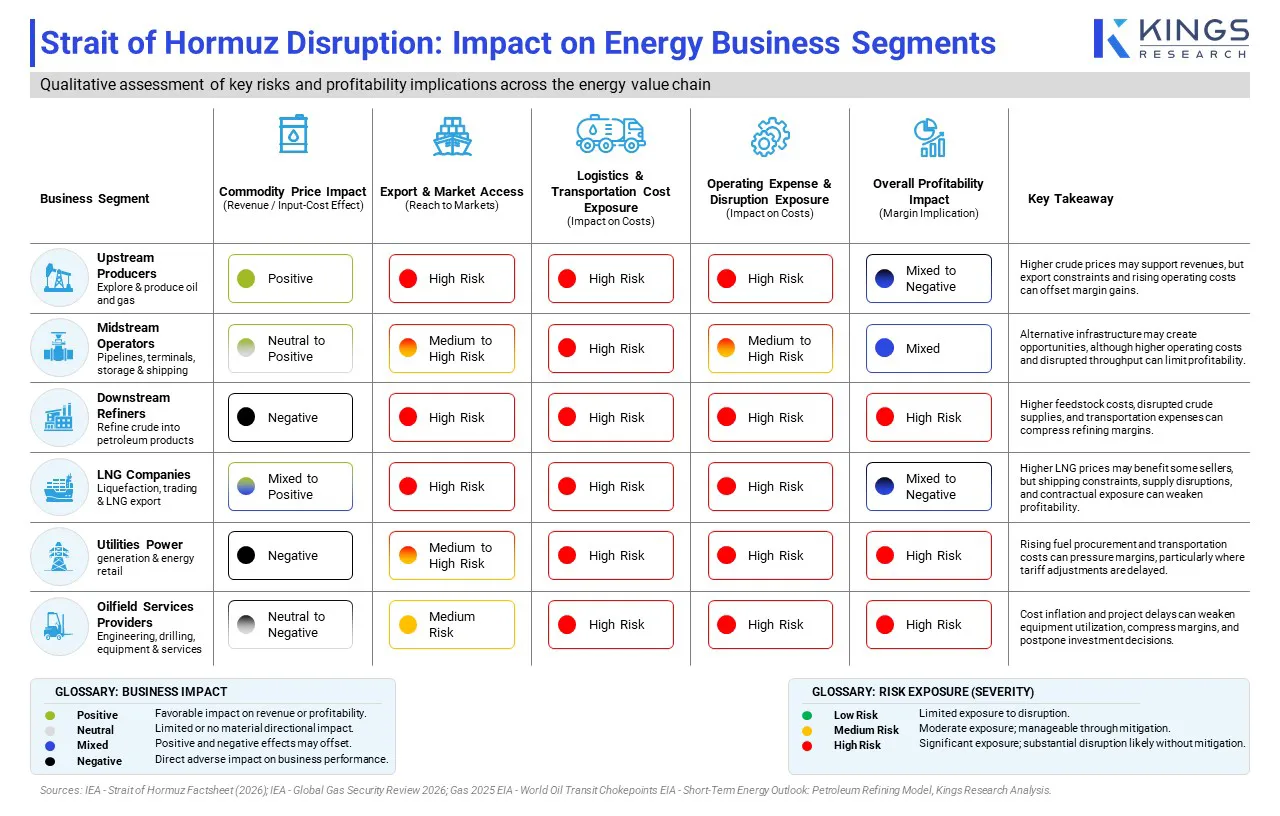
International oil and gas prices are interconnected, which means disruptions in one region can have far-reaching ripple effects across crude procurement costs, refinery service economics, and transportation expenses. For energy companies, this creates an important distinction between physical supply exposure and market-price exposure. Businesses that directly import from Gulf countries are affected, but those that do not directly deal with Gulf exports are also experiencing higher input costs, more expensive transportation, and greater uncertainty in long-term procurement contracts.
How Has the Hormuz Disruption Shaped Various Energy Markets?
Crude oil, liquefied natural gas (LNG), and refined petroleum products form the foundation of the energy industry, and this disruption has shaken them to the core. Exposure and the ability of each energy product to recover differ because of multiple factors. Understanding each energy product and its industry is important in determining how the disruption has shaped the industry and how it is expected to shape it in the future if the conflict is not resolved soon.
Crude Oil: Restricted Exports and a Tighter Global Supply Balance
The most visible and most affected energy commodity remains crude oil. Saudi Arabia, Iraq, Kuwait, Iran and the UAE are among the major producers whose export operations are connected to the Strait. Restrictions on tanker movements therefore affect the ability of these producers to deliver crude to international buyers.
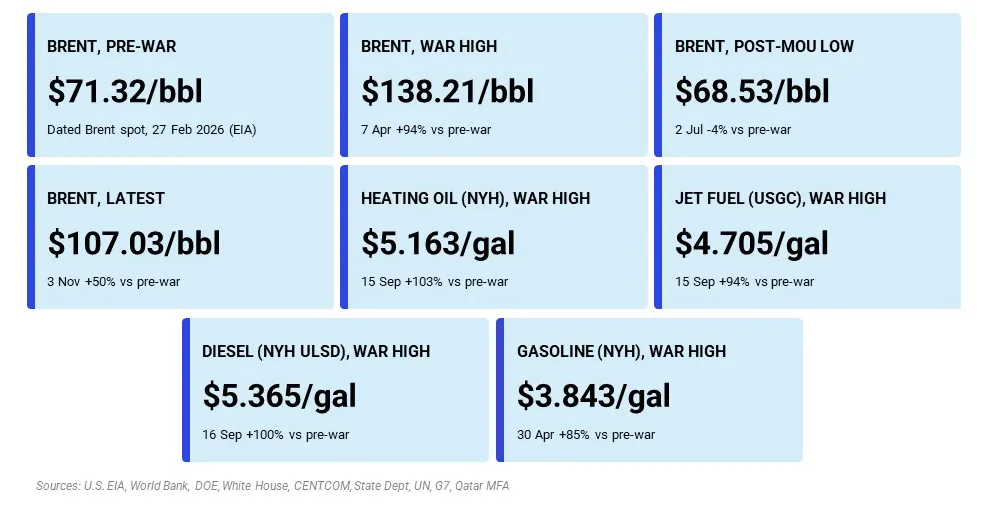
To understand the extent of the impact on crude oil markets, consider the following statistics. Brent crude monthly average spot price per barrel was USD 103.13 in March 2026, and this increased to USD 114.16 in September 2026. For comparison, the Brent monthly average for February 2026 was USD 70.89 before the conflict started.
Strategic inventory releases, alternative export routes, increased output from producers outside the Gulf, and adjustments in demand have helped offset part of the supply shortfall. With much of the world’s readily available spare crude production capacity being concentrated in the Gulf, the ability to mobilize it to offset losses from disruption is very limited. The actual supply deficit depends on how quickly inventories are depleted and whether consumers can reduce consumption.
LNG: A Structural Supply Challenge for Global Gas Markets
Unlike crude, LNG supply has hit the wall due to very limited alternative transportation and export options. LNG exports depend on liquefaction facilities, specialized vessels, and accessible export terminals. The lack of alternative infrastructure to replace the scale of Qatar's seaborne LNG exports to international markets has significantly changed the LNG supply chain, resulting in a major supply shock.
As per the Strait of Hormuz Factsheet published by the IEA, the Strait accounted for approximately 19% of global LNG trade in 2025. 93% of Qatar's LNG exports and 96% of the UAE's LNG exports normally transited the Strait of Hormuz in 2025. According to the IEA, global LNG production fell by approximately 6% over the March to October 2026 period. If Hormuz trade flows remain largely disrupted through the end of 2026, global LNG supply is likely to decline by approximately 3% in 2026 as compared to 2025.
This translates into higher procurement costs, greater competition for flexible cargoes, and increased uncertainty surrounding long-term supply commitments for LNG importers. For LNG exporters outside the Gulf, this creates an opportunity to capture additional demand. However, the opportunity cannot be realized without evaluation of production capacity, liquefaction availability, shipping infrastructure, and contractual commitments.
Refined Petroleum Products: The Downstream Supply Chain Under Pressure
Beyond crude and LNG, the disruption has also shaken the supply chain for products such as diesel, liquefied petroleum gas (LPG), kerosene, petroleum coke, and others. The disruption has affected the downstream industries through two channels.
First, restricted crude availability can force refineries to adjust operations, reduce utilization, or seek alternative feedstocks. Second, disruptions to refined-product exports can tighten regional availability even when crude supplies remain accessible. This crisis creates uneven effects across downstream industries. Refinery profitability depends on the relationship between crude acquisition costs and the prices received for refined petroleum products.
What the Hormuz Crisis Means for Energy Companies and Their Profitability?
The financial and business impact of this crisis on energy companies can be assessed by evaluating factors such as production exposure, export accessibility, procurement contracts, operating expenses, and the ability to transfer additional costs to customers. Higher energy prices do not automatically translate into high profits for every business across the energy value chain.
Aramco: Financial Resilience Amid Supply Disruption
Saudi Aramco's Q3 2026 results demonstrate how operational resilience can help an energy company maintain financial performance during times of crisis. Aramco maintained a supply reliability rate of 97.8% despite attacks and volatility in global energy markets. The company achieved this through its integrated business model, strategic storage, flexible logistics, and the East-West Pipeline.
The company also reported a 10.9% quarter-on-quarter increase in net income, from USD 32.69 billion in Q2 to USD 36.25 billion in Q3 2026. This increase does not depict an improvement in profitability. The company recognized a USD 6.91 billion gain from selling its equity stake in PRefChem, along with other sales-related income.
Examining the adjusted net income gives a much clearer picture: it declined 6.6% quarter-on-quarter, from USD 33.38 billion in Q2 to USD 31.19 billion in Q3 2026. The company’s average realized crude oil price also fell from USD 108.10 to USD 95.20 per barrel, while operating costs increased from USD 81.5 billion to USD 88.12 billion, respectively, from Q2 to Q3.
This is the perfect example of why investors should distinguish reported earnings from underlying operating performance. Aramco also demonstrated how alternative infrastructure and operational flexibility can help sustain customer deliveries during supply disruptions.
How is the Strait of Hormuz crisis changing competitive positioning across the global energy industry? Connect with Kings Research to evaluate market exposure, track industry developments, and identify the business implications of shifting energy supply chains.
Why Alternative Infrastructure Cannot Fully Replace Hormuz?
The infrastructure to replace the high concentration of energy commodities moved through the Strait of Hormuz can only partially ease the pressure. Limitations of LNG transportation and marine shipping routes are also key challenges to finding the Strait of Hormuz replacements.
- Capacity constraints: The available pipeline capacity is substantially lower than normal oil transit volumes.
- Infrastructure dependencies: Redirecting crude requires adequate storage, terminal access, tanker availability, and functioning export logistics.
- LNG transportation limitations: Existing oil pipelines cannot replace the specialized liquefaction and maritime export infrastructure used by Qatar and the UAE.
Consequently, infrastructure diversification can improve resilience, but it cannot eliminate the global energy industry's dependence on Hormuz. However, the diversification process would require time that the world does not have. So, even if alternative infrastructure bypasses the full capacity of the Strait, it is not expected to happen anytime soon to ease the stress on the current energy value chain.
How is the Hormuz Crisis Reshaping Global Energy Investment and Infrastructure?
The Strait of Hormuz crisis is changing how energy markets have worked for decades, and this change is not limited to the duration of the U.S.-Iran crisis. As energy businesses and investors realize the strategic value of supply-chain flexibility and infrastructure resilience, they are expected to change their investment priorities going forward. Kings Research expects the following four investment areas to stand out for energy companies and investors going forward.
Oil Export Infrastructure and Pipeline Expansion
Limited bypass capacity strengthens the case for expanding pipelines, storage facilities, and export terminals. Saudi Arabia and the UAE already operate alternative routes, but further investment must be justified by construction costs, security risks, and long-term utilization. Infrastructure that remains underused outside crisis periods may struggle to deliver attractive returns. Finding the right balance of utility in crises as well as normal operations is crucial for investments in this segment.
LNG Supply Diversification and Export Capacity
Disruptions to Qatari and UAE deliveries have highlighted the risks of concentrated LNG supply. North American and African producers could benefit as buyers diversify suppliers, creating opportunities across liquefaction projects, export terminals, shipping, and gas infrastructure. Returns will depend on construction costs, feedgas availability, long-term offtake agreements, and the global supply-demand balance.
Strategic Petroleum Reserves and Energy Storage
The current Strait of Hormuz situation has highlighted the role of strategic petroleum reserves and commercial energy storage in cushioning the impact of disruptions. These reserves can improve market flexibility and manage unreliable transportation routes. Despite not having long-term substitution potential and only offering temporary relief, interest in reserves and storage has risen notably around the world. So, decision-makers should evaluate financing, infrastructure, and inventory-maintenance costs before targeting this area.
Energy Diversification and Electrification
The disruption has increased emphasis on energy diversification and electrification. Investments in renewables, nuclear power, electrification, and energy efficiency, particularly in import-dependent economies, are expected to rise rapidly as emphasis on energy security rises. This is a long-term investment strategy that would require near-term resilience with a combination of fossil fuels and viable energy alternatives.
Diversification of energy sources and electrification stand out as a clear win from the U.S.-Iran crisis. The event has accelerated the clean energy transition like no other subsidy or government program has been able to since March 2026. Both Kings Research and the Energy Transitions Commission's report, Lessons on Energy Security after the Hormuz Crisis, highlight this increased demand for clean energy. Here are some key highlights that support this demand.
- EV registrations in the European Union rose around 50% year over year in March 2026.
- Chinese solar exports doubled in March 2026 over February 2026.
- Two major Philippine pension funds announced the launch of solar loan programs for residential rooftop installations.
- Solar imports reached record highs in 50 countries, with increases of 141% in India, 391% in Ethiopia, and 207% in Kenya.
Future of the Global Energy Industry: Beyond the Strait of Hormuz Crisis
The disruption at the Strait of Hormuz has exposed critical flaws in the supply chains of the energy industry. The energy industry absorbed part of the disruption through alternative suppliers, inventory releases, redirected oil flows, and adjustments in consumption. There are limits to these alternatives, and they are expected to become a major problem if the disruption is prolonged further.
Recent movements in the geopolitical landscape have further confirmed that the uncertainty around the Strait of Hormuz is not expected to be resolved anytime soon. Whether the crisis is resolved tomorrow or over the next year, the energy industry is not expected to return to its pre-conflict structure. Vulnerabilities that have been exposed in this crisis are expected to remain crucial in energy investment decision-making for years to come.
Energy businesses around the world are expected to focus on three priorities to cushion themselves from potential disruptions like these in the future.
- Reduce supply concentration: Evaluate dependence on individual suppliers, export terminals, transportation routes, and energy commodities.
- Strengthen operational resilience: Improve inventory planning, contractual flexibility, alternative sourcing, and logistics preparedness.
- Reassess capital allocation: Prioritize investments that improve export access, supply reliability, and long-term competitiveness.
For energy executives, the challenge is to move beyond short-term crisis management and build operating models capable of withstanding recurring geopolitical shocks. The changing global energy landscape is creating new risks and opportunities across oil, gas, LNG, and energy infrastructure. Connect with Kings Research to access market intelligence, evaluate industry developments, and identify the strategic opportunities shaping the future of the global energy sector.