

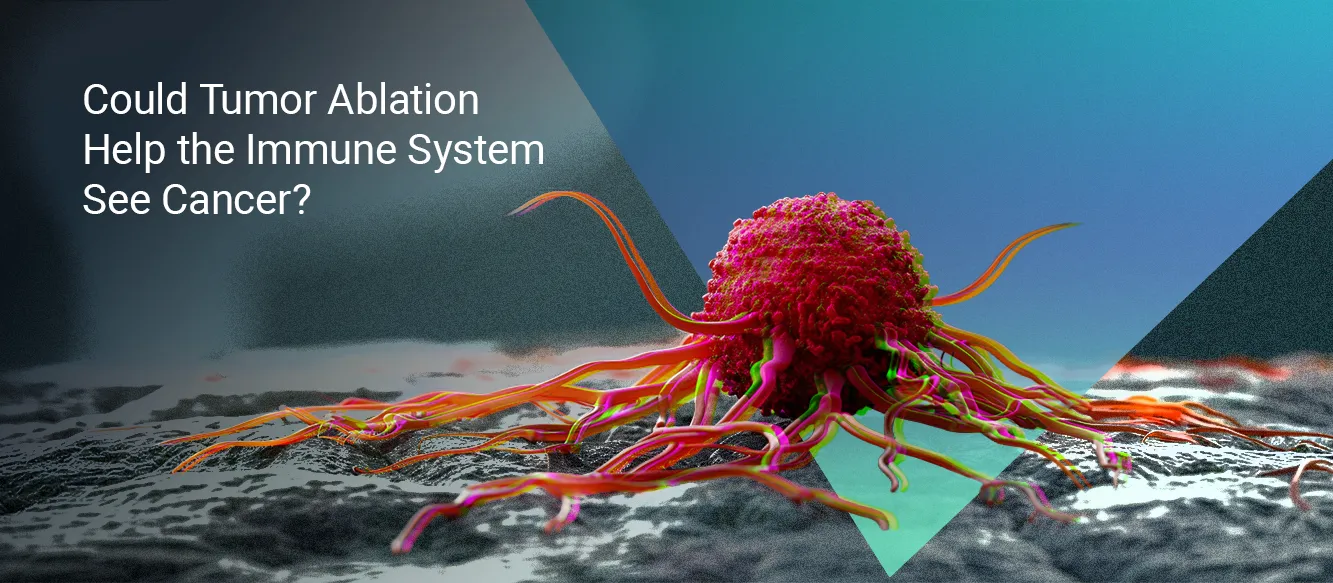
Tumor ablation may complement immunotherapy by destroying cancer cells and releasing tumor-associated antigens that can help the immune system recognize cancer. The resulting immune response varies by tumor type, ablation method, and treatment combination. Clinical trials remain essential to determine whether these effects translate into improved outcomes for patients.
Valuations point to significant expansion in the global tumor ablation market, as per Kings Research, starting from USD 1,922.5 million in 2025 and anticipated to reach USD 4,947.2 million by 2033, progressing at a CAGR of 12.54%. Within this growing field, oncologists continuously investigate whether destroying a tumor locally makes cancer cells highly visible to the host immune system. Patients frequently ask about the exact mechanisms of these treatments. While physical interventions eliminate specific localized lesions, immunotherapy stimulates the body's defenses globally.
According to the National Cancer Institute (NCI), immune checkpoint inhibitors (ICIs) as monotherapy exhibit a clinical response rate below 30% across solid tumors, primarily due to established therapeutic resistance issues within the tumor microenvironment. Combining these two methods could bypass established resistance mechanisms. Physical interventions may complement biological drugs by releasing tumor-associated antigens, presenting a renewed pathway for oncology care.
What is Ablation of Tumors?
The tumor ablation meaning centers on the direct, image-guided physical destruction of malignant cells using extreme temperature or mechanical energy. Physicians perform tumor ablation surgery to target specific, localized lesions rather than treating the entire body systemically. Data from the National Institutes of Health (NIH) indicates that for small hepatocellular carcinomas measuring under 3 centimeters, targeted radiofrequency interventions achieve complete necrosis rates exceeding 90%. This high efficacy makes tumor ablation therapy a vital option for patients ineligible for traditional surgical resection.
How Does Tumor Ablation Change the Biological Environment Inside a Tumor?
- Ablation destroys targeted tumor tissue.
- Tumor-derived antigens and cellular danger signals are released into the environment.
- Antigen-presenting cells help activate tumor-specific T cells.
- The resulting response may face limits from immune suppression and other tumor-specific factors.
Local tumor ablation techniques heavily alter the structural and chemical landscape of a malignant growth. The procedure initiates immunogenic cell death, a specific form of cellular demise that forcefully releases intracellular contents into the extracellular matrix. These expelled contents include damage-associated molecular patterns and tumor-specific antigens.
Such high efficacy in physical destruction supplies an abundant source of fresh antigens directly into the tumor microenvironment. Dendritic cells detect these components, process the antigens, and rapidly migrate to nearby lymph nodes. There, they present the material to naive T cells, initiating robust T-cell priming. When physical destruction breaks down cell membranes, the sudden flood of antigens effectively alerts the patient's immune system.
Why Do Some Tumors Remain Resistant Even After the Immune System Recognizes Them?
Despite the availability of fresh tumor antigens, many cancers successfully maintain an overwhelmingly immunosuppressive environment. This environment actively blocks effective T-cell activity. Immune exclusion creates dense physical and chemical barriers, preventing active T cells from infiltrating the primary tumor bed. Furthermore, specialized immunosuppressive cells constantly secrete inhibitory signals. These signals induce profound T-cell exhaustion, rendering the body's natural defenders entirely inactive.
Pancreatic ductal adenocarcinoma (PDAC) is characterized by a dense, desmoplastic stroma and an immunosuppressive tumor microenvironment that can restrict immune-cell infiltration and limit treatment efficacy. Clinical studies have reported objective response rates typically below 5% for immune checkpoint inhibitor monotherapy in unselected PDAC populations. In addition, the anatomical complexity and molecular heterogeneity of these tumors can further complicate treatment response. Different spatial regions within a single mass frequently present entirely different antigen profiles, allowing certain cellular subpopulations to evade detection completely. Simply releasing antigens via local destruction rarely proves sufficient to generate a sustained antitumor response without simultaneously dismantling the tumor's entrenched immunosuppressive networks.
Which Tumor Ablation Techniques Offer Different Routes to Immune Activation?
Medical device manufacturers continuously engineer advanced tumor ablation techniques to achieve precise tissue destruction. Different physical energy modalities create entirely unique biological signatures within the treated tissue, heavily influencing the subsequent immune cascade.
|
Ablation Method |
Physical Mechanism |
Potential Immune Effect |
Main Limitations |
Evidence Maturity |
|
Radiofrequency ablation |
Tissue heating via alternating electrical current |
Releases cellular antigens and stimulates localized inflammation |
Heat sink effect from adjacent blood vessels reduces efficacy |
Extensive clinical history; emerging combination evidence |
|
Microwave ablation |
Electromagnetic wave-induced water molecule rotation |
Rapid coagulative necrosis with massive antigen shedding |
High temperatures risk extensive protein denaturation |
Widespread clinical use; active combination trials |
|
Cryoablation |
Extreme freezing and thawing via gas |
Preserves intact intracellular proteins for superior antigen presentation |
Requires multiple freeze-thaw cycles; variable margins |
Strong preclinical immune activation data available |
|
Irreversible electroporation |
High-voltage electrical pulses creating nanopores |
Induces apoptosis while sparing surrounding vascular structures |
Requires cardiac synchronization and deep general anesthesia |
Growing adoption in pancreatic and hepatic malignancies |
|
Histotripsy |
Focused acoustic cavitation causing mechanical liquefaction |
Releases structurally intact neoantigens without thermal damage |
Requires clear acoustic windows; limited targeted tissue types |
Early-phase trials; recent regulatory clearances |
Industry leaders increasingly focus on developing purely temperature-independent options. In February 2023, HistoSonics announced FDA clearance and the initiation of its pivotal IDE Hope4Kidney trial, deploying the Edison system to deliver precise histotripsy treatments. This advanced system uses highly focused sound energy to produce controlled acoustic cavitation, which mechanically destroys targeted tissue at a sub-cellular level. Because this method avoids high heat, the process preserves critical protein structures, heavily influencing the subsequent immune cascade.
What Are Clinical Trials Revealing About Ablation and Immunotherapy Combinations?
Human clinical evidence is beginning to clarify how tumor ablation may complement immunotherapy, although the effectiveness of these combinations remains under investigation across several malignancies.
An active National Cancer Institute–listed Phase I study, NCT06246968, evaluates pembrolizumab combined with either cryoablation or histotripsy in patients with locally advanced or metastatic triple-negative breast cancer (TNBC). Its primary objective is to assess changes in CD4-PD1 levels in the blood following ablation, while secondary objectives include immune-marker changes, imaging response, progression-free survival, and overall survival. The study is designed to investigate safety and potential treatment benefits, but its trial listing does not establish clinical efficacy.
A separate active Phase II study, NCT05779423, investigates cryoablation combined with ipilimumab and nivolumab in patients with unresectable metastatic melanoma that has progressed following immune checkpoint inhibitor therapy. The trial evaluates clinical benefit and safety while exploring mechanisms of immune checkpoint inhibitor resistance and the immunomodulatory effects of cryoablation. These studies illustrate ongoing efforts to determine whether local tumor destruction can improve systemic immune responses and help address treatment resistance.
When Can Local Tumor Treatment Produce Effects Beyond the Ablated Site?
The abscopal effect refers to tumor regression at sites outside the area directly treated with a local therapy. In combination research, scientists investigate it as a possible consequence of systemic antitumor immune activation. It remains uncommon and unpredictable.
When systemic activation operates successfully, CD8+ T cells initially primed at the primary site circulate continuously through the bloodstream. These specialized cells actively identify and attack distant metastases sharing identical antigen profiles. Leveraging the abscopal effect alongside powerful systemic drugs could elevate response rates across multiple distant metastatic sites. Predicting exactly which patients will experience this widespread regression remains a profoundly complex clinical challenge, requiring deeper investigation into host genetics and baseline immunity.
What Prevents Ablation-Immunotherapy Combinations From Becoming Standard Practice?
Translating theoretical biological potential into standard clinical care requires overcoming multiple translational barriers. Patient responses fluctuate drastically based on inherited genetics, prior lines of therapy, and overall metastatic burden. Treatment sequencing introduces another critical variable. Administering immunotherapy days before, exactly during, or weeks after the physical destruction completely alters the resulting immune cascade.
Patients often ask, Is ablation better than chemotherapy? These therapies serve entirely different purposes. Chemotherapy provides systemic treatment with widespread cellular toxicity, whereas physical devices target a specific localized mass. Establishing comprehensive standard operating protocols remains a major hurdle for dual therapies. Clinical researchers face the complex challenge of proving that adding a physical device to an immunotherapy regimen distinctly improves long-term patient outcomes compared to using the drug alone. Physical parameters, including target temperature, exact duration, and necessary spatial margins, currently lack standardized protocols optimized for maximum immune activation. Combining powerful physical therapies with systemic drugs also elevates the risk of compound adverse events, including severe autoimmune reactions.
How Could Combination Oncology Research Influence Tumor Ablation Technology Development?
Emerging clinical data directly shape the commercial landscape and future engineering paths for medical devices. Expanding applications create new opportunities in image-guided treatment planning, precision hardware engineering, and coordinated drug-device development partnerships. Manufacturers must consistently demonstrate procedural reproducibility, undeniable safety, and clear patient benefits to establish long-term clinical value.
Medtronic, in March 2023, published comprehensive safety and efficacy data from the OPuS One study, which thoroughly investigated its OsteoCool system for treating bone metastases. Such technological advancements highlight the medical industry's ongoing shift toward deeply integrated oncology solutions. As researchers uncover the exact parameters that maximize systemic immune recognition, device makers will likely refine their software algorithms and energy delivery mechanisms to match these highly specific biological requirements.
What Evidence Will Determine the Future Role of Tumor Ablation in Immunotherapy?
The future role of these dual treatments depends entirely on robust, reproducible clinical validation. Controlled clinical trials must identify highly validated biomarkers capable of reliably predicting patient responses before interventions begin. The clinical value of experimental cancer treatments is evaluated through clinical trials using endpoints such as overall survival, progression-free survival, and objective response rate. The relevance of each endpoint depends on the cancer type, treatment setting, and available therapeutic alternatives. Durable outcome data demonstrating significantly increased overall survival will dictate the integration of these combined modalities into mainstream protocols. Extensive human data will ultimately determine whether local tumor destruction consistently unlocks systemic immunity against heavily resistant cancers.
For those tracking these technological shifts and the broader commercial landscape, the industry's evolution continues to create new pathways for both patient care and device innovation. Explore the complete tumor ablation market report from Kings Research to gain deeper insights into emerging device technologies, ongoing clinical advancements, and the key regulatory developments shaping the future of interventional oncology.
FAQs
Does tumor ablation work for cancers that resist immunotherapy?
Tumor ablation offers a potential method to forcefully alter the microenvironment and release trapped antigens. Oncologists actively study whether this specific process overcomes resistance, though it remains an investigational strategy requiring further clinical validation before routine adoption.
Can the immune response triggered by tumor ablation affect untreated tumors?
A localized treatment occasionally triggers an abscopal effect, causing distant, untreated tumors to shrink. This rare systemic response requires highly specific biological conditions to occur and avoids operating as a guaranteed procedural outcome.
Is cryoablation different from histotripsy in how it affects the immune system?
Cryoablation freezes malignant tissue to cause cell death, while histotripsy utilizes focused sound waves to mechanically liquefy cells. These distinct physical mechanisms release cellular debris differently, leading researchers to study their unique impacts on subsequent immune activation.
Can tumor ablation be combined with immune checkpoint inhibitors?
Numerous active clinical trials currently test precise combinations of physical devices and immune checkpoint inhibitors. Researchers hypothesize the local destruction provides the necessary antigens for the checkpoint inhibitors to enhance systemic T-cell activity effectively.
What biomarkers could help predict responses to ablation-immunotherapy combinations?
Researchers intensely investigate circulating tumor DNA, specific T-cell receptor profiles, and local immune cell infiltration as potential biomarkers. These indicators may eventually help physicians identify patients most likely to benefit from combined therapies.
Are tumor ablation and immunotherapy combinations approved for routine cancer treatment?
These combinations remain primarily confined to the clinical trial phase. Regulatory agencies strictly require definitive proof of improved long-term survival and absolute safety before approving them as standard therapies for routine oncology care.