
Inquire Now
Key Strategic Points
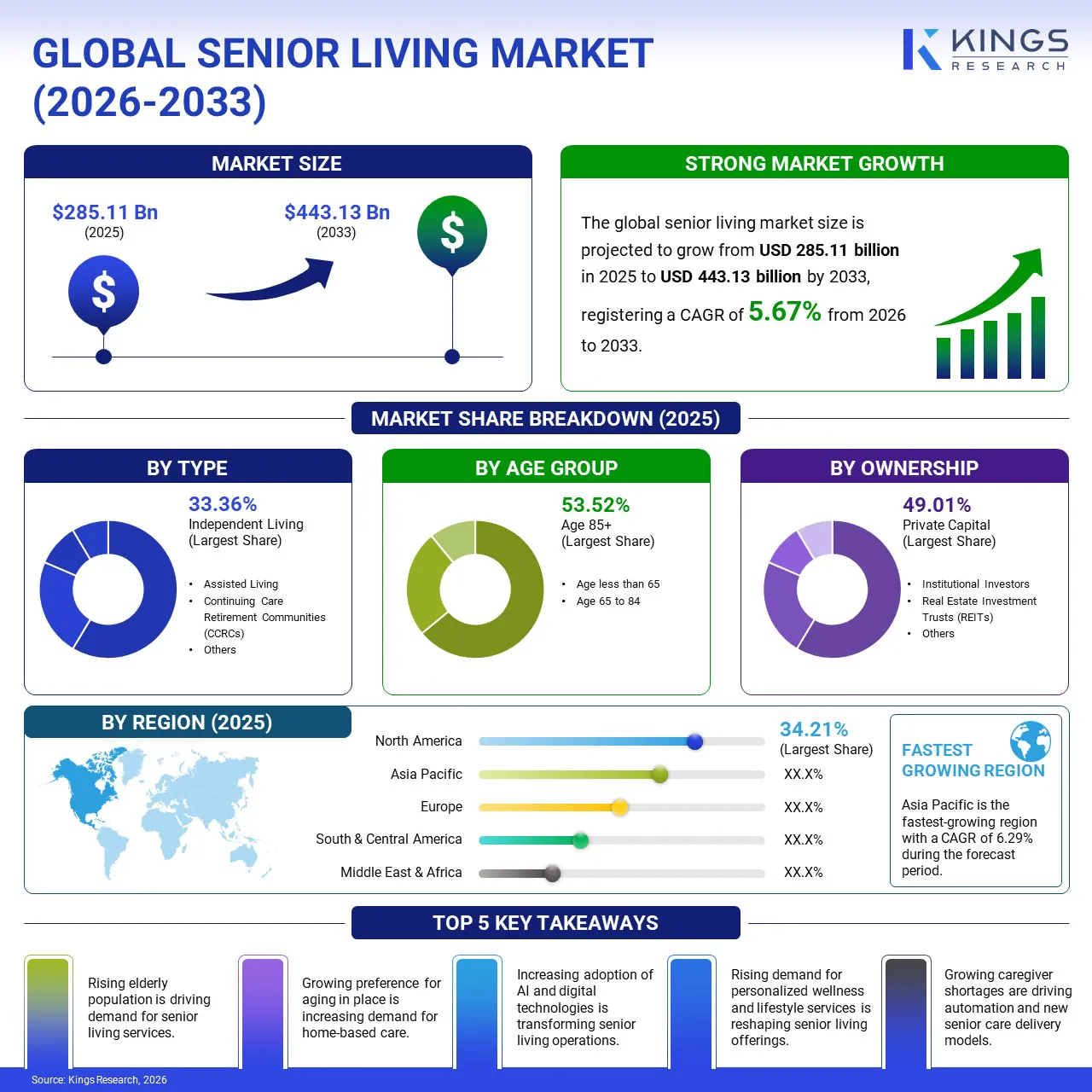
According to Kings Research analysis, the global senior living market size was recorded at USD 285.11 billion in 2025 and is projected to reach USD 443.13 billion by 2033, growing at a CAGR of 5.67% over the forecast period from 2026 to 2033.
The market is experiencing steady growth, driven by the aging population, increasing life expectancy, and rising demand for specialized and supportive care services. Changing family structures, smaller households, and reduced availability of informal caregivers are further encouraging the adoption of organized senior living communities.
Moreover, increasing preference for active, independent lifestyles is supporting demand for senior living communities that combine housing, healthcare, wellness, and social engagement. Technological advancements are further driving adoption of artificial intelligence, remote monitoring, smart devices, and digital health solutions aimed at enhancing resident safety, personalizing care, and improving operational efficiency, thereby transforming market dynamics.
Increasing life expectancy and the demand for specialized health care requirements and healthier lifespans highlight the rising need for senior housing and care services. Furthermore, declining family sizes and greater geographic mobility are reducing the availability of informal caregivers, increasing reliance on professional senior living and care facilities, which provide integrated care services, social engagement, and community-based support within a single environment. The oldest baby boomers are poised to turn 80 in 2026, indicating growing demand for assisted living and memory care for this cohort.
According to the U.S. Census Bureau, the 80+ population is anticipated to grow by 48% between 2025 and 2030, with more than 82 million residents aged over 65 years by 2050, adding millions of age-qualified residents to the eligible pool for senior living. This creates a steady demand for skilled nursing, assisted living, and memory care services, enabling market players to expand facilities and thus creating growth opportunities.
For instance, in January 2025, Azura Memory Care and Assisted Living announced the opening of its new Verona facility, expanding its specialized care services with features including thoughtfully designed living spaces, communal areas, gardens, and specialized memory care programs.
Managing high operational expenses comprising labor costs, particularly for skilled nursing and assisted living staff, limits growth opportunities. The rise in demand for qualified personnel, along with increasing energy costs and compliance-related expenses, further pressures operators.
Moreover, staffing shortages, intensified by persistent shortages of qualified nurses, caregivers, and frontline personnel, reduce the operational efficiency of senior living facilities. This affects the quality of resident care and strains resources owing to the additional training costs incurred due to high turnover rates. The American Senior Housing Association (ASHA) estimates the demand for 3 million additional skilled workers over the next 15 years.
Across the broader long-term care sector, workforce demand is expected to be more than six times higher, highlighting the scale of the labor shortage and the growing need for workforce expansion.
Additionally, the highly regulated nature of the senior living industry, with unanticipated changes in state and federal guidelines associated with licensing, accreditation, and reimbursement rates, introduces operational complexities. To mitigate these risks, market players are investing in long-term workforce sustainability through internal training and upskilling, flexible scheduling, wellness programs, and employee benefit packages as workforce development strategies.
The adoption of artificial intelligence in senior living facilities is enabling improvements in personalized care services, safety monitoring, and staff efficiency. AI integration enables personalized and proactive care through the analysis of residents’ health data, daily routines, mobility patterns, and preferences. This allows caregivers to identify changing requirements and tailor services accordingly.
Furthermore, the integration of AI-enabled monitoring technologies facilitates the tracking of movement and gait patterns to identify potential fall risks and alert caregivers, supporting timely intervention and improving resident safety.
The adoption of AI-enabled voice-activated platforms within senior living facilities assists residents and caregivers with timely reminders and daily activities. This supports greater autonomy and provides a highly personalized environment for senior care, thus presenting significant market growth opportunities.
In June 2025, The Aspenwood Company announced that it will be investing in technology and AI across its 20 senior living communities to improve resident care and team efficiency. The company implemented AI tools that support fall detection, wellness monitoring, personalized experiences, loneliness reduction, and real-time operational insights. The goal was to utilize technology to free staff from administrative tasks, enabling them to spend more time with residents, families, and teams.
|
Segmentation |
Details |
|
|
By Type |
Independent Living, Assisted Living, Continuing Care Retirement Communities (CCRCs), Others |
|
|
By Age Group |
Age less than 65, age 65 to 84, and age 85+ |
|
|
By Ownership |
Institutional Investors, Real Estate Investment Trusts (REITs), Private Capital, Others |
|
|
By Region |
North America |
U.S., Canada, Mexico |
|
Europe |
France, the UK, Spain, Germany, Italy, Russia, and the rest of Europe |
|
|
Asia-Pacific |
China, Japan, India, Australia, ASEAN, South Korea, Rest of Asia-Pacific |
|
|
Middle East and Africa |
Turkey, U.A.E., Saudi Arabia, South Africa, Rest of Middle East & Africa |
|
|
South and Central America |
Brazil, Argentina, and the rest of South and Central America |
|
The independent living segment held the largest share of 33.36% in 2025, with a valuation of USD 95.11 billion. The high share is attributed to the rising adoption of independent living communities among seniors seeking greater autonomy and an active lifestyle. The rising demand for age-friendly housing, social engagement, and services that enable older adults to maintain their independence is boosting segmental growth.
The age 85+ segment is anticipated to register the fastest CAGR of 6.03% over the forecast period, reaching USD 243.72 billion in 2033. The high growth rate is attributed to increasing longevity, with individuals aged 85 and above requiring assisted living and supportive care services due to growing care needs associated with advanced age.
By region, the global senior living industry is segmented into North America, Europe, Asia Pacific, the Middle East and Africa, and South and Central America.
North America accounted for the largest share of 34.21% in 2025, valued at USD 97.54 billion. This dominance is reinforced by the rising demand for continuous care models that facilitate residents' seamless transition from independent living to assisted living or memory care without changing communities as their health requirements evolve.
According to the National Council on Aging (NCOA), adults aged 65 and older represented 18.9% of the U.S. population in 2025, with the share projected to reach 23.4% by 2060. Older adults are living longer, with average life expectancy at age 65 reaching 19.7 additional years, thereby increasing the need for effective senior living facilities in the region.
Asia Pacific is the fastest-growing region, anticipated to grow at the fastest CAGR of 6.29% over the forecast interval, reaching a valuation of USD 116.73 billion by 2033. This notable expansion is mainly fueled by the region's large aging population, with approximately 15% of the population aged over 60 years, and this share is projected to rise to 26% by 2050, according to the United Nations Economic and Social Commission for Asia and the Pacific.
Moreover, rapid urbanization and declining birth rates are increasing the need for support for a rising elderly population, making institutional or assisted care a necessity. This trend is further supported by the growing prevalence of nuclear families across prominent Asian countries, including India, South Korea, and Southeast Asia.
The Europe senior living market is witnessing notable growth, primarily propelled by a rapidly aging population, increasing life expectancy, and rising demand for assisted and residential care services. Rising pressure on informal family caregiving and healthcare systems is leading to the widespread adoption of organized senior care facilities.
The Middle East & Africa market is driven by a growing elderly population, improving healthcare infrastructure, and increasing awareness of specialized senior care services. Moreover, urbanization and changing family structures are contributing to demand for assisted living and other formal elderly-care solutions in the region.
South & Central America is experiencing growing demand for senior living services as life expectancy increases and the older population expands, thus raising the demand for senior living facilities in the region.
The global market landscape is characterized by strategic mergers and acquisitions, with private equity firms and real estate investment trusts establishing stronger footholds in the market to capitalize on demographic-driven growth. These large-scale buyers often acquire distressed facilities at discounted valuations and consolidate them into larger operating portfolios. The transactions provide financial support to struggling operators and further boost competitive intensity and the expansion of leading operators across key geographies.
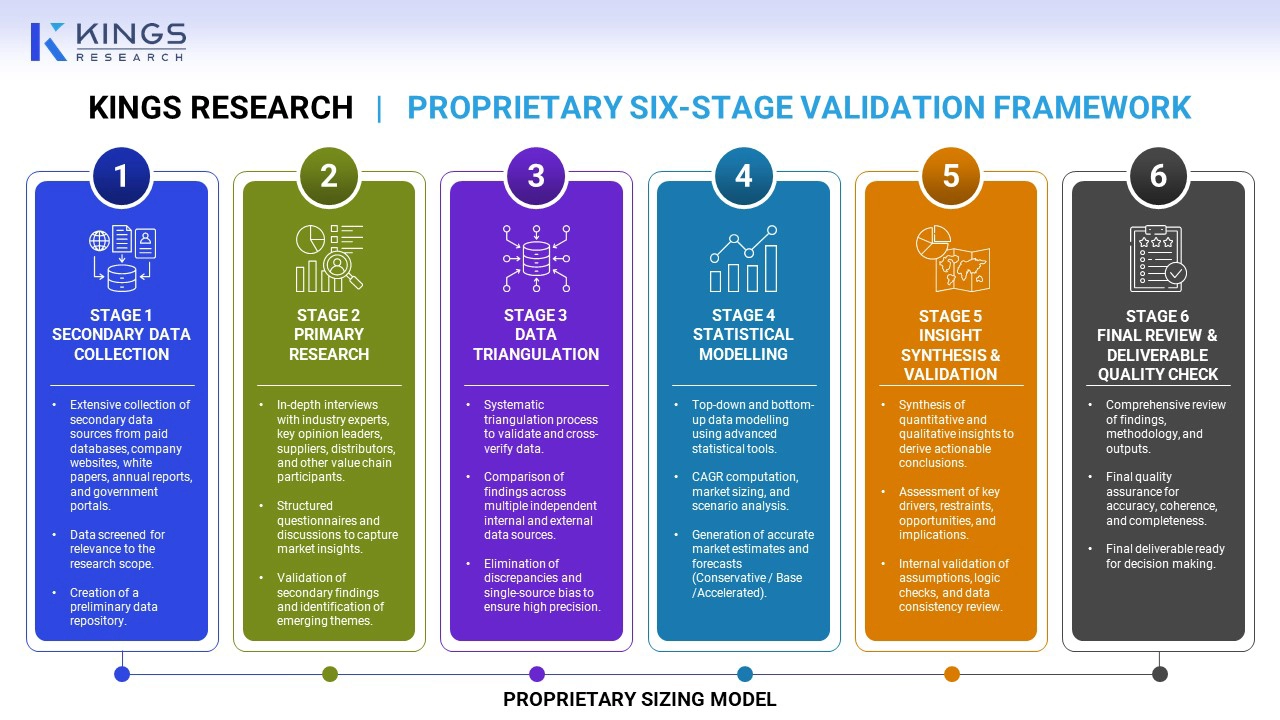
Our methodology triangulates insights from multiple independent and publicly available research databases and is further validated against regulatory filings and public company disclosures. All estimates are cross-verified; no single-source data is presented without validation.
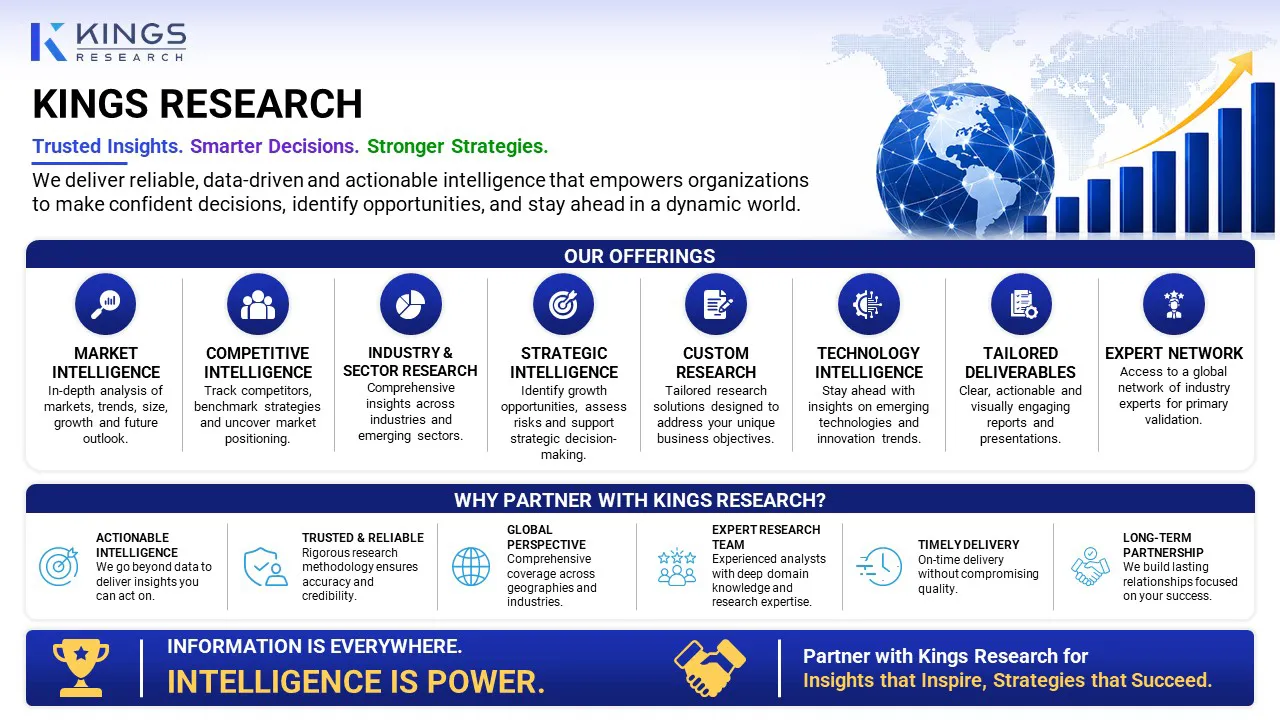
Our custom offerings deliver tailored, data-driven intelligence and strategic guidance to help organizations identify, evaluate, and capitalize on key market opportunities.
Frequently Asked Questions

Faizy brings over four years of experience in market research and consulting, with a proven ability to support strategic engagements across diverse industries and business environments. His work focuses on understanding complex market structures, identifying emerging opportunities, and translating research findings into clear, commercially relevant insights. With strong analytical capabilities and a structured approach to problem-solving, he evaluates industry trends, competitive landscapes, customer dynamics, and evolving business models. His expertise encompasses market research, competitive intelligence, market sizing and forecasting, industry assessment, company benchmarking, and strategic analysis. Faizy combines technical proficiency with a strong research orientation, enabling him to interpret both qualitative and quantitative information effectively. He has contributed to projects that help organizations assess growth potential, strengthen market positioning, and evaluate strategic priorities. His adaptable approach allows him to work across sectors while maintaining a consistent focus on accuracy, relevance, and delivering insights that support informed decision-making for clients and stakeholders.
With many years of consulting experience across global pharma, biotech, and MedTech markets, Minaz brings deep domain expertise, strategic clarity, and analytical rigor to every engagement. She has led 130+ consulting assignments spanning market entry, competitive landscaping, and portfolio prioritization, helping clients navigate complex, high-stakes decisions with confidence. Known for her ability to synthesize primary and secondary research into executive-ready recommendations, Minaz has built forecasting models and market sizing frameworks that have informed multi-million dollar investment decisions in oncology, diagnostics, and peptide therapeutics. Beyond her analytical strength, Minaz is a trusted client partner, translating complex datasets into clear, actionable insights for senior stakeholders. She currently leads a team of research analysts, driving business expansion, and shaping client engagement strategy.