
Inquire Now
Key Strategic Points
According to Kings Research analysis, the global value-based healthcare (VBHC) market size was recorded at USD 2.87 billion in 2025 and is projected to reach USD 10.77 billion by 2033, growing at a CAGR of 18.27% over the forecast period from 2026 to 2033.
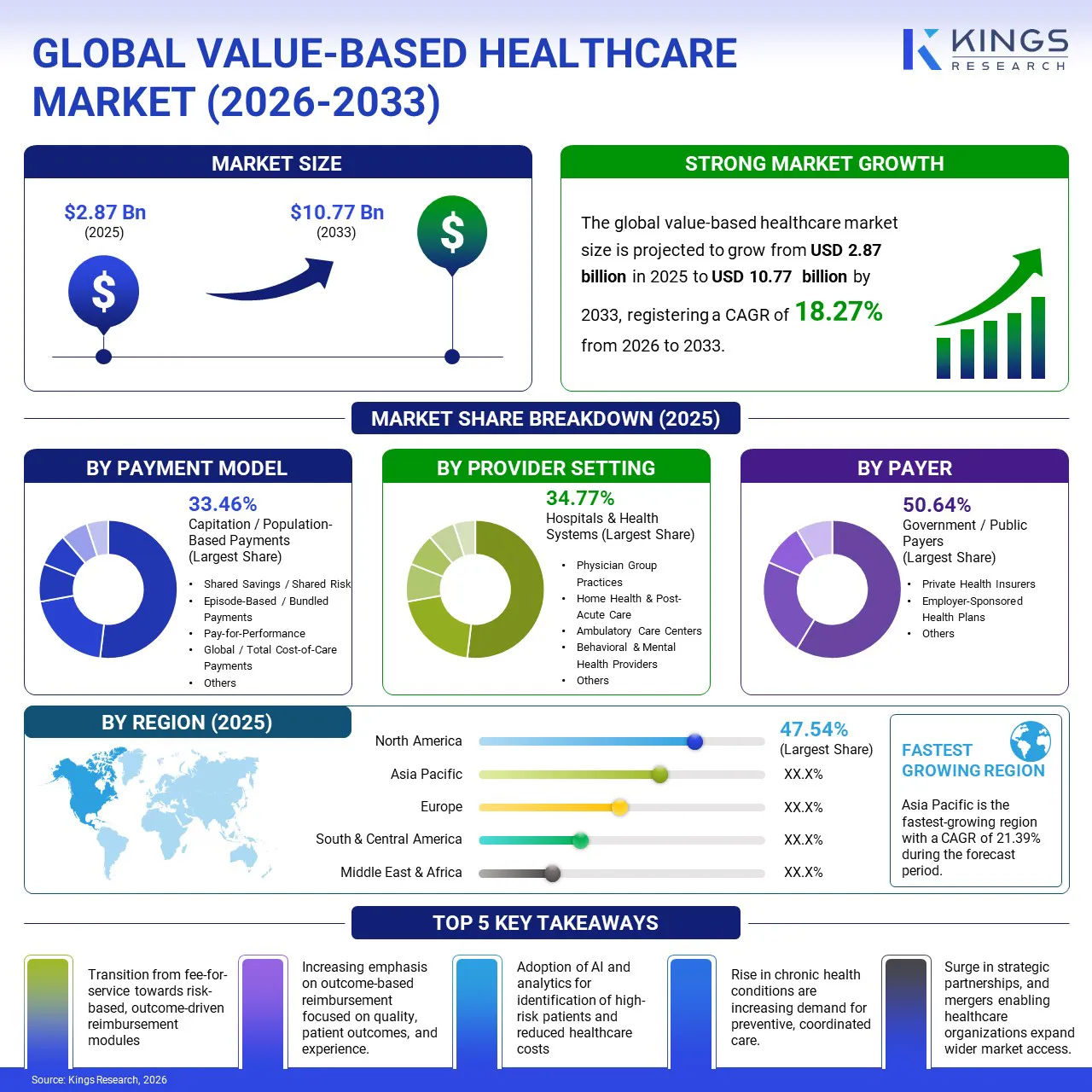
The value-based healthcare market encompasses healthcare delivery and reimbursement arrangements that align financial incentives with improved patient outcomes, care quality, care coordination, and cost efficiency. The market includes risk-sharing and performance-linked payment structures, along with associated services that enable providers and payers to manage population health, improve care delivery, and optimize healthcare expenditure.
The market expansion is primarily driven by escalating healthcare expenses, a rising chronic disease burden, and a strategic shift toward providing quality healthcare. This growth is further supported by capitation payment models and public payer initiatives, which aim to align financial incentives with patient outcomes, while the integration of advanced analytics models accelerates adoption by addressing data fragmentation and enhancing predictive care.
The prioritization of patient primary care under VBHC, fueled by the alignment of payments with care quality and performance, leads to improved patient outcomes while reducing overall healthcare costs. Rising healthcare spending, the increasing prevalence of chronic diseases, health disparities, and unequal access to quality care further boost the adoption of VBHC.
Pricing disparities and escalating healthcare costs due to rising inflation place an increasingly unsustainable financial burden on patients, leading more than 25% of adults to delay or forgo necessary care. VBHC thus reorients the system to deliver better outcomes at lower costs, thereby enabling patients to access appropriate care more easily and encouraging widespread adoption.
For instance, following a brief slowdown after the COVID pandemic, healthcare spending accelerated sharply in 2023, hitting its highest growth rate in over two decades. The Centers for Medicare & Medicaid Services (CMS) projects healthcare costs to rise faster than overall inflation for the next 10 years, accounting for more than 20% of the U.S. economy (GDP) by 2033.
Additionally, governments are aligning their strategies to standardize healthcare plan pricing data and mandate clear out-of-network cost disclosures, thereby promoting transparent market competition.
In October 2026, the U.S. Department of Health and Human Services (HHS), through the Centers for Medicare & Medicaid Services (CMS), announced rules strengthening federal price transparency requirements under the Transparency in Coverage (TiC) framework. The regulations aim to allow patients to compare healthcare costs before receiving care by improving data quality and expanding out-of-network pricing disclosures. The measures are intended to promote market competition, enable patients to make informed decisions, and reduce overall healthcare costs.
The dynamics of operational, financial, and regulatory factors associated with reimbursement challenges hinder market growth. As reimbursement depends on quality metrics that are generally reconciled weeks or months after care is delivered, healthcare organizations face significant challenges in identifying operational problems early.
The inability of conventional financial metrics such as accounts receivable and collection rates to fully reflect the performance of value-based contracts further hampers widespread adoption of value-based healthcare models. Moreover, requirements for accurate and timely clinical documentation, coding, claims submission, and quality reporting can lead to errors or delays in value-based healthcare procedures, thereby directly impacting reimbursement.
Additionally, regulatory requirements for demonstrating quality outcomes and maintaining accurate reporting increase the pressure on healthcare organizations to strengthen performance management, limiting the development of the value-based healthcare market.
To address this challenge, healthcare providers are closely monitoring cash flows, maintaining financial reserves, and tracking payer contracts. VBHC providers are further implementing performance-based bonuses, shared savings, and risk-sharing arrangements to manage financial risks, improve financial stability, and align care quality with reimbursement incentives.
VBHC market players are leveraging data analytics and artificial intelligence (AI) to support sustainable transformation in the rapidly expanding market landscape. Fragmented data and interoperability barriers, resulting from information being stored across disparate systems, hinder seamless integration across electronic health records (EHRs), claims data, social determinants of health (SDOH), and patient engagement tools. This is boosting the adoption of AI-enabled analytics platforms in the VBHC domain to facilitate care orchestration.
Furthermore, predictive modeling and natural language processing provide the operational digital backbone needed to make this transformation feasible and scalable. These value-based care technologies enhance cost forecasting, strengthen care coordination, improve outcome measurement, and encourage preventive interventions. This creates pathways for VBHC systems that reward quality over quantity and align incentives with patient well-being.
For instance, in January 2025, Innovaccer acquired Humbi AI to strengthen its value-based healthcare capabilities through advanced actuarial intelligence and analytics. The acquisition enables providers and payers to design smarter value-based contracts, manage financial and clinical performance, and optimize risk.
|
Segmentation |
Details |
|
|
By Payment Model |
Capitation / Population-Based Payments, Shared Savings / Shared Risk, Episode-Based / Bundled Payments, Pay-for-Performance, Global / Total Cost-of-Care Payments, Others |
|
|
By Provider Setting |
Hospitals & Health Systems, Physician Group Practices, Home Health & Post-Acute Care, Ambulatory Care Centers, Behavioral & Mental Health Providers, Others |
|
|
By Payer |
Government / Public Payers, Private Health Insurers, Employer-Sponsored Health Plans, Others |
|
|
By Region |
North America |
U.S., Canada, Mexico |
|
Europe |
France, UK, Spain, Germany, Italy, Russia, Rest of Europe |
|
|
Asia-Pacific |
China, Japan, India, Australia, ASEAN, South Korea, Rest of Asia-Pacific |
|
|
Middle East and Africa |
Turkey, U.A.E., Saudi Arabia, South Africa, Rest of Middle East & Africa |
|
|
South and Central America |
Brazil, Argentina, Rest of South and Central America |
|
The capitation/population-based payments segment held the largest market share of 33.46% in 2025, valued at USD 0.96 billion. This growth is attributed to the predictable, upfront payment structure of capitation, which encourages providers to focus on preventive and coordinated care rather than volume. Moreover, capitation-based systems align financial incentives with patient outcomes and cost control, thus making them suitable for population health management. Growing adoption of value-based care, chronic disease management, and risk-sharing models is further supporting demand for capitation-based payments.
The behavioral & mental health providers segment is poised to register the fastest CAGR of 21.61% over the forecast period, reaching USD 0.75 billion in 2033. This notable expansion is propelled by the rising demand for mental and behavioral healthcare services, supported by rising awareness and diagnosis of mental health conditions.
Reduced social stigma, broader routine screening in primary care, and expanded telehealth access, along with lingering post-pandemic psychological distress and increased economic and social stressors, particularly among younger populations, contribute to segmental growth.
The government/public payers segment held the largest share of 50.64% in 2025, generating a valuation of USD 1.45 billion. This growth is fueled by the strong government involvement in healthcare financing and the large population covered through public insurance programs. Furthermore, the rising adoption of value-based payment initiatives by government payers emphasizes improving patient outcomes while controlling healthcare costs.
The global value-based healthcare (VBHC) industry is fragmented in nature, characterized by the presence of global and regional market players, including payers, provider groups, risk-bearing physician platforms, technology vendors, analytics companies, and care-management specialists. According to the U.S. Centers for Medicare & Medicaid Services (CMS), competitive health care markets provide patients with choices and encourage health care providers to offer high-quality, affordable, and efficient services. Key industry players are adopting strategic partnerships with healthcare providers, insurance companies, and reimbursement platforms to strengthen their market presence and broaden their offerings across key therapeutic areas.
The global value-based healthcare market is segmented into North America, Europe, Asia Pacific, the Middle East & Africa, and South & Central America.
North America held the majority share of 47.54% in 2025, registering a valuation of USD 1.36 billion. This dominance is reinforced by the vast healthcare ecosystem, comprising a diverse network of payers, providers, producers, patients, regulators, and other stakeholders, each of which plays a distinct role in financing, delivering, and innovating healthcare, creating opportunities for regional market development.
U.S. public programs, including Medicare and Medicaid, cover more than 130 million people, while employer-sponsored insurance covers nearly 150 million, alongside a large private insurance market. Additionally, the presence of more than 5,500 hospitals, approximately 41,000 Medicare-certified skilled nursing facilities, and millions of physicians, nurses, specialists, clinics, and other healthcare professionals further strengthens the region's extensive healthcare ecosystem and supports the development of the VBHC market.
Asia Pacific is estimated to register the fastest growth rate of 21.39% through the projection period. This rapid growth is attributed to growing pressure on healthcare systems due to rising demand, demographic changes, and financial constraints. These factors are encouraging patients and policymakers to seek better outcomes, more patient-centered care, and greater sustainability, thereby presenting growth opportunities.
Furthermore, the demographic transition witnessed in Southeast Asia compared with other regions of the world is marked by declining fertility, an aging population, and a rising prevalence of chronic diseases with poor management of chronic conditions. Inadequate management of these conditions contributes to adverse health outcomes and hospitalizations, increasing healthcare costs and encouraging the adoption of VBHC in Asia Pacific.
Moreover, barriers, including limitations in reimbursement and procurement models, gaps in data infrastructure, and the need for stronger collaboration among policymakers, payers, clinicians, patients, Health Technology Assessment (HTA) bodies, and the market, act as significant restraints on the development of the regional market.
The growth of the value-based healthcare market in Europe is driven by rising healthcare expenditure, population aging, and the increasing burden of chronic diseases, thereby encouraging healthcare providers to improve patient outcomes while optimizing resource utilization. Europe's established universal healthcare systems, strong digital health infrastructure, and increasing focus on outcome-based reimbursement and integrated care further support value-based healthcare market growth in Europe.
Increasing healthcare investments, the rising prevalence of chronic diseases, and healthcare system reforms aimed at improving care quality and patient outcomes contribute to the growth of VBHC in the Middle East and Africa. Expanding government-led healthcare transformation initiatives, digitalization, and the presence of advanced private healthcare infrastructure further facilitate the adoption of VBHC in the region. In South and Central America, the rising burden of chronic diseases and increasing healthcare expenditure, coupled with limited affordability among a significant portion of the population, are shaping the adoption of value-based care.
The global value-based healthcare (VBHC) industry is fragmented in nature, characterized by the presence of global and regional market players, including payers, provider groups, risk-bearing physician platforms, technology vendors, analytics companies, and care-management specialists. According to the U.S. Centers for Medicare & Medicaid Services (CMS), competitive health care markets provide patients with choices and encourage health care providers to offer high-quality, affordable, and efficient services. Key industry players are adopting strategic partnerships with healthcare providers, insurance companies, and reimbursement platforms to strengthen their market presence and broaden their offerings across key therapeutic areas.
How We Gather This Information
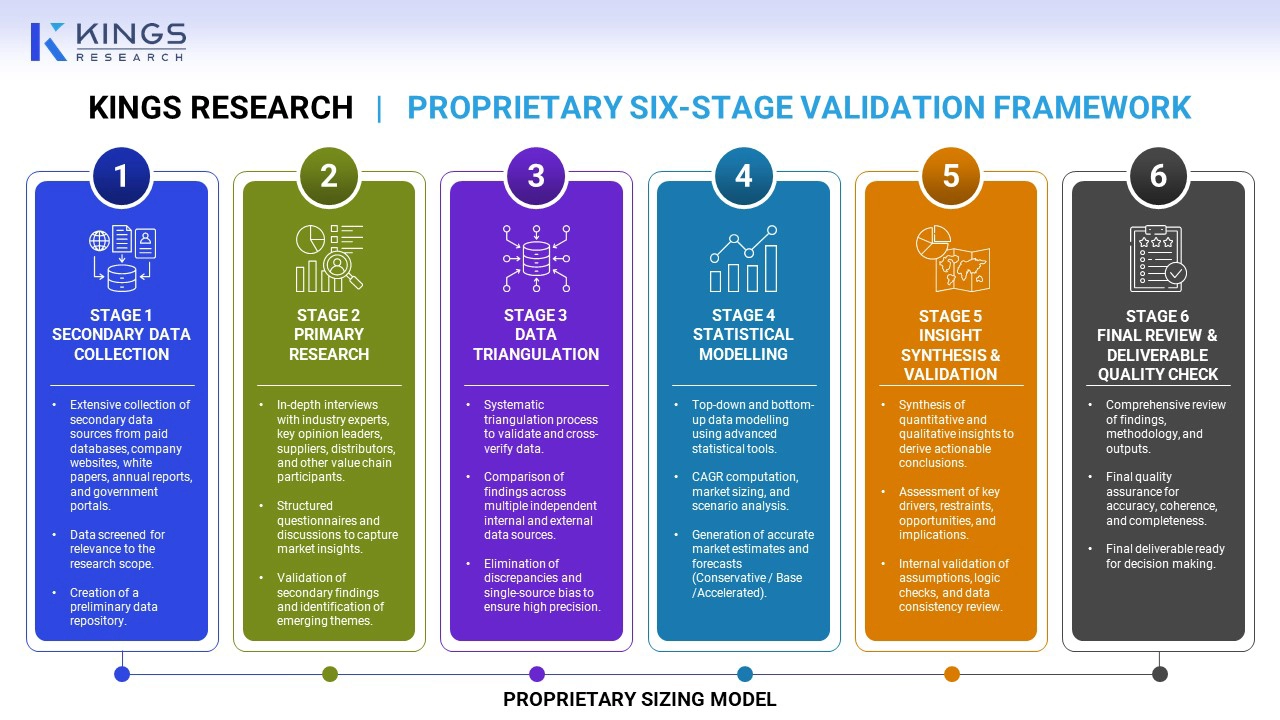
Our methodology triangulates insights from multiple independent and publicly available research databases and is further validated against regulatory filings and public company disclosures. All estimates are cross-verified; no single-source data is presented without validation.
Our custom offerings deliver tailored, data-driven intelligence and strategic guidance to help organizations identify, evaluate, and capitalize on key market opportunities.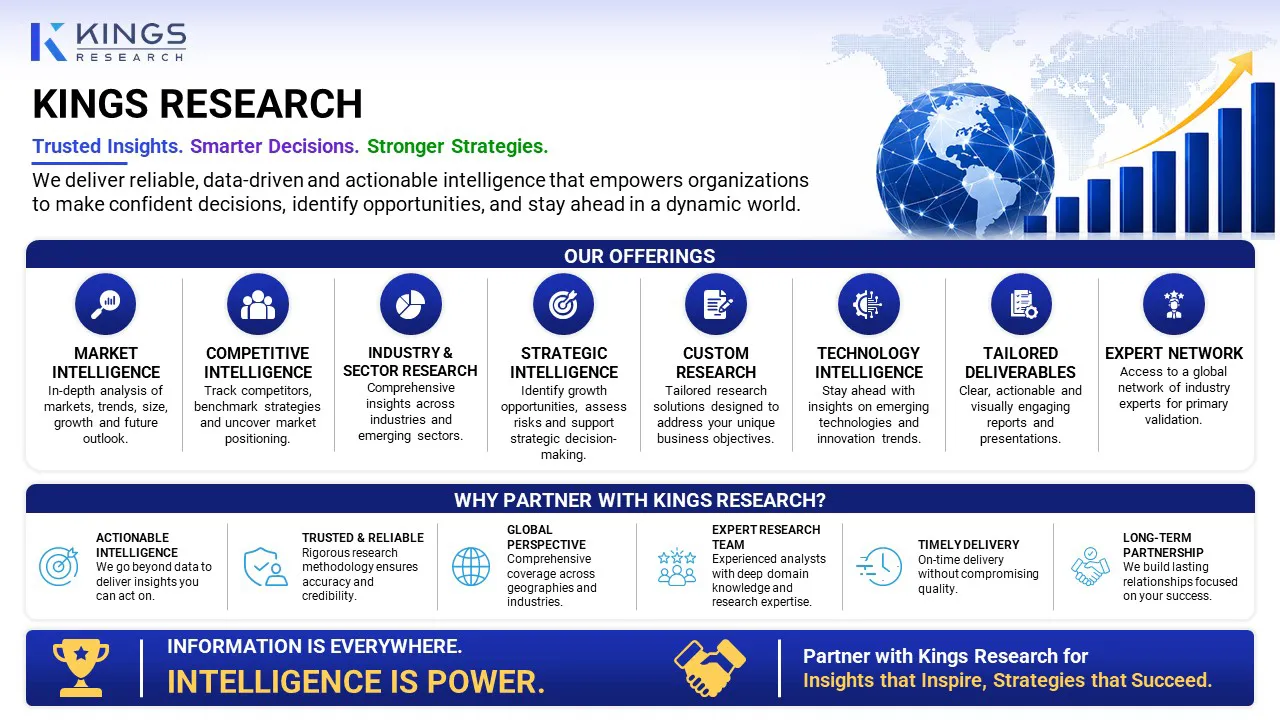
Frequently Asked Questions

Faizy brings over four years of experience in market research and consulting, with a proven ability to support strategic engagements across diverse industries and business environments. His work focuses on understanding complex market structures, identifying emerging opportunities, and translating research findings into clear, commercially relevant insights. With strong analytical capabilities and a structured approach to problem-solving, he evaluates industry trends, competitive landscapes, customer dynamics, and evolving business models. His expertise encompasses market research, competitive intelligence, market sizing and forecasting, industry assessment, company benchmarking, and strategic analysis. Faizy combines technical proficiency with a strong research orientation, enabling him to interpret both qualitative and quantitative information effectively. He has contributed to projects that help organizations assess growth potential, strengthen market positioning, and evaluate strategic priorities. His adaptable approach allows him to work across sectors while maintaining a consistent focus on accuracy, relevance, and delivering insights that support informed decision-making for clients and stakeholders.
Habi is a seasoned research and consulting leader with renowned experience in guiding clients on strategic growth and transformation initiatives across global markets. He has led high-performing research teams that deliver actionable insights on market expansion, M&A strategies, opportunity assessment, new business development, and product launches. His project portfolio spans large petrochemical producers, electronic device manufacturers, lubricants companies, and other leading enterprises across diverse industrial and consumer sectors. He currently heads the research department at Kings Research, where he is responsible for setting the research agenda, mentoring analysts, and ensuring client-ready deliverables that support executive decision-making. With extensive experience in market intelligence, strategic research, and consulting, Habi brings a strong understanding of evolving industry dynamics, competitive landscapes, emerging opportunities, and business growth challenges. His expertise includes developing research frameworks, translating complex market data into actionable strategic recommendations, and working closely with senior stakeholders to address critical business questions. He has also contributed to building research capabilities, strengthening analytical methodologies, and driving a culture of quality and insight-led decision-making within research teams. His cross-industry exposure enables him to connect market trends with broader business implications and provide perspectives that help organizations identify opportunities, mitigate risks, and make informed strategic decisions.