
Inquire Now
Key Strategic Points
According to Kings Research analysis, the global precision medicine market size was recorded at USD 103.25 billion in 2025 and is projected to reach USD 266.09 billion by 2033, growing at a CAGR of 12.77% over the forecast interval 2026 to 2033.
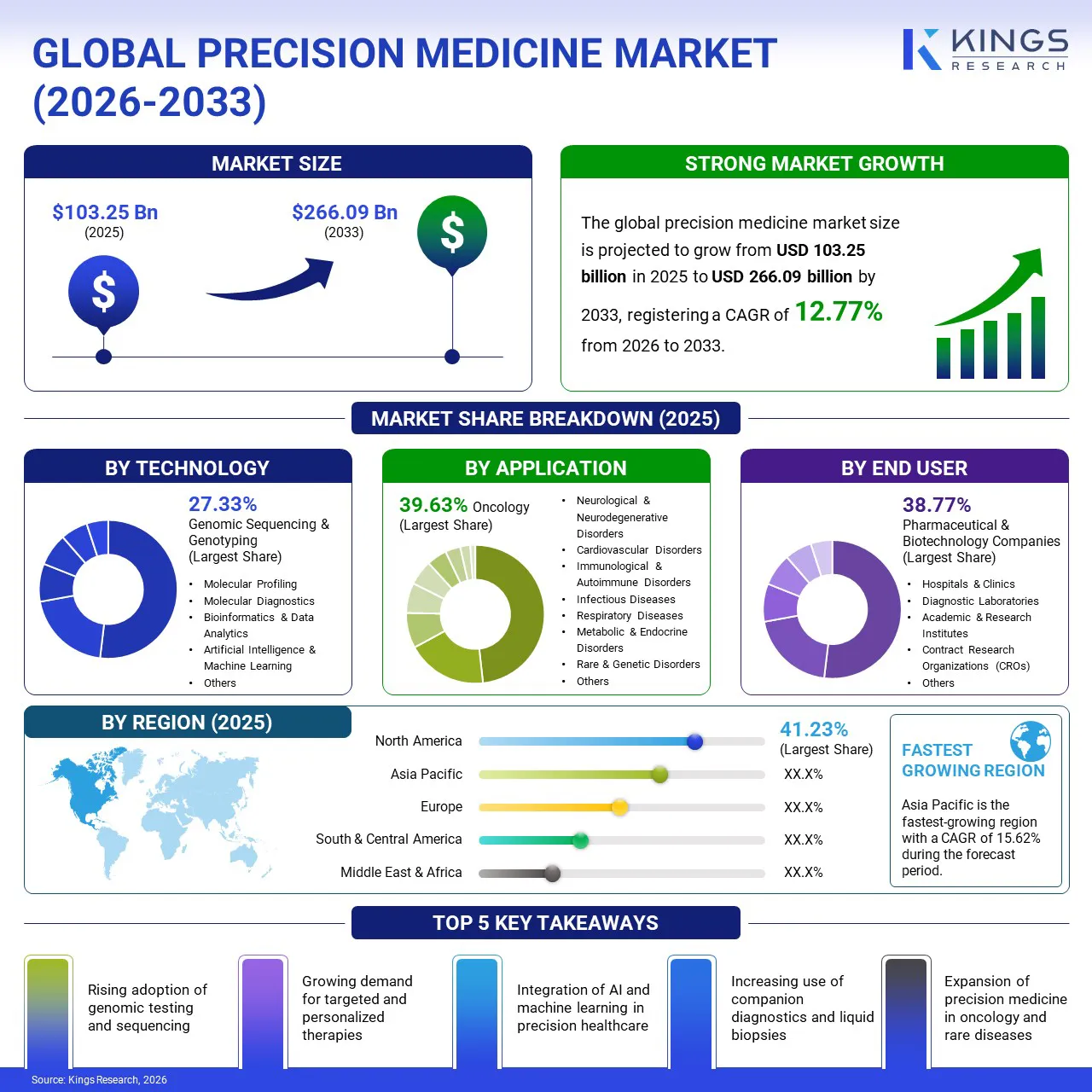
The market is witnessing significant growth due to the transition of healthcare systems toward targeted disease prevention, diagnosis, and treatment. The ability of precision medicine to leverage genomic information, molecular characteristics, clinical data, and patient-specific factors supports personalized healthcare decisions and drives market growth.
Advancements in genomic sequencing, molecular diagnostics, biomarker testing, artificial intelligence, machine learning, and data analytics further create growth opportunities for market expansion. Moreover, increasing awareness of personalized healthcare, rising prevalence of chronic and genetic disorders, advancements in genomic technologies, and expanding investments in healthcare research are contributing to market development.
Precision medicine is enabling a shift from reactive disease management to proactive prevention and targeted intervention by leveraging molecular markers that indicate the presence of disease before the onset of clinical signs and symptoms.
The inclusion of genomic sequencing plays a crucial role in this transformation by analyzing DNA samples to identify genetic variants, mutations, and clinically relevant biomarkers associated with disease susceptibility, treatment response, and drug metabolism.
This enables grouping patients based on their molecular profiles, thus facilitating precise therapeutic decision-making. Market players are expanding collaborations to enhance the efficacy of precision medicines, accelerating the adoption of innovative genomic testing solutions.
For instance, in March 2026, Illumina and Labcorp expanded their collaboration to improve access to precision oncology and advanced genomic testing. The partnership is targeted at developing new tests, generating clinical evidence, and scaling access to cancer biomarker testing through tissue and liquid biopsy solutions.
The high cost associated with precision medicine is driven by the use of advanced technologies, including DNA sequencing, genetic testing, specialized diagnostic tests, and individually targeted therapies in healthcare. Substantial investments in research and development of precision therapies further contribute significantly to their high cost, restraining widespread adoption.
Additionally, challenges associated with data privacy arise from the collection and analysis of highly sensitive personal genetic and health data through genetic sequencing, clinical tests, wearable devices, health-monitoring tools, and behavioral apps. The storage of this data in electronic health records (EHRs), local devices, and cloud-based applications creates data privacy concerns.
To address this challenge, governments are implementing genetic privacy laws and data protection frameworks aimed at safeguarding critical healthcare data. In May 2026, the 79th World Health Assembly endorsed Resolution WHA79.8 on precision medicine, focusing on targeted, personalized, and equitable healthcare. The resolution strengthens policies, infrastructure, workforce capacity, affordability, regulation, and ethical data governance for precision medicine implementation across the globe.
The integration of big data into precision medicine enables the optimization of patient care, enhanced diagnosis, and reduction in medical inventory waste. The vast amount of healthcare data collected, which includes electronic health records (EHR), medical images, genetic information, wearable-device data, and behavioral/environmental information in one secure system, creates demand for big data analytics.
The collected data is used to detect similar groups of patients, predict disease progression, and support personalized diagnosis and treatment, boosting growth opportunities for precision medicine. Market players are signing strategic collaborations aimed at extending the applicability of big data analytics platforms in precision medicine.
|
Segmentation |
Details |
|
|
By Technology |
Genomic Sequencing & Genotyping, Molecular Profiling, Molecular Diagnostics, Bioinformatics & Data Analytics, Artificial Intelligence & Machine Learning, and Others |
|
|
By Application |
Oncology, Neurological & Neurodegenerative Disorders, Cardiovascular Disorders, Immunological & Autoimmune Disorders, Infectious Diseases, Respiratory Diseases, Metabolic & Endocrine Disorders, Rare & Genetic Disorders, and Others |
|
|
By End User |
Pharmaceutical & Biotechnology Companies, Hospitals & Clinics, Diagnostic Laboratories, Academic & Research Institutes, Contract Research Organizations (CROs), and Others |
|
|
By Region |
North America |
U.S., Canada, and Mexico |
|
Europe |
France, UK, Spain, Germany, Italy, Russia, and the Rest of Europe |
|
|
Asia Pacific |
China, Japan, India, Australia, ASEAN, South Korea, and the Rest of Asia Pacific |
|
|
Middle East and Africa |
Turkey, U.A.E., Saudi Arabia, South Africa, and the Rest of Middle East & Africa |
|
|
South and Central America |
Brazil, Argentina, and the Rest of South and Central America |
|
The genomic sequencing & genotyping segment held the largest share of 27.33%, with a valuation of USD 28.22 billion in 2025. This high share is attributed to the rising adoption of next-generation sequencing and genotyping technologies, increasing demand for genomic-based diagnosis, and expanding applications in personalized disease risk assessment and treatment selection.
The rare and genetic disorders segment is anticipated to grow at the fastest CAGR of 15.29% over the forecast period, reaching USD 25.32 billion in 2033. This rapid growth is largely fueled by the rising prevalence of rare and genetic disorders, increasing demand for genomic testing and personalized therapies, and advancements in sequencing and precision diagnostics.
By region, the global precision medicine market is segmented into North America, Europe, Asia Pacific, the Middle East and Africa, and South and Central America.
North America captured the largest share of 41.23% in 2025, with a valuation of USD 42.57 billion in 2025. This dominance is largely attributable to the strong research infrastructure, extensive public and private investment, and a large scientific and medical workforce. The healthcare research ecosystem facilitates medical discoveries and the development of drugs, medical devices, and clinical procedures through targeted research and data-driven approaches to disease prevention, diagnosis, and treatment.
Asia Pacific is the fastest-growing region, with a projected CAGR of 15.62% over the forecast period and a valuation of USD 67.27 billion by 2033. The rising demand for personalized medicine, driven by the increasing prevalence of chronic disease and genetic diversity, is anticipated to fuel the growth of precision medicine in the region in the upcoming years.
Countries including China, Singapore, South Korea, India, and Japan have increased investment in genomic research, healthcare technologies, and precision medicine initiatives. Governments are undertaking initiatives aimed at strengthening genomic research infrastructure, expanding access to genomic data, and integrating precision medicine into national healthcare systems.
For instance, the Ministry of Science & Technology launched the Indian Genomic Data Set, the Framework for Exchange of Data Protocols (FeED), and the Indian Biological Data Centre (IBDC) Portals, making 10,000 whole genome samples accessible to researchers across India and the globe. The GenomeIndia project aims to advance genomic research, personalized healthcare, genetic disorder treatment, and biotechnology innovation in India.
Europe holds a significant share of the precision medicine market, supported by advanced healthcare infrastructure, strong genomic research capabilities, and government funding. Countries such as the UK, Germany, France, and Switzerland are expanding precision medicine through genomics, personalized therapies, and data-driven healthcare initiatives.
The Middle East & Africa precision medicine market is experiencing notable growth as governments invest in healthcare modernization, genomics, and advanced diagnostic technologies. Countries including Saudi Arabia, the UAE, and South Africa are developing genomic programs and precision healthcare initiatives to improve disease prevention, diagnosis, and treatment.
South & Central America is witnessing increasing adoption of precision medicine, driven by growing healthcare investments, genomic research, and demand for advanced diagnostics. Countries are strengthening genomic capabilities and personalized healthcare initiatives to address chronic and genetic diseases.
The global precision medicine market is fragmented, with numerous players operating across diverse geographies. Market players are engaging in strategic partnerships to expand their portfolios, strengthen their market presence, and broaden service offerings across emerging market areas.
How We Gather This Information
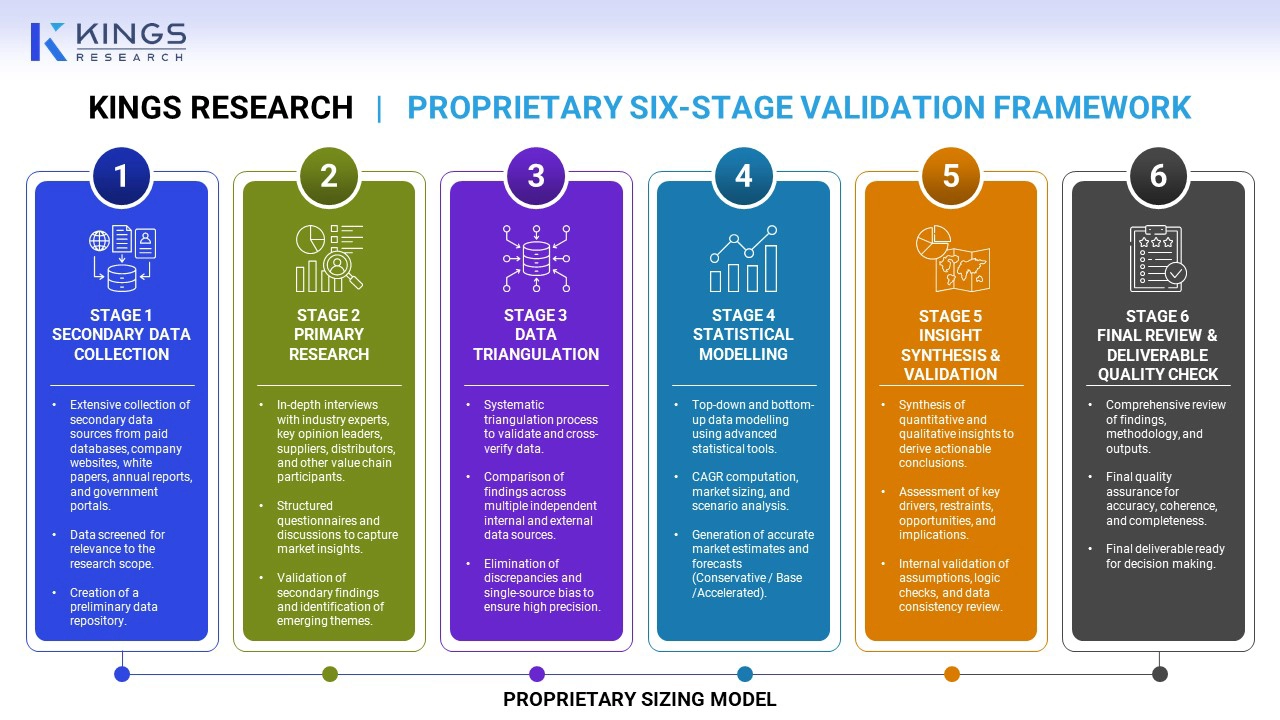
Our methodology triangulates insights from multiple independent and publicly available research databases, which is further validated against regulatory filings and public company disclosures. All estimates are cross-verified; no single-source data is presented without validation.
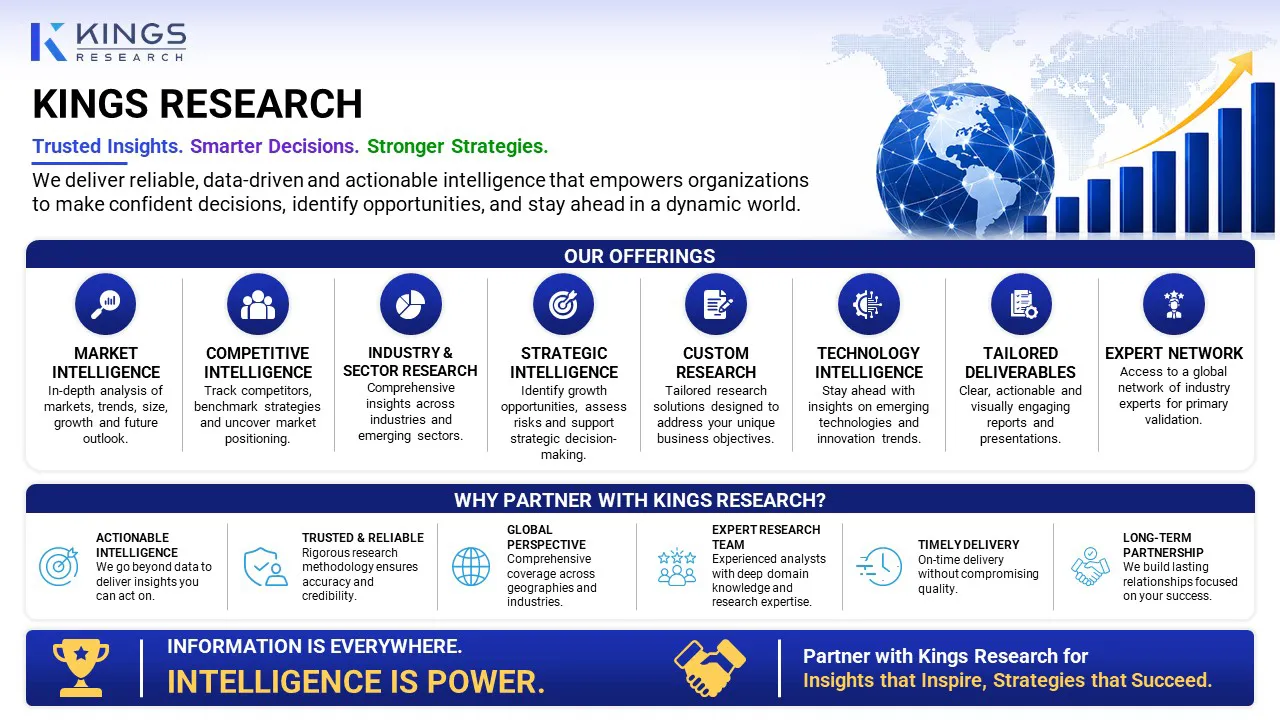
Our custom offerings deliver tailored, data-driven intelligence and strategic guidance to help organizations identify, evaluate, and capitalize on key market opportunities.
Frequently Asked Questions

Faizy brings over four years of experience in market research and consulting, with a proven ability to support strategic engagements across diverse industries and business environments. His work focuses on understanding complex market structures, identifying emerging opportunities, and translating research findings into clear, commercially relevant insights. With strong analytical capabilities and a structured approach to problem-solving, he evaluates industry trends, competitive landscapes, customer dynamics, and evolving business models. His expertise encompasses market research, competitive intelligence, market sizing and forecasting, industry assessment, company benchmarking, and strategic analysis. Faizy combines technical proficiency with a strong research orientation, enabling him to interpret both qualitative and quantitative information effectively. He has contributed to projects that help organizations assess growth potential, strengthen market positioning, and evaluate strategic priorities. His adaptable approach allows him to work across sectors while maintaining a consistent focus on accuracy, relevance, and delivering insights that support informed decision-making for clients and stakeholders.
With many years of consulting experience across global pharma, biotech, and MedTech markets, Minaz brings deep domain expertise, strategic clarity, and analytical rigor to every engagement. She has led 130+ consulting assignments spanning market entry, competitive landscaping, and portfolio prioritization, helping clients navigate complex, high-stakes decisions with confidence. Known for her ability to synthesize primary and secondary research into executive-ready recommendations, Minaz has built forecasting models and market sizing frameworks that have informed multi-million dollar investment decisions in oncology, diagnostics, and peptide therapeutics. Beyond her analytical strength, Minaz is a trusted client partner, translating complex datasets into clear, actionable insights for senior stakeholders. She currently leads a team of research analysts, driving business expansion, and shaping client engagement strategy.