
Inquire Now
Key Strategic Points
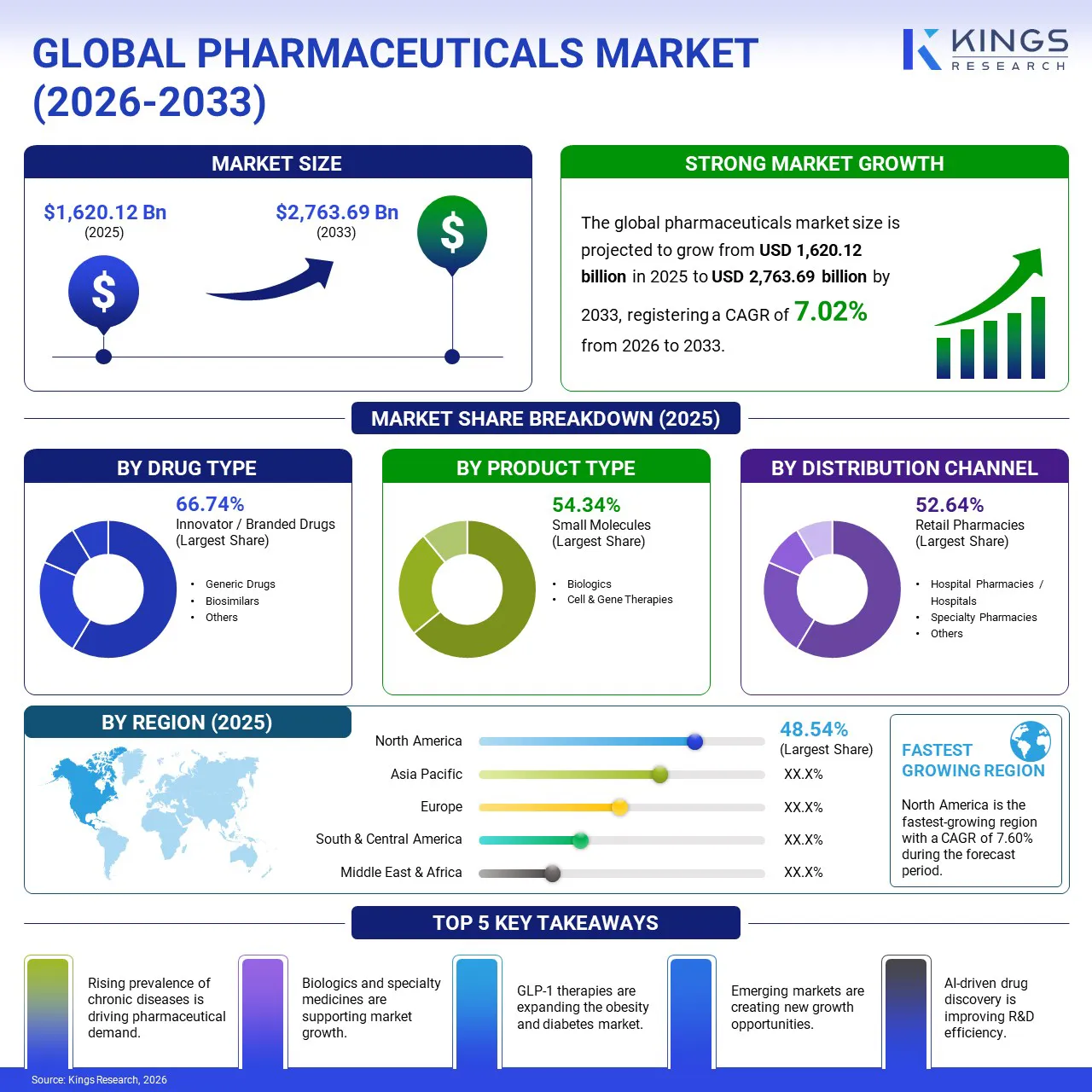
According to Kings Research analysis, the global pharmaceuticals market size was recorded at USD 1,620.12 billion in 2025 and is projected to reach USD 2,763.69 billion by 2033, growing at a CAGR of 7.02% over the forecast period from 2026 to 2033.
The global pharmaceuticals market is experiencing sustained growth, driven by rising healthcare demand, the increasing prevalence of chronic diseases, an aging population, and continued investments in research and development. Surging adoption of biologics, biosimilars, specialty medicines, personalized treatments, and advanced therapies is reshaping the industry landscape. Additionally, the integration of artificial intelligence, digital technologies, and precision medicine is enhancing drug discovery, improving clinical development efficiency, and supporting the development of targeted treatments.
Expanding demand for oncology, cardiovascular, metabolic, specialty drugs, and other chronic disease therapies, alongside a growing emphasis on affordable medicines and improved healthcare access, is creating new opportunities for market participants. However, escalating manufacturing costs, pricing pressures, stringent regulatory requirements, counterfeit medicines, and supply chain disruptions continue to challenge market expansion and profitability. Pharmaceutical companies are prioritizing innovation, advanced manufacturing capabilities, supply chain resilience, and strategic partnerships to strengthen their competitive positioning.
The surge in demand for advanced therapies, the increasing prevalence of chronic diseases, and the need for cost-effective treatments are boosting the adoption of biologics and biosimilars. Biologic drugs play a crucial role in managing complex medical conditions, including cancer, autoimmune disorders, and diabetes, owing to their targeted therapeutic benefits. Their growing adoption allows pharmaceutical manufacturers to expand their product portfolios and strengthen their presence in high-value therapeutic segments.
Biosimilars further support growth by introducing competition to established biologic therapies. Developed to be highly similar to approved reference biologics, they can reduce treatment costs, improve affordability, and expand patient access to essential therapies. This creates commercial opportunities for pharmaceutical companies while encouraging healthcare providers to incorporate biosimilars into treatment regimens.
Increasing life expectancy and the rising prevalence of chronic conditions, including diabetes, hypertension, and obesity, due to changing lifestyles and rising healthcare awareness, and the growing older population are generating demand for specialized treatments and innovative drug therapies, fueling global pharmaceuticals market expansion.
According to the United Nations, the global population aged 65 and older is projected to reach 2.2 billion by 2070, while by the mid-2030s, the number of individuals aged 80 and older is expected to reach 265 million, surpassing the number of infants. These demographic shifts create opportunities for age-related conditions, including cardiovascular diseases, cancer, and neurodegenerative disorders. Cardiovascular diseases remain a leading cause of death worldwide, sustaining the need for advanced medications and long-term treatment solutions.
Meanwhile, global cancer cases approached 2.04 million in 2025, according to the American Cancer Society, with the burden projected to increase by 67% by 2050. This trend is driving demand for chemotherapy and other oncology medicines, encouraging pharmaceutical companies to expand oncology research and develop targeted therapies, further supporting market growth.
The global pharmaceutical industry is facing cost pressures amid escalating geopolitical tensions in the Gulf. Rising energy prices and disruptions arising from the conflict, including the closure of the Strait of Hormuz, are negatively impacting the supply of active pharmaceutical ingredients (APIs), cold-chain logistics, packaging, and other critical inputs. These challenges constrain production growth and pressure manufacturers' profit margins.
According to the United Nations Conference on Trade and Development (UNCTAD), commercial activities through the Strait of Hormuz remained 90% below pre-war levels, with the global air-cargo capacity dropping by 79% in the Gulf as of March 2026. These disruptions are affecting the transport of biologics and advanced therapies and generic medicines to Southeast Asia, Africa, Europe, and North America. Airspace disruptions in the Gulf have further disrupted cargo operations, with Dubai estimated to be unable to process more than 10,000 tons of pharmaceutical cargo. These challenges are disrupting commercial and humanitarian supply chains and threatening the availability of critical medicines, particularly oncology drugs.
Meanwhile, tariff escalations and pricing policies are increasing trade uncertainty, squeezing profit margins of pharma companies, thereby potentially raising medicine prices. The April 2026 Section 232 proclamation signed by the U.S. government imposes 100% tariffs on pharmaceuticals, including patented drugs, their active ingredients, and the raw materials used in production, potentially hiking duties of up to 100%.
Approximately 53% of the patented drugs sold in the U.S. are produced in overseas markets, while only 15% of the active ingredients are registered production bases in the U.S., as per the United States Food and Drug Administration (FDA) in 2025. The proclamation covers patented drugs protected by valid U.S. patents and listed in the U.S. FDA Orange Book or Purple Book, along with their APIs and key starting materials. These tariff escalations pose significant downside risks to global pharmaceutical manufacturing and supply chains, potentially increasing costs and disrupting market dynamics.
Counterfeit medicines are fake or imitation products that infringe Intellectual Property (IP) rights, including trademarks, copyright, and patents, while threatening public health, economies, and the environment. According to the Pharmaceutical Security Institute (PSI), the U.S. and Canada recorded more than 2,000 incidents in 2025, while over 7,000 incidents were documented across 142 countries globally, marking the highest annual total in the past 23 years. These figures highlight the growing scale of pharmaceutical crime, while surveillance and reporting gaps may lead to underreporting.
Government and international law enforcement agencies are intensifying efforts to combat illicit pharmaceutical trade, prevalent mostly in the form of OTC drugs. Global operations resulted in 1,728 investigations and the closure of approximately 13,000 websites, social media pages, channels, and bots used to market and sell illegal or falsified pharmaceuticals.
In 2025, the U.S. Drug Enforcement Administration (DEA) seized well over 47 million fentanyl-laced counterfeit pills and nearly 10,000 pounds of fentanyl powder, equivalent to more than 369 million lethal doses of fentanyl. The International Criminal Police Organization launched Operation Pangea XVII, conducted across 90 countries from December 2024 to May 2025, leading to the seizure of 50 million doses of illicit pharmaceuticals worth USD 65 million, the dismantling of 123 criminal groups, and 769 arrests. These outcomes highlight the alarming scale of the global trade in unapproved and counterfeit medicines.
Artificial intelligence (AI) enables drug discovery, clinical development, manufacturing, and patient care. The growing availability of biological, chemical, genomic, and clinical data enables pharmaceutical companies to leverage machine learning, predictive analytics, and generative AI to accelerate innovation and improve operational efficiency.
AI-driven drug discovery uses advanced algorithms to identify novel therapeutic targets, predict drug-target interactions, and optimize molecular structures, reducing dependence on time-consuming experimental approaches. By predicting toxicity and efficacy issues early, AI also helps minimize late-stage clinical failures, reduce research and development costs, and accelerate time-to-market. These capabilities are creating opportunities for pharmaceutical companies to improve pipeline productivity and strengthen their competitive positioning.
The expansion of GLP-1 (glucagon-like peptide-1) receptor agonists beyond conventional type 2 diabetes therapies into broader cardio metabolic applications is generating growth opportunities. Expanded indications for chronic weight management, cardiovascular risk reduction, and chronic kidney disease are boosting adoption.
Next-generation oral formulations and higher-dose regimens are further reducing barriers to treatment and expanding the addressable market beyond traditional injectable therapies. In emerging markets, India's GLP-1 segment recorded a 74% increase in unit sales in August 2026, reflecting strong demand. Upcoming patent expiries and high volume requirements further create commercial opportunities for originators, generic manufacturers, contract development and manufacturing organizations (CDMOs), and active pharmaceutical ingredient (API) suppliers worldwide.
|
Segmentation |
Details |
|
|
By Drug Type |
Innovator / Branded Drugs, Generic Drugs, Biosimilars, and Others |
|
|
By Product Type |
Small Molecules, Biologics, and Cell & Gene Therapies |
|
|
By Therapeutic Area |
Oncology, Immunology, Cardiovascular & Metabolic Diseases, CNS & Mental Health, Infectious Diseases, Respiratory Diseases, Gastrointestinal Diseases, Genitourinary & Reproductive Health, Dermatology, and Others |
|
|
By Route of Administration |
Oral, Injectable, Topical, Inhalation, and Others |
|
|
By Distribution Channel |
Retail Pharmacies, Hospital Pharmacies / Hospitals, Specialty Pharmacies, Others |
|
|
By Region |
North America |
U.S., Canada, and Mexico |
|
Europe |
France, UK, Spain, Germany, Italy, Russia, and Rest of Europe |
|
|
Asia-Pacific |
China, Japan, India, Australia, ASEAN, South Korea, and Rest of Asia-Pacific |
|
|
Middle East and Africa |
Turkey, U.A.E., Saudi Arabia, South Africa, and Rest of Middle East & Africa |
|
|
South and Central America |
Brazil, Argentina, and Rest of South and Central America |
|
The innovator / branded drugs segment accounted for the largest share of 66.74%, with a valuation of USD 1,081.22 billion in 2025. Its dominance is driven by patent protection, physician influence, perceived quality, and pricing power. This dominance is further supported by established brand recognition, which empowers buyers to view brand names as a guarantee of purity, corporate accountability, and reliable manufacturing, boosting adoption compared to generic drugs.
The cell and gene therapies segment is poised to register the fastest CAGR of 18.07% over the forecast period, reaching USD 262.69 billion in 2033. Growth is driven by their potential to deliver durable, potentially curative outcomes through a single administration. By targeting the underlying cellular and genetic causes of severe diseases rather than merely managing symptoms, these therapies offer a promising approach to treating serious medical conditions.
The oncology segment is anticipated to grow at a CAGR of 10.71% from 2026 to 2033, propelled by unmet medical needs, scientific advancements, and sustained investment in cancer drug development. The increasing adoption of innovative therapies, including antibody-drug conjugates, radiopharmaceuticals, and cell and gene therapies, further supports clinical trial activity and segmental growth.
The oral segment was valued at USD 730.94 billion in 2025, exhibiting a majority share of 45.12%. Its dominance is driven by patient convenience and compliance due to the simplicity of administration. Flexible dosage forms, including standard tablets, extended-release pills, or fast-dissolving films, further boost demand for oral pharmaceuticals.
Specialty pharmacies are estimated to grow at the fastest CAGR of 9.72% over the projection period. This expansion is fostered by rising demand for advanced therapies, including biologics, biosimilars, gene therapies, and personalized medicines, alongside the increasing incidence of chronic and rare diseases. Additionally, specialty pharmacies support complex medication handling, therapy initiation, adherence monitoring, side-effect management, and insurance navigation, promoting coordinated care and improved patient outcomes.
The global pharmaceuticals market analysis is segmented into North America, Europe, Asia Pacific, the Middle East & Africa, and South & Central America.
North America held the largest share of 48.54% in 2025, valued at USD 786.40 billion. This dominance is reinforced by the region’s high healthcare expenditure, substantial investments in research and development, advanced healthcare infrastructure, and a strong pipeline of innovative drugs. Established pharmaceutical and biotechnology sectors in Canada and Mexico’s expanding pharmaceutical manufacturing capabilities further contribute to regional market development.
U.S. tariff escalations and pricing policies, including the Most-Favored-Nation (MFN), are increasing trade uncertainty, pressuring manufacturers’ profit margins, raising medicine prices, and disrupting global pharmaceutical supply chains. The policies aim to lower U.S. prescription drug prices by aligning them with those in other high-income countries, with estimated domestic savings of USD 529 billion over 10 years.
However, tariffs and cross-border supply-chain disruptions, particularly those affecting imported active pharmaceutical ingredients, are pressuring manufacturers to strengthen domestic production, diversify sourcing, and improve supply-chain resilience.
The Asia Pacific pharmaceutical market is projected to register a CAGR of 6.94%, ranking as the second-fastest-growing region after North America. This growth is fueled by major Asian economies emerging as pharmaceutical production and innovation hubs, challenging the dominance of conventional Western pharmaceutical hubs. Expanding drug pipelines, vaccine developments, and science-driven ecosystems in China, South Korea, Singapore, and Taiwan are further advancing biologics, medtech, and clinical research across the region.
China introduced its first dedicated policy to promote high-quality development in pharmaceutical retail, transforming pharmacies into integrated healthcare service providers. The policy aims to improve pharmaceutical services, drug affordability and accessibility, and supply chain efficiency, while encouraging industry consolidation, digital pharmacy services, and emergency preparedness.
India ranks third globally by pharmaceutical production volume and 11th by value, supported by more than 3,000 pharmaceutical companies and 10,500 manufacturing units, many approved by the U.S. Food and Drug Administration (USFDA). In 2025, Indian pharma exports were estimated at USD 30.5 billion, while the active pharmaceutical ingredient (API) market was valued at approximately USD 14.77 billion. As the world’s largest supplier of generic medicines, India accounts for around 20% of global pharmaceutical supply, manufacturing approximately 60,000 generic brands across 60 therapeutic categories. Its expanding trade agreements, including the India-EU FTA, India-UK CETA, and India-NZ FTA, are anticipated to expand market access, boost exports and investment, and strengthen integration into global healthcare value chains.
Government initiatives promoting quality, affordable healthcare are strengthening domestic pharmaceutical supply across Asia Pacific. In India, the Pradhan Mantri Bhartiya Janaushadhi Pariyojana (PMBJP) under the Ministry of Chemicals and Fertilizers (Government of India) established 17,990 Jan Aushadhi Kendras by December 2025, expanding access to affordable generic medicines across India. The initiative offers 2,110 medicines and 315 surgical products, consumables, and devices at prices 50–80% lower than leading branded alternatives. Sales of approximately USD 177.9 million during FY 2025–26 further indicate growing uptake of cost-effective pharmaceutical products.
The Europe pharmaceuticals market share was 23.55% in 2025, with the growth attributed mainly to strong healthcare infrastructure, substantial R&D investments, and leading pharmaceutical companies in Germany, Switzerland, and the UK. However, stringent regulations, pricing pressures, and policies promoting affordable medicines influence manufacturers’ profit margins and market growth.
The growth of the pharmaceutical market in South and Central America is fueled by rising healthcare expenditure, expanding healthcare access, and increasing demand for generic medicines in emerging economies such as Brazil and Argentina. However, economic volatility, dependence on imported pharmaceutical ingredients, and uneven healthcare infrastructure challenge regional market expansion.
The expansion of the Middle East & Africa pharmaceutical market is driven by rising healthcare investments, growing demand for medicines, and government initiatives to strengthen domestic manufacturing, particularly in Saudi Arabia, the UAE, and South Africa. However, limited healthcare access in some countries, reliance on imported medicines, and supply-chain constraints hinder domestic market growth.
The global pharmaceutical industry is fragmented, with global and regional players competing across markets. Leading companies are investing in research and development (R&D), manufacturing infrastructure, biologics, specialty medicines, and advanced therapies to expand production capabilities, gain a competitive advantage, and strengthen their market presence.
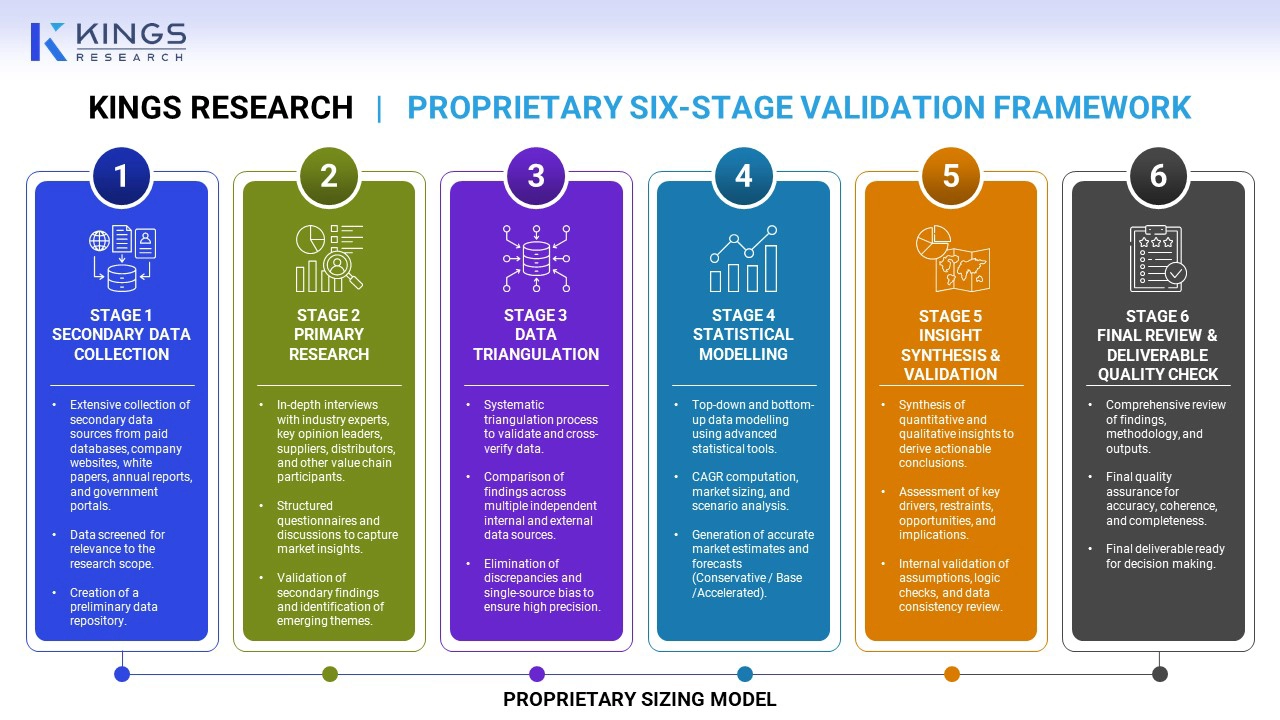
Our methodology triangulates insights from multiple independent and publicly available research databases and is further validated against regulatory filings and public company disclosures. All estimates are cross-verified; no single-source data is presented without validation.
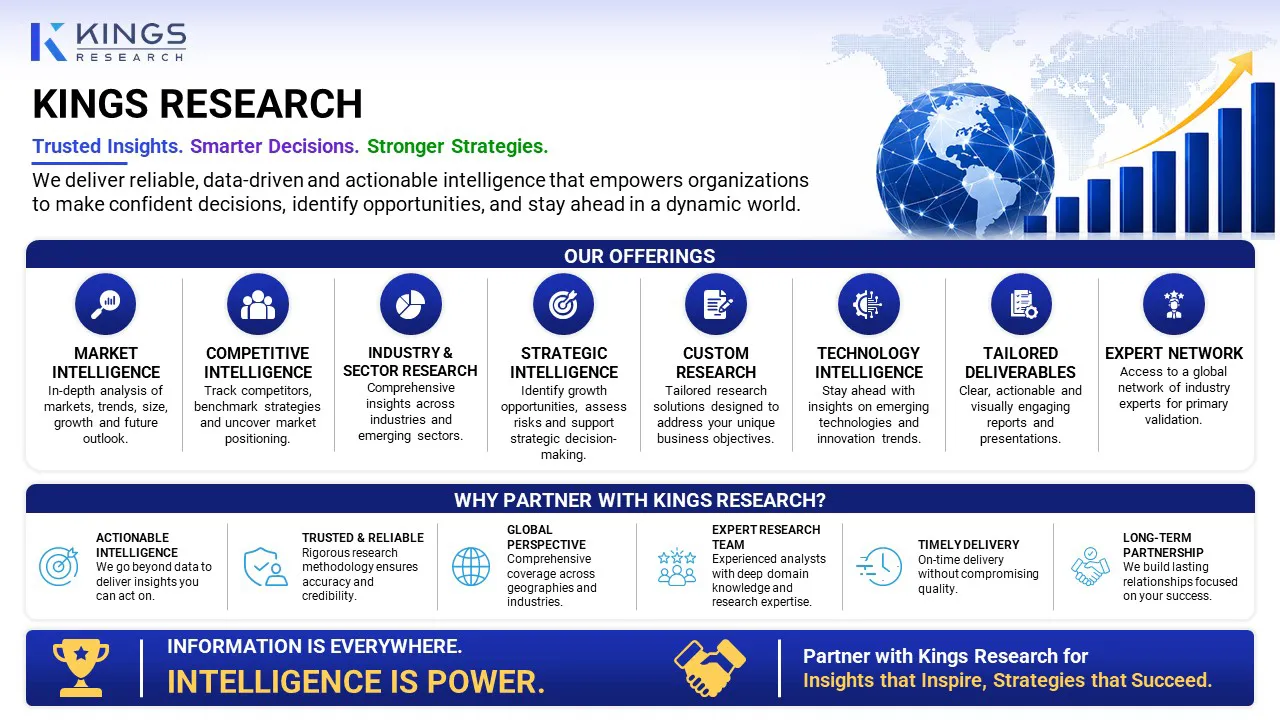
Our custom offerings deliver tailored, data-driven intelligence and strategic guidance to help organizations identify, evaluate, and capitalize on key market opportunities.
Frequently Asked Questions

Faizy brings over four years of experience in market research and consulting, with a proven ability to support strategic engagements across diverse industries and business environments. His work focuses on understanding complex market structures, identifying emerging opportunities, and translating research findings into clear, commercially relevant insights. With strong analytical capabilities and a structured approach to problem-solving, he evaluates industry trends, competitive landscapes, customer dynamics, and evolving business models. His expertise encompasses market research, competitive intelligence, market sizing and forecasting, industry assessment, company benchmarking, and strategic analysis. Faizy combines technical proficiency with a strong research orientation, enabling him to interpret both qualitative and quantitative information effectively. He has contributed to projects that help organizations assess growth potential, strengthen market positioning, and evaluate strategic priorities. His adaptable approach allows him to work across sectors while maintaining a consistent focus on accuracy, relevance, and delivering insights that support informed decision-making for clients and stakeholders.
With many years of consulting experience across global pharma, biotech, and MedTech markets, Minaz brings deep domain expertise, strategic clarity, and analytical rigor to every engagement. She has led 130+ consulting assignments spanning market entry, competitive landscaping, and portfolio prioritization, helping clients navigate complex, high-stakes decisions with confidence. Known for her ability to synthesize primary and secondary research into executive-ready recommendations, Minaz has built forecasting models and market sizing frameworks that have informed multi-million dollar investment decisions in oncology, diagnostics, and peptide therapeutics. Beyond her analytical strength, Minaz is a trusted client partner, translating complex datasets into clear, actionable insights for senior stakeholders. She currently leads a team of research analysts, driving business expansion, and shaping client engagement strategy.