
Inquire Now
Key Strategic Points
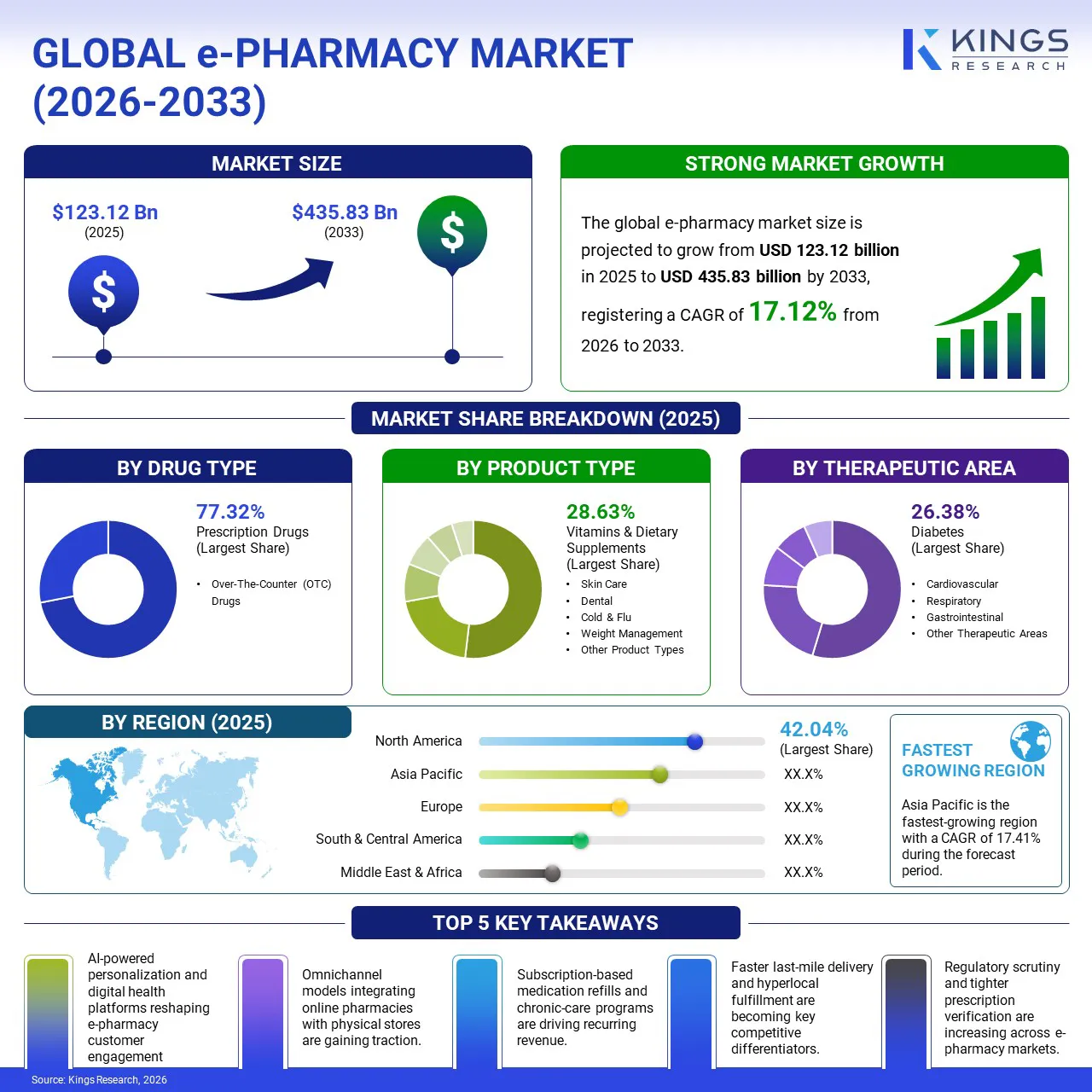
According to Kings Research analysis, the global ePharmacy market size was recorded at USD 123.12 billion in 2025 and is projected to reach USD 435.83 billion by 2033, growing at a CAGR of 17.12% over the forecast period from 2026 to 2033.
Market growth is driven by the increasing consumer inclination toward digital channels for convenient, accessible, and cost-effective medication procurement. Rising internet and smartphone penetration, increasing prevalence of chronic diseases, and greater consumer preference for quick home delivery and prescription refills are contributing to market development. Moreover, price transparency, expanding digital healthcare ecosystems, and the demand for automated fulfillment driven by evolving consumer behavior are creating growth opportunities.
Increased accessibility, convenience, privacy, and price transparency are fueling market growth. Online pharmacies enable consumers to order medicines anytime and from anywhere, thereby eliminating the necessity to travel to physical pharmacies and making prescription refills easier. The ability to purchase medications from home further enables greater privacy when dealing with sensitive health conditions and treatments. Additionally, digital platforms facilitate easy price comparisons for consumers across different pharmacies and brands, thereby encouraging cost-conscious purchasing.
Challenges associated with regulatory uncertainty, data privacy, and compliance requirements hamper market development. Data storage requirements and the potential misuse of sensitive customer health information require e-pharmacies to comply with applicable data protection and electronic health record standards.
Cybersecurity risks include phishing, ransomware, and insider threats, which can compromise sensitive customer and prescription data through unauthorized access and lead to data loss, financial damage, and operational disruption, thereby hampering adoption. Moreover, low internet penetration across underdeveloped economies is limiting market growth.
To address this challenge, market players are adopting centralized verification mechanisms, including NABP Digital Pharmacy Accreditation in the U.S. and regional verification seals such as the EU Common Logo. These measures strengthen trust and ensure the presence of only verified pharmacies on major search networks and digital platforms, thereby preventing cyber fraud.
For instance, in April 2026, Walgreens was reaccredited by the National Association of Boards of Pharmacy (NABP), thus extending its accreditation through August 2028. The reaccreditation reflects Walgreens’ commitment to maintaining high-quality specialty pharmacy services, including patient education, medication adherence, and appropriate medication use.
The rising adoption of agentic AI in the ePharmacy marketplace facilitates AI systems to autonomously execute medicine purchase orders and manage end-to-end workflows with limited human intervention. It provides support to pharmacies through automated data entry, prior authorization follow-ups, inventory management, medication reconciliation, and proactive patient follow-ups. This results in improved operational efficiency, reduced errors and costs, while enabling pharmacists to focus on patient-centered and clinical activities.
|
Segmentation |
Details |
|
|
By Drug Type |
Prescription Drugs and Over-The-Counter (OTC) Drugs |
|
|
By Product Type |
Skin Care, Dental, Cold & Flu, Vitamins & Dietary Supplements, Weight Management, and Others |
|
|
By Therapeutic Area |
Diabetes, Cardiovascular, Respiratory, Gastrointestinal, and Others |
|
|
By Region |
North America |
U.S., Canada, and Mexico |
|
Europe |
France, UK, Spain, Germany, Italy, Russia, and Rest of Europe |
|
|
Asia-Pacific |
China, Japan, India, Australia, ASEAN, South Korea, and Rest of Asia-Pacific |
|
|
Middle East and Africa |
Turkey, U.A.E., Saudi Arabia, South Africa, and Rest of Middle East & Africa |
|
|
South and Central America |
Brazil, Argentina, and Rest of South and Central America |
|
The prescription drugs segment accounted for the largest share of 77.32% in 2025, registering a valuation of USD 95.19 billion. This high share is attributed to the increasing prevalence of chronic diseases and the rising demand for greater accessibility and convenience in procuring medicines online, along with proper labeling, safer usage, and professional guidance.
The weight management product type is likely to grow at the fastest CAGR of 16.75% over the forecast period, reaching USD 60.86 billion in 2033. This growth is mainly propelled by the rising preference among obese patients for digital weight-loss services over traditional clinics, primarily to avoid the discomfort and stigma associated with face-to-face discussions about weight.
By region, the global ePharmacy market has been segmented into North America, Europe, Asia Pacific, the Middle East and Africa, and South and Central America.
North America held the largest share of 42.04% in 2025, valued at USD 51.76 billion. This growth is attributed to extensive internet penetration and a strong cultural shift toward online shopping across the U.S. and Canada, propelled by rising consumer interest in online medicine procurement. Moreover, the rise of discount programs offered by ePharmacy platforms, including GoodRx and Mark Cuban Cost Plus Drugs, has gained popularity by offering transparent, direct-to-consumer online pricing, thereby contributing to regional market development.
Asia Pacific is the fastest-growing region, which is anticipated to grow at a CAGR of 17.41% over the forecast period and reach a valuation of USD 118.13 billion by 2033.
The demographic shifts across the Asia Pacific region, particularly the aging populations of Japan, South Korea, and China, contribute significantly to increased medical prescription volumes due to the growing prevalence of chronic conditions such as diabetes and cardiovascular disorders, which require long-term medication management. These factors are expected to boost the adoption of ePharmacies across the region.
Moreover, rising urbanization, infrastructure development, population growth, and increasing demand for generic medications, followed by the development of organized pharmacy chains, prescription refill services, home delivery, and the widespread adoption of smartphones and greater internet penetration, are further anticipated to foster regional market growth.
For instance, the medicine-delivery sector in India is rapidly shifting toward quick-commerce, with platforms leveraging AI and hyperlocal fulfillment, attracting increasing funding for business expansion and enabling faster deliveries. Notable players include Tata 1mg, PharmEasy, Apollo 24|7, Zepto, Blinkit, and Swiggy, creating growth opportunities in the emerging market.
In July 2026, Plazza secured USD 15 million in a Series A funding round co-led by Accel, Elevation Capital, and Nexus Venture Partners. The Indian company operates a pharmacy-first quick commerce platform that leverages AI-driven inventory intelligence to ensure accurate medicine delivery within 15 to 30 minutes. The company plans to utilize this capital to expand its physical pharmacy network across new geographies, enhance its supply chain infrastructure, and scale its engineering and operations teams.
The Europe market is witnessing steady growth and is emerging as a strong market for pharmaceutical e-commerce, largely due to the interplay between advanced digital healthcare infrastructure and an EU-wide regulatory foundation. Regulatory frameworks, including the General Data Protection Regulation (GDPR), support the protection of sensitive patient health data, while good distribution practice guidelines help ensure medicine safety and traceability throughout the supply chain.
The Middle East & Africa market is supported by expansive digital healthcare infrastructure and rising consumer awareness of online medicine procurement. The surge in medical infrastructure development across the UAE, Saudi Arabia, Qatar, and South Africa is presenting new opportunities for market expansion.
The rising internet and smartphone penetration, expanding digital healthcare ecosystems, and rising demand for convenient access to medicines are leading to the widespread adoption of ePharmacy in South and Central America. The rising prevalence of chronic diseases, increasing urbanization, and a surge in consumer acceptance of online shopping further support regional market expansion.
The global market is fragmented in nature, characterized by a large number of market players holding significant shares across diverse markets. Market players are engaging in strategic partnerships and acquisitions, targeted at portfolio expansion, strengthening market presence, and broadening service offerings across emerging markets.
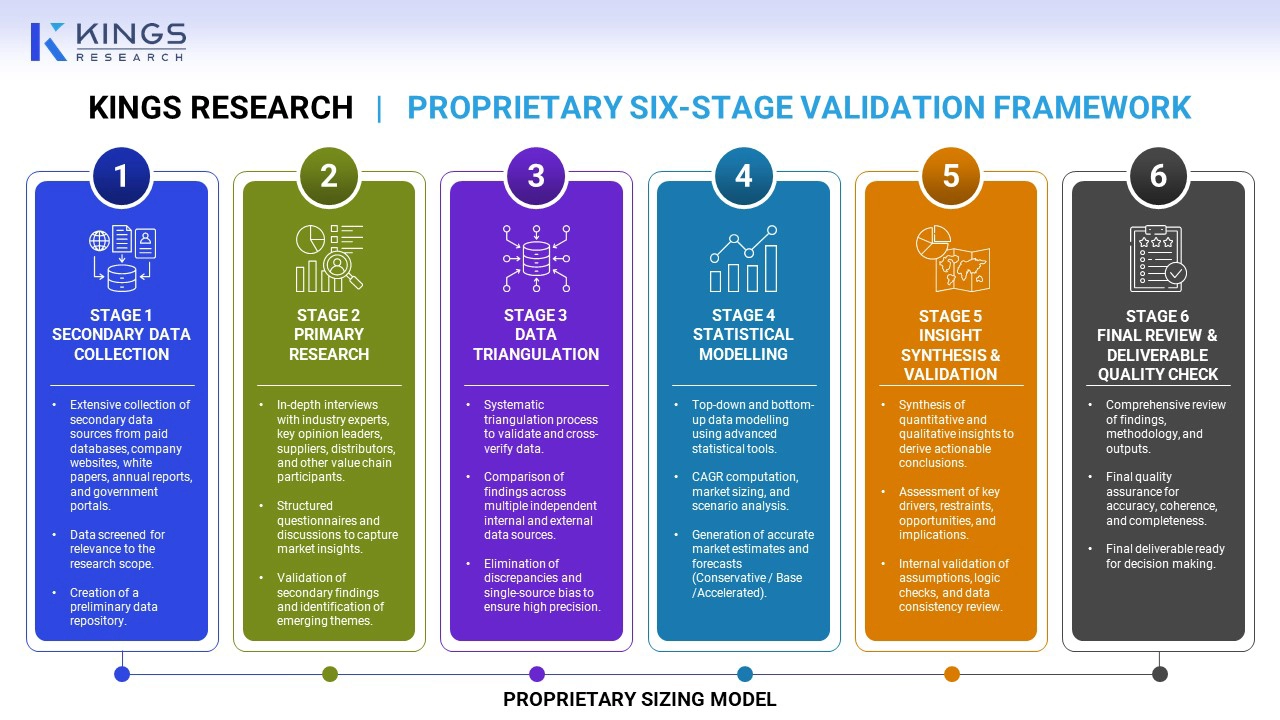
Our methodology triangulates insights from multiple independent and publicly available research databases and is further validated against regulatory filings and public company disclosures. All estimates are cross-verified; no single-source data is presented without validation.
Our custom offerings deliver tailored, data-driven intelligence and strategic guidance to help organizations identify, evaluate, and capitalize on key market opportunities.
Frequently Asked Questions

Faizy brings over four years of experience in market research and consulting, with a proven ability to support strategic engagements across diverse industries and business environments. His work focuses on understanding complex market structures, identifying emerging opportunities, and translating research findings into clear, commercially relevant insights. With strong analytical capabilities and a structured approach to problem-solving, he evaluates industry trends, competitive landscapes, customer dynamics, and evolving business models. His expertise encompasses market research, competitive intelligence, market sizing and forecasting, industry assessment, company benchmarking, and strategic analysis. Faizy combines technical proficiency with a strong research orientation, enabling him to interpret both qualitative and quantitative information effectively. He has contributed to projects that help organizations assess growth potential, strengthen market positioning, and evaluate strategic priorities. His adaptable approach allows him to work across sectors while maintaining a consistent focus on accuracy, relevance, and delivering insights that support informed decision-making for clients and stakeholders.
With many years of consulting experience across global pharma, biotech, and MedTech markets, Minaz brings deep domain expertise, strategic clarity, and analytical rigor to every engagement. She has led 130+ consulting assignments spanning market entry, competitive landscaping, and portfolio prioritization, helping clients navigate complex, high-stakes decisions with confidence. Known for her ability to synthesize primary and secondary research into executive-ready recommendations, Minaz has built forecasting models and market sizing frameworks that have informed multi-million dollar investment decisions in oncology, diagnostics, and peptide therapeutics. Beyond her analytical strength, Minaz is a trusted client partner, translating complex datasets into clear, actionable insights for senior stakeholders. She currently leads a team of research analysts, driving business expansion, and shaping client engagement strategy.