

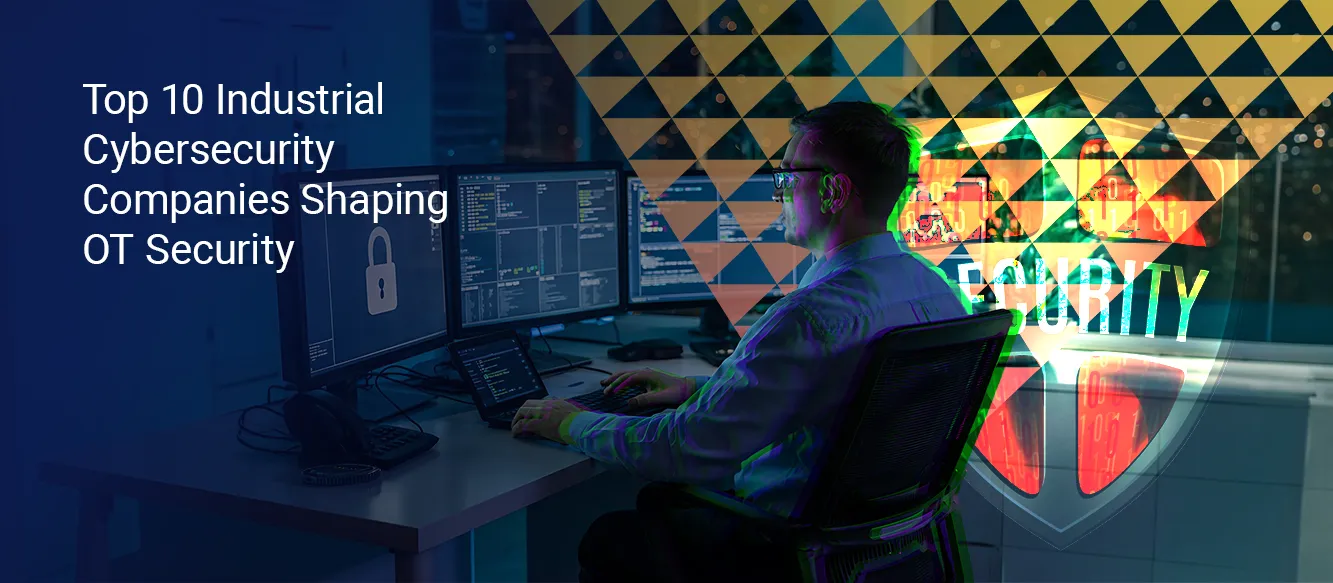
The global industrial cybersecurity market was valued at USD 22.91 billion in 2022. Kings Research anticipates that this industry will reach USD 44.65 billion by 2030. This growth indicates a consistent 8.54% compound annual growth rate (CAGR), driven by heavy investments from various industry leaders such as ABS Group of Companies, Inc., Cisco Systems, Inc., Fortinet, Inc., Honeywell International Inc., Microsoft, Rockwell Automation, Schneider Electric, Siemens, Thales, and IBM.
Industrial cybersecurity is the specialized practice of protecting operational technology (OT), industrial control systems (ICS), and connected physical machinery from digital threats. Unlike standard IT security, which prioritizes data confidentiality, industrial security frameworks are engineered to safeguard physical assets, maintain production uptime, and protect the safety of human workers.
As manufacturers, energy providers, logistics networks, and industrial enterprises connect legacy operational technology with cloud systems, choosing the right cybersecurity partner has become a board-level priority. The following companies are shaping the industrial cybersecurity market through network security, OT visibility, SCADA protection, zero trust, AI-led threat detection, and industrial automation expertise.
Kings Research’s selection focuses on real deployment versatility rather than marketing claims. We evaluated each provider on its strength in industrial control systems and OT environments, support for IT-OT convergence, capabilities across detection, response, segmentation, and compliance, and track record in protecting critical infrastructure across manufacturing, energy, utilities, and defense. The ten companies listed represent the top tier of industrial cybersecurity providers whose solutions align with the priorities of CISOs, CIOs, COOs, and plant operations.
At-a-Glance: Industrial Cybersecurity Vendor Comparison Matrix
|
Company |
Lineage |
Core Strength |
Best Fit For |
|
Cisco Systems |
IT-Native |
Deep visibility into industrial network assets using embedded deep packet inspection. |
Large manufacturing enterprises with extensive installed Cisco hardware bases. |
|
Fortinet, Inc. |
IT-Native |
Ruggedized firewalls enforcing edge security and strict OT network microsegmentation. |
Downtime-sensitive industrial plants requiring localized, remote threat containment. |
|
Microsoft |
IT-Native |
Agentless network monitoring for asset discovery paired with centralized cloud threat hunting. |
Modern facilities using hybrid and cloud-connected operational infrastructures. |
|
IBM |
IT-Native |
Enterprise-grade OT/IT threat detection augmented by multi-agent autonomous response. |
Multinational conglomerates requiring end-to-end managed security services (MSSP). |
|
Siemens |
OT-Native |
Cloud-based SaaS vulnerability matching and risk-prioritization for the shop floor. |
Factory floors and machine builders seeking low-expertise vulnerability management. |
|
Schneider Electric |
OT-Native |
Interoperable EcoStruxure architecture and native process-level security designs. |
Critical infrastructure managers running power grids, water systems, or processing plants. |
|
Honeywell |
OT-Native |
Agentless, passive asset monitoring and vendor-agnostic centralized OT SOC operations. |
Complex environments requiring continuous, multi-site vendor-neutral threat analysis. |
|
Rockwell Automation |
OT-Native |
Plant-floor security services grounded in deep industrial machinery physics and behavior. |
Automotive and heavy industrial firms actively transitioning legacy assets to smart factories. |
|
Thales |
IT-Native |
Sovereign data encryption and elite state-level threat intelligence infrastructure. |
Highly regulated defense contractors, civil aviation, and critical public security operators. |
|
ABS Group |
OT-Native |
Marine/offshore asset risk management and engineering-led compliance auditing (IEC 62443). |
Oil and gas producers, maritime fleets, and safety-critical offshore terminal operators. |
1. Cisco Systems
Core strength: Deep visibility into industrial network assets and traffic using embedded deep packet inspection.
Recent Development: Cisco is integrating Cisco Cyber Vision and Cisco Secure Equipment Access into selected industrial Ethernet switches, including the IE3500 and IE9300 Rugged Series. The integrated offering provides OT asset visibility and zero-trust remote access without requiring separate security appliances or traditional VPN-based setups. Cisco says the approach can help industrial organizations strengthen cybersecurity while simplifying OT network modernization.
Key strategic focus: Cisco integrates Cyber Vision sensors into its industrial switches and routers, enabling operators to map asset communication patterns and vulnerabilities using telemetry enriched with Cisco Talos threat intelligence.
Best fit for: Large manufacturing enterprises with extensive installed bases of Cisco enterprise and industrial networking hardware.
Strategic takeaway: Cisco reduces deployment overhead by turning the industrial network itself into a distributed security sensor.
2. Fortinet, Inc.
Core strength: Ruggedized next‑generation firewalls and switches that enforce security at the edge while enabling OT network segmentation and microsegmentation.
Recent Development: In March 2025, Fortinet expanded its Fortinet OT Security Platform with enhanced OT visibility, secure segmentation, ruggedized connectivity, and stronger OT security operations, including advanced threat detection and response capabilities across its OT security stack.
Key strategic focus: Fortinet uses its FortiOS‑based Security Fabric to coordinate threat containment across converged IT and OT zones, applying virtual patching on ruggedized FortiGate appliances to shield legacy assets from lateral exploits without interrupting operations.
Best fit for: Downtime‑sensitive industrial plants that need localized threat containment and protection for legacy OT devices in harsh or remote environments.
Strategic takeaway: Fortinet delivers broad OT‑specific signature coverage and high‑performance, ASIC‑accelerated inspection designed for demanding industrial conditions.
3. Microsoft
Core strength: Agentless network monitoring for asset discovery, combined with centralized IT/OT security monitoring across a unified SOC experience.
Recent Development: Microsoft has continued to update Defender for IoT through OT monitoring software releases, alongside ongoing sensor and alert updates across its OT networks.
Key strategic focus: Microsoft uses IoT- and OT-aware behavioral analytics in Defender for IoT to detect threats that traverse from IT networks into OT environments, integrating with Microsoft Sentinel and Defender XDR for cloud-native orchestration, automated response playbooks, and unified threat hunting.
Best fit for: Modern facilities using hybrid and cloud-connected operational infrastructures that want to extend enterprise security operations coverage across IT, IoT, and OT environments.
Strategic takeaway: Microsoft excels at unifying IT, IoT, and OT visibility and response inside a single security operations center via its Defender portal.
4. IBM
Core strength: Enterprise-grade OT/IT threat detection and automated incident response, backed by the X-Force threat intelligence and research group.
Recent Development: IBM announced new cybersecurity measures in April 2026 to help enterprises confront agentic attacks, including a consulting assessment for AI-specific exposures and IBM Autonomous Security, a multi-agent service designed to automate remediation, detection, and response at machine speed.
Key strategic focus: IBM scales automated incident response using QRadar SOAR and AI-driven playbooks to minimize breach lifecycles, while its consulting services help manufacturers map OT network attack surfaces, manage supply chain risk, and respond to active threats.
Best fit for: Multinational conglomerates requiring end-to-end managed security services and structured risk-reduction workflows across complex, multi-site environments.
Strategic takeaway: IBM provides structured threat management and incident investigation frameworks for global OT security architectures, increasingly augmented by autonomous, multi-agent response capabilities.
5. Siemens
Core strength: Cloud-based SaaS vulnerability matching and risk-based prioritization for OT assets on the shop floor.
Recent Development: Siemens launched SINEC Security Guard in April 2024 as a cloud-based OT vulnerability management platform that matches known vulnerabilities to industrial asset inventories, prioritizes remediation based on firmware and configuration, and supports task tracking for maintenance-window remediation.
Key strategic focus: Siemens bridges the shop-floor security gap with its SINEC Security Guard platform, which automates asset risk analysis by matching known vulnerabilities to a digital inventory, prioritizing mitigation based on specific firmware versions and configurations in use, and offering optional signature-based intrusion detection.
Best fit for: Factory floors and machine builders seeking repeatable, low-expertise vulnerability management and security validation during scheduled maintenance windows.
Strategic takeaway: Siemens prioritizes threat remediation based on asset criticality and installed firmware state to preserve production uptime, with third-party asset support added progressively.
6. Schneider Electric
Core strength: Interoperable system architecture and process-level security design.
Recent Development: Schneider Electric continued expanding its industrial cybersecurity portfolio through EcoStruxure-based OT security and IEC 62443-aligned protections for industrial automation and control systems.
Key strategic focus: Schneider Electric builds native cyber defense capabilities into its programmable automation controllers and digital software layers. The company deploys its EcoStruxure Plant architecture to provide real-time control over security risks, balancing operational reliability with tracking of environmental and safety risks.
Best fit for: Critical infrastructure managers running power grids, water treatment plants, or processing facilities.
Strategic takeaway: Schneider Electric treats security as a core component of overall operational profitability and physical safety.
7. Honeywell
Core strength: Agentless, passive threat monitoring and vendor-agnostic OT security operations.
Recent Development: In June 2025, Honeywell introduced AI-enabled OT cybersecurity solutions, including Honeywell Cyber Proactive Defense and Honeywell OT Security Operations Center, to help industrial operators strengthen cyber resilience, support continuous operations, and improve resiliency using AI-driven behavioral analytics and agentless monitoring.
Key strategic focus: Honeywell delivers round-the-clock threat tracking through its OT SOC, built specifically for industrial environments, using Cyber Insights to passively classify assets and detect anomalies without installing software agents on sensitive machinery, and Cyber Watch to provide a centralized, multi-site view of the entire OT cybersecurity posture.
Best fit for: Complex industrial environments requiring continuous, vendor-neutral threat analysis and rapid on-site incident response.
Strategic takeaway: Honeywell isolates OT vulnerabilities and protects process continuity without disrupting operations, using agentless monitoring across both Honeywell and non-Honeywell assets.
8. Rockwell Automation
Core strength: Operational governance and plant-floor security services grounded in deep industrial automation expertise.
Recent Development: In April 2025, Rockwell Automation launched Security Monitoring and Response to provide continuous, real-time OT monitoring. Enabled by Rockwell’s OT Security Operations Center, the service combines 24/7 threat detection, alert prioritization, and expert-led incident response to help reduce disruption and improve security visibility.
Key strategic focus: Rockwell Automation draws on decades of automation experience to secure distributed control systems, deploying its SecureOT solution suite to build tailored governance frameworks that prioritize physical safety, network segmentation, and secure remote access management for contractors and third-party vendors.
Best fit for: Automotive, discrete manufacturing, and heavy industrial firms actively transitioning legacy control infrastructure toward connected smart factories.
Strategic takeaway: Rockwell provides security context grounded in the actual physics and operational behavior of industrial machinery, bridging the gap between OT knowledge and cybersecurity practice.
9. Thales
Core strength: Sovereign data security and advanced threat intelligence infrastructure for national and critical systems.
Recent Development: Thales’s 2025 Data Threat Report for critical infrastructure, based on 513 respondents across energy, utilities, telecommunications, and transportation, found that 73% cited fast-moving AI as their top concern, 74% are investing in GenAI-specific security tools, and only 2% have encrypted 80% or more of sensitive cloud data.
Key strategic focus: Thales designs and implements customized cyber strategies for critical infrastructure and defense networks, deploying its global network of specialized Security Operations Centers to combine threat intelligence with real-time incident containment, ensuring the operational integrity of complex transport, defense, and public security systems.
Best fit for: Highly regulated defense contractors, civil aviation entities, and critical public security operators requiring sovereign-grade security governance.
Strategic takeaway: Thales is a strong partner for geo-distributed, high-compliance networks that demand elite threat anticipation and state-level incident response capabilities.
10. ABS Group
Core strength: Marine and offshore asset risk management, compliance auditing, and engineering-led cybersecurity for safety-critical systems.
Recent Development: In April 2026, ABS announced the acquisition of RMC Global to strengthen its cybersecurity, risk management, and resilience capabilities. The acquisition combines RMC’s expertise in critical infrastructure protection with ABS Consulting’s global resources and technical depth to support clients facing rising operational risk, cyber threats, and regulatory pressure.
Key strategic focus: ABS Group conducts technical risk assessments for maritime environments and offshore energy terminals, providing specialized engineering expertise to verify control system compliance with maritime regulations and industrial standards, such as IACS UR E26/E27 and IEC 62443, and to map cyber risks directly against physical structural safety.
Best fit for: Oil and gas producers, maritime fleet operators, and offshore terminal managers operating in regulated and safety-critical environments.
Strategic takeaway: ABS Group bridges the gap between mechanical engineering reality and operational cyber posture, making it uniquely suited for environments where a cyber failure has direct physical and safety consequences.
IT-Native vs. OT-Native Industrial Cybersecurity Companies
The choice between information technology firms and operational technology providers represents a foundational dilemma for modern leadership teams, made more urgent by the fact that U.S. government analysis documented 36 confirmed cyberattacks (Cyber Av3ngers -29 and Pro-Russia Hacktivist - 7) against American industrial control systems across water, energy, food, and manufacturing sectors in just a five-month window between late 2023 and April 2024.
IT-native firms such as Cisco, Microsoft, and IBM approach the factory floor from the top down, treating industrial machinery as an extension of a broader network of endpoints. These suppliers excel at managing cloud scalability, processing massive datasets, and providing unified dashboards that span corporate offices, regional distribution centers, and hybrid OT environments, with Cisco leveraging embedded network sensors, Microsoft integrating Defender for IoT into its Sentinel SIEM, and IBM deploying QRadar SOAR with AI-driven playbooks.
OT-native providers such as Siemens, Schneider Electric, Honeywell, and Rockwell Automation build security from the bottom up, designing the actual automation controllers, digital substations, and assembly lines that their security tools protect. These firms recognize that an industrial machine cannot simply be rebooted during a vulnerability scan, so their security software embeds directly into SCADA and PAC components, ensuring that defensive protocols align with physical safety parameters and process continuity.
While the legacy conglomerates and infrastructure giants outlined above form the baseline framework of industrial network deployment, a specialized ecosystem of pure-play operational technology security firms continues to drive niche innovations. Deep-tier security audits often see enterprise architectures augmented by dedicated threat-hunting platforms from specialized providers.
Prominent market specialists, including Claroty, Dragos, Nozomi Networks, Armis, Tenable OT, and Forescout, offer highly granular, protocol-specific behavior monitoring and threat intelligence built exclusively for industrial control environments. Integrating these specialized detection layers alongside comprehensive network deployments allows industrial enterprises to achieve a defense-in-depth posture across complex industrial installations.
Why Industrial Cybersecurity is Becoming a CFO Priority
Boardroom executives no longer view factory floor security as a minor technical line item. It has become an essential risk-management strategy for corporate balance sheets.
Siemens' True Cost of Downtime 2024 report found that unscheduled downtime costs the world's 500 biggest companies a combined $1.4 trillion annually, with automotive production lines losing up to $2.3 million per hour during stoppages.
This financial fallout includes lost output, idle labor, and reactive repair premiums, compounded when the cause is a cyberattack. Implementing a software-defined zero-trust architecture protects corporate margins by preventing these catastrophic stoppages before they occur.
Key Industrial Cybersecurity Market Drivers
- Rapid convergence of OT networks and cloud analytics is expanding the attack surface, enabling ransomware and other threats to move from business IT to plant-floor control systems.
- Strict regulatory mandates are also accelerating adoption: the updated
- IEC 62443-2-1:2024 now defines security program requirements for industrial automation and control system operators, while the U.S. CIRCIA proposed rule requires critical-infrastructure entities to report covered cyber incidents within 72 hours and ransom payments within 24 hours.
- The rise of smart cities and IIoT is broadening the attack surface through connected grid sensors, water systems, and logistics infrastructure, forcing municipalities and operators to invest in specialized network defenses and OT monitoring.
How CISOs Should Choose the Right Industrial Cybersecurity Partner
A chief information security officer must assess the unique operational realities of their facilities before signing a vendor contract. If your organization requires cloud scalability and a single dashboard across thousands of corporate endpoints, an IT-native supplier is the right choice. However, if physical process continuity and machinery safety are non-negotiable, choose an OT-native provider. You need a partner who understands the mechanical physics of your equipment to ensure a security patch does not accidentally trip a safety valve.
Industrial Cybersecurity Market Report
Strategic Data for the C-Suite
The dynamics of industrial security change by the month. Our full report provides proprietary regional segmentations and deep dives into specific threat vectors, such as living-off-the-land (LotL) attacks. It also includes an expanded analysis of the competitive environment.
Improve Your Vendor Selection Process
Don't leave your infrastructure to chance. Download the complete Kings Research report to access the data-backed insights your boardroom needs to select the right partner.
Frequently Asked Questions About Top Industrial Cybersecurity Companies
What is industrial cybersecurity?
Industrial cybersecurity is the practice of protecting operational technology, industrial control systems, and connected machinery from digital threats. Unlike standard IT security, which centers on data privacy, these solutions protect physical assets, production uptime, and worker safety.
Which companies are leading the industrial cybersecurity market?
Market leaders include a mix of tech giants and automation pioneers, such as Cisco Systems, Fortinet, Microsoft, IBM, Siemens, Schneider Electric, Honeywell, Rockwell Automation, Thales, and ABS Group.
What is the difference between IT and OT cybersecurity?
Information technology security protects data at rest and in transit across corporate networks and devices. Operational technology security protects the physical processes and hardware on the factory floor, ensuring machines operate without dangerous interruptions or physical damage.
Why is industrial cybersecurity important for manufacturers?
Cyberattacks can trigger unplanned production stoppages that cost manufacturers millions of dollars per hour in idle labor and lost output. Strong cyber defense protects margins, ensures regulatory compliance, and prevents the theft of valuable intellectual property.
How should CISOs choose an industrial cybersecurity vendor?
CISOs should choose based on facility infrastructure: select an IT‑native partner for unified cloud dashboards and broad endpoint monitoring, and an OT‑native automation partner where physical safety, protocol understanding, and process continuity are the primary priorities.