
Inquire Now
Key Strategic Points
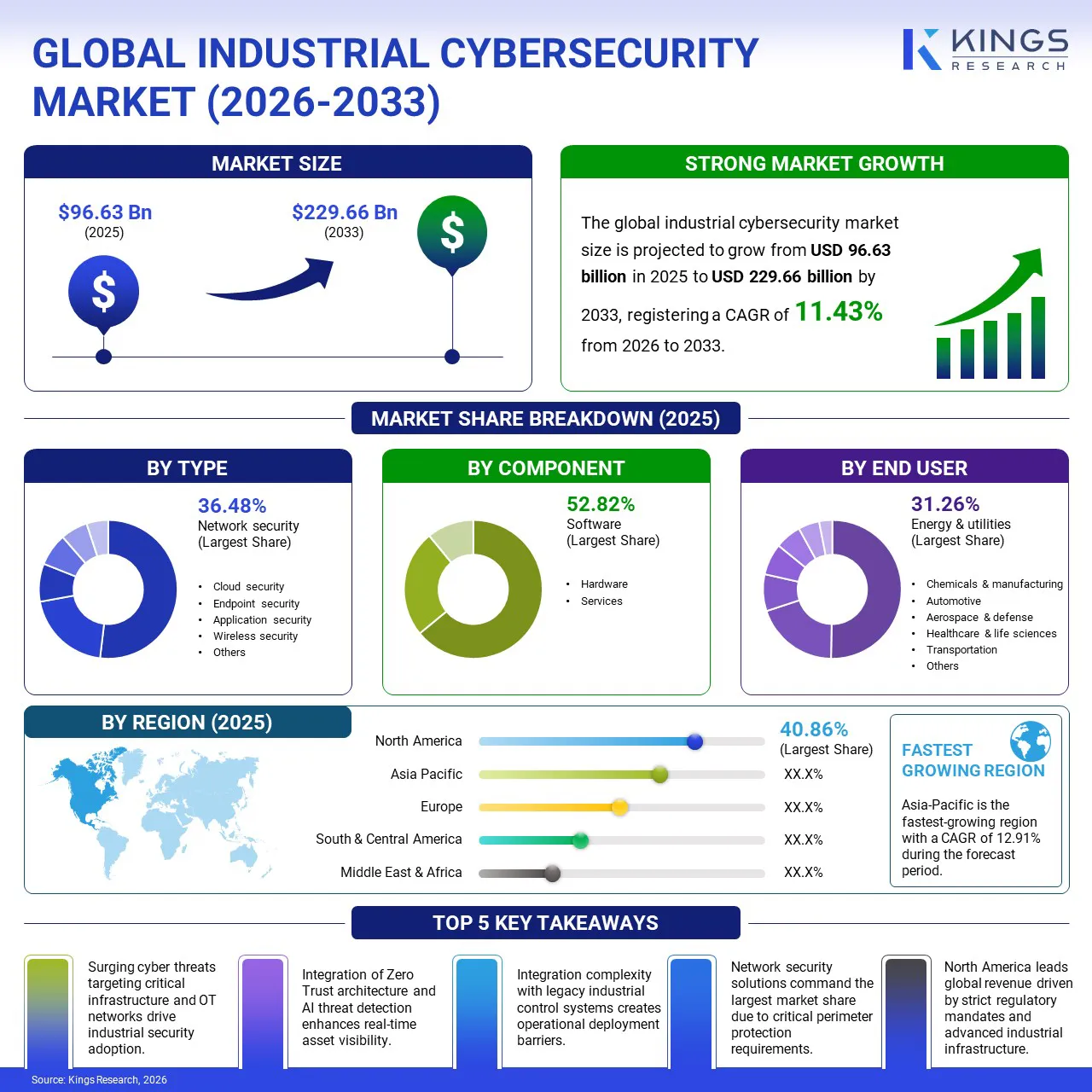
According to Kings Research, the global industrial cybersecurity market size was valued at USD 96.63 billion in 2025 and is projected to reach USD 229.66 billion by 2033, growing at a CAGR of 11.43% from 2026 to 2033.
The market is undergoing robust expansion, fueled by increasing IT-OT convergence, widespread IoT adoption, and the operational integration of AI-powered robotics. Elevated demand for critical infrastructure defense, firewalls, and encryption capabilities act as major catalyzing factors propelling market growth.
Additionally, the introduction of technologies comprising the Internet of Things (IoT), cloud computing, and generative AI further accelerates the demand for increased cybersecurity across diverse industrial verticals, which are designed to protect against cyber-attacks and data breaches.
The increasing adoption of AI-powered industrial robots is driving demand for advanced industrial cybersecurity solutions to protect connected robotic systems, operational data, and control networks from cyberattacks and data breaches. While AI and robotics enhance automation, productivity, and operational efficiency, their growing integration also expands the industrial attack surface.
Cyberattacks targeting AI-enabled robots can lead to system downtime, operational disruptions, malfunctions, and compromises to data confidentiality and integrity. As industrial automation and AI adoption continue to expand, increasingly sophisticated cybersecurity measures will be required to secure robotic systems and mitigate evolving cyber threats.
Industrial cybersecurity issues related to high costs and limited availability of experienced professionals are a major concern for industrial organizations. These issues require a holistic approach, including the development of specific training programs, the adoption of best practices for system security, and the implementation of a zero-trust architectural model. These actions enable organizations to improve their cybersecurity and protect themselves from the potentially devastating consequences of cybersecurity breaches.
Agentic AI enables autonomous identification and continuous monitoring of networks, recognition of emerging attack patterns, and autonomous deployment of countermeasures to neutralize cyber threats before escalation. Machine learning models trained on vast cybersecurity datasets anticipate future threats, assess vulnerabilities, and recommend proactive measures.
Additionally, the ability of agentic AI to analyze attack surfaces in real time empowers organizations to fortify their security and prepare robust cyber threat mitigation strategies.
|
Segmentation |
Details |
|
|
By Type |
Network Security, Endpoint Security, Cloud Security, Application Security, Others |
|
|
By Component |
Hardware, Software, Services |
|
|
By End User |
Energy & Utilities, Chemicals & Manufacturing, Automotive, Aerospace & Defense, Healthcare & Life Sciences, Transportation, Others |
|
|
By Region |
North America |
U.S., Canada, Mexico |
|
Europe |
France, the UK, Spain, Germany, Italy, Russia, and the rest of Europe |
|
|
Asia Pacific |
China, Japan, India, Australia, ASEAN, South Korea, and the rest of Asia-Pacific |
|
|
Middle East and Africa |
Turkey, U.A.E., Saudi Arabia, South Africa, Rest of Middle East & Africa |
|
|
South and Central America |
Brazil, Argentina, and the rest of South and Central America |
|
The software segment captures the highest market share of 52.82% in 2025. The segment growth is driven by rising demand for software solutions such as firewalls, SCADA encryption, virtualization security, anti-virus/malware, and backup and recovery, which are essential for mitigating critical operational risks and ensuring operational continuity across connected environments.
The energy & utilities segment dominates the market with a majority share of 31.26% and is the largest segment with a market value of USD 30.21 billion in 2025. The segment growth is driven by the rising demand for industrial cybersecurity solutions aimed at protecting industrial control systems from cyber-attacks.
Based on regional analysis, the global industrial cybersecurity market is classified into North America, Europe, Asia Pacific, the Middle East and Africa, and South and Central America.
The North America industrial cybersecurity market share stood at around 40.86% in 2025, registering a valuation of USD 39.48 billion. The market growth is driven by the growing concerns related to cybersecurity across the U.S. and Canada, especially in critical infrastructure, including energy, water, transportation, and manufacturing systems. This necessitates that end users scrutinize the efforts associated with preeminent practices to secure their systems, such as implementing secure coding practices, regular software updates, intrusion detection and prevention systems, and employee training.
Moreover, the U.S. federal government is continuing its efforts to provide resources and guidance to organizations to improve their cybersecurity and provide incentives to encourage organizations to adopt best practices to secure their systems, which propel market growth across the region.
Asia Pacific was the fastest-growing region, registering a CAGR of 12.91% over the forecast interval. The growth rate is driven by the increased focus of governments on a proactive approach to cybersecurity that includes risk assessments, vulnerability assessments, regular security audits, and incident response planning. The government across the region is providing initiatives that stimulate the focus on improving the security of the region's critical infrastructure.
Governments across the region are introducing cybersecurity strategies aimed at solidifying cybersecurity across critical infrastructure sectors. For instance, the government of Singapore launched a cybersecurity act aimed at strengthening critical infrastructure in the country against cyberattacks.
Market vendors across the region are launching innovative cyber capabilities, expanding the footprint of security data centers, and continuing to establish dedicated engineering teams to assist organizations in fortifying their defenses and catalyzing their digital transformation, which fosters market share over the estimated timeframe.
Stringent regulatory frameworks, including GDPR and NIS2, compel industries to bolster critical infrastructure resilience across Europe. The adoption of Industry 4.0, zero-trust architectures, and AI-driven security automation across major industrial hubs comprising Germany, the UK, France, and others further drives market growth.
Rapid industrial digitalization, increased IoT connectivity, and rising cross-sector cyber threats across South and Central America fuel the market development of industrial cybersecurity. Market growth is further supported by evolving national data protection mandates and expanding public-private investments in Computer Security Incident Response Teams (CSIRTs).
Moreover, investments in securing energy, oil and gas, and public utility infrastructures against targeted cyber risks act as major market propellers for the Middle East and Africa region. Furthermore, strong government initiatives and national cybersecurity mandates across GCC nations drive the demand for cloud security and operational technology (OT) protection solutions.
The global industrial cybersecurity market is fragmented in nature with prominent market players capturing significant market share in their respective geographies. Companies are engaging in strategic business strategies, including partnerships, mergers and acquisitions, product innovations, and joint ventures, to expand their product portfolio.
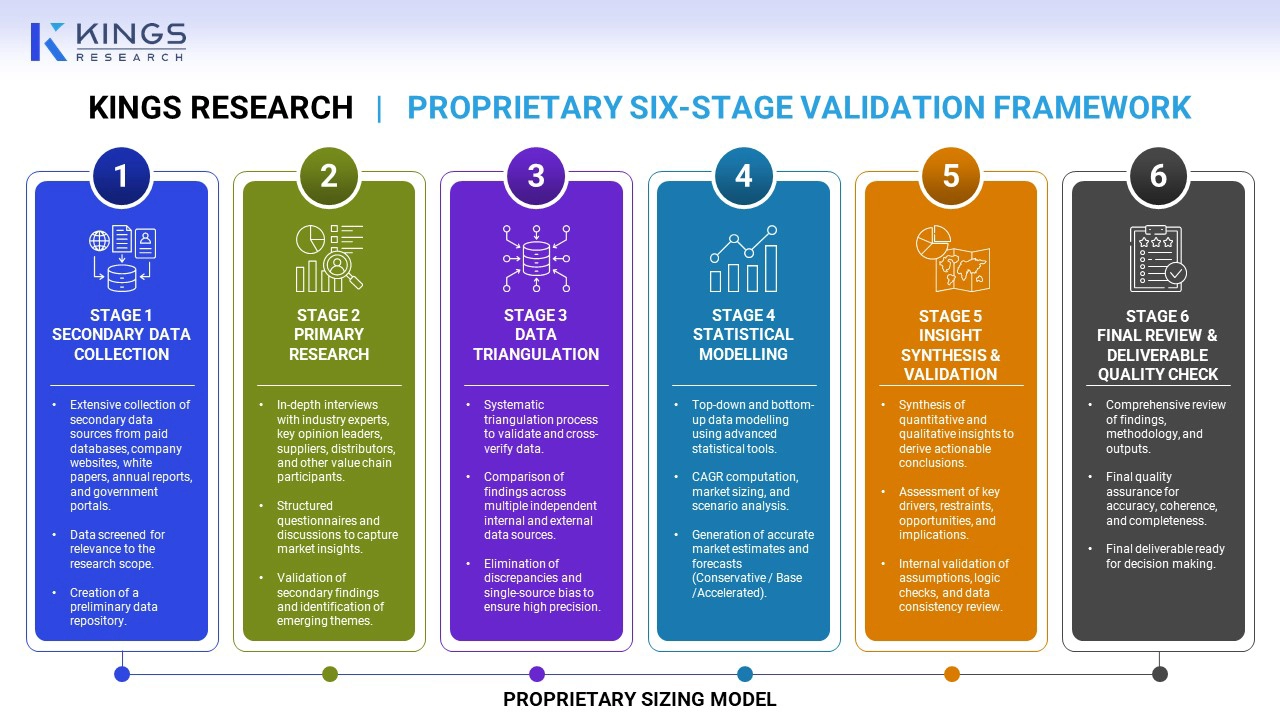
Our methodology triangulates insights from multiple independent and publicly available research databases, which is further validated against regulatory filings and public company disclosures. All estimates are cross-verified; no single-source data is presented without validation.
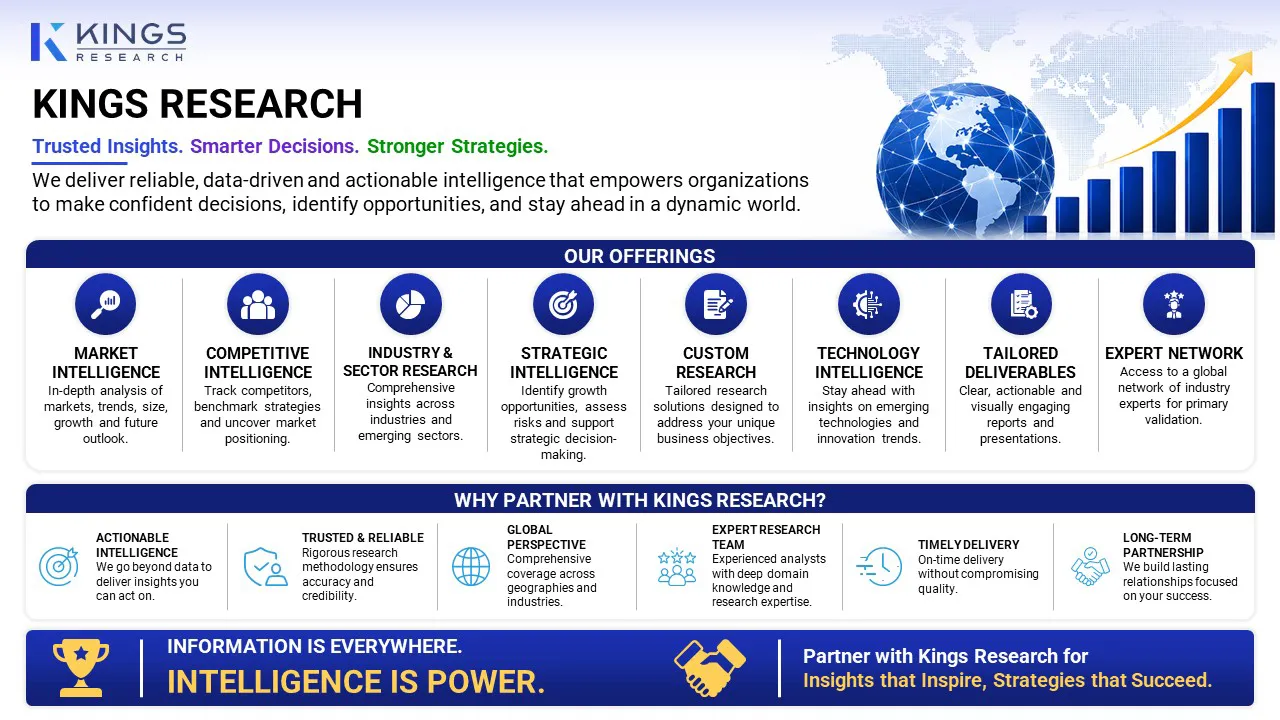
We deliver tailored, data-driven intelligence and strategic guidance to help organizations identify, evaluate, and capitalize on key market opportunities.
Frequently Asked Questions

Saket is a proficient research specialist with a strong emphasis on the renewable energy and BFSI sectors. His expertise lies in trend analysis and data interpretation, which allows him to extract critical insights vital for strategic decision-making. Saket’s commitment to applying advanced analytical techniques underscores his dedication to addressing complex challenges. Beyond his professional endeavors, Saket is an avid football enthusiast who thrives on the competitive dynamics of the game. This passion for teamwork and strategy mirrors his approach to research and problem-solving in his professional life. His ability to translate numerical trends into actionable business frameworks has consistently benefited stakeholders across both established and emerging markets. Saket's disciplined analytical rigor, combined with his innate strategic foresight, ensures that every project he undertakes yields clear, defensible conclusions. Furthermore, his collaborative spirit enables him to engage effectively with cross-functional teams and drive consensus during high-stakes research initiatives.
Habi is a seasoned research and consulting leader with renowned experience in guiding clients on strategic growth and transformation initiatives across global markets. He has led high-performing research teams that deliver actionable insights on market expansion, M&A strategies, opportunity assessment, new business development, and product launches. His project portfolio spans large petrochemical producers, electronic device manufacturers, lubricants companies, and other leading enterprises across diverse industrial and consumer sectors. He currently heads the research department at Kings Research, where he is responsible for setting the research agenda, mentoring analysts, and ensuring client-ready deliverables that support executive decision-making. With extensive experience in market intelligence, strategic research, and consulting, Habi brings a strong understanding of evolving industry dynamics, competitive landscapes, emerging opportunities, and business growth challenges. His expertise includes developing research frameworks, translating complex market data into actionable strategic recommendations, and working closely with senior stakeholders to address critical business questions. He has also contributed to building research capabilities, strengthening analytical methodologies, and driving a culture of quality and insight-led decision-making within research teams. His cross-industry exposure enables him to connect market trends with broader business implications and provide perspectives that help organizations identify opportunities, mitigate risks, and make informed strategic decisions.


