

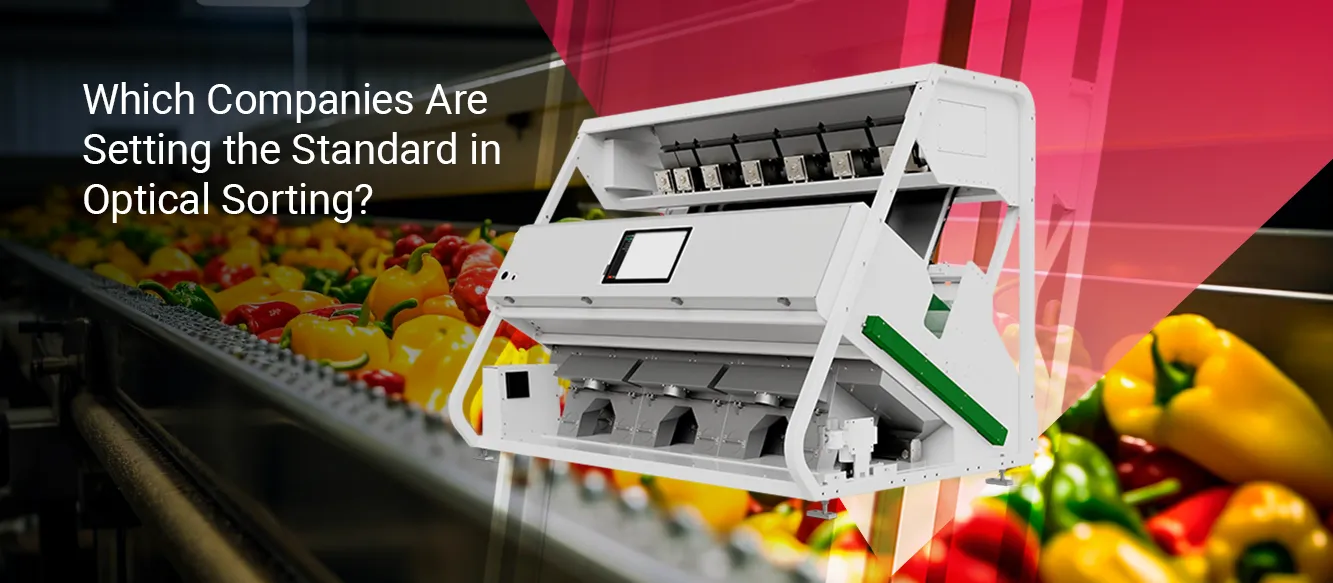
The optical sorting industry includes established equipment manufacturers, sensor technology providers, and specialists serving food processing, agriculture, and recycling operations. Companies such as TOMRA, Bühler, Satake, and Hefei Meyer Optoelectronic Technology compete alongside manufacturers focused on specific sorting applications and industrial requirements.
The top optical sorter companies differ in their product portfolios, financial performance, ownership structures, and geographic presence. Understanding these factors helps food processors, recycling facility managers, and equipment buyers evaluate suppliers based on operational requirements and investment considerations.
According to Kings Research, the global optical sorter market was valued at USD 2,275.5 million in 2025 and is estimated to reach USD 4,402.7 million by 2033, registering a CAGR of 8.72% over the forecast period from 2026 to 2033. These developments highlight the growing importance of automated inspection and material separation across industrial applications.
What Is an Optical Sorter?
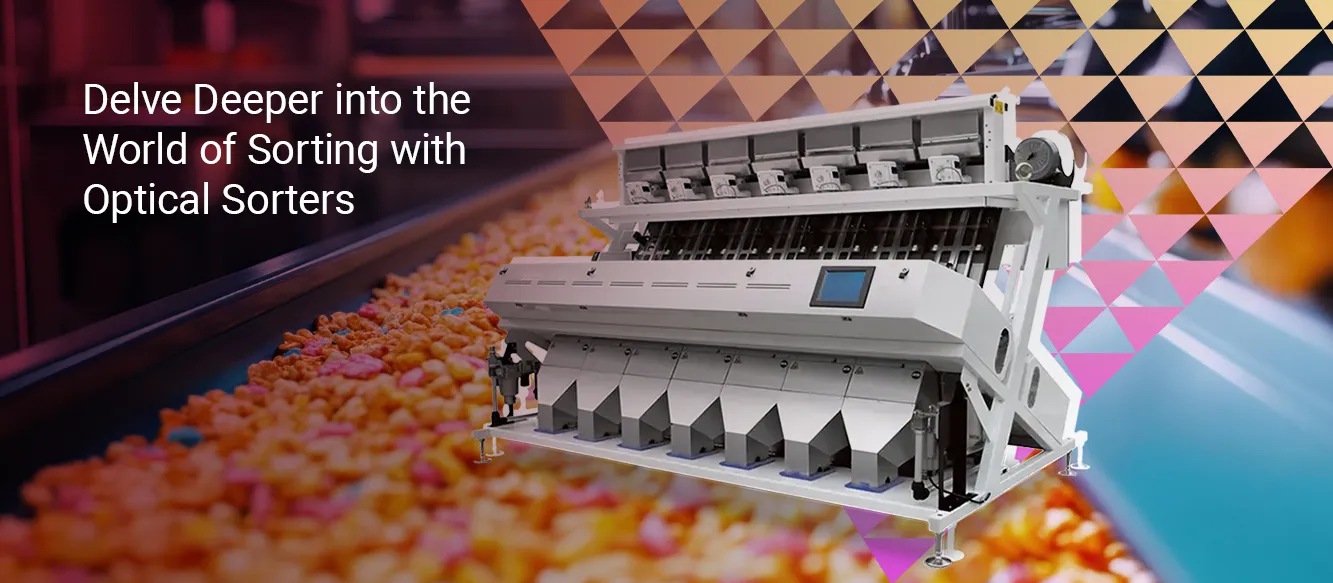
An optical sorter uses cameras, sensors, and image-processing technology to identify differences in the materials moving along a conveyor. The system evaluates characteristics such as color, shape, size, and composition before using targeted air jets or mechanical mechanisms to separate selected items. These systems support quality control and material recovery across several industries.
The equipment is used in food processing, plastics recovery, mining, and other industrial applications. Its capabilities depend on the sensing technology, material characteristics, and sorting requirements. Buyers can explore the optical sorting process to understand how different systems identify and separate materials.
Who Are the Leading Optical Sorter Manufacturers?
Optical sorter manufacturers serve different applications, from food grading and agricultural processing to plastics recovery and waste management. Kings Research identifies companies across these categories, with portfolios spanning color sorting, sensor-based separation, and automated recycling systems. The following companies represent the report's key players, listed alphabetically.
Key optical sorter companies
- Binder+Co AG
- Bühler Group
- Grain & Protein Technologies (Cimbria)
- GREEFA
- Hefei Meyer Optoelectronic Technology Inc.
- Machinex Industries Inc.
- National Recovery Technologies, LLC
- Pellenc ST
- RayTec Vision Limited
- REDWAVE
- Satake Corporation
- Sesotec Group
- STEINERT GmbH
- Techik Instrument (Shanghai) Co., Ltd.
- TOMRA Systems ASA
TOMRA
TOMRA operates across food sorting, recycling, and other resource recovery activities. Its annual report provides a useful view of the company's sorting-related business performance, although its reporting segments cover different applications.
According to TOMRA's 2025 annual report, TOMRA Food generated EUR 328 million in revenue in 2025, representing 5% growth. TOMRA Recycling, which also includes mining activities, generated EUR 218 million, down 18%. Together, these businesses represented 41.43% of the group's EUR 1,318 million revenue. The remaining revenue includes activities such as reverse vending.
Hefei Meyer Optoelectronic Technology
Hefei Meyer develops optical sorting systems and other optoelectronic equipment. Its portfolio includes color sorters used in agricultural and food processing applications, making it a relevant company among color sorting machine manufacturers.
A March 2026 summary of Hefei Meyer's annual report shows that its color sorter business generated RMB 1.753 billion in revenue in 2025, an increase of 8.05%. The company's total revenue was RMB 2.407 billion, which also included medical imaging activities. The distinction matters when comparing its sorting business with companies that report broader operating segments.
Satake, Bühler, and the Recycling Specialists
Satake and Bühler offer sorting technologies for food and agricultural processing, while several other manufacturers focus on material recovery and industrial separation. Product development across these companies reflects the growing role of machine vision and automated identification in sorting applications.
Satake introduced its SLASH modular sorter in April 2026, while Bühler launched its SORTEX AI700 deep-learning sorter in May 2025. These developments illustrate how manufacturers are incorporating advanced imaging and software into sorting systems. The wider machine vision industry provides relevant context for these technology developments.
The other companies in the Kings Research list address different sorting requirements. Binder+Co, REDWAVE, STEINERT, Machinex, Pellenc ST, and National Recovery Technologies serve recycling and resource recovery applications. GREEFA focuses on produce handling and grading, while Sesotec, Techik, and RayTec Vision offer inspection and sorting technologies for industrial and food applications.
Who Owns the Major Optical Sorter Brands Now?
Ownership structures can affect how buyers assess a manufacturer's business, product portfolio, and long-term presence. Cimbria is a notable example because its ownership changed following its separation from AGCO. TOMRA also operates through several business segments, with its Food and Recycling divisions covering optical sorting applications.
Cimbria is part of Grain & Protein Technologies (GPT), which was formed through an AGCO carve-out in November 2024 and subsequently acquired by American Industrial Partners. Grain & Protein Technologies' company history outlines this ownership transition. This distinction is important when reviewing older supplier listings that may still associate Cimbria with AGCO.
TOMRA's reporting structure also requires attention. Its Food and Recycling divisions cover optical sorting activities, while its broader group includes other operations, such as reverse vending. Its business portfolio also extends to produce sorting applications, including areas connected to fruit grading and sorting equipment.
Where Do Optical Sorter Manufacturers Operate in the USA?
The US market includes equipment manufacturers, international companies with local facilities, and suppliers serving recycling infrastructure projects. Their locations range from manufacturing and commercial operations to test and training centers. For buyers, these facilities can influence access to equipment demonstrations, technical support, and application testing.
Key Technology operates from Walla Walla, Washington, while Grain & Protein Technologies, the owner of Cimbria, is based in Franklin, Tennessee. TOMRA opened an Americas test and training center in Charlotte, North Carolina, in April 2026. Bühler and West-Link also opened a test and training center in Stockton, California, in March 2025, according to Kings Research.
Company performance and public procurement records provide additional context for optical sorter manufacturers in the USA. TOMRA's North American Recycling sales declined by 59% in 2025. Its third-quarter 2026 results showed Recycling revenue of EUR 54 million, compared with EUR 40 million in the corresponding quarter of 2025. Year-to-date revenue through the third quarter was EUR 141 million, compared with EUR 143 million in the same period of 2025. These figures reflect different reporting periods and should be assessed accordingly. The TOMRA third-quarter report provides the reported figures.
Public investment also demonstrates demand for sorting infrastructure. A CalRecycle grant approval document identifies NRT SpydIR-HS optical sorters supplied by Bulk Handling Systems as part of GreenWaste Recovery's proposed secondary plastics processing facility in California. Such projects illustrate the role of optical sorting equipment in expanding material recovery capacity.
How Much Does an Optical Sorter Cost?
Optical sorter cost varies according to processing capacity, sensing technology, material type, configuration, and manufacturer. Equipment prices can range from tens of thousands to millions of dollars. Buyers should also account for installation, power requirements, air systems, wear parts, calibration, and other site-specific expenses when comparing quotations.
Public procurement records offer useful reference points, although the figures cover different equipment configurations and project scopes.
|
Public cost reference |
Reported amount |
What the amount covers |
|
USD 715,300 |
Project cost including steel, freight, installation, and testing |
|
|
USD 492,300 |
Machine price alone, representing 68.82% of the quoted project cost |
|
|
USD 4,879,712 |
Three optical sorters, a glass decontamination unit, conveyors, and feeders |
The Iowa Department of Natural Resources' project financial assistance form covers the purchase and installation of an MSS Cirrus FiberMax optical sorter proposed by Metro Waste Authority. Similarly, a CalRecycle grant approval document outlines SANCO Services LP's proposed equipment upgrades, including three optical sorters, a glass decontamination unit, conveyors, and feeders. These examples illustrate how project costs can extend beyond the sorting equipment itself to include installation and supporting infrastructure.
For facilities handling recovered plastics, the choice of sorting equipment also depends on the material stream and the required purity level. Investment decisions should account for the wider economics of recycled-plastics processing, including the value of recovered material and downstream processing requirements.
What Should Buyers Know About Regulatory and Technology Developments?
Regulatory requirements, recycling targets, and material-identification limitations can influence equipment selection and facility planning. Buyers evaluating optical sorting systems should consider the standards applicable to their markets, the materials they intend to process, and the performance of the selected sensing technology under actual operating conditions.
The EU Machinery Regulation applies from January 20, 2027. Certain high-risk machinery involving AI-based safety functions will require third-party conformity assessment under the applicable provisions. Manufacturers supplying equipment to the EU market should assess the requirements relevant to their machinery and intended use.
In the US, the EPA's 2021 National Recycling Strategy supports a national recycling rate target of 50% by 2030. The EPA strategy page reflects the agency's subsequent review activity, including the review announced in June 2026.
Material characteristics also affect sorting performance. Conventional near-infrared (NIR) systems have limited effectiveness when identifying black plastics because carbon black absorbs the light used by the sensors. Research published through the University at Buffalo discusses this limitation and alternative approaches. The research publication offers technical context for facilities assessing plastic recovery systems.
Conclusion
The optical sorting industry includes established manufacturers such as TOMRA, Bühler, Satake, and Hefei Meyer, alongside specialists serving recycling, resource recovery, and industrial applications. Their product portfolios and financial performance reflect different business priorities, making it important for buyers to evaluate suppliers according to their specific processing requirements rather than relying on company rankings alone.
Ownership structures also provide useful context when assessing suppliers. Cimbria's transition from AGCO to Grain & Protein Technologies illustrates why buyers should verify current corporate relationships when reviewing manufacturer information. Meanwhile, TOMRA's Food and Recycling businesses and Hefei Meyer's color-sorting operations demonstrate how companies report sorting-related performance across different business scopes.
For US food processors and recycling facility operators, supplier location, access to testing facilities, technical support, and equipment availability are also important considerations. Public procurement records further show that the purchase price represents only part of the investment, with installation, infrastructure, and commissioning adding to the overall project cost.
Ultimately, selecting among the top optical sorter companies requires an assessment of sorting technology, material compatibility, throughput, operating requirements, service support, and total project expenditure. Reviewing these factors alongside company disclosures and market developments can help buyers make more informed equipment decisions. For additional market insights, explore the Kings Research optical sorter market report.
Frequently Asked Questions
Who are some manufacturers of color sorting machines?
Hefei Meyer, Satake, TOMRA, and Bühler are among the companies associated with color sorting and optical sorting equipment. Their portfolios serve different applications, including food processing and agricultural sorting. Buyers should compare each manufacturer's sensing technology, throughput, material compatibility, and service capabilities before selecting a system.
Which industry uses the most optical sorters?
Food processing represented the leading end-use application in the Kings Research assessment. Optical sorting systems help processors identify and separate products based on visible characteristics, supporting grading, quality control, and the removal of unwanted materials across food production operations.
Can optical sorters sort black plastic?
Conventional NIR sorting systems have limited effectiveness with black plastics because carbon black absorbs the light used for material identification. Alternative sorting approaches have been discussed in research, but buyers should request application-specific performance data and conduct material tests before selecting a system.
Which region leads the optical sorter market?
Asia Pacific held the largest regional share in the Kings Research assessment. Demand across food processing, agriculture, and recycling applications supports the region's position. Equipment suppliers evaluating regional opportunities should consider local processing requirements, investment in recycling infrastructure, and demand for automated sorting systems.
What is the US National Recycling Goal?
The EPA's National Recycling Strategy supports a national recycling rate target of 50% by 2030. The strategy provides a framework for improving collection, processing, and material recovery. Optical sorting systems can support these efforts by helping facilities identify and separate recyclable materials more efficiently.