Obesity has emerged as a major challenge for public health around the world. According to the World Health Organization (WHO), around 45% of adults aged 18 and over were above normal weight in 2024. This represented approximately 2.6 billion adults who were overweight, and 940 million of these people were above a body mass index of 30. With a high prevalence of obesity, the risk of Type 2 diabetes rises substantially. A new opportunity has emerged at the intersection of diabetes management, metabolic healthcare, and obesity treatment.
Novo Nordisk A/S recognized this opportunity and launched Ozempic. The growing adoption of glucagon-like peptide-1 (GLP-1) therapies has also helped boost the demand for Ozempic and made it a new trend in the healthcare sector. For healthcare executives and investors, the Ozempic phenomenon raises a more important question: How will the GLP-1 revolution redistribute commercial opportunities across the healthcare industry?
Kings Research analysts are tracking the Ozempic phenomenon to understand how it is shaping competitive dynamics and treatment approaches across the broader healthcare industry. With the prevalence of diabetes and obesity expected to rise, analyzing the opportunity around GLP-1 and Ozempic medications becomes crucial for healthcare companies and investors looking to improve their business potential. Let's examine how the Ozempic effect is influencing the broader healthcare sector.
How Did Ozempic Become a Commercial Force in Healthcare?
Ozempic was approved in the United States back in 2017 for improving glycemic control in adults with Type 2 diabetes. The medication contains semaglutide, a GLP-1 receptor agonist developed by Novo Nordisk. Its prescription information includes cardiovascular risk reduction for certain adults with Type 2 diabetes and established cardiovascular disease, and kidney-related risk reduction for eligible patients with Type 2 diabetes and chronic kidney disease.
Wegovy is another semaglutide-based product made by Novo Nordisk that is approved for chronic weight management. Though often grouped and mentioned in the same conversations, it is important to distinguish between Ozempic and Wegovy, as they are approved for different indications and have separate dosing regimens.
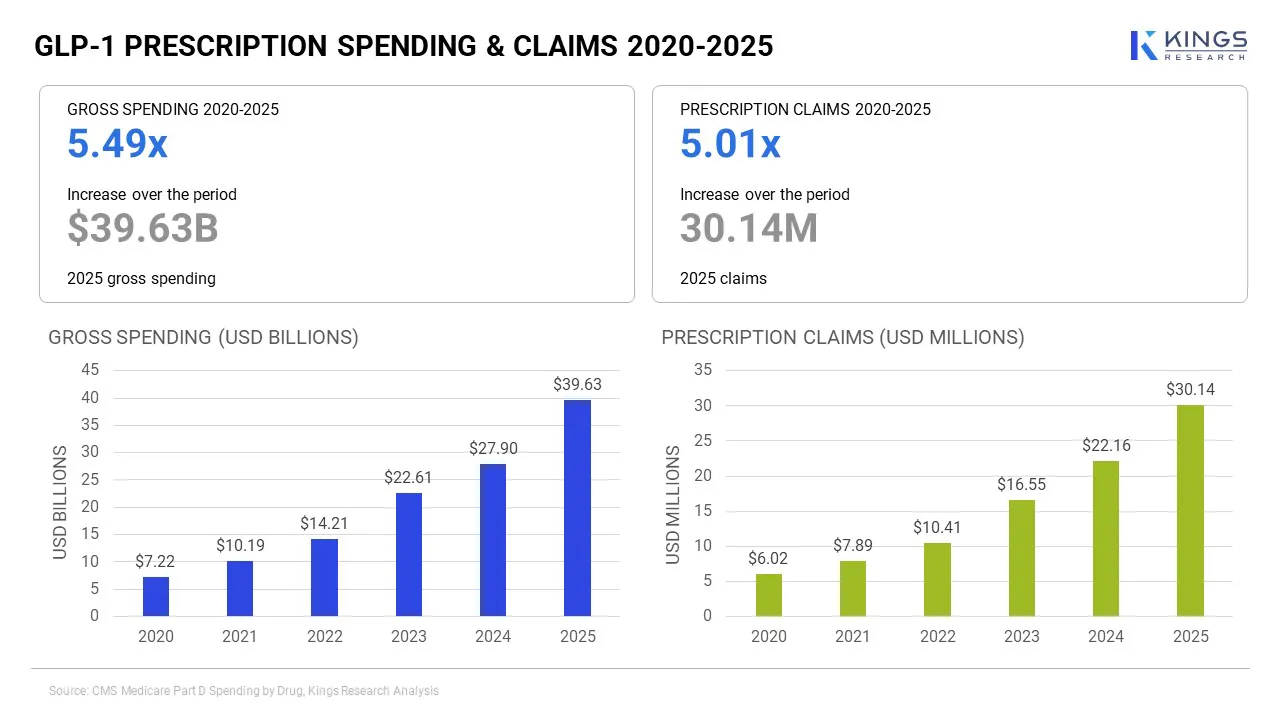
The commercial success of these semaglutide-based drugs reflects a substantial change in global pharmaceutical demand. GLP-1 therapies are becoming central in discussions about obesity treatment, cardiovascular health, and metabolic disease management. The implications of GLP-1 therapeutics' commercial success are expected to extend well beyond traditional healthcare and medication-related considerations. Here’s a spending and claims analysis for GLP-1 demand in the United States that depicts how it has evolved over the past few years.
Is Novo Nordisk’s Advantage in the Ozempic Business Vanishing?
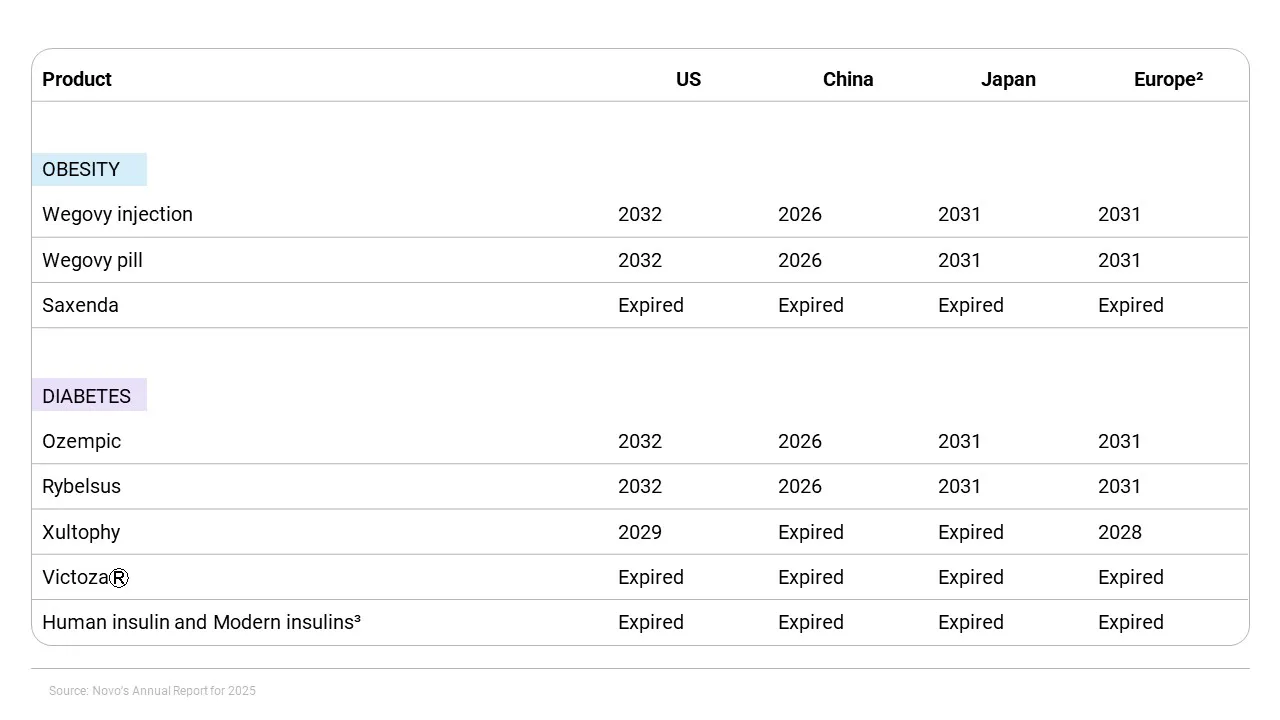
Novo Nordisk's first-mover advantage is eroding. Pharmaceutical competition, pricing challenges, and patent expirations are the major forces behind the erosion of Novo’s advantage in the Ozempic business that it pioneered. A major challenger, Eli Lilly, has emerged and gained substantial commercial traction.
Eli Lilly has gained commercial traction through its tirzepatide-based drugs, Mounjaro and Zepbound. In 2025, Mounjaro generated USD 22.96 billion in revenue, growing 99% year over year, while Zepbound generated USD 13.54 billion, increasing 175%. By comparison, Novo Nordisk reported DKK 127.09 billion in Ozempic sales in 2025, up 10% at constant exchange rates. Lilly's growth reflects strong demand, the competitive appeal of dual GIP/GLP-1 activity, and expanding market access. The competitive pressure is extending beyond branded products.
|
Competitive Dimension |
Novo Nordisk |
Eli Lilly |
|
Diabetes portfolio |
Ozempic |
Mounjaro |
|
Obesity portfolio |
Wegovy |
Zepbound |
|
Active ingredient |
Semaglutide |
Tirzepatide |
|
Treatment mechanism |
GLP-1 receptor agonism |
Dual GIP and GLP-1 receptor agonism |
|
Strategic priorities |
Oral formulations, manufacturing, market access |
Pipeline development, manufacturing, portfolio expansion |
Novo has acknowledged losses in GLP-1 volume market share across diabetes and obesity markets. Patent expirations in India and Brazil in March 2026 have also opened up opportunities for generic semaglutide products in these markets. Canada has also witnessed changes, as key patent protection ended in the country for semaglutide. Cheaper generics are expected to substantially change the competitive landscape for GLP-1 therapy providers. Approvals of new GLP-1 drugs are also expected to change the healthcare industry going forward.
- In April 2026, Health Canada announced the approval of the first generic version of Novo Nordisk’s Ozempic made by Dr. Reddy’s Laboratories. The generic semaglutide injection was approved after a thorough review of the evidence provided by the company. It is indicated for once-weekly treatment of adult patients with Type 2 diabetes.
- In May 2026, Anvisa, the health regulatory agency for Brazil, announced the approval of the country’s first semaglutide-based injector pen. The approved drug uses the same active ingredient as Novo Nordisk's Ozempic, whose patent expired in Brazil in March 2026. The drug is expected to be produced at the EMS plant in São Paulo state with a capacity of up to 40 million pens per year.
- In July 2026, South Africa’s local health regulator granted approval for the generic version of semaglutide developed by Sun Pharma. The treatment is expected to be launched in 2 mg/1.5 mL and 4 mg/3 mL strengths. This is the second major regulatory win for Sun Pharma following a successful rollout in India.
These developments signal a transition in the healthcare landscape. Novo cannot maintain its dominance through semaglutide's first-mover advantage alone. It will have to focus on innovation, pricing, manufacturing scale, and brand strength to stay competitive.
How Ozempic and GLP-1 Drugs Are Changing the Weight-Loss and Diabetes Treatment Businesses?
The growing emphasis on adopting pharmaceutical-led, clinically supervised approaches to weight management and Type 2 diabetes care is creating new opportunities. This change is expected to transform the competitive landscape across the healthcare industry.
In the weight-loss industry, prescription-based treatments are increasing the role of endocrinologists, obesity specialists, primary care physicians, and specialized clinics. Traditional providers offering nutrition counseling, behavioral support, and lifestyle programs may face greater competition, but these services remain important for long-term weight management and patient monitoring.
Sustained use of GLP-1 therapies can raise questions regarding affordability, tolerability, and adherence, which are central to patient retention. A study titled “Weight regain and cardiometabolic effects after withdrawal of semaglutide 2.4 mg: The STEP 1 trial extension” showed that participants regained approximately two-thirds of their prior weight loss after discontinuing semaglutide and the lifestyle intervention after one year. This study reinforces why GLP-1 medications cannot completely replace traditional weight-management approaches.
The advent of GLP-1 medications has shifted the emphasis in diabetes care from merely lowering blood sugar to addressing metabolic and weight-related health more broadly. Clinical trials have also shown reductions in the risks of heart attacks and strokes and slower progression of chronic kidney disease. The development of oral semaglutide formulations is also expected to reduce the need for injections in diabetes care. However, GLP-1 drugs are not universal replacements for insulin or other established therapies; treatment decisions remain patient-specific.
As per the 2026 Access to Medicine Index published by Access to Medicine Foundation, diabetes R&D is highly concentrated on GLP-1 medications. Despite this, there is a significant gap in insulin access around the world, and it is particularly notable in lower-income countries. Lilly, Novo Nordisk, and Sanofi are taking steps to expand access to insulin.
Companies that continually assess clinical outcomes, treatment accessibility, patient retention, and their ability to combine medication and lifestyle support are expected to benefit from the rise in GLP-1 medication demand.
The Healthcare Businesses That Stand to Gain or Lose
The impact of Ozempic is extending across multiple healthcare segments. While pharmaceutical manufacturers are the most direct beneficiaries, the wider GLP-1 ecosystem creates opportunities and challenges for businesses involved in treatment delivery, reimbursement, manufacturing, and patient management.
The following matrix outlines the potential commercial implications.
|
Healthcare business |
Potential opportunity |
Potential disruption or risk |
|
Pharmaceutical manufacturers |
Higher demand for obesity and diabetes treatments |
Pricing pressure, competition, and R&D costs |
|
CDMOs and API manufacturers |
Increased demand for peptide production and sterile manufacturing |
Capacity constraints and quality requirements |
|
Hospitals and specialty clinics |
Expansion of metabolic and obesity treatment services |
Changes in traditional treatment volumes |
|
Bariatric surgery providers |
Opportunities for integrated medical and surgical pathways |
Potential changes in surgical patient demand |
|
Insurers and PBMs |
New formulary management and utilization services |
Higher prescription spending |
|
Retail and specialty pharmacies |
Increased prescription dispensing |
Pricing and distribution pressures |
|
Telehealth providers |
Growth in digital weight-management services |
Regulatory, clinical, and patient-retention risks |
|
Medical device companies |
Demand for injection devices and drug-delivery technologies |
Product substitution and manufacturing competition |
The broader conclusion is that GLP-1 adoption will not create winners uniformly. Companies must evaluate how treatment changes affect their specific revenue streams, operating costs, and competitive positioning.
The Cost, Access, Adverse Effects, and Regulatory Challenges Slowing Down GLP-1 Boom
Despite the commercial opportunity, affordability remains one of the biggest obstacles to wider adoption. Insurers face a growing challenge of balancing patient demand with the financial implications of long-term treatment. The rapidly growing demand for GLP-1 treatments is one part of the equation; the other part depends on the ability of healthcare purchasers to finance treatment at scale. The coverage environment also depends on patient eligibility, reimbursement, and pharmaceutical market access.
Regulatory oversight is also an important factor that every company focusing on capitalizing on the Ozempic effect should assess thoroughly. Regulatory updates and changes have profound commercial implications for pharmacies, outsourcing facilities, digital prescription platforms, and pharmaceutical manufacturers.
The growing adoption of Ozempic and other GLP-1 therapies also brings safety and tolerability considerations that could influence long-term market growth. Despite offering benefits for eligible patients, these medications have been known to cause adverse effects ranging from common gastrointestinal symptoms to less frequent but potentially serious complications.
According to the FDA's prescribing information, the most frequently reported side effects of Ozempic include nausea, vomiting, diarrhea, abdominal pain, and constipation. These effects are particularly relevant in the initial stages of treatment. More serious risks that have been reported are acute pancreatitis, gallbladder disease, acute kidney injury associated with dehydration, severe gastrointestinal reactions, and allergic reactions.
These adverse effect considerations could hamper the commercial potential of the GLP-1 medication ecosystem. Investments in safety monitoring, clinical evidence, and patient education are essential for pharmaceutical companies to make the most of the GLP-1 trend going forward. Other challenges include adverse-event monitoring, counterfeit products, treatment discontinuation, and supply-chain reliability. For pharmaceutical companies, maintaining product quality, consistent supply, and reasonable pricing will remain essential to sustaining market confidence.
A 2026 study published on PubMed Central estimates that injectable generic semaglutide could be manufactured for approximately USD 28 to 140 per patient annually, while oral formulations could cost USD 186 to 380 annually. The price per patient gap between injectable and oral formulations highlights a substantial global access opportunity. By the end of 2026, generic injectable semaglutide could potentially reach 162 countries, representing 69% of the global type 2 diabetes burden and 84% of clinical obesity cases.
Want to assess how drug prices, regulatory changes, and market access could shape your healthcare business strategy? Connect with Kings Research analysts to gain a comprehensive understanding of the healthcare sector and all the factors influencing it.
How is the Ozempic Effect Shaping the Future of Healthcare Businesses?
The rise of Ozempic and the broader GLP-1 market represents a structural development in pharmaceutical competition and healthcare delivery. Pharmaceutical competition has moved beyond drug efficacy. Companies that have proper manufacturing capacity, affordability, clinical evidence, delivery formats, and international market access are expected to shape the long-term commercial landscape for GLP-1 medications.
Reimbursement is estimated to play a crucial role in ensuring the long-term commercial sustainability of GLP-1 drugs. Insurers, employers, and healthcare providers must evaluate the immediate cost of treatment against potential long-term health benefits. Investment opportunities in peptide manufacturing, drug-delivery technologies, digital healthcare, and integrated metabolic treatment services are also emerging across the pharmaceutical sector.
Understanding the transformation early and spotting opportunities before competitors could be key to maximizing the benefits of the Ozempic effect. Want to understand how the healthcare sector is shaping up and how your business can benefit from the rise in demand for GLP-1 medications? Connect with analysts at Kings Research to learn more about the healthcare industry and its changing trends.