

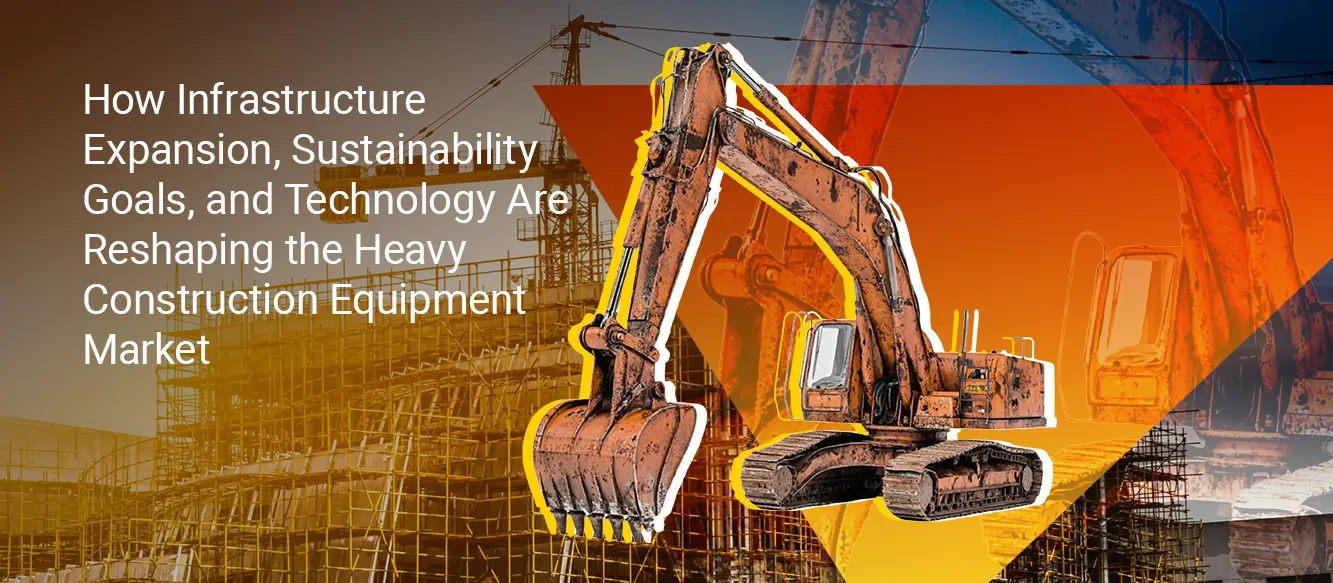
Heavy construction equipment refers to the heavy-duty machines, such as excavators, loaders, bulldozers, graders, cranes, and haulage equipment, used for earthmoving, excavation, lifting, material handling, and site preparation across construction, mining, transportation, energy, and industrial projects.
Construction companies today face a difficult balancing act. Infrastructure projects are becoming larger and more complex, environmental regulations are tightening, and project owners increasingly expect faster delivery timelines without sacrificing efficiency or sustainability.
As a result, heavy construction equipment is no longer evaluated solely on horsepower, lifting capacity, or durability. Contractors, fleet managers, and project developers are increasingly prioritizing fuel efficiency, emissions compliance, connectivity, predictive maintenance capabilities, and long-term operating costs when making procurement decisions.
These shifts are changing how equipment is designed, purchased, and deployed across construction, mining, transportation, energy, and industrial projects worldwide.
This article explores the key forces influencing equipment demand and explains how infrastructure investment, sustainability priorities, regulatory requirements, and digital technologies are reshaping the future of heavy construction equipment.
This article explores the key forces influencing equipment demand and explains how infrastructure investment, sustainability priorities, regulatory requirements, and digital technologies are reshaping the future of heavy construction equipment.
Why Infrastructure Spending Remains the Largest Demand Driver
Infrastructure development remains one of the most important drivers of demand for heavy construction equipment.
Governments around the world are investing heavily in transportation networks, public utilities, energy systems, ports, airports, and urban development projects. These initiatives require extensive earthmoving, excavation, grading, lifting, material handling, and site preparation activities.
Every stage of an infrastructure project depends on heavy machinery. Contractors rely on excavators, loaders, bulldozers, graders, cranes, and haulage equipment to complete projects efficiently and safely.
Infrastructure programs also create long-term demand because many projects extend over several years. This sustained activity supports:
-
Equipment purchases
-
Rental fleet expansion
-
Aftermarket services
-
Replacement cycles
-
Maintenance and repair operations
The Federal Highway Administration’s FY 2026 budget request totals $72.6 billion, including USD 8.5 billion in advance appropriations under the IIJA, and includes a USD 2.3 billion request for the INFRA program. Such investments create sustained demand for earthmoving, material handling, paving, and site-development equipment.
The global heavy construction equipment market was valued at USD 239.19 billion in 2024 and is projected to reach USD 329.25 billion by 2032, according to Kings Research, reflecting continued demand driven by infrastructure development and urbanization.
As countries continue investing in transportation, logistics, utilities, and industrial development, infrastructure spending is expected to remain a major catalyst for equipment demand.
How Sustainability Goals Are Influencing Equipment Procurement
Environmental performance has become an increasingly important factor in construction planning.
Historically, contractors focused primarily on productivity, machine durability, and acquisition costs. Today, sustainability objectives are influencing procurement decisions across both public and private sector projects.
Organizations are under growing pressure to reduce environmental impacts throughout the construction lifecycle. This pressure affects project owners, contractors, equipment manufacturers, and material suppliers alike.
According to the United Nations Environment Programme, cement and steel used in construction account for approximately 18% of global emissions.
As a result, equipment buyers are increasingly evaluating:
-
Fuel consumption
-
Emissions performance
-
Lifecycle operating costs
-
Electrification potential
-
Fleet sustainability metrics
Key Areas of Manufacturer Investment
Equipment manufacturers are responding through investments in:
-
Electric construction equipment
-
Hybrid machinery platforms
-
Alternative fuel technologies
-
Improved engine efficiency
-
Battery-powered compact equipment
The adoption rate varies by machine type. Compact equipment used in urban environments is generally moving toward electrification more quickly, while larger heavy-duty machines continue to rely on advances in diesel efficiency, hybrid systems, and emerging fuel solutions.
Manufacturers that can help contractors meet environmental objectives without sacrificing productivity are likely to strengthen their competitive position over the coming decade.
The Regulatory Shift Reshaping Equipment Design and Manufacturing
Environmental regulations are exerting a stronger influence on equipment development strategies. Policymakers are introducing stricter standards to improve air quality and reduce harmful emissions from off-road machinery.
Heavy construction machinery falls within the category of non-road mobile machinery. This segment contributes significantly to mobile-source emissions. According to the Climate and Clean Air Coalition, non-road mobile machinery and engines generate approximately 30% of nitrogen oxide emissions from mobile sources in major global markets.
This statistic explains why regulators are paying closer attention to equipment emissions. Nitrogen oxides contribute to smog formation and air quality concerns. Governments continue to establish stricter standards for engine performance and emissions control.
Manufacturers must invest heavily in research, engineering, testing, and product redesign to meet compliance requirements. Equipment platforms must balance environmental performance, durability, power output, and operational reliability. The challenge becomes more significant in heavy-duty applications where machinery operates under demanding conditions for extended periods.
The regulatory environment is also influencing purchasing behavior. Contractors operating in jurisdictions with strict emissions requirements often prioritize newer equipment that meets compliance standards. Fleet modernization has become a practical requirement for many operators.
Regulations are also creating opportunities for manufacturers that can introduce compliant solutions without sacrificing productivity. Companies that successfully balance performance and environmental requirements are likely to gain an advantage in competitive markets.
Digitalization and Automation Are Changing Fleet Economics
While sustainability and regulation often dominate industry discussions, digital transformation is emerging as another major force shaping the heavy construction equipment market.
Construction projects have traditionally relied on manual monitoring and reactive maintenance practices. Digital technologies now support a more data-driven approach to fleet management and equipment utilization.
Connected machinery generates continuous streams of operational data, including fuel consumption, idle time, machine health indicators, and utilization rates. Contractors increasingly use this information to identify underutilized assets, reduce unplanned downtime, and improve maintenance planning.
Predictive maintenance systems can detect potential component failures before breakdowns occur, helping operators avoid costly project delays and improve equipment availability.
Technologies Driving Fleet Transformation
-
Telematics and connected fleet management systems
-
Predictive maintenance and AI-driven analytics
-
Semi-autonomous and autonomous equipment functions
Many contractors now assess machinery based on total lifecycle value rather than upfront acquisition costs alone. Digital capabilities can improve fuel efficiency, reduce maintenance expenses, minimize downtime, and extend equipment lifespan. These benefits can have a measurable impact on project profitability.
Automation is gaining traction in applications where repetitive tasks and operational consistency are critical. Fully autonomous construction sites remain relatively uncommon. However, incremental automation is improving precision, productivity, and safety across a growing number of projects.
Equipment manufacturers are also expanding software offerings that help customers monitor fleet performance. Digital platforms can provide visibility into machine health, fuel consumption, utilization rates, and maintenance requirements. Access to this information supports better operational planning and resource allocation.
Emerging Opportunities Across Construction End Markets
Demand for heavy construction equipment is supported by multiple end-use sectors, creating a diversified growth environment for manufacturers and service providers.
Transportation infrastructure remains a primary source of demand, particularly as governments seek to modernize roads, bridges, transit systems, and logistics networks. However, opportunities extend well beyond public infrastructure spending.
Industrial construction projects are expanding in many regions due to manufacturing growth, supply chain diversification efforts, and investments in advanced production facilities. These projects require significant earthmoving, material handling, and site preparation activities that depend on heavy machinery.
The renewable energy sector is also creating new opportunities. Wind farms, solar installations, transmission infrastructure, and energy storage facilities require specialized construction equipment throughout the development process. As countries pursue energy transition goals, demand for equipment in this segment is expected to grow.
Urban development remains another important contributor. Cities continue to expand housing capacity, commercial facilities, healthcare institutions, and public infrastructure. Population growth and migration trends are encouraging new construction activity across both developed and emerging markets.
Mining and resource extraction industries also represent an important market segment. Global demand for minerals used in battery manufacturing, electrification, and advanced technologies is driving investment in mining projects that rely heavily on construction and earthmoving equipment.
The diversity of these end markets helps support industry stability. Growth in one segment can often offset slower activity in another, creating a more balanced demand environment.
Challenges Limiting Industry Expansion
Despite favorable long-term fundamentals, the heavy construction equipment market faces several operational and economic challenges.
Equipment acquisition costs continue to rise as manufacturers integrate advanced technologies, emissions-control systems, and digital capabilities into machinery platforms. Contractors must carefully assess return on investment when making purchasing decisions, particularly during periods of economic uncertainty.
Labor shortages present another significant concern. Many regions are experiencing difficulties recruiting skilled operators, technicians, and maintenance professionals. Workforce constraints can reduce equipment utilization rates and affect project efficiency.
Supply chain disruptions remain a consideration for manufacturers and contractors alike. Although conditions have improved compared to previous years, companies continue to monitor component availability, logistics challenges, and raw material price volatility. These factors can influence production schedules and equipment delivery timelines.
Addressing these challenges will require continued investment in workforce development, operational efficiency, and technology adoption.
Future Outlook for the Heavy Construction Equipment Market
The outlook for the heavy construction equipment market remains closely tied to infrastructure investment, environmental priorities, and technological innovation. Public and private sector spending is expected to support equipment demand across transportation, industrial, commercial, and energy-related construction projects.
Sustainability objectives are likely to influence future purchasing decisions as contractors and project owners seek equipment that aligns with environmental targets. Regulatory developments will continue to encourage cleaner technologies, while digitalization will reshape how fleets are managed and optimized.
Key Opportunities Shaping Future Growth
-
Infrastructure modernization programs
-
Fleet electrification initiatives
-
Connected and autonomous equipment technologies
Future competition is expected to extend beyond equipment performance alone. Manufacturers are increasingly competing on software capabilities, fleet connectivity, emissions performance, maintenance support, and lifecycle operating costs.
As fleet operators seek greater visibility into asset performance, connected equipment ecosystems are expected to become a more important differentiator across the industry.
Frequently Asked Questions
What factors are driving growth in the heavy construction equipment market?
Infrastructure development, urbanization, industrial construction activity, and technology adoption remain key growth drivers.
How is sustainability affecting heavy construction equipment?
Contractors increasingly prioritize lower-emission machinery, fuel-efficient equipment, and electrified platforms to support environmental goals.
What technologies are transforming construction equipment fleets?
Telematics, predictive maintenance systems, AI-powered analytics, automation, and remote monitoring solutions are becoming increasingly common.
Which industries create the highest demand for heavy construction equipment?
Transportation infrastructure, mining, industrial construction, renewable energy projects, and urban development are major sources of demand.
Strategic Intelligence: Understanding the Forces Reshaping Heavy Construction Equipment
Sustainability pressures extend beyond emissions reduction. According to global estimates, the construction sector generates approximately 2 billion tons of construction and demolition waste (CDW) each year, accounting for roughly one-third of global waste. This growing waste burden is encouraging contractors, project owners, and policymakers to adopt more resource-efficient construction practices and improve material recovery efforts.
As the intersection of policy, technology, and operational efficiency continues to shape equipment demand, industry leaders must stay ahead of the curve. Understand the forces reshaping your fleet strategy with our comprehensive market data below.
Looking for More Heavy Construction Equipment Market Insights?
Organizations evaluating growth opportunities, technology trends, regional demand patterns, and competitive developments can benefit from detailed market intelligence.
Explore the latest Heavy Construction Equipment Market report from Kings Research for in-depth analysis of market segments, emerging trends, and future growth opportunities.