


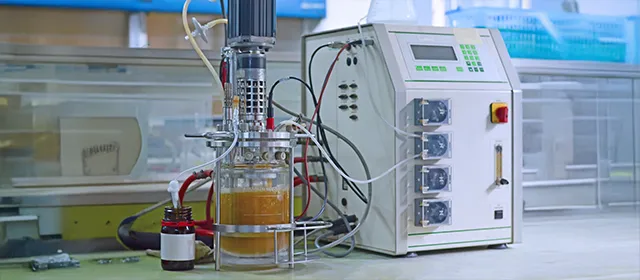
Flow (continuous) chemistry is changing how chemicals and drugs are made. A recent review found that continuous flow methods were used to intensify the synthesis of 14 drug processes in 2023–2024.
Regulators are supporting this shift. The U.S. Food and Drug Administration and international bodies have issued guidance (ICH Q13) to help developers use continuous manufacturing for drug substances and products. That guidance clarifies how to implement, control, and maintain continuous processes under current quality frameworks. (Source: www.fda.gov)
Academic and technical reviews highlight clear performance gains from flow chemistry: faster heat and mass transfer, improved safety for hazardous steps, better control of reaction conditions, and easier scale-up from lab to production. These benefits make flow chemistry attractive for pharmaceutical, fine chemicals, and specialty-chemical manufacturing.
Industry-focused reviews also note that continuous processing is no longer just experimental — multiple pharmaceutical products have already been approved using continuous production elements, showing the approach is practical for regulated manufacturing. According to Kings Research, the global Flow Chemistry Market is estimated to accrue a valuation of USD 4,565.6 million by 2031. This blog discusses the top 10 companies categorized based on their strong presence in the market.
What Does Flow Chemistry Mean?
Flow chemistry, also known as continuous flow or plug flow chemistry, is a method of conducting chemical reactions in a continuous flow stream. This process enables the efficient manufacture of chemical products and has led to significant breakthroughs in the production of compounds such as Tamoxifen for breast cancer and Artemisinin for malaria.
What Are the Applications of Flow Chemistry?
Here are some key applications:
- Pharmaceutical Production: Flow chemistry is extensively used in the pharmaceutical industry for the synthesis of active pharmaceutical ingredients (APIs). It allows for rapid and efficient synthesis of compounds, enabling the development of new drugs with improved yields and reduced reaction times.
- Fine Chemical Manufacturing: The technology is also applied in the production of fine chemicals, where precise control over reaction parameters is crucial. Flow chemistry facilitates the synthesis of complex molecules, including agrochemicals and specialty chemicals, in a more efficient manner compared to traditional batch processes.
- Reaction Kinetics Studies: Flow chemistry systems equipped with in-situ analytical tools enable chemists to study reaction mechanisms and kinetics in real-time. This capability allows for a better understanding of reaction pathways and optimization of conditions for desired outcomes.
- Electrochemical Synthesis: Flow chemistry is increasingly being utilized in electrochemical processes, particularly for organic electrosynthesis. This application leverages the continuous flow of reactants through electrochemical cells, enhancing reaction efficiency and safety.
- Environmental Applications: In analytical chemistry, flow chemistry techniques are employed for environmental monitoring and analysis. Continuous flow systems improve the precision and yield of analytical determinations, making them valuable for assessing pollutants and other environmental factors.
- Material Science: Flow chemistry is used in the synthesis of advanced materials, including polymers and nanomaterials. The ability to control reaction conditions in real-time allows for the production of materials with specific properties and functionalities.
Top 10 Flow Chemistry Companies in the World
1. Am Technology
Am Technology specializes in developing and manufacturing continuous flow reactors and systems designed for chemical synthesis. Their flow chemistry technology emphasizes efficient, scalable, and safe chemical processes. In 2024, Am Technology introduced a new generation of flow reactors, the “Coflore Agitated Cell Reactor,” featuring enhanced temperature control and pressure capabilities, improving reaction efficiency over traditional reactors.
2. Asahi Glassplant Inc.
Asahi Glassplant Inc. focuses on providing advanced glass and polymer materials for flow chemistry applications, including custom-designed flow reactors. Their expertise lies in creating durable and chemically resistant materials.
AGI Glassplant, a division of the AGI Group, launched its AGI Glassplant Sakura Pilot Reactors at ACHEMA 2024. The new line includes the Sakura and Sakura Mini, next-generation premium pilot reactors designed with the latest reactor vessel technology.
3. METTLER TOLEDO
METTLER TOLEDO is a global leader in laboratory instruments and process analytics, offering advanced flow chemistry solutions, including inline sensors and reactors. Their technology supports precise measurement and control of chemical processes. They introduced a new inline NIR (Near-Infrared) spectrometer for real-time monitoring of flow reactions, enhancing process control and optimization.
4. Vapourtec Ltd.
Vapourtec Ltd. specializes in the design and manufacture of flow chemistry systems and reactors, offering modular and scalable solutions for various chemical processes. Their systems are known for flexibility and ease of use. In 2021, Vapourtec launched the R-Series, a new modular flow chemistry platform that enables seamless integration with existing lab equipment for improved workflow efficiency.
5. ThalesNano Inc.
ThalesNano Inc. is a leading innovator in the field of flow chemistry, specializing in the development of advanced continuous flow reactors that enhance the efficiency and safety of chemical synthesis. ThalesNano’s flow reactors are designed to facilitate a wide range of chemical reactions under controlled conditions, allowing researchers to optimize processes and improve yields.
6. E.L. Group
E.L. Group offers advanced flow chemistry solutions with a focus on integrating flow reactors into industrial processes. Their systems are designed for high efficiency and scalability. The company has recently introduced a new high-throughput flow reactor designed for large-scale chemical production, significantly increasing reaction speed and yield.
7. Uniqsis Ltd.
Uniqsis Ltd. provides innovative flow chemistry systems and accessories for research and development, focusing on ease of use and versatility. In 2020, Uniqsis unveiled the FlowSyn Automated Loop Filling (FlowSyn Auto-LF™) system, a groundbreaking automated solution designed to accelerate the synthesis of compounds through flow chemistry. This innovative product aims to enhance productivity by delivering a greater number of compounds more efficiently.
8. Ehrfeld Mikrotechnik BTS
Ehrfeld Mikrotechnik BTS, a subsidiary of Bayer Technology Services GmbH, specializes in microreactor technology and flow chemistry systems, emphasizing precision and scalability in chemical processes. The company has introduced a new generation of microreactors with enhanced thermal and pressure control for more complex and demanding reactions.
9. Corning
Corning is a leading provider of materials and solutions for flow chemistry, including glass and ceramic reactors. Their products are designed for high performance and chemical resistance. Corning has recently developed a new line of glass microreactors with improved thermal stability and reduced backpressure, enhancing reaction control and safety.
In June 2023, Corning Incorporated introduced the “Lab Reactor System 2” as the latest addition to its Advanced-Flow Reactor portfolio. The plug-and-play system combines a dosing unit, reactor or photo-reactor unit, real-time camera monitoring, and integrated cooling for safer, efficient continuous flow chemistry development.
10. Parr Instrument Company
Parr Instrument Company is known for its extensive range of pressure reactors and flow chemistry systems, offering robust solutions for various chemical reactions. They launched advanced flow reactors with integrated pressure and temperature control, providing greater flexibility and precision in reaction management.
Conclusively
Flow chemistry is positioned to keep expanding because it makes manufacturing faster, safer, and more sustainable. Key players are helping growth by investing in modular continuous reactors, building process development teams, forming partnerships between equipment suppliers and producers, and adopting digital tools for process control and scale-up.
Companies are also working closely with regulators and research institutions to validate continuous routes and enable reliable, compliant production. Together these efforts are turning flow chemistry from a niche technology into a mainstream option for modern chemical manufacturing.