

The global movement of hazardous materials has increased significantly over the last decade, driven by rising industrial output, expanding chemical supply chains, and a growing dependence on fuels, pharmaceuticals, and specialty materials across industries.
This expansion has heightened the need for hazmat packaging, which is specialized packaging engineered to safely contain, store, and transport hazardous substances under strict regulatory controls.
Today, hazmat packaging is more than a protective barrier. It is a crucial safety and compliance tool embedded into international trade systems. Its role extends across chemicals, oil and gas, pharmaceuticals, manufacturing, agriculture, and energy sectors.
As regulations tighten and freight volumes rise, the demand for standardized, certified, and resilient hazmat packaging continues to accelerate. According to Kings Research, the global hazmat packaging market is set to generate a revenue of $16.37 billion by 2032.
This blog provides an in-depth look at the hazmat packaging landscape. It demonstrates the scale, risks, and regulatory environment that shape this landscape.
What is Hazmat Packaging?
Hazmat packaging refers to containers specifically designed to safeguard hazardous materials during storage and transportation. These materials may be flammable, corrosive, toxic, infectious, radioactive, or otherwise dangerous.
Packaging must prevent leaks, contamination, and exposure risks while also complying with stringent safety standards laid out by regulatory bodies such as PHMSA, the U.S. Department of Transportation, the UN Recommendations on the Transport of Dangerous Goods, and Title 49 CFR.
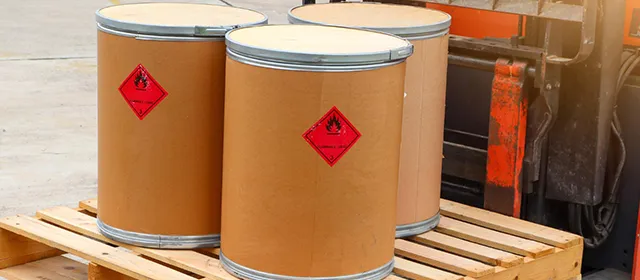
Modern hazmat packaging includes drums, intermediate bulk containers (IBCs), rigid and flexible containers, bottles, cans, pails, specialized cartons, and protective enclosures.
These products undergo meticulous testing such as drop tests, vibration tests, pressure testing, and chemical compatibility checks. The goal is to ensure that hazardous substances remain secure across all modes of transportation, including road, rail, sea, and air.
Rising Global Production and Transport of Hazardous Materials
The growth of hazardous-material movement forms the foundation of hazmat packaging demand. A massive proportion of global industrial output falls under hazardous classifications, and safe transport depends on certified packaging.
According to the Pipeline and Hazardous Materials Safety Administration (PHMSA), the United States alone manages approximately 1 million hazmat shipments every day. This scale highlights the extent to which modern industry relies on the movement of dangerous goods.
These daily activities correspond to roughly 3.3 billion tons of hazardous materials transported annually across all modes, including land, sea, and air. The material volume is staggering and demonstrates the indispensable role of compliant packaging solutions in day-to-day logistics.
PHMSA also notes that hazmat shipments represent about 12 percent of all freight tonnage moved within the nation. This share reinforces the systemic importance of hazmat logistics in commerce. When more than one tenth of all U.S. freight is hazardous, packaging becomes a non-negotiable element of supply chain continuity.
These figures illustrate the enormous demand for dependable, regulation-compliant hazmat packaging that can support daily operations across industrial sectors. (Source: www.phmsa.dot.gov)
Stricter Compliance Frameworks and Certification Requirements
Hazmat packaging fails to serve its purpose unless it meets exacting regulatory standards. Compliance is not optional. It is legally mandated.
PHMSA’s regulatory scope under U.S. law governing hazardous-material transportation covers over 1 million daily shipments, enforcing standards for packaging design, labeling, classification, materials selection, and testing. The regulatory authority is anchored in U.S. Title 49 CFR, which establishes the legal framework for hazardous-material packaging across all transportation modes.
Despite these strict requirements, safety challenges persist. According to bts.dot.gov, there were about 25,200 hazardous materials incidents reported in 2022, excluding pipeline incidents. These incidents occurred across surface, maritime, and air transportation. (Source: www.bts.dot.gov)
Many of these incidents stemmed from issues related to packaging integrity, improper handling, or containment failures, rather than transportation accidents alone. This demonstrates why certified packaging is essential. Even under oversight, risks remain substantial.
The combination of strict regulations and persistent safety incidents highlights the critical need for robust hazmat packaging. The industry cannot afford failure in containment systems because it directly affects workers, communities, and the environment.
Growth in Chemical, Oil and Gas, and Pharmaceutical Supply Chains
Demand for hazmat packaging is directly linked to the sectors responsible for producing and transporting hazardous substances. Key contributors include the chemical, petrochemical, pharmaceutical, and energy industries. Each handles millions of tons of hazardous materials annually.
While recent government datasets do not isolate global chemical output specific to packaging needs, historical data helps illustrate the dominance of chemical and petroleum commodities in hazardous-material logistics.
In an earlier dataset published by the U.S. Bureau of Transportation Statistics, flammable liquids such as gasoline and fuels accounted for 85.4 percent by weight and 86.4 percent by value of all hazardous materials transported in the country (Source: rosap.ntl.bts.gov). This overwhelming share shows that fuels and industrial chemicals form the backbone of hazmat transport-related logistics.
Given the current landscape, where chemical production continues to expand and fuel demand remains high, hazmat packaging plays a vital role in enabling safe movement of essential products. Pharmaceutical supply chains, with their sensitive chemicals and biologics, increasingly require specialized and compliant containers to protect product integrity while meeting regulatory expectations.
These industries rely heavily on hazmat packaging solutions such as UN rated drums, IBCs, liners, coated containers, and multi-layered packaging systems designed for both physical durability and chemical resistance.
Risks, Transportation Incidents, and Why Packaging Matters
Safety remains a core motivator for hazmat packaging adoption. The hazards involved in transporting dangerous goods can lead to catastrophic consequences if packaging fails or is improperly handled.
As noted earlier, approximately 25,200 non-pipeline incidents occurred in 2022 in the U.S., according to the Bureau of Transportation Statistics. While some incidents resulted from transportation accidents, many occurred during loading, unloading, storage, or handling activities.
This highlights an important reality. Hazardous-material safety must be ensured before and after transportation, not only during the journey. Packaging integrity plays a central role in these stages. Many hazmat containers rely on airtight or sealed packaging systems to prevent leakage or contamination
Incidents can arise from:
- container leaks
- ruptures caused by material incompatibility
- inadequate sealing
- structural failures under pressure
- mishandling during loading or unloading
- incorrect or missing hazard labels
The consistent frequency of these incidents shows why robust packaging is not simply a compliance requirement. It is a practical necessity for protecting life, property, and the environment.
Scale and Importance of Regulation-Enforced Packaging in Daily Commerce
The global economy depends on the secure movement of hazardous materials. Without compliant hazmat packaging, industries such as chemicals, pharmaceuticals, oil and gas, agriculture, automotive manufacturing, and even electronics would face significant disruptions.
PHMSA’s most recent public reporting shows that as of 2024, around 1.2 million daily hazmat shipments fall under its regulatory oversight. This marks an increase from earlier years and reflects the rising volume of hazardous materials required for industrial activities.
On an annual basis, this equates to approximately 1.6 billion tons of regulated hazardous materials shipped via air, rail, highway, and sea. These figures illustrate how deeply hazardous materials are embedded in modern commerce. Whether supplying gasoline to fuel stations, transporting industrial solvents, delivering medical gases, or shipping chemical precursors for manufacturing, hazmat packaging ensures every link in the chain remains secure.
The recurring and large-scale movement of these materials creates consistent demand for high-quality hazmat packaging. As industries expand and transportation infrastructure evolves, this demand continues to grow.
The Evolution of Hazmat Packaging Technologies
To keep pace with regulations and industry needs, hazmat packaging manufacturers are investing in advanced materials and smarter designs. Key trends include:
1. Multi-layer and composite packaging systems
These combine plastics, metals, and fibers to improve strength and chemical resistance.
2. UN-rated packaging
These containers are tested and certified for international transport under the UN Recommendations, making them suitable for global supply chains.
3. Enhanced leak-proof designs
Advanced seals, pressure-tested closures, and tamper-evident systems help prevent accidental releases.
4. Sustainable hazmat packaging
Recyclable materials, reusable IBCs, and waste-reducing designs support corporate sustainability goals.
5. Digital tracking and traceability
RFID, QR codes, and sensors help monitor packaging conditions and compliance status throughout transport.
These innovations support both operational efficiency and safety objectives. They allow companies to streamline logistics without compromising regulatory responsibilities.
Why Companies Are Increasingly Prioritizing Hazmat Packaging
- Regulatory Compliance
Strict national and international regulations require certified packaging. Non-compliance can lead to penalties, shipment delays, and reputational harm.
- Safety and Risk Mitigation
Incidents involving hazardous materials can cause environmental contamination, injuries, and significant financial liabilities.
- Operational Continuity
Reliable packaging prevents disruptions in supply chains for critical industries.
- Insurance and Liability Management
Insurance providers often require the use of certified hazmat packaging to reduce risk.
- Global Trade Requirements
Cross-border shipments require adherence to international packaging standards, ensuring the safe circulation of goods.
Concluding Thoughts
Hazmat packaging plays a central role in the global movement of hazardous materials. With more than 1 million daily shipments and billions of tons transported annually, the scale of hazardous-material logistics demands packaging that meets strict regulatory requirements.
Verified government data highlights the magnitude of this ecosystem, from the immense freight volumes to the thousands of annual incidents that reveal ongoing risks.
As industrial sectors such as chemicals, fuel products, pharmaceuticals, and specialty materials continue to expand, the need for advanced, durable, and compliant hazmat packaging will intensify. Safety, compliance, and operational reliability make this market vital to modern commerce.
Hazmat packaging is more than a container. It is a safeguard for people, property, and the environment. Its importance will continue to rise as global production and transportation of hazardous materials grow.