Inquire Now
Key Strategic Points
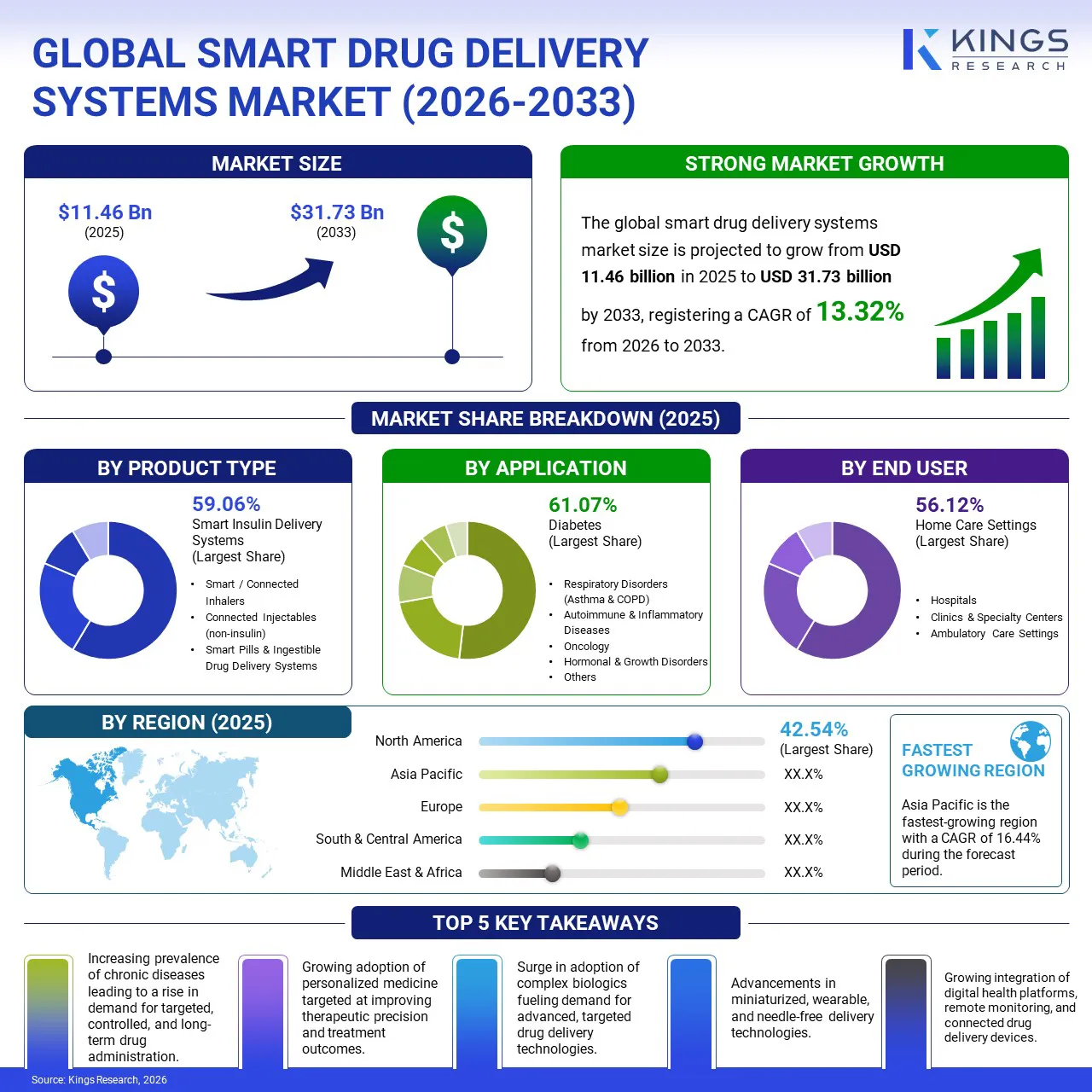
According to Kings Research, the global smart drug delivery systems market size was USD 11.46 billion in 2025 and is projected to reach USD 31.73 billion by 2033, exhibiting a CAGR of 13.32% over the forecast period (2026-2033).
Market growth is driven by the rising prevalence of diabetes and chronic respiratory diseases, wider adoption of automated insulin delivery, and rapid growth in self-administered GLP-1 and biologic therapies. Increasing respiratory disease cases are boosting demand for connected inhalers. Advances in connectivity, sensor integration, and remote monitoring, alongside the shift toward connected, automated, and patient-centric healthcare, are enhancing medication adherence, treatment management, and patient convenience.
Manufacturers are expanding their portfolios with innovative pumps, connected inhalers, and smart injectables, while strategic partnerships and regulatory developments support commercialization.
Smart insulin delivery systems remain a key market component, driven by growing adoption of connected pens, patch pumps, and closed-loop technologies. The preference for home-based care, personalized treatment, and remote patient monitoring is further accelerating adoption. Integration with continuous glucose monitors, smartphone applications, and digital health platforms is advancing toward comprehensive, data-driven drug delivery solutions.
Automated insulin delivery (AID) systems combine an insulin pump with a continuous glucose monitor (CGM) and an algorithm that automatically adjusts insulin delivery based on real-time glucose readings and trends. Initially adopted for type 1 diabetes management, these systems are gaining traction among patients with insulin-requiring type 2 diabetes. Clinical findings showing improved glycemic control, high patient satisfaction, and a low incidence of severe hypoglycemia are supporting their acceptance among the patient base. Wider access to AID technology among people with type 2 diabetes is expanding the potential user base and driving demand for smart insulin delivery systems.
According to the International Diabetes Federation (IDF), data updated as of August 2026, type 2 diabetes accounts for over 90% of all diagnosed diabetes globally. This underscores the substantial addressable patient population and significant market opportunities for smart insulin delivery systems. Advances in diabetes management, including technological integration, regulatory progress, and product expansion, are supporting market growth.
Connected medical devices, including smart insulin pumps, automated drug infusion systems, and Bluetooth-enabled autoinjectors, rely on unencrypted communication protocols comprising Wi-Fi, Bluetooth, and RFID. This increases the risk of patient data breaches and unauthorized access, remote manipulation, dose tampering, and broader healthcare IT breaches, while transmitting patient adherence data and synchronizing with clinical networks, in turn hindering insulin dosing. Early security demonstrations expose remote dosing risks in connected infusion and insulin pumps, prompting regulatory bodies to establish strict premarket and post-market safeguards.
The Cybersecurity in Medical Devices: Quality System Considerations and Content of Premarket Submissions guidance, issued in June 2025 by the U.S. Food and Drug Administration (FDA), outlines recommendations for medical device manufacturers on cybersecurity-by-design, device labeling, and cybersecurity documentation. It clarifies compliance requirements under Section 524B of the FD&C Act, including obligations for cyber devices and modifications to previously authorized devices, to strengthen medical device cybersecurity.
Technological advancements in autoinjectors, particularly the integration of smart and connected drug delivery systems, are improving medication adherence, patient safety, and treatment outcomes. Smart drug delivery system manufacturers are integrating electronic modules, sensors, and connectivity features to enable real-time medication monitoring, accurate dose tracking, audible injection guidance, and detection of potential user errors, including premature device removal or the use of expired medication. Autoinjectors and digital health applications facilitate medication reminders, adherence tracking, and data sharing among patients, healthcare professionals, and caregivers, enabling timely interventions and personalized patient support.
Manufacturers are also exploring reusable electronic drive units combined with disposable cassettes containing prefilled syringes to accommodate varying drug viscosities, dose volumes, and injection frequencies while reducing electronic waste. These developments further support remote patient monitoring, improved disease management, and sustainable drug delivery solutions.
Furthermore, the adoption of reusable and modular device designs, recyclable components, and bio-based medical-grade materials helps reduce medical waste and carbon emissions. Manufacturers are integrating electronic connectivity into reusable autoinjectors to minimize electronic waste, improve device lifecycle efficiency, and support sustainable drug delivery.
In August 2025, Ypsomed Holding AG received FDA 510(k) clearance for its SmartPilot connectivity add-on, which transforms the YpsoMate autoinjector into a connected drug delivery system. The device automatically captures and transmits injection data, including date, time, injection outcomes, and potential user errors, to smartphones via Bluetooth. This provides visual and audio guidance to patients while enabling healthcare professionals to monitor medication use and support adherence and treatment management.
|
Segmentation |
Details |
|
|
By Product Type |
Smart Insulin Delivery Systems, Smart/Connected Inhalers, Connected Injectables (non-insulin), and Smart Pills & Ingestible Drug Delivery Systems |
|
|
By Route of Administration |
Injectable, Inhalation, and Oral |
|
|
By Technology |
Bluetooth, NFC, Cellular/LPWAN, and Others |
|
|
By Application |
Diabetes, Respiratory Disorders (Asthma & COPD), Autoimmune & Inflammatory Diseases, Oncology, Hormonal & Growth Disorders, and Others |
|
|
By End User |
Home Care Settings, Hospitals, Clinics & Specialty Centers, and Ambulatory Care Settings |
|
|
By Region |
North America |
U.S., Canada, and Mexico |
|
Europe |
France, UK, Spain, Germany, Italy, Russia, and Rest of Europe |
|
|
Asia Pacific |
China, Japan, India, Australia, ASEAN, South Korea, and Rest of Asia Pacific |
|
|
Middle East & Africa |
Turkey, U.A.E., Saudi Arabia, South Africa, and Rest of Middle East & Africa |
|
|
South & Central America |
Brazil, Argentina, and Rest of South & Central America |
|
The smart insulin delivery systems segment held the largest share of 59.06% in 2025, supported by a substantial installed base of insulin pumps, recurring revenue from infusion sets and pods, and the shift toward automated insulin delivery. Connected insulin pens enable real-time insulin tracking and glucose monitoring by integrating AI-driven analytics, cloud connectivity, and personalized monitoring. These capabilities support effective insulin management, improve adherence, facilitate the management of diabetes-related comorbidities, and advance diabetes care.
The oral segment is expected to register the fastest CAGR of 14.29% over the forecast period, driven by robotic and oral-biologic delivery capsules, sensor-enabled adherence pills, and wider use in chronic disease. Rapid advancements in smart ingestible technologies, including 3D-printed capsules, gastrointestinal patches, and epithelium-injecting devices, are expected to fuel segmental growth.
The diabetes segment dominated the market with a share of 61.07% in 2025, driven by a large patient population requiring frequent, tightly regulated insulin administration alongside rapid adoption of patch pumps, closed-loop systems, and connected pens. According to the International Diabetes Federation's IDF Diabetes Atlas 11th edition published in April 2025, an estimated 589 million adults aged 20-79 had diabetes, and it is projected to reach 853 million by 2050. This rapidly expanding chronic patient base and the continuous requirement for glycemic control are fueling the demand for smart drug delivery systems.
The global smart drug delivery systems market is segmented into North America, Europe, Asia Pacific, Middle East & Africa, and South & Central America.
North America
North America held the largest share of 42.18% in 2025. The U.S. leads regional demand through broad insurance coverage for insulin pumps, early approval of automated insulin delivery for type 2 diabetes, and widespread use of GLP-1 therapies delivered by pens and autoinjectors approved by the U.S. FDA. Furthermore, the country benefits from its well-established medical device manufacturing industry, supported by ongoing innovation and research and development investments. The U.S. gains a competitive advantage in sectors comprising biotechnology, microelectronics, robotics, and software, supporting the development of advanced medical devices.
Moreover, the surging demand for personalized medicine, patient convenience, and home-based treatment accelerates innovation in automated and large-volume drug delivery solutions. In February 2026, Insulet Corporation reported strong FY2025 performance, with revenue increasing by 31% year-over-year to USD 2.7 billion, marking its 10th consecutive year of at least 20% constant-currency growth. Performance was primarily driven by strong Omnipod (a smart automated drug delivery system) adoption, with international revenue rising 44.1% and global active users exceeding 600,000.
Asia Pacific
Asia Pacific is expected to register the fastest CAGR of 16.44% over the forecast period, largely attributed to aging populations and a rising burden of chronic diseases, creating sustained demand for inpatient care, home health management, and continuous diagnostic monitoring. The expansion of healthcare infrastructure and digital transformation, driven by diabetes prevalence, GLP-1 self-injection uptake, and local pen and autoinjector manufacturing, further fuels regional market growth. The concentration of local medtech manufacturing capacity across Southeast Asia presents substantial opportunities for accessible, high-value smart medical technologies. Additionally, the dominance of Chinese medtech manufacturers in the global medical devices industry, backed by sustained R&D and manufacturing expansion, is poised to create growth opportunities over the forecast period.
In June 2025, Ypsomed Holding AG inaugurated its first dedicated manufacturing facility in Changzhou, China, investing CHF 150 million (approximately USD 187.35 million) to establish an annual production capacity of up to 100 million injection devices. The expansion strengthens its global manufacturing capabilities and supports growing demand for self-injection solutions.
Europe, Middle East & Africa and South & Central America
Germany, France, and the UK drive regional demand for smart drug delivery systems through the adoption of connected insulin pumps, automated insulin delivery systems, smart injection devices, and connected respiratory drug delivery technologies. Established healthcare infrastructure, reimbursement support, and growing preference for home-based treatment further encourage market penetration.
In December 2025, the European Commission proposed simplifying medical device and in vitro diagnostic regulations, aiming to reduce regulatory burdens and support innovation. If adopted, the proposed changes are anticipated to facilitate the commercialization of advanced and connected drug delivery devices across Europe.
Saudi Arabia and the U.A.E. are fueling regional adoption through investments in advanced diabetes management, automated insulin delivery systems, and wearable drug delivery technologies. Growing healthcare modernization, government-backed treatment initiatives, and expanding private healthcare infrastructure in South Africa and Turkey are expected to support demand for smart drug delivery solutions.
In November 2025, Saudi Arabia's Health Endowment Fund launched a support program targeting 600 children with type 1 diabetes annually through the provision of advanced insulin pumps. Such initiatives are expected to improve access to technology-enabled drug delivery systems and strengthen adoption.
Additionally, new product launches in the region are accelerating market adoption, supported by advancements in smart drug delivery systems. In February 2026, Insulet Corporation launched the Omnipod 5 automated insulin delivery system and the Omnipod Discover data platform in Saudi Arabia, Kuwait, Qatar, and the U.A.E. The launch makes Omnipod 5 available in 19 countries and expands access to tubeless automated insulin delivery in the Middle East.
Brazil leads regional demand in South & Central America, aided by its expanding healthcare infrastructure, growing adoption of connected drug delivery technologies, and rising use of wearable injectors and insulin delivery devices. Argentina also contributes to market growth through demand for advanced insulin delivery solutions, including insulin pumps and connected injection devices.
In August 2025, Enable Injections received ANVISA approval for its enFuse on-body drug delivery system, enabling its distribution in Brazil for subcutaneous medication administration. This regulatory milestone is expected to expand access to wearable drug delivery technologies and support the adoption of self-administration solutions, particularly for biologic therapies.
The smart drug delivery systems market is fragmented in nature and is characterized by the presence of established medical device manufacturers, specialist insulin delivery companies, and digital health technology providers. Market competition is based on device innovation, automation, connectivity, ease of use, and integration with continuous glucose monitoring systems. Companies are expanding their product portfolios through advanced insulin pumps, wearable injectors, and connected autoinjectors, while pursuing regulatory clearances and commercial launches to strengthen their market presence.
Additionally, manufacturers are forming strategic partnerships to integrate digital patient support platforms, enhance device assembly capabilities, and accelerate product commercialization. These collaborations are enabling companies to offer integrated drug delivery solutions and expand their presence across global markets.
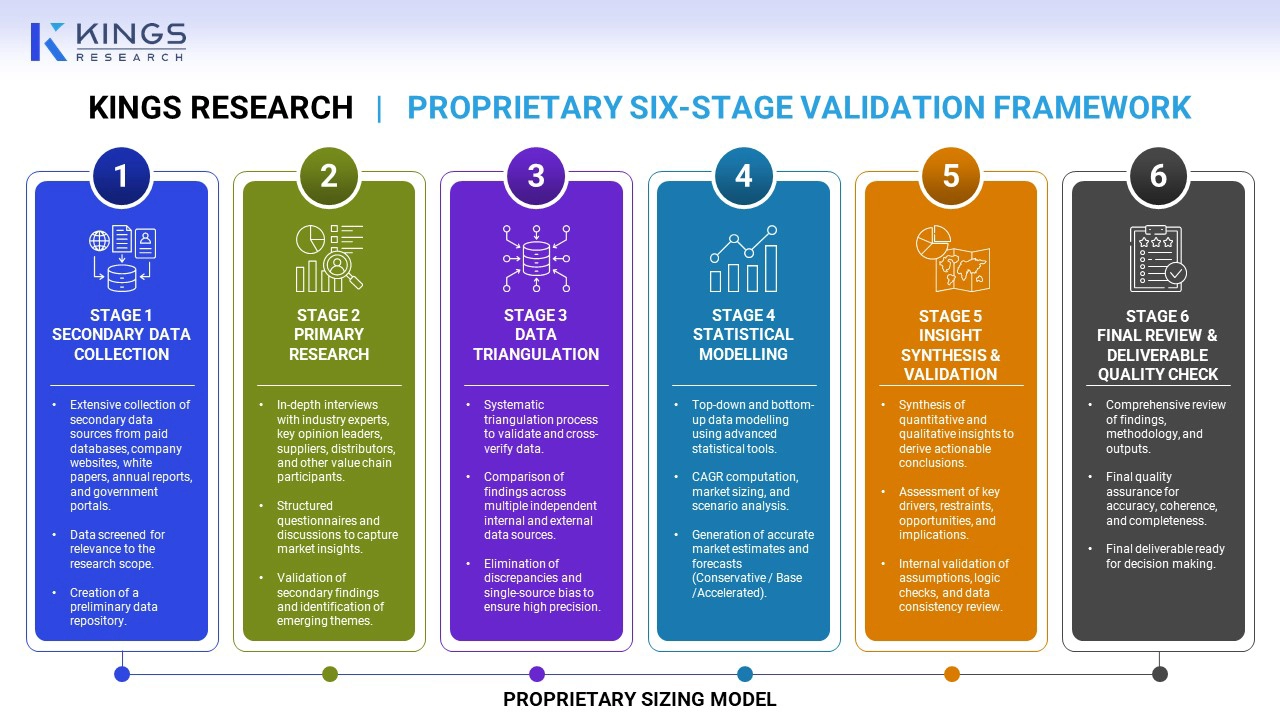
Our methodology triangulates insights from multiple independent and publicly available research databases, which are further validated against regulatory filings and public company disclosures. All estimates are cross-verified; no single-source data is presented without validation.
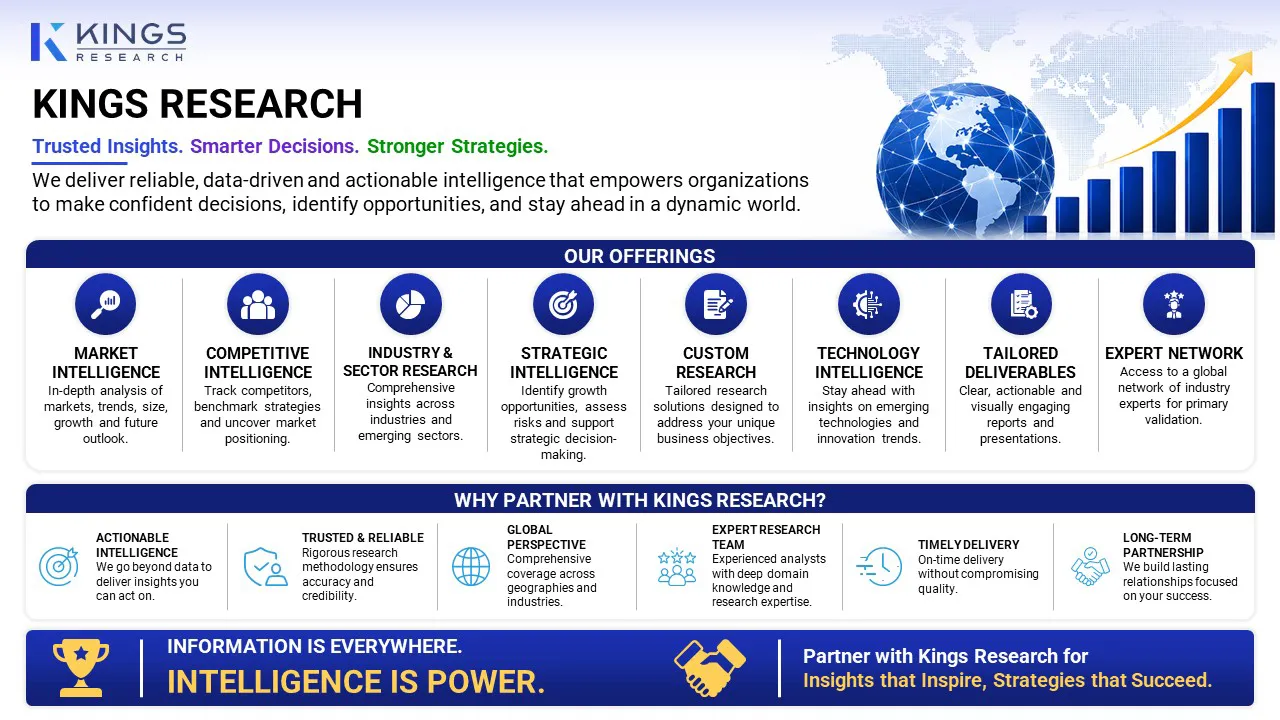
We deliver tailored, data-driven intelligence and strategic guidance to help organizations identify, evaluate, and capitalize on key market opportunities.
Frequently Asked Questions

Faizy brings over four years of experience in market research and consulting, with a proven ability to support strategic engagements across diverse industries and business environments. His work focuses on understanding complex market structures, identifying emerging opportunities, and translating research findings into clear, commercially relevant insights. With strong analytical capabilities and a structured approach to problem-solving, he evaluates industry trends, competitive landscapes, customer dynamics, and evolving business models. His expertise encompasses market research, competitive intelligence, market sizing and forecasting, industry assessment, company benchmarking, and strategic analysis. Faizy combines technical proficiency with a strong research orientation, enabling him to interpret both qualitative and quantitative information effectively. He has contributed to projects that help organizations assess growth potential, strengthen market positioning, and evaluate strategic priorities. His adaptable approach allows him to work across sectors while maintaining a consistent focus on accuracy, relevance, and delivering insights that support informed decision-making for clients and stakeholders.
With many years of consulting experience across global pharma, biotech, and MedTech markets, Minaz brings deep domain expertise, strategic clarity, and analytical rigor to every engagement. She has led 130+ consulting assignments spanning market entry, competitive landscaping, and portfolio prioritization, helping clients navigate complex, high-stakes decisions with confidence. Known for her ability to synthesize primary and secondary research into executive-ready recommendations, Minaz has built forecasting models and market sizing frameworks that have informed multi-million dollar investment decisions in oncology, diagnostics, and peptide therapeutics. Beyond her analytical strength, Minaz is a trusted client partner, translating complex datasets into clear, actionable insights for senior stakeholders. She currently leads a team of research analysts, driving business expansion, and shaping client engagement strategy.