Inquire Now
Key Strategic Points
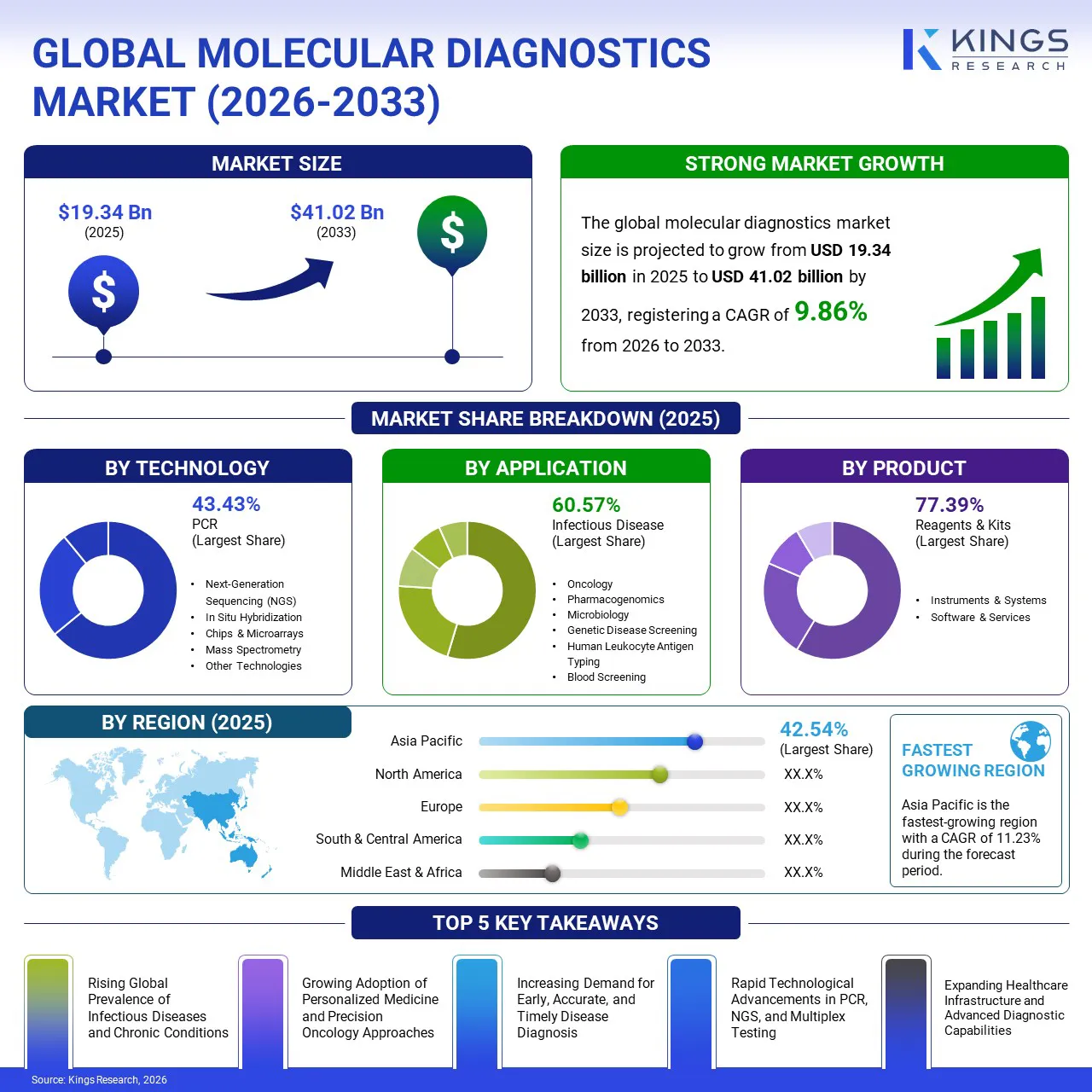
According to Kings Research, the global molecular diagnostics market size was USD 19.34 billion in 2025 and is projected to grow from USD 21.24 billion in 2026 to USD 41.02 billion by 2033, exhibiting a CAGR of 9.86% over the forecast period (2026-2033).
Market growth is driven by the rising burden of infectious diseases, expanding precision oncology and cancer screening, and growing adoption of point-of-care and syndromic PCR testing. Declining sequencing costs, broader reimbursement for genomic profiling, and automated platforms are expanding the use of DNA and RNA testing in clinical decision-making. The market covers in vitro diagnostic products that detect DNA and RNA, as well as protein and metabolite signatures measured through mass spectrometry.
It includes reagents and kits, instruments and systems, and software and services sold to hospitals, reference laboratories, and allied end users. Growing molecular testing across infectious diseases, oncology, genetic testing, and reproductive health, supported by demand for advanced diagnostic panels, genomic profiling, liquid biopsies, and early cancer detection, is creating growth opportunities. Increasing automation, integrated diagnostic platforms, and investments in innovative technologies are further driving market expansion.
Cancer screening is increasingly shifting toward blood-based liquid biopsy assays that analyze circulating tumor DNA (ctDNA) and other biomarkers for early detection. These tests use molecular diagnostic technologies, including Next-Generation Sequencing (NGS) and PCR, to identify cancer-associated changes, monitor treatment resistance, and assess tissue damage. By detecting tumor-specific biomarkers, molecular diagnostics support precision oncology, guide targeted therapy and immunotherapy selection, and enable personalized treatment.
Advances in liquid biopsy are expanding clinical applications, reducing reliance on invasive biopsies, and increasing demand for diagnostic instruments, reagents, and bioinformatics solutions. Market players are developing multi-cancer early detection tests, strengthening clinical validation, and advancing liquid biopsy technologies to improve early diagnosis and personalized cancer care.
In January 2026, GRAIL, Inc. completed the final module of its Premarket Approval (PMA) application to the U.S. FDA for its Galleri multi-cancer early detection test. The company sold more than 185,000 Galleri tests in 2025. Growing clinical validation, digital health partnerships, and emerging Medicare coverage pathways for multi-cancer early detection tests are anticipated to support growth in the oncology molecular diagnostics segment.
In April 2025, Stanford Medicine researchers developed a novel liquid biopsy blood test that analyzes cell-free RNA to detect cancers, monitor treatment resistance, and identify tissue damage. The test detected lung cancer in 73% of patients, including those with early-stage disease.
The developments could enable earlier detection of treatment resistance, reduce reliance on invasive biopsies, and support personalized treatment. They also highlight the potential for monitoring non-cancerous conditions, contributing to molecular diagnostics market growth. Additionally, the adoption of molecular Point-of-Care (POC) PCR testing is supporting this growth by enabling rapid and accurate detection of infectious diseases at the point of care.
In December 2025, F. Hoffmann-La Roche Ltd received FDA clearance with a CLIA waiver for its cobas liat Bordetella panel, its first point-of-care test for Bordetella infections, including whooping cough. The test delivers results in 15 minutes, supporting timely diagnosis and treatment decisions. In June 2025, Visby Medical secured up to USD 55 million, with the potential to reach USD 65 million, to drive the commercial launch and manufacturing scale-up of its FDA-authorized at-home Women’s Sexual Health Test.
This development highlights the shift toward decentralized molecular diagnostics through a proprietary, single-use, instrument-free PCR platform that delivers laboratory-grade results in approximately 30 minutes via smartphone integration.
Challenges in securing reimbursement for molecular infectious disease testing amid evolving payer policies, coding requirements, and increased scrutiny of medical necessity limit growth opportunities. Advances in molecular diagnostics have outpaced existing reimbursement frameworks, resulting in inconsistent payer interpretations and reimbursement limitations, particularly for tests without specific CPT codes. These challenges increase financial pressures on clinical laboratories, restrict their ability to sustain operations, and limit investments in advanced diagnostic technologies.
To address these challenges, molecular diagnostics laboratories are adopting appropriate coding strategies, strengthening clinical utility evidence, improving documentation, and engaging proactively with payers. In February 2026, the Centers for Medicare & Medicaid Services confirmed that the Consolidated Appropriations Act of 2026 delayed Medicare Clinical Laboratory Fee Schedule (CLFS) payment reductions, eliminating phase-in reductions for 2026 and capping reductions at 15% per test annually from January 1, 2027, through 2029. These reductions may pressure laboratory margins and slow investments in reagents and diagnostic systems in the U.S. market.
The continued reliance on conventional diagnostic methods in low- and middle-income countries creates growth opportunities for the molecular diagnostics market. Government-funded health programs and international donors are supporting the adoption of rapid molecular tests, generating demand for instruments and reagents. According to the Global Tuberculosis Report 2025 published by the World Health Organization (WHO), rapid molecular tests were used as the initial diagnostic method for 54% of people newly diagnosed with TB globally in 2024.
However, significant gaps remain, with coverage of only 41% in the South-East Asia Region. Limited access to rapid diagnostic technologies across TB diagnostic facilities highlights the need for expanded deployment of WHO-recommended molecular testing solutions. Increased funding and partnerships are accelerating the adoption of molecular TB diagnostics, creating additional growth opportunities.
In September 2026, the Institute of Philanthropy (IoP) committed up to USD 5 million to expand innovative near-point-of-care (NPOC) molecular tuberculosis (TB) diagnostics in high-burden countries comprising Southeast Asia and parts of Africa. The commitment unlocked an additional USD 5 million in matching funds from the Gates Foundation, mobilizing up to USD 10 million in total.
The initiative aims to improve access to rapid and accurate TB testing by bringing diagnostic technologies closer to patients, particularly in underserved communities. It further provides technical assistance and implementation support to facilitate the sustainable adoption of these technologies across national healthcare systems.
|
Segmentation |
Details |
|
|
By Technology |
PCR, Next-Generation Sequencing (NGS), In Situ Hybridization, Chips & Microarrays, Mass Spectrometry, and Other Technologies |
|
|
By Application |
Infectious Disease, Oncology, Pharmacogenomics, Microbiology, Genetic Disease Screening, Human Leukocyte Antigen Typing, and Blood Screening |
|
|
By Product |
Reagents & Kits, Instruments & Systems, and Software & Services |
|
|
By Sample Type |
Blood, Serum & Plasma, Urine, and Other Sample Types (Saliva, Tissue, Swabs) |
|
|
By End User |
Hospitals, Diagnostic & Reference Laboratories, Academic & Research Institutes, and Other End Users |
|
|
By Region |
North America |
U.S., Canada, and Mexico |
|
Europe |
France, UK, Spain, Germany, Italy, Russia, and Rest of Europe |
|
|
Asia Pacific |
China, Japan, India, Australia, ASEAN, South Korea, and Rest of Asia Pacific |
|
|
Middle East & Africa |
Turkey, U.A.E., Saudi Arabia, South Africa, and Rest of Middle East & Africa |
|
|
South & Central America |
Brazil, Argentina, and Rest of South & Central America |
|
The PCR segment held the largest share of 43.43% in 2025. PCR remains the standard method for infectious disease testing due to its high sensitivity, specificity, speed, and accuracy in detecting disease-causing pathogens and genetic abnormalities. Its ability to amplify small quantities of DNA or RNA enables early disease detection and reliable diagnosis, driving demand.
The infectious disease segment accounted for the largest share of 60.57% in 2025. This dominance is attributed to the rising prevalence of viral and bacterial infections and the growing need for rapid, accurate disease detection. Molecular diagnostic techniques, particularly PCR, enable early pathogen identification with high sensitivity and specificity, supporting timely treatment and effective outbreak management for infectious diseases, including COVID-19, tuberculosis, Ebola, and meningitis, among others.
The blood, serum & plasma segment held the largest share of 80.88% in 2025. Blood, along with its derivatives, serum and plasma, provide valuable biomarkers for disease identification, progression assessment, and treatment monitoring. Their minimally invasive collection, broad diagnostic applications, and ability to support reliable biomarker analysis contribute to their widespread use in molecular diagnostics.
The global molecular diagnostics market is segmented into North America, Europe, Asia Pacific, Middle East & Africa, and South & Central America.
North America
North America dominated the market, accounting for the largest share of 42.54% in 2025. This dominance is supported by advanced healthcare infrastructure, substantial R&D investments, and widespread adoption of molecular diagnostic technologies. The region's extensive healthcare ecosystem, comprising hospitals, diagnostic laboratories, research institutions, healthcare providers, regulatory bodies, and molecular diagnostics manufacturers across the U.S. and Canada, contributes to its significant market share. Collaboration among these stakeholders strengthens disease detection, clinical testing, R&D, and the adoption of advanced diagnostic technologies.
Additionally, investments in healthcare infrastructure, rising demand for precision medicine, and technological innovation create significant growth opportunities. The U.S. leads regional demand through its extensive reference laboratory networks, broad reimbursement coverage for molecular tests, and early adoption of genomic profiling and point-of-care PCR. In Canada, provincial health systems are expanding molecular testing for infectious diseases and cancer, while private laboratory chains in Mexico are increasing PCR and sequencing capacity, supporting regional market growth through 2033.
Asia Pacific
The Asia Pacific molecular diagnostics market is projected to register the fastest CAGR of 11.22% over the forecast period. This rapid growth reflects the region's disproportionate disease burden, which accounts for 60% of global tuberculosis cases, 62.6% of liver disease deaths, and nearly half of global breast cancer diagnoses, according to the World Economic Forum.
An aging population and the rising prevalence of chronic and infectious diseases are increasing demand for advanced diagnostics, while investments in molecular diagnostics laboratory systems are supporting wider adoption. In emerging Asian economies, including India and the Southeast Asian countries, public programs targeting tuberculosis, HIV, and hepatitis are expanding the use of molecular tests, while government pricing reforms in China are lowering test prices and increasing testing volumes.
For instance, the Government of India is strengthening its tuberculosis diagnostic infrastructure under the National TB Elimination Programme (NTEP), with over 9,800 rapid molecular testing facilities and 107 culture and drug susceptibility testing laboratories established nationwide. The 100-Day TB Mukt Bharat Abhiyan further supports early detection and screening among high-risk populations, boosting demand for molecular diagnostics.
As of June 2026, the campaign had screened more than 281 million people through over 170,000 health camps across 120,000 high-risk villages and wards, highlighting the scale of India's disease detection infrastructure and its potential to support demand for advanced diagnostic technologies, including molecular testing.
Europe, Middle East & Africa, and South & Central America
The Europe molecular diagnostics market is witnessing growth, supported by established public health laboratory networks, national cancer screening programs, and advanced healthcare infrastructure across Germany, France, and the UK. Increasing adoption of Next-Generation Sequencing (NGS), PCR, and other molecular testing technologies, along with routine clinical use, skilled laboratory personnel, and genomic research investments, is strengthening regional demand.
For instance, in December 2025, the Directorate-General for Health and Food Safety of the European Commission proposed regulatory reforms to simplify requirements for medical devices and in vitro diagnostic medical devices. The proposal seeks to streamline compliance procedures and strengthen European Medicines Agency (EMA) support for medical device expert panels, potentially improving the regulatory environment for molecular diagnostic manufacturers.
The Middle East & Africa molecular diagnostics market is supported by expanding healthcare infrastructure, national genomic initiatives, and investments in hospital and diagnostic laboratories. Growing adoption of PCR and NGS technologies is strengthening testing capabilities, while donor-funded HIV and tuberculosis screening programs continue to drive molecular testing demand across several African countries. Increased focus on infectious disease surveillance and early diagnosis is further supporting regional market expansion.
The South & Central America molecular diagnostics market is anticipated to grow steadily, propelled by expanding laboratory infrastructure and increasing adoption of molecular testing across Brazil and Argentina. In Brazil, public healthcare laboratories and domestic diagnostic manufacturers support the availability of molecular tests for infectious diseases and blood screening. In Argentina, private diagnostic laboratories are increasingly adopting molecular technologies for oncology, genetic testing, and infectious disease detection.
The molecular diagnostics market comprises large diagnostics companies with broad instrument platforms and test menus, alongside specialists focused on sequencing, oncology, or syndromic testing. Competition centers on test menu breadth, automation, turnaround time, regulatory clearances, and installed base size. Companies are expanding existing platform menus, seeking CLIA waivers for point-of-care systems, and securing reimbursement for genomic tests.
Major transactions and portfolio changes are also reshaping the competitive landscape as companies prioritize higher-growth molecular and oncology businesses. Additionally, diagnostics companies are securing regulatory clearances and partnering with pharmaceutical firms to develop companion diagnostics that match patients with targeted therapies. Moreover, private equity investors and strategic buyers are acquiring diagnostics businesses to expand their scale in molecular testing, supporting market growth over the forecast period.
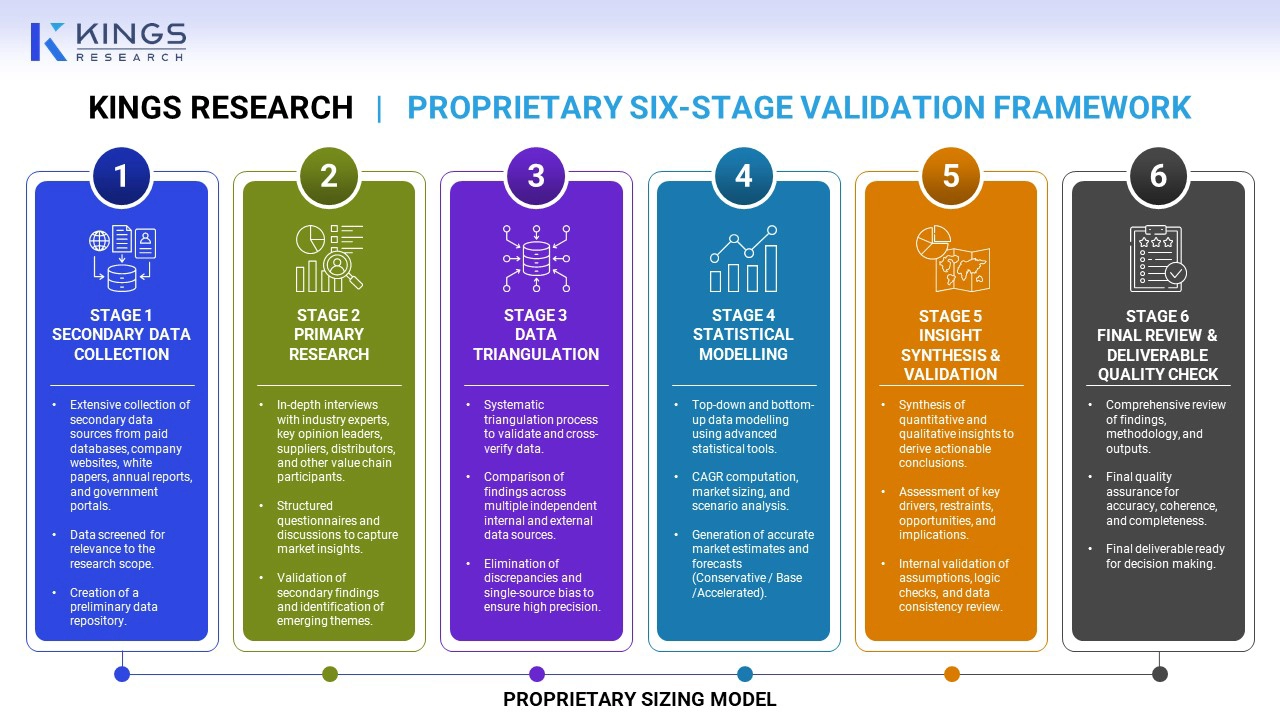
Our methodology triangulates insights from multiple independent and publicly available research databases, which are further validated against regulatory filings and public company disclosures. All estimates are cross-verified; no single-source data is presented without validation.
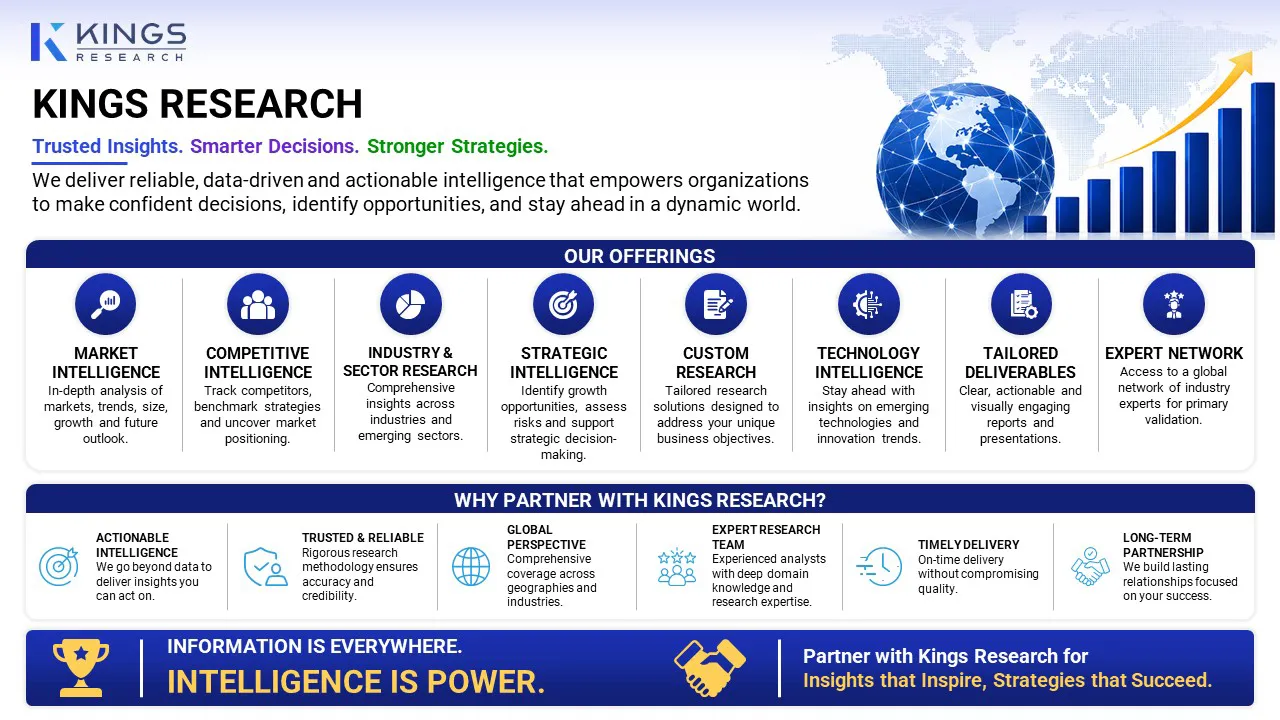
We deliver tailored, data-driven intelligence and strategic guidance to help organizations identify, evaluate, and capitalize on key market opportunities.
Frequently Asked Questions

Faizy brings over four years of experience in market research and consulting, with a proven ability to support strategic engagements across diverse industries and business environments. His work focuses on understanding complex market structures, identifying emerging opportunities, and translating research findings into clear, commercially relevant insights. With strong analytical capabilities and a structured approach to problem-solving, he evaluates industry trends, competitive landscapes, customer dynamics, and evolving business models. His expertise encompasses market research, competitive intelligence, market sizing and forecasting, industry assessment, company benchmarking, and strategic analysis. Faizy combines technical proficiency with a strong research orientation, enabling him to interpret both qualitative and quantitative information effectively. He has contributed to projects that help organizations assess growth potential, strengthen market positioning, and evaluate strategic priorities. His adaptable approach allows him to work across sectors while maintaining a consistent focus on accuracy, relevance, and delivering insights that support informed decision-making for clients and stakeholders.
With many years of consulting experience across global pharma, biotech, and MedTech markets, Minaz brings deep domain expertise, strategic clarity, and analytical rigor to every engagement. She has led 130+ consulting assignments spanning market entry, competitive landscaping, and portfolio prioritization, helping clients navigate complex, high-stakes decisions with confidence. Known for her ability to synthesize primary and secondary research into executive-ready recommendations, Minaz has built forecasting models and market sizing frameworks that have informed multi-million dollar investment decisions in oncology, diagnostics, and peptide therapeutics. Beyond her analytical strength, Minaz is a trusted client partner, translating complex datasets into clear, actionable insights for senior stakeholders. She currently leads a team of research analysts, driving business expansion, and shaping client engagement strategy.