
Inquire Now
Key Strategic Points
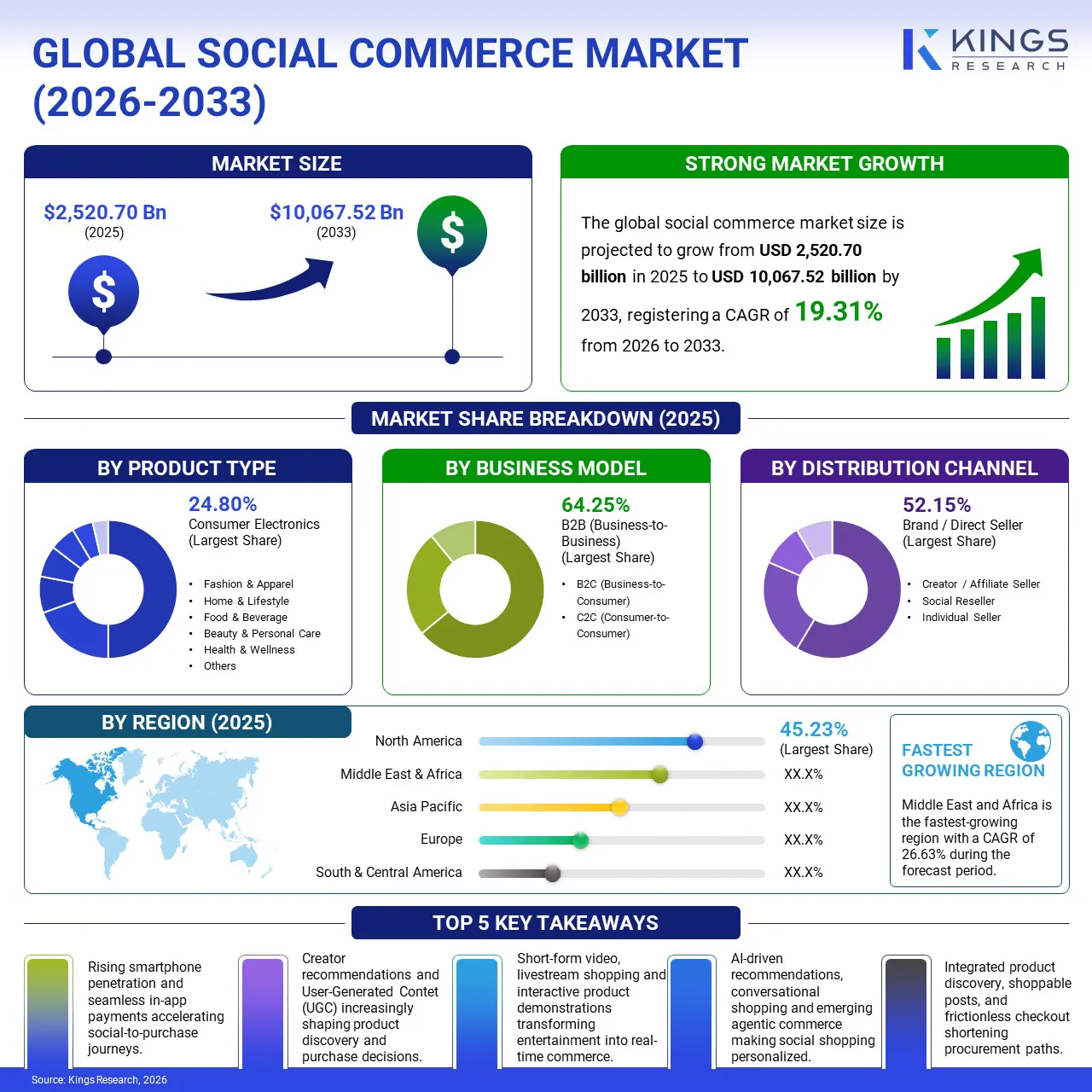
According to Kings Research analysis, the global social commerce market size was recorded at USD 2,520.70 billion in 2025 and is projected to reach USD 10,067.52 billion by 2033, growing at a CAGR of 19.31% over the forecast period from 2026 to 2033.
Social commerce integrates online shopping features into social media platforms. This seamlessly enhances how consumers engage, interact, and make purchase decisions while scrolling through their preferred social media platforms. Interactive features, including reviews, likes, shares, recommendations, influencer content, and livestream shopping, create a more engaging and socially driven purchasing environment.
The market is witnessing significant growth as consumers increasingly rely on social media platforms for product discovery, recommendations, and purchasing decisions. Rising internet and smartphone penetration, growing adoption of digital payments, increasing influencer and creator-led marketing, and the expansion of livestream and mobile commerce are fueling adoption.
Furthermore, personalized recommendations, seamless in-app purchasing, and the growing integration of artificial intelligence are enhancing customer engagement and creating new opportunities for social commerce platforms and businesses.
The rising prevalence of impulse buying across social and online commerce environments is amplified by peer recommendations, personalized product recommendations, influencer marketing, and livestream shopping. The growing social media usage for entertainment, news, learning, and more has led to companies using the platforms to market and sell their products. Additionally, rising consumer demand for convenience, faster purchase decisions, and automated shopping experiences is fueling market expansion. These factors stimulate consumer interest and engagement, encourage unplanned purchases, and create new growth opportunities.
According to Amazon, Gen Z and Millennials account for 15% and 9% of the shoppers, respectively, in the global social media shopping ecosystem. This growing engagement with social platforms highlights the increasing role of social media in influencing product discovery and purchasing behavior.
The social commerce industry faces increasing cybersecurity challenges as dynamic platforms integrate social media with direct online purchasing. Cybercriminals frequently exploit these ecosystems through targeted phishing, social engineering, account takeovers, and fraudulent payment activities. Security breaches often lead to immediate financial disruption, compromised user data, significant reputational damage, and strict regulatory penalties.
To mitigate these risks, organizations are deploying multi-layered defense frameworks, including advanced network security, strict access controls, and robust end-to-end data encryption. Additionally, social commerce platforms are leveraging artificial intelligence and blockchain technology to enable real-time threat detection and facilitate secure and transparent transactions across interconnected networks.
For instance, in September 2025, TikTok Shop introduced stronger payment security with PIN, Face ID, and Touch ID options to prevent unauthorized transactions. The feature enables a seamless and convenient checkout without compromising on security.
Moreover, in November 2025, EverC introduced Scam Network Intelligence, an AI-powered solution that detects and disrupts online fraud. The solution maps scam networks across e-commerce, social media, advertising, messaging, and payment platforms, and identifies connected fraud patterns and high-risk entities, enabling marketplaces to detect scams.
The technology provides enforcement-grade intelligence, thereby enabling faster decisions, blocking suspicious activity, and preventing brand abuse across shopping marketplaces on social media platforms.
The emergence and adoption of generative and agentic AI across social media and commerce platforms are creating new opportunities for personalized recommendations, conversational shopping, automated content creation, and more efficient product discovery. Generative search can help consumers discover products through natural-language queries by synthesizing information, comparing options, and surfacing relevant recommendations, while agentic AI can take these capabilities further by acting on behalf of shoppers.
AI shopping agents act as commerce interfaces that search and compare products, recommend suitable products, complete transactions, track orders, and manage returns on behalf of consumers, thereby reducing the time, effort, and cognitive burden associated with shopping.
Agentic AI further integrates sales, service, and retention into a connected process by identifying shopper intent from comments and messages, answering product questions, providing purchase links, and handling routine queries automatically. Market players are introducing agentic AI features that proactively manage tasks on behalf of users. These capabilities potentially enhance conversion rates, average order value, and consumer retention while integrating with social platforms and CRM systems.
|
Segmentation |
Details |
|
|
By Product Type |
Consumer Electronics, Fashion & Apparel, Home & Lifestyle, Food & Beverage, Beauty & Personal Care, Health & Wellness, and Others |
|
|
By Business Model |
B2B (Business-to-Business), B2C (Business-to-Consumer), and C2C (Consumer-to-Consumer) |
|
|
By Distribution Channel |
Brand / Direct Seller, Creator / Affiliate Seller, Social Reseller, and Individual Seller |
|
|
By Region |
North America |
U.S., Canada, Mexico |
|
Europe |
France, UK, Spain, Germany, Italy, Russia, Rest of Europe |
|
|
Asia-Pacific |
China, Japan, India, Australia, ASEAN, South Korea, Rest of Asia-Pacific |
|
|
Middle East and Africa |
Turkey, U.A.E., Saudi Arabia, South Africa, Rest of Middle East & Africa |
|
|
South and Central America |
Brazil, Argentina, Rest of South and Central America |
|
The consumer electronics segment held the largest share of 24.80% in 2025, with a valuation of USD 624.96 billion. This notable growth is attributed to the rising adoption of smartphones, laptops, gaming devices, and other allied electronic products through social commerce platforms. Increasing consumer preference for convenient online shopping, product demonstrations, and influencer recommendations is influencing the adoption of social commerce channels for the purchase of consumer electronics, thereby boosting segmental growth.
The C2C (consumer-to-consumer) segment is projected to grow at the fastest CAGR of 23.15% over the forecast period, reaching USD 959.28 billion in 2033. This rapid growth is fueled by the rising adoption of peer-to-peer selling platforms, increasing consumer participation in online marketplaces, and the rising popularity of social media-enabled transactions. Additionally, the ease of connecting buyers and sellers directly, combined with lower entry barriers and growing consumer trust in digital payment solutions, is likely to propel segmental expansion.
By region, the global social commerce industry is segmented into North America, Europe, Asia Pacific, the Middle East and Africa, and South and Central America.
North America held the largest share of 45.23%, valued at USD 1,139.91 billion in 2025. This dominance is reinforced by the large and digitally engaged consumer base, strong e-commerce infrastructure, and widespread social media adoption across the U.S. and Canada.
The rapid growth of creator- and influencer-led shopping is driven by the widespread adoption of major platforms, including TikTok Shop, Facebook, Instagram, YouTube, and Pinterest. These platforms integrate product discovery, recommendations, affiliate marketing, and purchasing into social experiences, enabling consumers to discover products across visually driven categories such as fashion, beauty, personal care, and electronics, thereby boosting regional market growth.
The Middle East and Africa is emerging as the fastest-growing region, anticipated to register a CAGR of 26.63% over the forecast period, reaching a valuation of USD 728.96 billion by 2033.
This high growth rate is fueled by increasing smartphone penetration, digital payment availability, and social connectivity that are accelerating the transition from traditional retail to socially embedded online purchasing.
According to Forbes, nearly 98.98% of the Emirati population is active on social media, with a major portion engaged in commerce through social media platforms. This empowers luxury brands to adapt to transforming consumer behavior and the growing influence of social media. Additionally, the rising influence of creators, authentic storytelling, and social commerce in connecting luxury brands with modern audiences is presenting growth opportunities for the regional market.
The European social commerce market is witnessing robust growth, driven by high internet penetration, established e-commerce infrastructure, and strong consumer adoption of social media platforms. Rising influencer marketing, social media commerce, and integrated payment solutions are creating new opportunities for brands to engage consumers and drive online purchases.
A large number of digitally connected populations in growing economies such as China and India, rising smartphone penetration with the availability of budget-friendly smartphones, low internet costs, and widespread use of social media platforms are supporting the growth of the Asia Pacific social commerce market. The surging adoption of live commerce, creator-led retail, digital payments, and mobile-first purchasing is significantly driving regional market growth.
Social commerce market trends in South & Central America are being driven by increasing internet access, smartphone usage, and digital payment penetration, which are reshaping consumer purchasing behavior. Expanding social media usage and influencer-driven product discovery are enabling businesses to engage consumers through social platforms.
The market players are engaging in strategic technical partnerships, targeted at portfolio expansion, strengthening market presence, and broadening service offerings across emerging areas. These partnerships and alliances enable companies to leverage their combined expertise, which helps fuel the development of innovative solutions.
How We Gather This Information
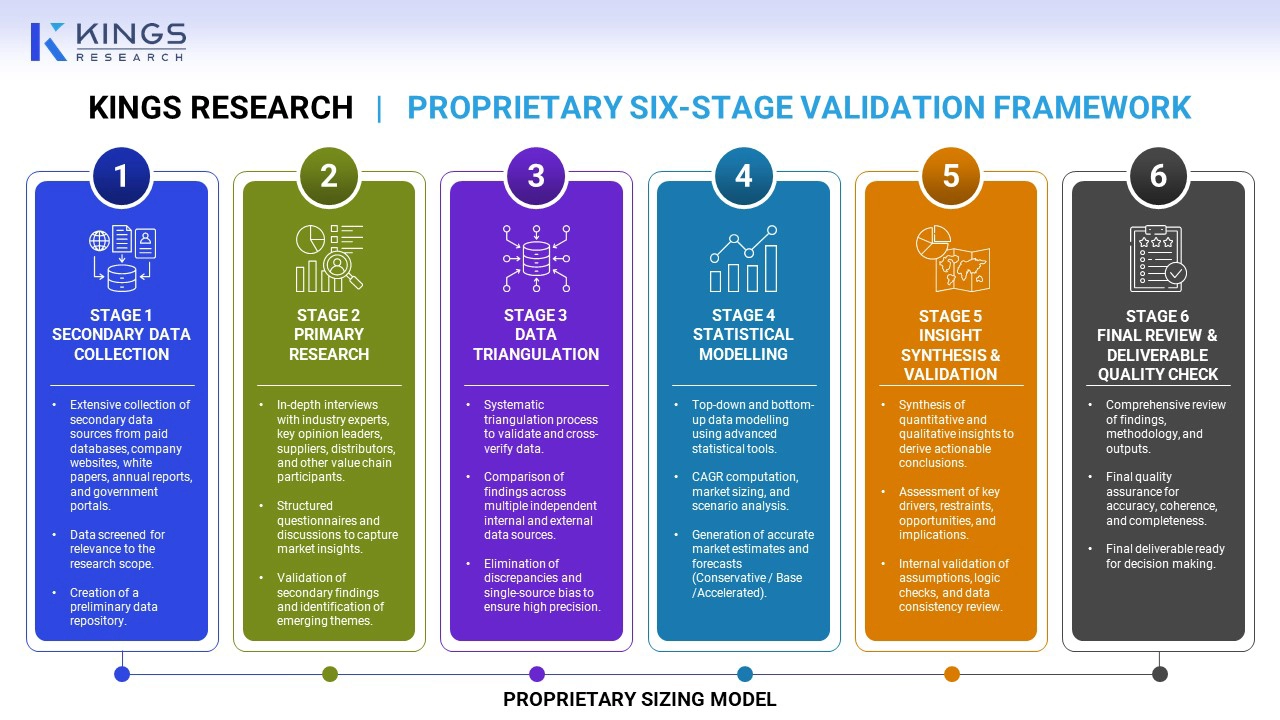
Our methodology triangulates insights from multiple independent and publicly available research databases and is further validated against regulatory filings and public company disclosures. All estimates are cross-verified; no single-source data is presented without validation.
Our custom offerings deliver tailored, data-driven intelligence and strategic guidance to help organizations identify, evaluate, and capitalize on key market opportunities.
Frequently Asked Questions

Faizy brings over four years of experience in market research and consulting, with a proven ability to support strategic engagements across diverse industries and business environments. His work focuses on understanding complex market structures, identifying emerging opportunities, and translating research findings into clear, commercially relevant insights. With strong analytical capabilities and a structured approach to problem-solving, he evaluates industry trends, competitive landscapes, customer dynamics, and evolving business models. His expertise encompasses market research, competitive intelligence, market sizing and forecasting, industry assessment, company benchmarking, and strategic analysis. Faizy combines technical proficiency with a strong research orientation, enabling him to interpret both qualitative and quantitative information effectively. He has contributed to projects that help organizations assess growth potential, strengthen market positioning, and evaluate strategic priorities. His adaptable approach allows him to work across sectors while maintaining a consistent focus on accuracy, relevance, and delivering insights that support informed decision-making for clients and stakeholders.
Habi is a seasoned research and consulting leader with renowned experience in guiding clients on strategic growth and transformation initiatives across global markets. He has led high-performing research teams that deliver actionable insights on market expansion, M&A strategies, opportunity assessment, new business development, and product launches. His project portfolio spans large petrochemical producers, electronic device manufacturers, lubricants companies, and other leading enterprises across diverse industrial and consumer sectors. He currently heads the research department at Kings Research, where he is responsible for setting the research agenda, mentoring analysts, and ensuring client-ready deliverables that support executive decision-making. With extensive experience in market intelligence, strategic research, and consulting, Habi brings a strong understanding of evolving industry dynamics, competitive landscapes, emerging opportunities, and business growth challenges. His expertise includes developing research frameworks, translating complex market data into actionable strategic recommendations, and working closely with senior stakeholders to address critical business questions. He has also contributed to building research capabilities, strengthening analytical methodologies, and driving a culture of quality and insight-led decision-making within research teams. His cross-industry exposure enables him to connect market trends with broader business implications and provide perspectives that help organizations identify opportunities, mitigate risks, and make informed strategic decisions.