
Inquire Now
Key Strategic Points
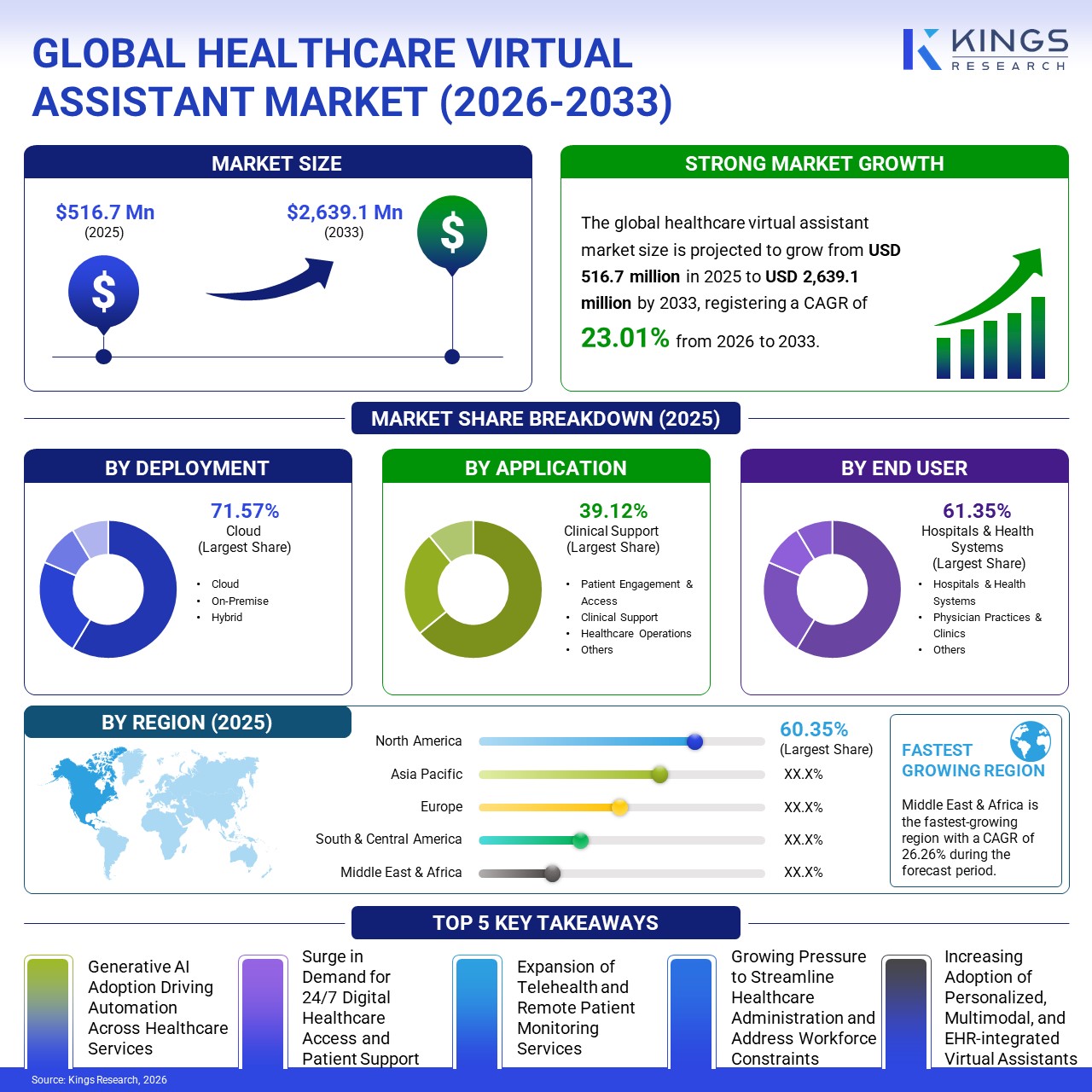
According to Kings Research analysis, the global healthcare virtual assistant market size was recorded at USD 516.7 million in 2025 and is projected to reach USD 2639.1 million by 2033, growing at a CAGR of 23.01% over the forecast period from 2026 to 2033.
The market is expanding significantly, mainly due to the rising adoption of AI-driven solutions targeted at improving patient engagement and operational efficiency. The surge in administrative workloads associated with the healthcare domain and the shortage of skilled personnel are prompting developers to innovate virtual assistant platforms that enable the automation of scheduling, billing, patient communication, and care coordination activities.
Moreover, the rise in demand for convenient, personalized, and round-the-clock healthcare access is further supporting the adoption of virtual assistants, with cloud-based and hybrid deployments gaining traction due to their scalability, flexibility, and ability to integrate with healthcare information systems.
The increasing demand to reduce manual administrative workloads, combat worker shortages, and address rising patient demands for 24/7 digital care is highlighting the need for healthcare virtual assistants. Increasing patient volumes and a shortage of trained administrative personnel create challenges for healthcare providers in managing appointment scheduling, insurance verification, patient communication, and billing coordination efficiently.
The World Health Organization (WHO) has projected a shortfall of 11.1 million health workers by 2030 in lower- and middle-income countries, including doctors, nursing staff, administrative personnel, and operations staff. This signals the requirement for technology-enabled automation solutions. Market players are thus introducing platforms that integrate AI capabilities, support a broader range of healthcare applications, and enable greater integration across clinical and administrative workflows.
Protection of sensitive patient and healthcare data from cyberattacks and data theft is limiting the adoption of healthcare virtual assistants. The increasing frequency of malware, ransomware, phishing, and data breaches compromises patient confidentiality and creates legal and regulatory challenges, restraining the integration of virtual assistants in healthcare.
According to IBM Corporation, healthcare is among the most expensive industries in terms of data breaches, with an average cost of a healthcare data breach reported at USD 7.42 million in 2025. Attackers often target patients' personally identifiable information (PII), which is frequently used for identity theft, insurance fraud, and other associated financial crimes. To address this challenge, industry players encrypt sensitive data both in transit and at rest and back up data to secure, off-site locations to mitigate risks of data loss or breaches.
Vocal biomarkers are emerging as non-invasive diagnostic tools for the early screening of cognitive, behavioral, and neurological conditions through the analysis of patients' voices. This approach enables clinical support for patients with underlying medical conditions, including mild cognitive impairment, depression, anxiety, Parkinson’s, Alzheimer’s, multiple sclerosis, and Huntington’s disease. This results in earlier identification of potential health concerns and facilitates timely clinical intervention.
Additionally, the integration of vocal biomarkers with virtual assistants embedded in smartphones and wearable devices is further poised to enable continuous monitoring and more proactive, personalized healthcare, presenting opportunities for market development. Market players are adopting expansion strategies through fundraising and product development aimed at capturing market share.
|
Segmentation |
Details |
|
|
By Deployment |
Cloud, On-Premise, and Hybrid |
|
|
By Application |
Patient Engagement and Access, Clinical Support, Healthcare Operations, and Others |
|
|
By End User |
Hospitals and Health Systems, Physicians' Practices and Clinics, and Others |
|
|
By Region |
North America |
U.S., Canada, and Mexico |
|
Europe |
France, UK, Spain, Germany, Italy, Russia, and Rest of Europe |
|
|
Asia-Pacific |
China, Japan, India, Australia, ASEAN, South Korea, and Rest of Asia-Pacific |
|
|
Middle East and Africa |
Turkey, U.A.E., Saudi Arabia, South Africa, and Rest of Middle East & Africa |
|
|
South and Central America |
Brazil, Argentina, and Rest of South and Central America |
|
The cloud segment accounted for the largest share of 71.57% in 2025, with a valuation of USD 369.8 million. This growth is attributed to its high scalability, advanced data processing, and robust security infrastructure for handling healthcare data. The adoption of AI virtual assistants in healthcare enables the provision of high computational capabilities, continuous uptime, and data integration required to handle complex clinical workflows safely and efficiently.
The patient engagement and access segment is anticipated to register the fastest CAGR of 24.68% over the forecast period, reaching USD 1,010.9 million in 2033. This growth is fueled by the increasing adoption of AI-powered healthcare virtual assistants for appointment scheduling, medication reminders, health information, care navigation, and patient support. These solutions enhance accessibility, streamline patient-provider communication, and enable proactive, continuous engagement, contributing significantly to market expansion.
By region, the global healthcare virtual assistant market has been segmented into North America, Europe, Asia Pacific, the Middle East and Africa, and South and Central America.
North America accounted for the largest share of 60.35% in 2025, with a valuation of USD 311.8 million. This growth is attributed to the vast software development ecosystem, which drives innovation and deployment of tools aimed at advancing virtual assistants for the healthcare sector. The vast digital health ecosystem across the U.S. is further transforming the market by connecting technology, data, providers, and consumers to develop seamless and personalized healthcare products and services, including virtual assistants, thereby enabling convenient access and improved patient experiences.
The Middle East and Africa healthcare virtual assistant market forecast projects the region to be the fastest-growing market, expanding at a CAGR of 26.26% to reach USD 47.02 million by 2033. The rising population, along with an estimated internet penetration rate of 67.2%, creates a strong foundation for mobile health, virtual care, digital assistants, and connected healthcare services. Moreover, the rapid adoption of AI driven virtual healthcare assistants and allied technologies in the UAE and Saudi Arabia, where governments and healthcare organizations are exploring AI applications in areas such as clinical decision support,healthcare chatbots, and precision medicine, further creates new growth opportunities.
Europe represents a significant market for healthcare virtual assistants, driven by the growing digitization of healthcare systems, increasing demand for patient engagement virtual assistant in form of healthcare chatbots and other AI driven conversational technologies. The region’s focus on improving healthcare accessibility and operational efficiency is creating opportunities for virtual assistants across patient support and care navigation.
Asia Pacific is expected to witness strong growth in the healthcare virtual assistant market, supported by expanding digital healthcare infrastructure, increasing smartphone and internet penetration, and growing adoption of AI-enabled healthcare solutions. The region’s large and digitally connected population highlights the need for virtual assistants to improve access, patient engagement, and healthcare navigation.
South and Central America is emerging as a developing market for healthcare virtual assistants, supported by increasing digital healthcare adoption, expanding telemedicine services, and growing demand for convenient access to healthcare. Moreover, rising smartphone usage, investments in healthcare technology, and the expansion of virtual care services are boosting demand for AI-powered healthcare virtual assistants in the region.
Numerous healthcare providers and technology companies operating in the global market are prioritizing developing innovative solutions to improve patient engagement and operational efficiency within the healthcare ecosystem. Market players are engaging in strategic technical partnerships and collaborations aimed at strengthening market presence and broadening service offerings across emerging market areas.
How We Gather This Information
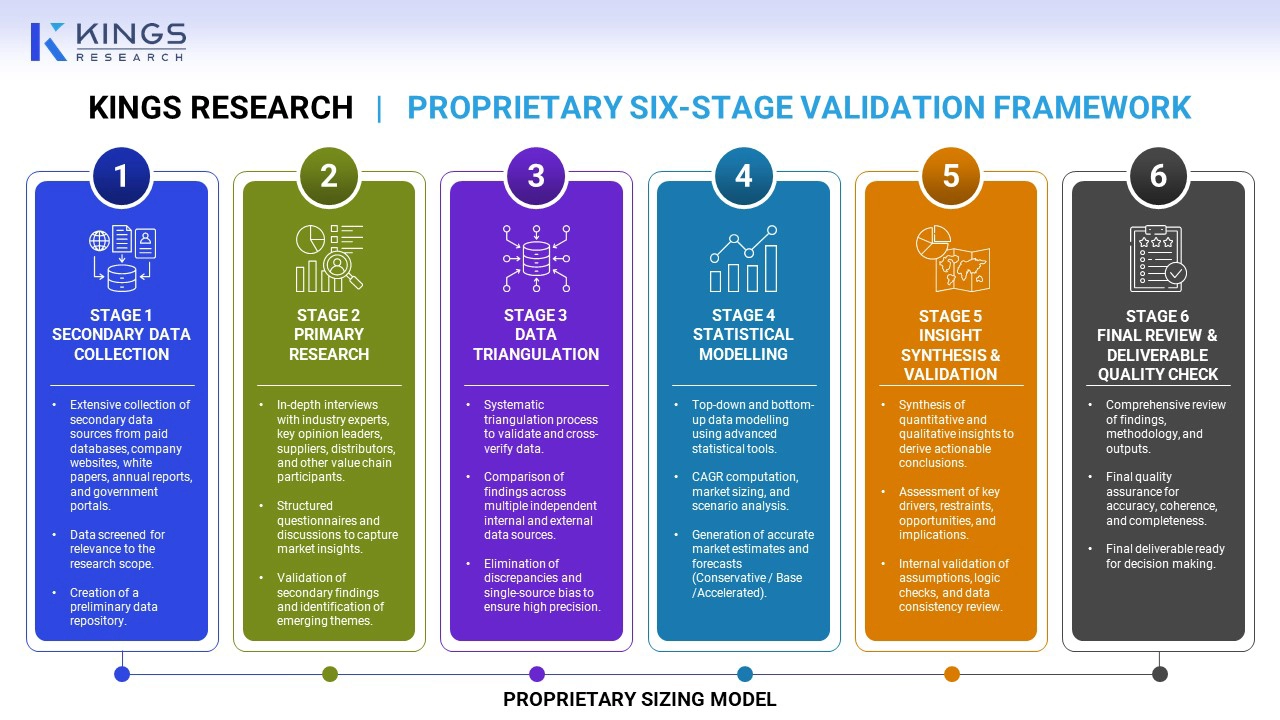
Our methodology triangulates insights from multiple independent and publicly available research databases, which is further validated against regulatory filings and public company disclosures. All estimates are cross-verified; no single-source data is presented without validation.
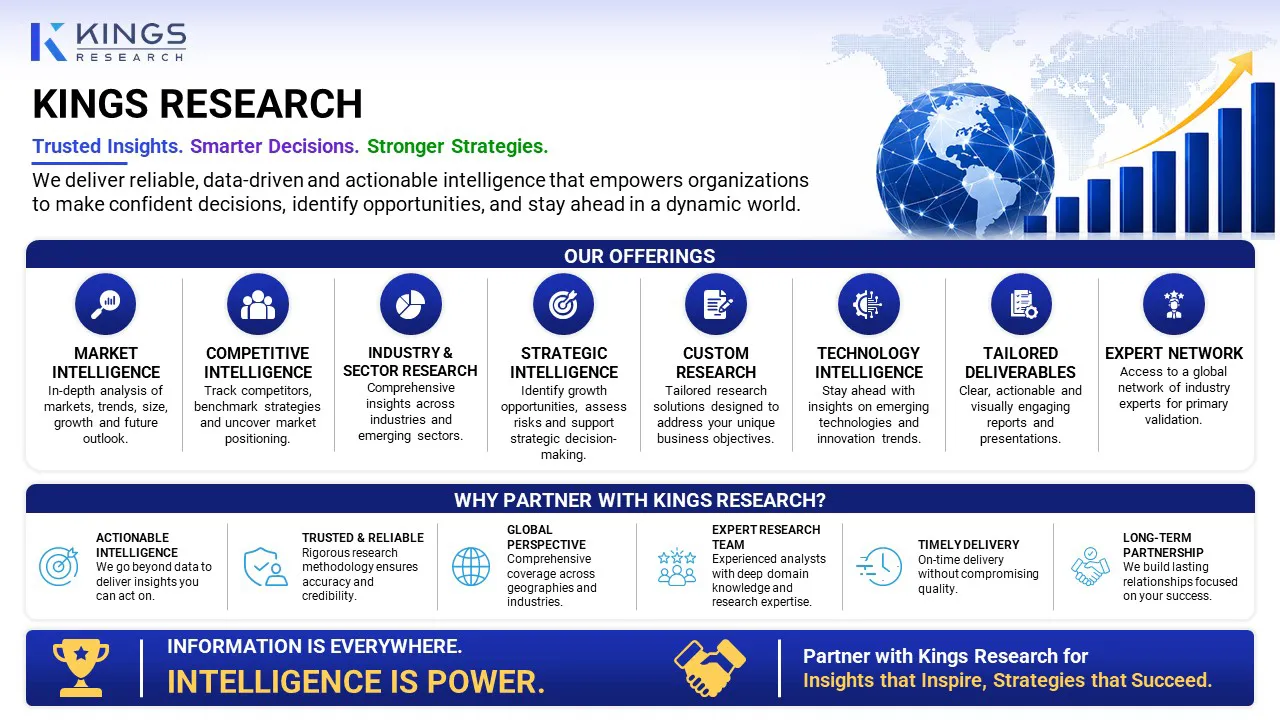
Our custom offerings deliver tailored, data-driven intelligence and strategic guidance to help organizations identify, evaluate, and capitalize on key market opportunities.
Frequently Asked Questions

Faizy brings over four years of experience in market research and consulting, with a proven ability to support strategic engagements across diverse industries and business environments. His work focuses on understanding complex market structures, identifying emerging opportunities, and translating research findings into clear, commercially relevant insights. With strong analytical capabilities and a structured approach to problem-solving, he evaluates industry trends, competitive landscapes, customer dynamics, and evolving business models. His expertise encompasses market research, competitive intelligence, market sizing and forecasting, industry assessment, company benchmarking, and strategic analysis. Faizy combines technical proficiency with a strong research orientation, enabling him to interpret both qualitative and quantitative information effectively. He has contributed to projects that help organizations assess growth potential, strengthen market positioning, and evaluate strategic priorities. His adaptable approach allows him to work across sectors while maintaining a consistent focus on accuracy, relevance, and delivering insights that support informed decision-making for clients and stakeholders.
Habi is a seasoned research and consulting leader with renowned experience in guiding clients on strategic growth and transformation initiatives across global markets. He has led high-performing research teams that deliver actionable insights on market expansion, M&A strategies, opportunity assessment, new business development, and product launches. His project portfolio spans large petrochemical producers, electronic device manufacturers, lubricants companies, and other leading enterprises across diverse industrial and consumer sectors. He currently heads the research department at Kings Research, where he is responsible for setting the research agenda, mentoring analysts, and ensuring client-ready deliverables that support executive decision-making. With extensive experience in market intelligence, strategic research, and consulting, Habi brings a strong understanding of evolving industry dynamics, competitive landscapes, emerging opportunities, and business growth challenges. His expertise includes developing research frameworks, translating complex market data into actionable strategic recommendations, and working closely with senior stakeholders to address critical business questions. He has also contributed to building research capabilities, strengthening analytical methodologies, and driving a culture of quality and insight-led decision-making within research teams. His cross-industry exposure enables him to connect market trends with broader business implications and provide perspectives that help organizations identify opportunities, mitigate risks, and make informed strategic decisions.