
Inquire Now
Key Strategic Points
According to Kings Research analysis, the global software-defined storage (SDS) market was valued at USD 6,063.7 million in 2025 and is estimated to grow from USD 6,797.3 million in 2026 to USD 16,876.9 million in 2033, registering a CAGR of 13.87% over the forecast period (2026-2033).
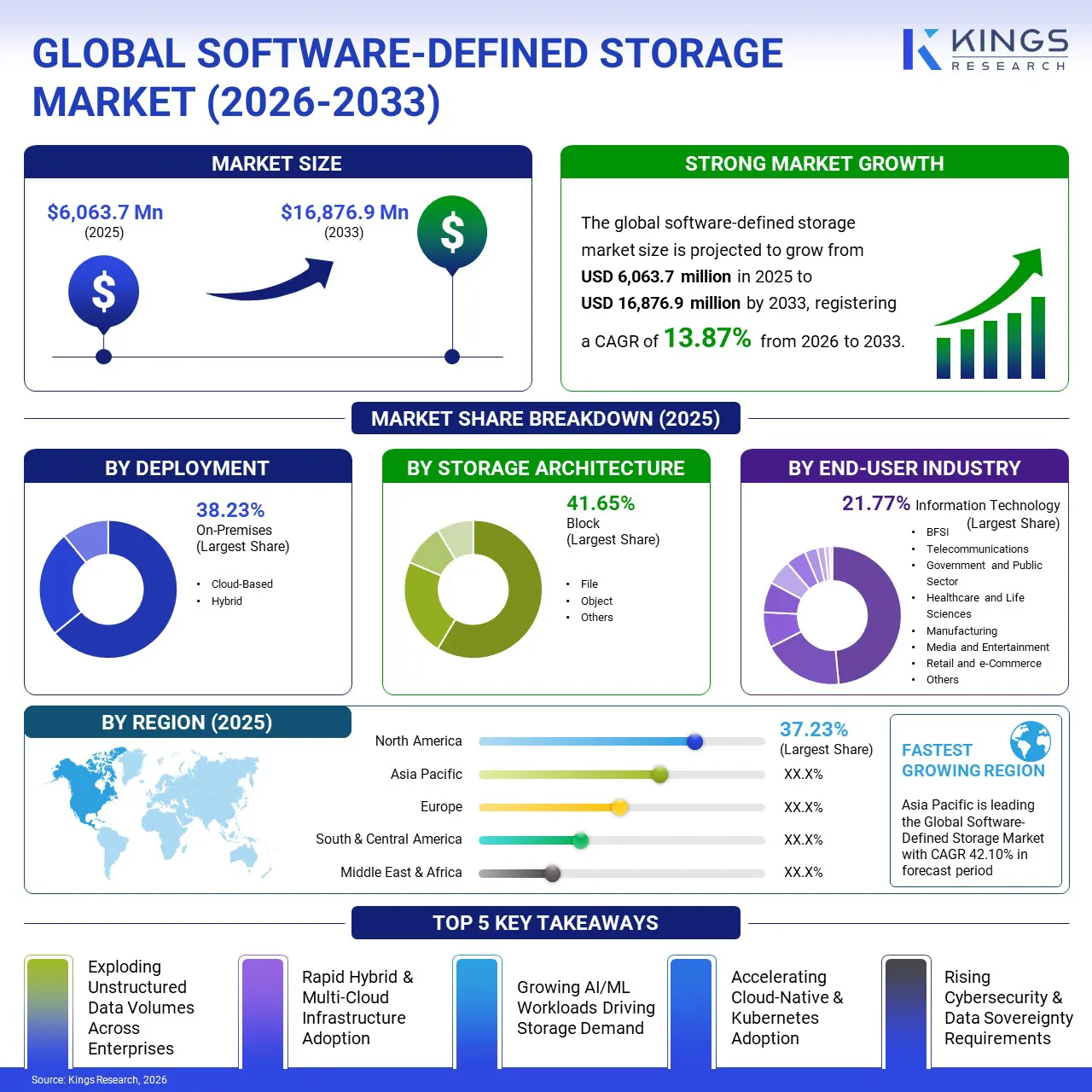
The market comprises software-based solutions that abstract, pool, manage, and dynamically allocate storage resources across physical and virtual infrastructure. Market growth is being driven by the rapid expansion of enterprise data owing to the widespread usage of cloud computing, IoT devices, AI/ML applications, and digital services.
The limitations associated with traditional storage architectures, including limited scalability, performance constraints, high technology refresh costs, and complex management, boost the demand for more flexible storage models. The ability of SDS to enable distributed architectures, on-demand capacity expansion, parallel processing, and unified management of block, file, and object storage architectures is expected to support broader enterprise adoption and continued market growth.
Software-defined storage (SDS) reduces dependence on proprietary storage hardware by enabling organizations to use commodity x86-based systems, which lowers both capital and operational expenditures. The surge in data volumes across organizations thus enables them to scale storage incrementally from terabytes to petabytes without major infrastructure investments. This leads to simplified storage management, improved operational efficiency, and support for hybrid-cloud and cloud-ready environments, thereby driving adoption of software-defined storage solutions across modern IT infrastructures and allied end-use domains.
Additionally, rising SSD and DRAM prices, driven by increasing AI infrastructure demand, are prompting organizations to optimize existing storage infrastructure and consolidate multiple storage architectures. This growing demand for hardware flexibility, efficient resource use, and intelligent data tiering is prompting vendors to improve software-driven storage optimization, automation, and data management capabilities.
The adoption of software-defined storage is limited by the challenges of integrating SDS platforms with existing storage area networks (SANs), proprietary storage systems, and established IT processes. Solutions that require infrastructure replacement, complex data migration, or additional hardware can increase deployment costs and operational risks. Additionally, limitations in advanced data services, including replication, disaster recovery, and migration, may require enterprises to maintain conventional storage systems alongside SDS, thereby limiting the cost savings and operational benefits offered by SDS solutions.
To address this challenge, market players are developing solutions that enable enterprises to reduce migration risks and operational complexity while limiting vendor lock-in. In September 2025, Hitachi Vantara and Red Hat released the combined VSP One and Red Hat OpenShift Virtualization platform, which enables organizations to migrate VMware workloads, run VMs and containers on a shared infrastructure, and reduce duplicate hardware and licensing costs. Its active-active data access, disaster avoidance, and workload mobility capabilities support continuous operations and resilience across distributed environments. These capabilities help address key barriers to SDS adoption, particularly infrastructure complexity, migration challenges, and gaps in data availability.
The evolution of traditional HPC environments designed to support simulation, modeling, artificial intelligence (AI), machine learning (ML), advanced analytics, digital engineering, digital twins, and large-scale research workloads is creating new growth opportunities for the global SDS market.
The surge in multi-petabyte and exabyte-scale datasets, along with increasing GPU and AI accelerator adoption, distributed users, and hybrid cloud environments, is further creating a strong demand for storage architectures that offer high scalability, performance, and simplified data access, management, orchestration, and security. Market players are aligning their strategies to develop SDS solutions that are scalable, high-performance, and flexible, and that can support growing HPC and AI-driven data workloads.
|
Segmentation |
Details |
|
|
By Deployment |
On-Premises, Cloud-Based, Hybrid |
|
|
By Storage Architecture |
Block, File, Object, Others |
|
|
By Organization Size |
Large Enterprises, Small and Medium Enterprises |
|
|
By End User Industry |
Banking, Financial Services and Insurance (BFSI), Telecommunications, Information Technology, Government and Public Sector, Healthcare, and Life Sciences, Manufacturing, Media and Entertainment, Retail and e-Commerce, Others |
|
|
By Region |
North America |
U.S., Canada, Mexico |
|
Europe |
France, UK, Spain, Germany, Italy, Russia, Rest of Europe |
|
|
Asia-Pacific |
China, Japan, India, Australia, ASEAN, South Korea, Rest of Asia-Pacific |
|
|
Middle East and Africa |
Turkey, U.A.E., Saudi Arabia, South Africa, Rest of Middle East & Africa |
|
|
South and Central America |
Brazil, Argentina, Rest of South and Central America |
|
The on-premises deployment held the largest share of 38.23% in 2025, with a valuation of USD 2,318.4 million. This high share is attributable to the demand for data security, data sovereignty, and infrastructure performance offered by on-premises environments. The installation of on-premises software-defined storage solutions enables end users to maintain direct control over data location, encryption, and storage infrastructure while reducing concerns related to third-party data exposure. Also, the high demand for on-premises software-defined storage solutions is due in large part to lower latency, compliance with regulations, and lower maintenance costs.
The object storage architecture is likely to grow at the fastest CAGR of 17.34% over the forecast period from 2026 to 2033. This expansion is fueled by its ability to handle large amounts of unstructured data. The growth of artificial intelligence, machine learning, analytics, data lakes, video content, IoT, and backups is creating massive data volumes that require flexible storage solutions capable of organizing, searching, and analyzing billions of objects. Additionally, high scalability and accessibility compared to other storage architectures, along with its ability to store data redundantly across devices and locations, are poised to create growth avenues for its adoption across new end-use verticals.
The global software-defined storage market is fragmented, with competition distributed across leading global players and regional players that maintain strong positions in their respective markets. Companies are strengthening strategic technology partnerships and pursuing mergers and acquisitions to expand their reach across untapped markets.
By region, the global software-defined storage market is segmented into North America, Europe, Asia Pacific, the Middle East and Africa, and South and Central America.
North America held the largest share of 37.23% in 2025, with a valuation of USD 2,257.8 million. The U.S. emerges as a premier hub for the software-defined storage market owing to the vast software development ecosystem, which drives innovation and deployment of diverse SDS products and services. The rise in cloud computing adoption and widespread use of data-intensive applications across enterprises further accelerate the growth of scalable and flexible storage infrastructure, thereby driving the adoption of software-defined storage solutions across the region.
The Asia-Pacific software-defined storage market is anticipated to grow at the fastest CAGR of 17.13% over the forecast period (2026-2033). The rapid pace of software adoption and digital transformation in the region is presenting growth avenues for the regional market. The large digital population, growing AI adoption, cloud expansion, and increasing data generation are boosting demand for scalable, flexible, and cost-efficient data infrastructure.
The transition of enterprises across China, Japan, South Korea, and India towards cloud- and AI-driven architectures is likely to fuel demand for SDS solutions throughout the projection period.
Europe is forecasted to grow at a steady CAGR of 12.65% over the forecast interval. Accelerating cloud adoption, data-center modernization, and increasing enterprise demand for flexible storage architectures drive the growth of the SDS market in Europe.
The rising deployment of AI, edge computing, and data-intensive workloads across prominent European economies, including the UK, Germany, and France, encourages adoption of SDS solutions aimed at enhancing scalability, resource utilization, and storage management.
The Middle East and Africa are anticipated to grow at a CAGR of 15.11% over the forecast period. Rising digital transformation and surging investments in cloud-enabled infrastructure fuel the growth of software-defined storage solutions in the Middle East and Africa. Expanding data-center capacity and rising AI adoption further fuel cost-efficient and scalable storage environments in the region.
South and Central America captured 6.53% market share in 2025. Rising data generation, digitalization of enterprises, and investments in modern data-center infrastructure across Brazil, Argentina, and Chile increase the adoption of SDS platforms to support flexible and efficient storage management.
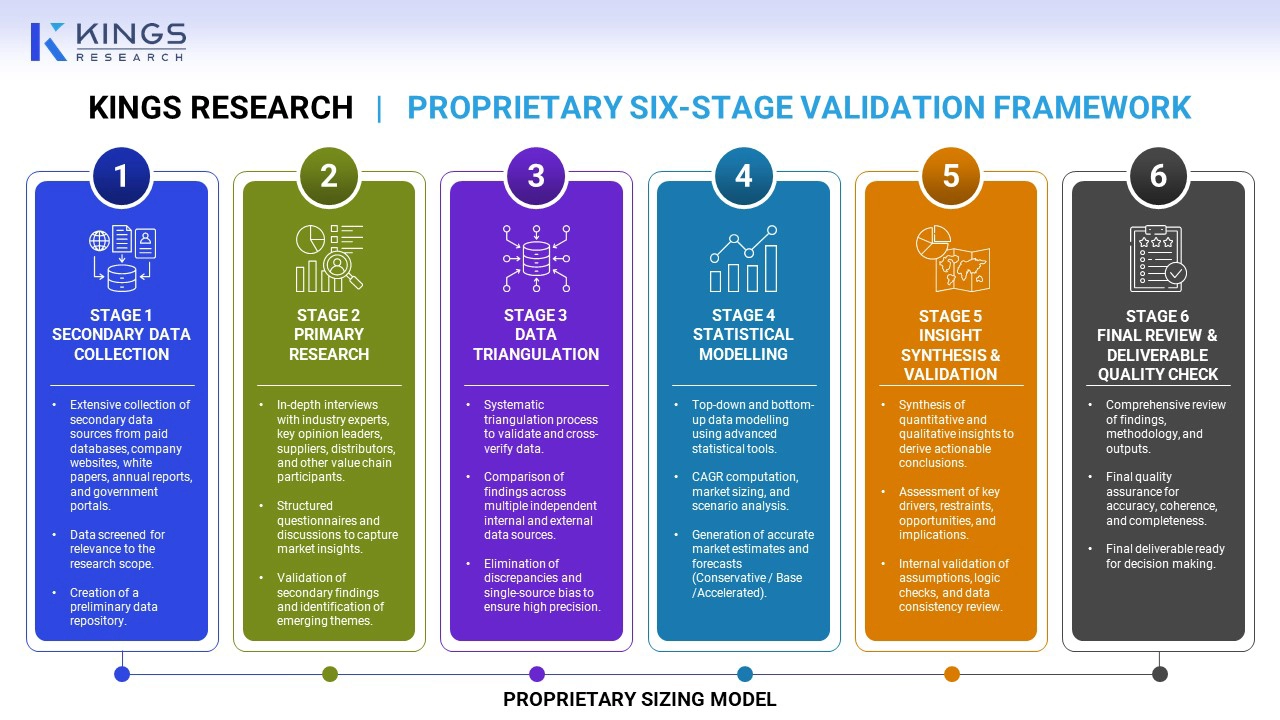
Our methodology triangulates insights from multiple independent and publicly available research databases, which is further validated against regulatory filings and public company disclosures. All estimates are cross-verified; no single-source data is presented without validation.
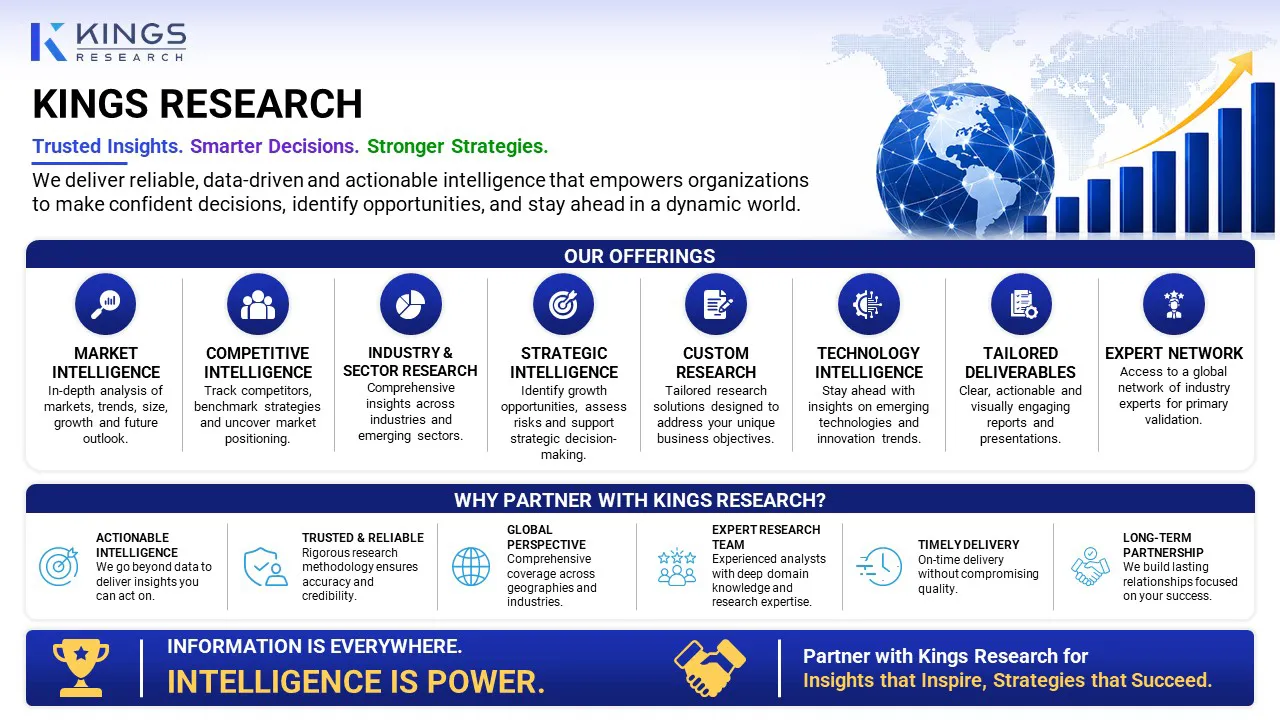
Our custom offerings deliver tailored, data-driven intelligence and strategic guidance to help organizations identify, evaluate, and capitalize on key market opportunities.
Frequently Asked Questions

Faizy brings over four years of experience in market research and consulting, with a proven ability to support strategic engagements across diverse industries and business environments. His work focuses on understanding complex market structures, identifying emerging opportunities, and translating research findings into clear, commercially relevant insights. With strong analytical capabilities and a structured approach to problem-solving, he evaluates industry trends, competitive landscapes, customer dynamics, and evolving business models. His expertise encompasses market research, competitive intelligence, market sizing and forecasting, industry assessment, company benchmarking, and strategic analysis. Faizy combines technical proficiency with a strong research orientation, enabling him to interpret both qualitative and quantitative information effectively. He has contributed to projects that help organizations assess growth potential, strengthen market positioning, and evaluate strategic priorities. His adaptable approach allows him to work across sectors while maintaining a consistent focus on accuracy, relevance, and delivering insights that support informed decision-making for clients and stakeholders.
Habi is a seasoned research and consulting leader with renowned experience in guiding clients on strategic growth and transformation initiatives across global markets. He has led high-performing research teams that deliver actionable insights on market expansion, M&A strategies, opportunity assessment, new business development, and product launches. His project portfolio spans large petrochemical producers, electronic device manufacturers, lubricants companies, and other leading enterprises across diverse industrial and consumer sectors. He currently heads the research department at Kings Research, where he is responsible for setting the research agenda, mentoring analysts, and ensuring client-ready deliverables that support executive decision-making. With extensive experience in market intelligence, strategic research, and consulting, Habi brings a strong understanding of evolving industry dynamics, competitive landscapes, emerging opportunities, and business growth challenges. His expertise includes developing research frameworks, translating complex market data into actionable strategic recommendations, and working closely with senior stakeholders to address critical business questions. He has also contributed to building research capabilities, strengthening analytical methodologies, and driving a culture of quality and insight-led decision-making within research teams. His cross-industry exposure enables him to connect market trends with broader business implications and provide perspectives that help organizations identify opportunities, mitigate risks, and make informed strategic decisions.