



In today’s information-intensive economy, business success depends on how effectively organizations can interpret data. Intuition and experience still matter, but the ability to make evidence-based decisions now determines who stays competitive.
Market research methodology acts as the structured framework that converts raw information into meaningful business insight. It defines how data is collected, analyzed, and interpreted to support strategic planning, product development, and market forecasting.
At Kings Research, this process involves more than gathering numbers. It is a disciplined approach that ensures every insight is factual, verifiable, and relevant to real-world market behavior. Through systematic research design, careful data validation, and comprehensive analysis, we help organizations navigate uncertainty and make confident decisions that support long-term growth.
Understanding Market Research Methodology
Market research methodology is the scientific process through which analysts gather and interpret data to explain how markets function and evolve. It is not limited to surveys or statistics but encompasses a combination of conceptual frameworks, data models, and interpretive tools.
The purpose of this methodology is to bridge the gap between information and action. By applying structured procedures, researchers can understand patterns of consumer behavior, measure market size, and evaluate competitive landscapes. The methodology ensures that the research outcomes are both reliable and replicable, making them a dependable foundation for strategic decision-making.
In essence, it allows businesses to answer three critical questions:
- What is happening in the market?
- Why is it happening?
- How can the business respond effectively?
Stage 1: Defining the Research Objective
Every research study begins with a clear definition of its purpose. This first stage is about identifying what needs to be discovered and why it matters. For instance, a company may want to understand regional demand for a product, measure brand awareness, or evaluate the adoption rate of new technology.
The research objective shapes the entire methodology. It determines the data sources, the type of analysis, and even the reporting style. A poorly defined objective leads to scattered insights, whereas a focused goal ensures coherence throughout the process.
At this stage, the research team collaborates closely with clients to align expectations and define measurable outcomes. Once the objective is framed, researchers can proceed to design an approach that produces relevant and credible results.
Stage 2: Research Design and Data Collection
The research design specifies the blueprint for how information will be obtained. It defines whether the study will use exploratory, descriptive, or causal research methods and determines the mix of quantitative and qualitative techniques.
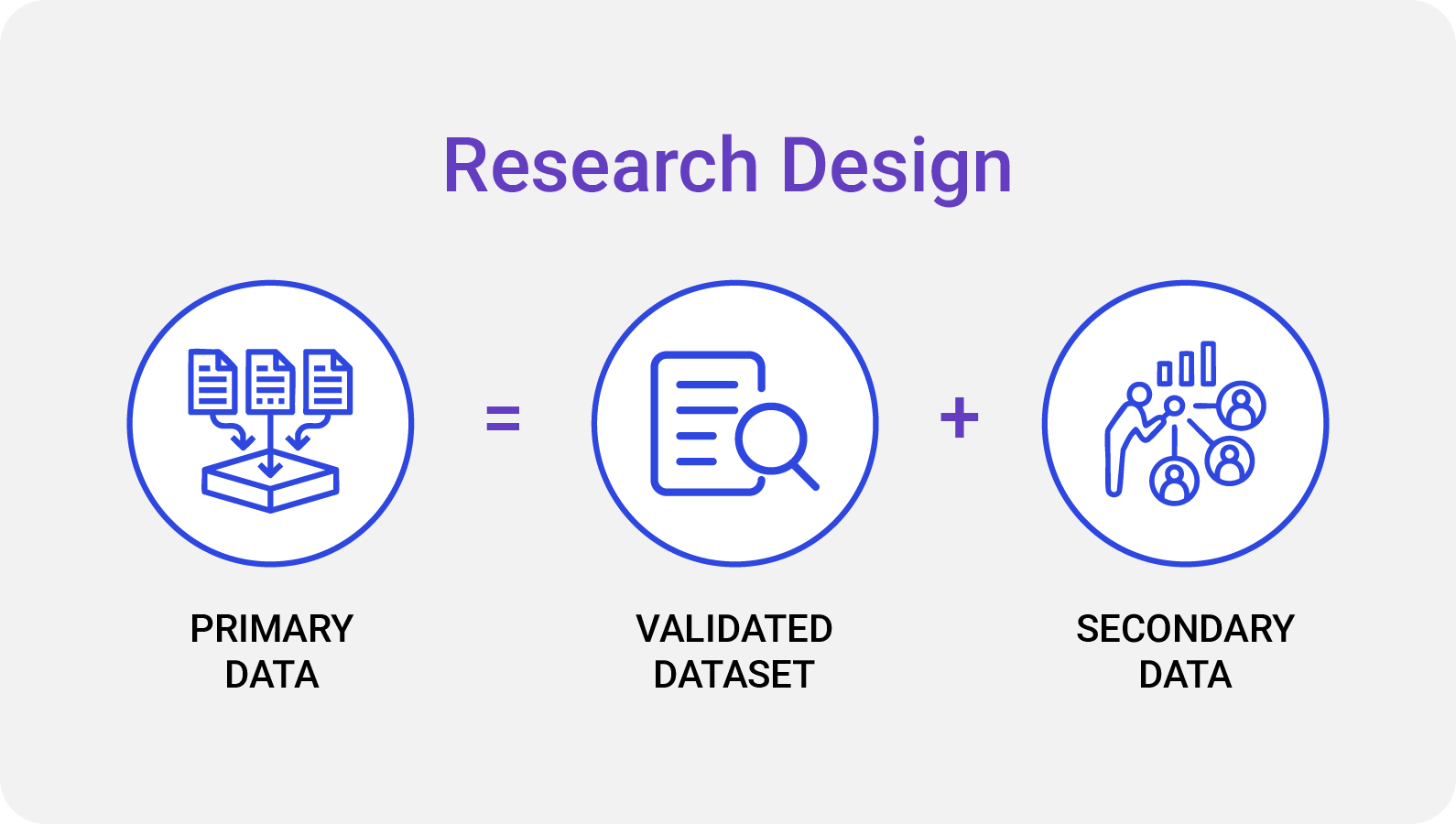
Data collection lies at the core of this stage. Reliable insights depend on high-quality inputs, which come from two main sources:
- Primary data: Information collected directly from stakeholders, consumers, or industry experts through interviews, surveys, and focus groups.
- Secondary data: Verified information sourced from government databases, company filings, and published academic research.
Integrating both types of data gives a comprehensive understanding of the market. Effective data collection also involves eliminating duplication, reducing bias, and ensuring representativeness across sample groups. This stage establishes the foundation for all subsequent validation and analysis.
Stage 3: Data Validation and Triangulation
The reliability of market research depends on how accurately the data reflects reality. Data validation is the process of verifying that every figure, trend, and observation is consistent with trusted sources. This step ensures that the conclusions drawn later are factual and not influenced by outliers or reporting errors.
Data triangulation strengthens this reliability by cross-verifying information from multiple perspectives. For instance, insights from consumer interviews can be checked against sales statistics and public records to confirm their accuracy. This approach minimizes bias and builds confidence in the final findings.
Researchers often use a combination of bottom-up and top-down approaches to confirm the consistency of market size estimates. The bottom-up approach aggregates individual segment data, while the top-down method starts from the overall industry figure and breaks it into components. When both approaches align, the result is a validated, evidence-based forecast.
Stage 4: Data Analysis and Interpretation
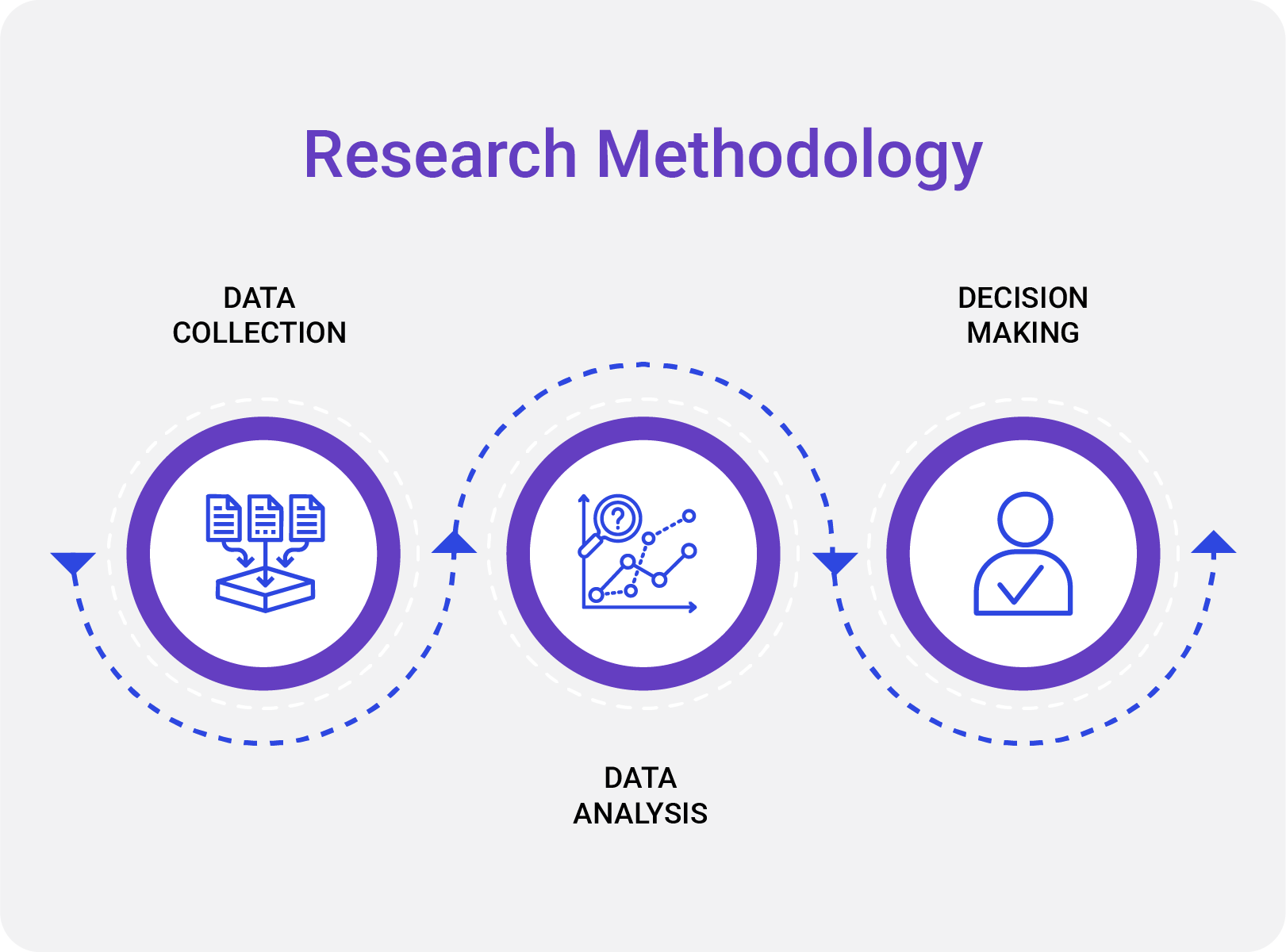
After the data is verified, it must be analyzed to uncover insights. This stage is where statistics meet storytelling. Researchers apply analytical techniques such as regression analysis, correlation studies, and cluster segmentation to identify trends, patterns, and relationships within the data.
Quantitative analysis helps identify measurable outcomes such as market growth rates, revenue projections, and consumer segment sizes. On the other hand, qualitative interpretation provides a deeper understanding of behaviors, motivations, and attitudes that influence purchasing decisions.
Combining these two forms of analysis creates a complete view of the market environment. The process allows decision-makers to understand not just what is happening, but why it is happening and how it might evolve.
Stage 5: From Insight to Decision
Data analysis alone is not enough unless it informs action. The final stage translates analytical findings into a business strategy. This involves synthesizing complex results into clear recommendations that executives can apply directly to investment planning, product development, or market expansion.
Insights are usually presented through visually driven dashboards, detailed analytical reports, and concise executive summaries. These deliverables emphasize both the data and the context behind it, helping decision-makers connect findings to business objectives.
A well-designed report provides not only the results but also their implications, ensuring that insights lead to practical and measurable outcomes.
Benefits of a Structured Market Research Methodology
|
Client Benefit |
How It Adds Value |
|
Improved Accuracy |
Data triangulation and multi-source validation ensure factual and consistent results. |
|
Actionable Insights |
Findings are designed to translate directly into business strategy. |
|
Time Efficiency |
Structured data flow accelerates project turnaround without compromising quality. |
|
Informed Decision-Making |
Evidence-based outcomes reduce the risk of costly business errors. |
|
Confidence and Credibility |
Transparent and replicable processes build trust among stakeholders. |
A methodical research framework gives clients clarity and assurance. By following this systematic process, Kings Research delivers insights that empower informed business decisions and reduce strategic uncertainty.
Challenges in Applying Market Research Methodology
Despite its strengths, implementing an effective research methodology presents challenges. Data inconsistency across markets, limited access to niche segments, and the rapid evolution of consumer behavior often complicate research outcomes.
Additionally, integrating structured quantitative data with unstructured sources such as social media or customer feedback requires advanced analytical tools. The growing complexity of digital information has made validation more critical than ever.
Modern researchers now rely on artificial intelligence, natural language processing, and machine learning algorithms to process vast datasets efficiently. However, human expertise remains essential for interpreting nuanced findings that automated systems may overlook.

Adapting Methodology for Future Markets
As data ecosystems evolve, research methodologies must adapt. Emerging technologies allow analysts to access real-time information, simulate future scenarios, and assess dynamic consumer patterns. Predictive analytics and data visualization are transforming traditional research into agile, interactive processes.
The future of market research lies in combining automation with analytical creativity. Researchers who embrace continuous learning and adaptive frameworks will be best positioned to meet the increasing demand for accuracy, speed, and contextual relevance.
Organizations that invest in methodological innovation will not only understand their current markets but will also anticipate future opportunities with greater precision.
Conclusion
Market research methodology represents the science of transforming information into a strategic advantage. It provides the structure through which data becomes actionable knowledge. Each stage, from defining objectives to validating findings, plays a critical role in ensuring that insights are reliable, relevant, and useful.
Through this systematic process, Kings Research ensures that every report delivers measurable value. By blending factual validation with analytical rigor, we help organizations transform uncertainty into opportunity and insight into decisions.
When businesses follow a research-based approach, they gain more than data; they gain the confidence to make informed choices that shape their future success.