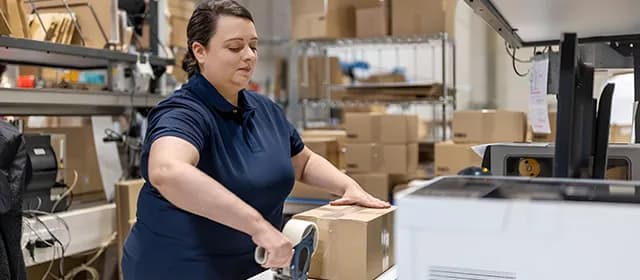



Green packaging refers to packaging designed to reduce environmental impact through approaches such as material efficiency, reuse, recyclability, recycled content, renewable materials, and improved end-of-life recovery. Its sustainability depends on the package's full lifecycle, including production, use, collection, recycling or reuse, and disposal.
The commercial packaging sector is actively shifting away from conventional single-use models. Modern strategies demand approaches that go beyond merely swapping one material for another. The real evolution centers on three distinct pillars: reuse, recyclability, and material innovation. Smarter packaging models consider what happens before, during, and after the consumer uses the product. A successful design balances environmental impact with product protection, shelf life, logistics, cost, and end-of-life recovery.
Historically, companies treated packaging primarily as a marketing and containment tool, prioritizing aesthetics and immediate cost savings over long-term environmental consequences. Today, that paradigm is entirely different. According to Kings Research analysis, the global green packaging market achieved a valuation of USD 327.46 billion in 2022. Projections indicate this figure will expand to USD 557.66 billion by 2030, representing a compound annual growth rate of 7.04% throughout the 2023 to 2030 forecast period. This rapid financial expansion reflects a structural shift in global manufacturing. Brands are abandoning basic material substitution to adopt comprehensive lifecycle thinking, ensuring that every container serves a productive purpose even after its initial use phase concludes.
What Actually Makes Packaging "Green"?
Readers often treat various sustainability terms interchangeably. However, distinct terminology defines very different material characteristics and end-of-life requirements.
What makes packaging sustainable?
- Uses materials efficiently
- Supports reuse or effective recovery
- Contains recycled or renewable inputs where appropriate
- Protects the product effectively
- Fits available collection and recycling systems
- Minimizes unnecessary components
- Meets applicable environmental and safety requirements
Green packaging goes far beyond the physical material itself. Resource use, manufacturing emissions, transportation weight, use-phase durability, collection infrastructure, and end-of-life pathways all influence genuine sustainability.
Professionals use Lifecycle Assessments (LCAs) to quantify these impacts across Scope 1, Scope 2, and Scope 3 emissions. An LCA evaluates the energy required to extract raw materials, the water consumed during manufacturing, the fuel burned during global distribution, and the greenhouse gases emitted during final disposal. A biodegradable item sent to a landfill lacking oxygen fails to degrade properly, generating methane instead. A technically recyclable item missing local sorting facilities simply becomes conventional waste. Therefore, assessing packaging requires evaluating its entire journey from raw extraction to final recovery.
Reuse Is Turning Packaging Into a Repeat-Use System
Reuse initiatives turn packaging into a cyclical asset rather than a disposable liability. These systems include returnable transport packaging, refill-at-home models, refill-at-store stations, and comprehensive deposit-return programs. Reusable foodservice and transport items require completely different logistical frameworks compared to single-use options.
Implementing reuse requires dedicated, capital-intensive infrastructure: centralized collection points, industrial cleaning facilities, stringent inspection protocols, redistribution networks, and complex reverse logistics. Consumer participation is equally vital. Without high return rates, the entire system collapses under the weight of manufacturing replacement units.
Major beverage producers are actively building this necessary infrastructure. A recent press release from The Coca-Cola Company detailed its strategic operational targets, announcing a goal to use 35% to 40% recycled material in primary packaging globally by 2035. Crucially, the company also aims to ensure the collection of 70% to 75% of the equivalent number of bottles and cans introduced into the market annually by 2035. This development demonstrates how industry leaders view collection systems and reusable infrastructure as interconnected prerequisites for success.
When does reuse outperform single-use? The environmental benefits depend heavily on specific operational metrics: the total number of reuse cycles, local return rates, transport distances, thermal washing requirements, and packaging durability. Heavy glass bottles require significant thermal energy to sanitize and heavy fuel consumption to transport. They must complete multiple cycles to offset their initial production footprint. If return rates drop below a critical threshold, the reusable system loses its environmental advantage completely. Success requires meticulous supply chain planning, local proximity to washing facilities, and exceptionally high consumer engagement.
Recyclability Is Moving Into the Design Stage
Actual sustainability depends entirely on local collection infrastructure, sorting capabilities, material efficiency, product protection, and lifecycle impacts. A technically recyclable item requires an active recovery system to deliver genuine environmental benefits, making local infrastructure just as important as the material itself.
Design for recycling is becoming a primary focus for packaging engineers globally. Engineers are prioritizing mono-material structures and actively simplifying components. Removing difficult-to-separate layers, incompatible adhesives, and problematic dark coatings ensures better sorting compatibility at automated facilities.
A crucial distinction exists between a package being "technically recyclable" in a laboratory and a package actually entering an effective, profitable recycling pathway in the real world. Regional definitions and Extended Producer Responsibility (EPR) systems increasingly dictate what officially qualifies as recyclable. For example, black plastics historically absorbed near-infrared light at sorting facilities, causing them to slip past optical scanners into landfill streams. Today, designers specify detectable colorants to guarantee correct sorting.
Industry players are publicly committing to these design overhauls. In November 2024, Amcor highlighted its success in winning a major Dow Innovation Award for developing highly recyclable coffee packaging. As part of this initiative, Amcor has pledged to design all its packaging to be recyclable, reusable, or compostable, shifting aggressively toward mono-material polyethylene structures that easily enter existing mechanical recycling streams.
Multilayer films illustrate this specific engineering challenge perfectly. Multilayer films provide crucial barrier and shelf-life functions. However, their structural complexity makes recycling exceptionally difficult. Resolving this requires advanced material design and data-driven approaches to improve circularity without sacrificing food safety. Brands are actively transitioning from complex laminates to oriented polyethylene or polypropylene structures that maintain necessary oxygen barriers while fitting seamlessly into existing recovery streams.
Material Innovation Is Solving Problems That Traditional Materials Fail to Address
Innovations in materials focus heavily on solving specific performance deficits rather than merely introducing novelties.
Better barriers without complex laminates
Developers are creating advanced water, moisture, oxygen, and grease resistance layers that remain completely compatible with recycling streams. These alternatives replace problematic metallic foils and unrecyclable plastic resins. For instance, ultra-thin silicon oxide or aluminium oxide coatings provide immense barrier protection while remaining microscopic enough to avoid contaminating the recycling vat.
Renewable and bio-based materials
Cellulose-based options, fiber packaging, bio-based polymers, and plant-derived inputs reduce reliance on fossil fuels. These sustainable packaging materials offer promising alternatives for specific applications, particularly in the agricultural sectors.
Companies are scaling these precise material improvements rapidly. Tetra Pak announced that it successfully sourced 72% of its aluminium foil volumes as Aluminium Stewardship Initiative (ASI Aluminium) certified material in 2025. Furthermore, the company highlighted its ongoing investments in simplifying the material structure of its packaging to drastically enhance recyclability.
Advanced coatings
Water-based and bio-based functional barriers are replacing problematic perfluoroalkyl and polyfluoroalkyl substances (PFAS) in paper packaging. These advanced coatings allow fiber-based containers to hold hot liquids and resist heavy grease while remaining fully repulpable in standard paper recycling facilities.
Data-enabled material development
Artificial intelligence and predictive modeling optimize packaging performance at a microscopic level. Engineers use these digital tools to precisely calculate the exact material thickness required, minimizing excess weight. Recent studies explore artificial intelligence for predicting shelf life and evaluating barrier efficacy under varying humidity conditions.
It remains essential to evaluate each innovation critically. Every bio-based or biodegradable material carries its own distinct carbon footprint. Finding the correct application is vital for achieving genuine, measurable sustainability.
The Real Test: Can Green Packaging Still Protect the Product?
Can sustainable packaging perform equally well as conventional options? The primary purpose of packaging remains product protection. If a container fails to protect its contents, the resulting product waste often carries a larger environmental footprint than the packaging itself.
Food and beverage applications demand rigorous moisture resistance, oxygen barriers, mechanical strength, temperature stability, and strict food safety compliance. A sustainability trade-off frequently emerges between minimizing packaging and preventing product damage. Less packaging might increase food waste, whereas excessive packaging increases the physical footprint. A smart design finds the exact balance required to maximize shelf life while minimizing material usage.
When oxygen infiltrates a poorly designed package, lipid oxidation ruins the food inside. When moisture enters, microbial growth accelerates. Food waste generates immense greenhouse gas emissions during decomposition, making protective functionality a core component of true sustainability.
Why "Recyclable," "Compostable," and "Biodegradable" Differ
Understanding the exact differences between these terms helps businesses make better operational decisions. The academic literature distinguishes circular strategies according to principles like recycled content, reusability, and design for disassembly.
What is the difference between reusable and recyclable packaging?
|
Attribute |
Recyclable |
Reusable |
Compostable |
Biodegradable |
Recycled-content packaging |
|
Primary objective |
Recover material |
Multiple use cycles |
Biological breakdown under specified conditions |
Biological degradation |
Displace virgin materials |
|
Typical end-of-life pathway |
Mechanical or chemical recycling |
Washing and redistribution |
Industrial composting facility |
Natural environmental breakdown |
Varies based on material type |
|
Infrastructure dependency |
Strongly dependent on local MRFs |
Strongly dependent on reverse logistics |
Strongly dependent on industrial composters |
Variable dependency on environment |
Moderate dependency on resin supply |
|
Key limitation |
Requires active collection and sorting |
Requires high return rates to be viable |
Contaminates standard recycling streams |
Unpredictable breakdown timeframes |
Subject to secondary material quality |
|
Best-use consideration |
Widely accepted consumer goods |
High-frequency local distribution networks |
Food-contaminated packaging items |
Agricultural films left in soil |
Secondary transit packaging and boxes |
Regulations Are Making Packaging Design More Strategic
The European Union Packaging and Packaging Waste Regulation (PPWR), which entered into force in February 2025, establishes a harmonized framework. It aims to reduce packaging waste, encourage reuse, improve recycling, and increase the circular use of materials.
Compliance requires meeting strict recyclability thresholds, minimum recycled content percentages, and specific reuse targets. The regulation mandates packaging minimization and imposes restrictions on certain problematic formats. According to EUR-Lex documentation on Regulation (EU) 2025/40, these rules apply sweeping changes across the European landscape. The European Commission continues issuing specific implementing measures, including a February 2026 exemption concerning pallet wrapping and straps, refining these stringent requirements further.
For manufacturers, these regulations make design choices deeply strategic. Regulatory compliance precedes consumer behavior, forcing companies to engineer solutions that meet legal standards before hitting retail shelves. Extended Producer Responsibility systems are shifting the financial burden of waste management directly onto producers. This creates a powerful economic incentive to design easily recoverable containers, as companies pay higher fees for placing unrecyclable materials onto the market.
Smarter Packaging Needs Smarter Recovery Infrastructure
Designing a recoverable item represents only half the battle. Creating a localized system capable of processing it is equally vital. The recovery ecosystem involves collection networks, optical sorting technologies, material recovery facilities (MRFs), recycling capacity, and secondary material markets.
Government data reveals the immense scale of the infrastructure challenge. The European Union generated 79.7 million tonnes of packaging waste in 2023, with paper and cardboard constituting 40.4% (32.3 million tonnes) of the total volume. Furthermore, plastic packaging waste reached 15.8 million tonnes, while glass accounted for 15.0 million tonnes. Managing such vast quantities requires highly sophisticated, automated sorting and processing facilities capable of separating distinct polymer types precisely.
These statistics prove that a package's design must align perfectly with the capabilities of the local waste management system. The exact same container might achieve high recycling rates in one region while heading straight to a landfill elsewhere due to absent infrastructure.
Explore the detailed regional dynamics in our Sustainable Packaging in 2026 overview.
Where Green Packaging Goes Next: From Better Packages to Better Systems
The future trajectory points toward five distinct developments:
- Packaging designed exclusively around available recovery pathways, ensuring materials match local infrastructure capabilities.
- Reuse systems supported by shared, standardized infrastructure, lowering the barrier to entry for smaller brands.
- Materials engineered for both high performance and easy recyclability, bridging the gap between product protection and circularity.
- Digital information and tracking tags supporting sorting, reuse, and traceability, allowing automated facilities to process materials efficiently.
- Regulatory definitions increasingly shaping design decisions globally, driving harmonization across international regions.
The Sustainable Packaging Coalition's 2026 outlook identifies design, policy, and recovery as deeply interconnected forces. The next generation of sustainable solutions will face judgment based purely on their lifecycle outcomes rather than initial claims.
Green Packaging Is Becoming a System, Beyond Merely a Material
The ongoing evolution requires holistic thinking. Reuse changes how containers circulate. Recyclability changes how engineers design them. Material innovation expands capabilities. Regulation dictates the baseline requirements businesses must meet. Recovery infrastructure ultimately determines what happens after consumer use.
Connecting these elements ensures a genuinely circular economy. Treating them as isolated initiatives severely limits their effectiveness. The future belongs to integrated systems that protect the product, satisfy the consumer, and fit seamlessly into a regenerative lifecycle.
Explore the complete Sustainable Packaging analysis by Kings Research for comprehensive industry forecasts.
Frequently Asked Questions
What are the disadvantages of green packaging?
Challenges include higher initial development costs, potential shelf-life limitations with certain bio-based films, and heavy reliance on local recycling infrastructure for success. Implementing new logistics requires significant upfront capital investment.
Is green packaging more expensive?
Initial material and design costs often run higher. However, optimizing size, reducing material weight, and participating in efficient zero-waste packaging systems frequently lowers long-term operational expenses and mitigates regulatory fees.
How can businesses switch to green packaging?
Companies transition by conducting thorough lifecycle assessments, auditing current waste streams, adopting strict design-for-recycling principles, and collaborating directly with suppliers on mono-material solutions.
Does green packaging reduce plastic waste?
Effective implementations drastically lower plastic waste by prioritizing recycled content, eliminating unnecessary layers, shifting toward alternative materials, and ensuring complete compatibility with existing recovery streams.
What is the most sustainable packaging for shipping?
Corrugated cardboard with high recycled content remains highly sustainable for shipping due to exceptional global recovery rates, robust secondary material markets, and inherent structural strength.
How do consumers identify genuinely sustainable packaging?
Consumers look for standardized third-party certifications, clear disposal instructions, minimal mixed materials, and transparent brand reporting regarding environmental impact across the entire supply chain.