
Inquire Now
Key Strategic Points
According to Kings Research, the global pet food market size is projected to grow from USD 150.42 billion in 2025 to USD 244.94 billion by 2033, registering a CAGR of 6.38% from 2026 to 2033.
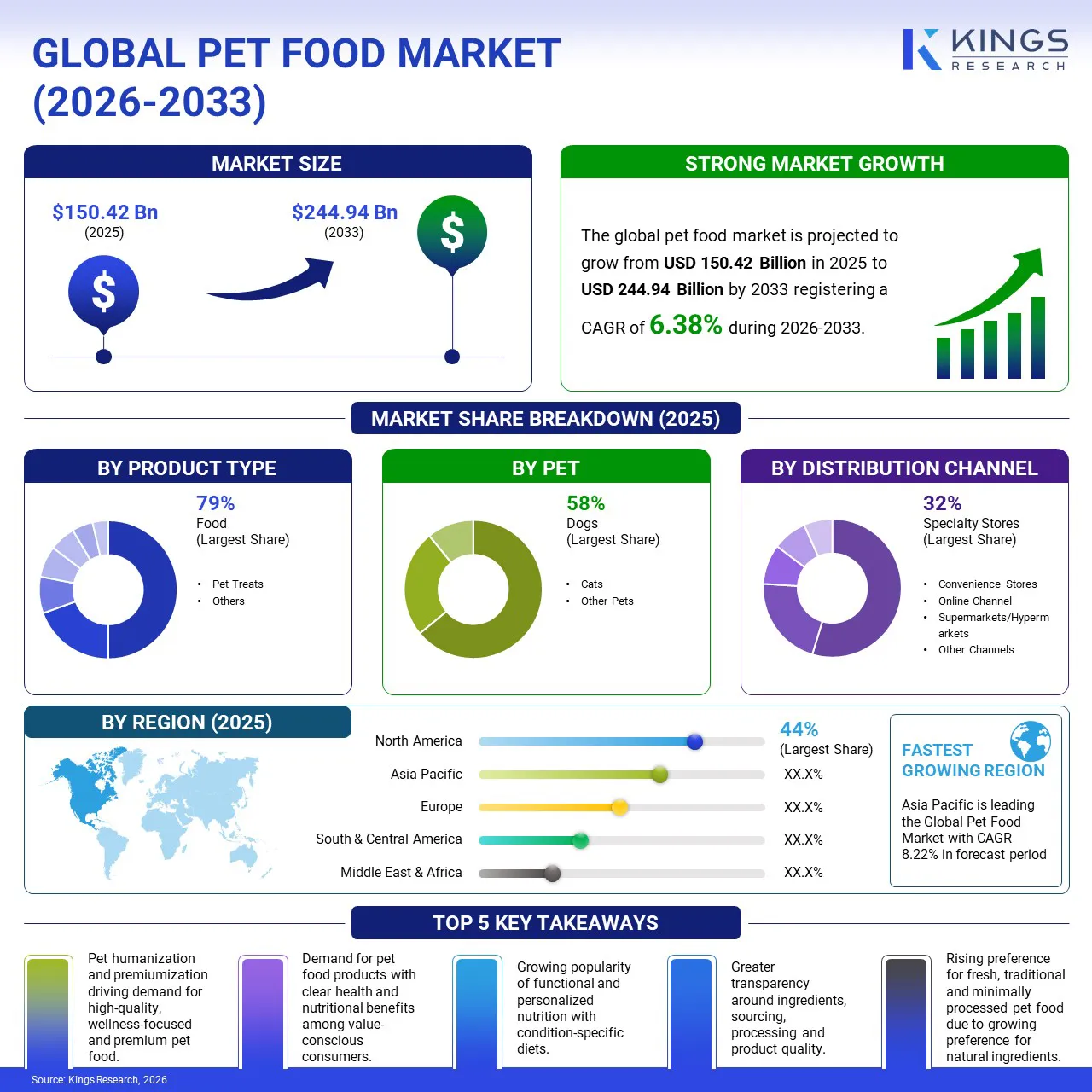
The global pet food market is evolving from a volume-driven category into a more premium, innovation-focused product. This transition reflects the rising humanization of pets, which places greater emphasis on their health and well-being. It is fueling demand for natural and minimally processed products, functional nutrition, and formulations tailored to specific life stages, breeds, and health requirements. Long-term growth is supported by rising pet ownership, increased consumer spending on pet care, and the continued expansion of e-commerce and subscription-based purchasing models for premium pet food products across emerging economies.
|
Segmentation |
Details |
|
|
By Product |
Food (Dry Pet Food (Kibbles, Others), Wet Pet Food), Pet Treats (Crunchy Treats, Dental Treats, Freeze-dried and Jerky Treats, Soft and Chewy Treats, Other Treats), Others |
|
|
By Pet |
Cats, Dogs, Other Pets |
|
|
By Distribution Channel |
Convenience Stores, Online Channel, Specialty Stores, Supermarkets/Hypermarkets, Other Channels |
|
|
By Region |
North America |
U.S., Canada, Mexico |
|
Europe |
France, UK, Spain, Germany, Italy, Russia, Rest of Europe |
|
|
Asia-Pacific |
China, Japan, India, Australia, ASEAN, South Korea, Rest of Asia-Pacific |
|
|
Middle East and Africa |
Turkey, U.A.E., Saudi Arabia, South Africa, Rest of Middle East & Africa |
|
|
South and Central America |
Brazil, Argentina, Rest of South and Central America |
|
The variation in nutritional requirements of pets compared to humans drives the demand for pet food. Pet food specific to species contains balanced nutrients and additives, including mixed traces of chicken, rice, corn, hides, bones, and offal, that are fortified with vitamins and minerals. These are critical for pets to sustain physical and mental health and activities.
Cats, for example, are carnivores and require specific nutrients, including taurine, that are essential for maintaining health. Nutritional deficiencies can impair key physiological functions and overall well-being.
Moreover, prolonged or excessive consumption of human food can expose pets to nutritional imbalances and health risks. High-fat foods can increase the risk of pancreatitis in dogs, while coffee, caffeine, and certain supplements can cause gastrointestinal, neurological, and cardiovascular symptoms, including tremors and seizures.
Key Insight: Increasing awareness of species-specific nutritional needs is fueling demand for targeted, nutritionally balanced pet foods, including premium, therapeutic, and life-stage-specific formulations.
Fluctuations in the prices of key ingredients comprising proteins, grains, vitamins, and packaging materials directly impact profitability. The variations are attributable to supply chain disruptions, feed costs, weather conditions, and changing consumer demand. The rising cost of additives and sustainable packaging further increase production expenses, particularly for premium pet food formulations.
Additionally, logistical challenges, including storage requirements and trade disruptions, increase costs and lead times while exposing sensitive ingredients to spoilage, contamination, and nutrient loss. These factors can result in supply shortages, pricing fluctuations, and disruptions in production planning.
To address these challenges, market players are adopting alternative protein sources, cost-efficient ingredients, synthetic additives, lightweight packaging, and premium pricing strategies to maintain profitability.
Key Insight: Volatility in protein, grain, additive, packaging, and logistics costs is increasing pressure on pet food manufacturers’ margins, encouraging greater use of alternative ingredients, diversified sourcing, and cost-efficient production strategies to strengthen supply-chain resilience.
The surge in demand for alternative and lab-cultivated protein sources is emerging as a notable trend in the pet food market. The advantages of lab-grown pet meat, including the production without large-scale raising and slaughter of livestock, followed by the reduced risk of contaminants, are influencing industry dynamics.
Furthermore, growing sustainability considerations are supporting interest in cultivated meat due to its potential to reduce land and water use and greenhouse gas emissions compared with conventional livestock production. Market players are adapting their production strategies accordingly to address demand for sustainable, ethical, and hypoallergenic pet nutrition options.
Key Insight: Cultivated meat is progressing toward commercial adoption in pet food, driven by demand for sustainable, ethical, and alternative protein sources. Product launches and regulatory clearances indicate growing industry investment and commercial readiness for next-generation pet nutrition.
The global pet food market remains moderately consolidated, with notable multinational players, specialized pet nutrition companies, and a growing base of independent premium and direct-to-consumer brands. Market players are strengthening their positions through strategic acquisitions and capacity expansion to broaden product portfolios and expand geographic reach.
Key Insight: Competitive differentiation is moving from shelf presence to portfolio breadth across premium, functional, and pet-specific categories, with mergers and acquisitions creating growth opportunities.
The North America pet food market accounted for the largest share of 44% in 2025, valued at USD 66.18 billion. This dominance is attributed to high pet ownership, premiumization of dog and cat diets, and an established pet specialty and e-commerce retail infrastructure. Additionally, dietary humanization trends involving demand for grain-free, high-protein, non-GMO, and clean labels with recognizable ingredients further fuel the demand for innovative pet food products.
The Asia-Pacific pet food market is estimated to register the fastest CAGR of 8.22% over the forecast period. This rapid growth is fostered by strong pet food demand from emerging markets, including India and South East Asia, where commercial pet food penetration remains relatively low. Rising urban pet ownership and increasing willingness among younger and urban consumers to spend on functional and premium pet food formats are further supporting regional market growth.
For instance, according to the World Animal Foundation, the pet population in Australia is estimated at 31,641,900 animals, with approximately 7.75 million households owning a pet. This growth is enabling prominent market players to expand their offerings across Asian markets to capitalize on the rising demand for pet food products in the region.
Key Insight: High pet ownership, premiumization, and a well-established pet food ecosystem position North America as the dominant region, while surging pet ownership and increasing spending on premium and functional pet food products position Asia-Pacific as the fastest-growing region.
Pet food industries in developed economies are supported by established regulatory frameworks covering the entire product lifecycle, ranging from ingredient approval and manufacturing to labeling, marketing, and sale.
The frameworks are targeted at ensuring nutritional adequacy, product safety, manufacturing hygiene, and accurate consumer information. Industry bodies, including the Fédération Européenne de l'Industrie des Aliments pour Animaux Familiers (FEDIAF) in Europe and the Association of American Feed Control Officials (AAFCO) in the U.S., provide guidelines that support consistent implementation and industry best practices. This regulatory structure reflects the increasing emphasis on pet health, product safety, transparency, and consumer protection in developed pet food markets.
Key Insight: Regulators across regions are increasingly focused on greater label transparency and formal ingredient-approval pathways, which raises compliance complexity but also creates a clearer, faster route to market for novel and functional ingredients such as precision-fermented proteins.
Capital deployment in the pet food market has remained active, supported by resilient pet spending despite broader discretionary pressures. Both strategic acquirers and private equity platforms are actively pursuing consolidation, with premium/functional nutrition, cat-specific portfolios, and novel-protein technology emerging as key areas of capital concentration.
Large strategic acquirers continue to view M&A as a primary growth lever.
General Mills completed five pet-category acquisitions since 2018 (Blue Buffalo, Nudges/Top Chews/True Chews, Fera Pets, Edgard & Cooper, and Whitebridge Pet Brands), while operating a dedicated growth-equity fund to incubate newly acquired pet brands ahead of full portfolio integration.
Pet food mergers and acquisitions activity is showing early signs of recovery after several years of subdued deal-making. The market recorded 23 deals in 2025, down from 26 in 2024, while 2026 has seen renewed interest from strategic buyers, including Colgate-Palmolive’s acquisition of Australian fresh pet food brand Prime100 in May 2025 and Agrolimen’s acquisition of U.S. fresh dog food company Ollie in February 2026.
Private investment activity continues to support expansion across manufacturing, supply chains, geographic reach, and differentiated nutrition segments.
Precision fermentation and alternative-protein ventures are attracting growth capital as manufacturers seek to diversify protein supply. Bond Pet Foods, in collaboration with Hill’s Pet Nutrition, received an FDA Center for Veterinary Medicine Letter of No Objection in May 2026 for its precision-fermented lamb protein ingredient for pet food. The development illustrates how strategically backed biotech partnerships can support the commercialization of novel ingredients.
Key Insight: Investment activity is concentrating around three hotspots: strategic consolidation in premium and specialized nutrition, private equity platform expansion across treats and specialty products, and growth-stage funding for precision-fermented and alternative proteins. These areas are emerging as key targets for M&A and venture investment over the forecast period.
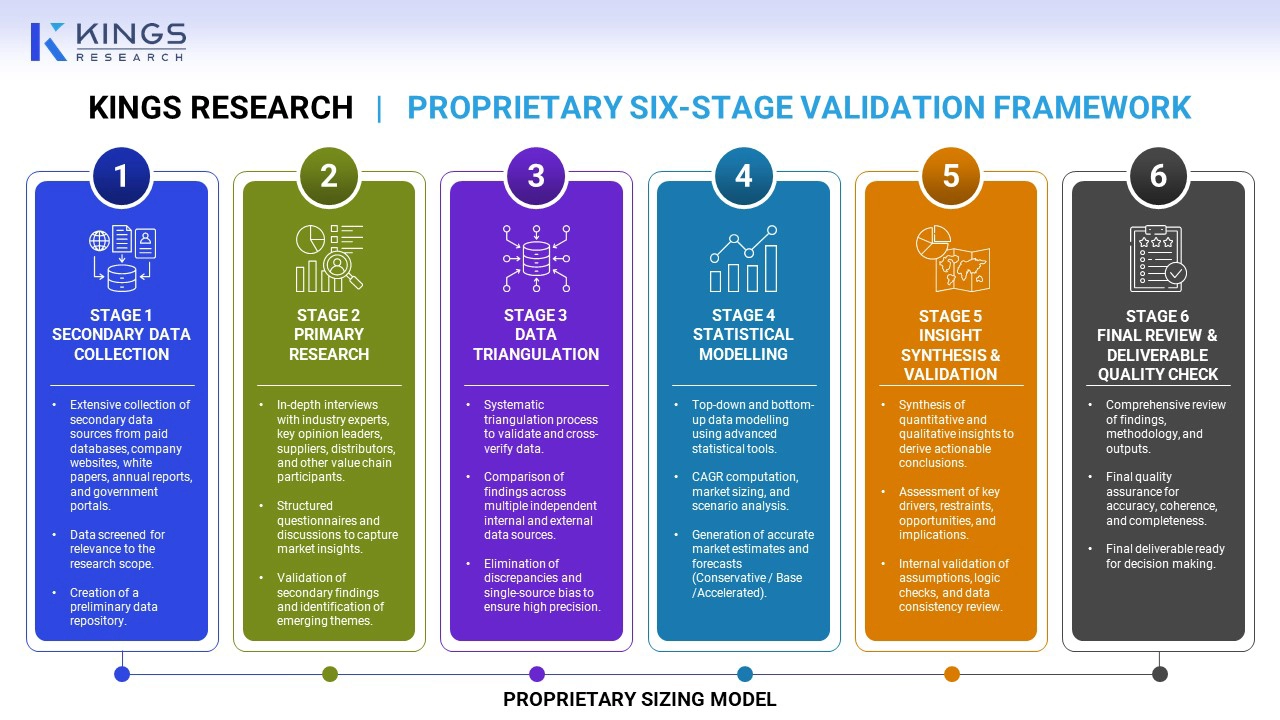
How We Gather This Information
Our methodology triangulates insights from multiple independent and publicly available research databases, which is further validated against regulatory filings and public company disclosures. All estimates are cross-verified; no single-source data is presented without validation.
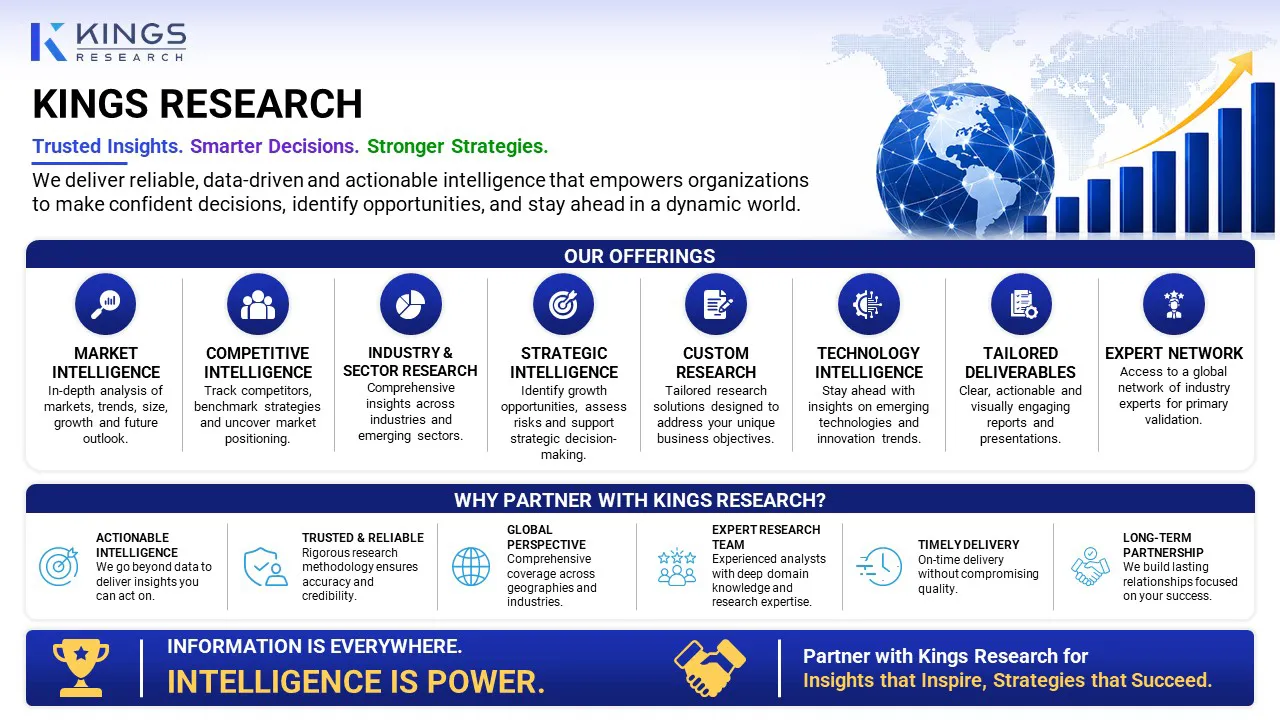
Our custom offerings deliver tailored, data-driven intelligence and strategic guidance to help organizations identify, evaluate, and capitalize on key market opportunities.
Frequently Asked Questions

Faizy brings over four years of experience in market research and consulting, with a proven ability to support strategic engagements across diverse industries and business environments. His work focuses on understanding complex market structures, identifying emerging opportunities, and translating research findings into clear, commercially relevant insights. With strong analytical capabilities and a structured approach to problem-solving, he evaluates industry trends, competitive landscapes, customer dynamics, and evolving business models. His expertise encompasses market research, competitive intelligence, market sizing and forecasting, industry assessment, company benchmarking, and strategic analysis. Faizy combines technical proficiency with a strong research orientation, enabling him to interpret both qualitative and quantitative information effectively. He has contributed to projects that help organizations assess growth potential, strengthen market positioning, and evaluate strategic priorities. His adaptable approach allows him to work across sectors while maintaining a consistent focus on accuracy, relevance, and delivering insights that support informed decision-making for clients and stakeholders.
Smriti Vinodia is a market research and consumer insights professional with expertise in qualitative research, consumer behavior, and strategic market intelligence across the FMCG and FMCD industries. She has experience supporting leading brands by transforming complex consumer and market insights into actionable strategies that inform product development, innovation, positioning, and business growth. Her expertise spans qualitative consumer research, market and competitive intelligence, consumer trend analysis, and AI-enabled insight generation. She has worked across diverse research engagements, helping organizations understand evolving consumer needs, identify emerging market opportunities, and strengthen customer-centric decision-making. Combining analytical rigor with a strong understanding of consumer psychology and market dynamics, Smriti brings a strategic perspective to research and insights. She focuses on connecting consumer behavior with commercial priorities, enabling organizations to make informed decisions, develop relevant products and experiences, and build sustainable growth strategies in rapidly evolving and competitive markets.