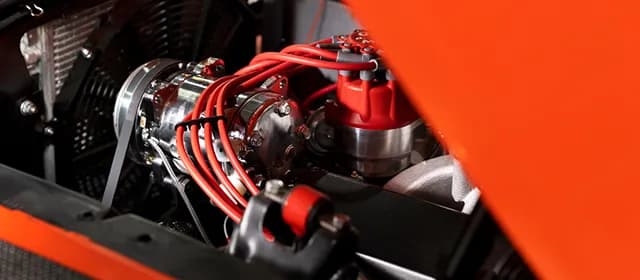



At its core, remanufacturing involves restoring used automotive components to a condition that meets or exceeds original equipment manufacturer specifications. Unlike simple recycling, which breaks materials down, remanufacturing preserves the embedded value of engineering, labor, and materials. This distinction is critical, especially in a world where resource efficiency is no longer optional but regulated and measured.
Automotive remanufacturing has moved far beyond its traditional perception as a cost-saving exercise. It is now a strategic lever shaping how manufacturers, suppliers, and governments respond to supply chain disruptions, sustainability mandates, and the rapid transition toward electrification. What was once viewed as a secondary aftermarket activity is increasingly becoming central to how the global automotive ecosystem manages resources, extends product lifecycles, and protects margins in a volatile economic environment.
As a result, the global automotive remanufacturing market is estimated to reach USD 63.14 billion in 2024 and grow to USD 118.79 billion by 2032, at a CAGR of 8.34%, according to a report published by Kings Research.
At its core, remanufacturing involves restoring used automotive components to a condition that meets or exceeds original equipment manufacturer specifications. Unlike simple recycling, which breaks materials down, remanufacturing preserves the embedded value of engineering, labor, and materials. This distinction is critical, especially in a world where resource efficiency is no longer optional but regulated and measured.
The scale of impact is significant. Remanufacturing can save up to 85% of the energy required to produce a new product. This level of energy conservation directly translates into reduced emissions and lower production costs, making remanufacturing a compelling proposition for both environmental and financial performance.
Automotive Remanufacturing at a Glance
|
Metric / Feature |
Details |
|
Top Remanufactured Parts |
Engines, transmissions, alternators, turbochargers, and electronic control units (ECUs). |
|
Cost Savings |
20% to 40% lower cost than equivalent new replacement parts |
|
Environmental Impact |
Reduces energy consumption by up to 85%. |
|
ICE vs. EV Shift |
Shifting from traditional mechanical components to high-value EV batteries and battery management systems. |
Download the Data Behind This Article: [Click here to access our full report detailing the 2024–2032 automotive remanufacturing forecasts.]
How Does Remanufacturing Reduce Emissions and Support a Circular Economy?
Governments and regulatory bodies are actively pushing circular economy frameworks, and automotive remanufacturing is emerging as one of the most practical and scalable implementations of this concept. The European Union, for example, has been advancing circular economy action plans that prioritize product longevity, reuse, and remanufacturing as key pillars of industrial sustainability.
The United Nations Environment Programme highlights that the extraction and processing of materials, fuels, and food contribute approximately half of total global greenhouse gas emissions.
This statistic underscores why extending the life of automotive components through remanufacturing is not just beneficial but necessary. By reducing the need for virgin material extraction, remanufacturing directly contributes to emissions-reduction targets and resource-conservation goals, thereby lowering overall material consumption. Automotive OEMs are increasingly aligning with these frameworks.
Automotive OEMs are increasingly aligning with these frameworks. Many are building closed-loop systems where used components, often referred to as “cores,” are collected, refurbished, and reintegrated into the supply chain. This approach not only reduces waste but also ensures a more predictable and resilient supply of critical parts.
What Components Are Most Commonly Remanufactured to Counter Supply Chain Volatility?
The past few years have exposed the fragility of global automotive supply chains. Semiconductor shortages, geopolitical tensions, and logistical disruptions have forced manufacturers to rethink sourcing strategies. In this context, remanufacturing offers a powerful alternative by reducing dependence on raw materials and international supply chains.
According to the U.S. Environmental Protection Agency (EPA), remanufacturing, reuse, and source reduction practices help conserve natural resources, reduce pollution, and minimize waste generation, supporting more resilient production systems.
This shift is particularly relevant for high-value components such as engines, transmissions, electrical systems, and electronic control units (ECUs). By recovering and restoring these exact parts, companies can maintain production continuity even when the new component supply is constrained. For a comprehensive breakdown of component-specific growth rates and market shares, explore the full Kings Research [Automotive Remanufacturing Market Report].
Moreover, remanufacturing enables faster turnaround times compared to traditional manufacturing, which is critical in an industry where downtime translates directly into lost revenue.
Digitalization is Transforming Remanufacturing Operations
Another major development shaping the automotive remanufacturing landscape is the integration of digital technologies. Advanced diagnostics, artificial intelligence, and predictive analytics are enabling more precise identification of component wear and failure patterns. This allows remanufacturers to optimize processes, reduce waste, and improve product quality.
Digital twins and IoT-enabled sensors are also playing a role in tracking component performance throughout their lifecycle. This data-driven approach ensures that parts are remanufactured at the optimal time, maximizing both efficiency and reliability.
The result is a shift from reactive to proactive remanufacturing, where decisions are based on real-time data rather than historical assumptions. This evolution is critical as vehicles become more complex and software-driven.
The EV Transition is Redefining Remanufacturing Economics
The rise of electric vehicles is fundamentally changing the dynamics of automotive remanufacturing. While EVs have fewer moving parts compared to internal combustion engine vehicles, they introduce new high-value components, particularly batteries, that require specialized remanufacturing and recycling processes.
According to the International Energy Agency, global electric car sales neared 14 million units in 2023, representing a significant increase from previous years.
This rapid growth is creating an equally large wave of end-of-life batteries that must be managed efficiently. Unlike traditional components, EV batteries contain critical minerals such as lithium, cobalt, and nickel, which are both expensive and geopolitically sensitive.
Beyond traditional component remanufacturing, the automotive industry is evolving toward a circular model. The U.S. Department of Energy highlights efforts to capture up to 90% of discarded or spent lithium-based batteries in the U.S., enabling the reuse of critical materials in new EV production.
This capability is not just environmentally beneficial but strategically essential. It reduces dependence on mining and helps stabilize supply chains for critical materials vital to the energy transition.
Battery Remanufacturing is Emerging as a Strategic Industry
EV battery remanufacturing is not limited to material recovery. It also includes second-life applications, where used batteries are repurposed for energy storage systems. This extends the useful life of batteries beyond their automotive application, creating additional value streams.
Repurposing EV batteries for stationary storage can significantly support renewable energy integration by providing flexible energy storage solutions.
This development is particularly important as countries invest heavily in renewable energy infrastructure. By integrating second-life batteries into energy grids, stakeholders can address intermittency challenges while maximizing resource efficiency.
For automotive companies, this creates new business models that go beyond vehicle manufacturing. It positions them as energy solution providers, expanding their role in the broader energy ecosystem.
Is Remanufactured Quality as Good as New Parts?
One of the longstanding challenges in automotive remanufacturing has been the perception of inferior quality compared to new parts. However, this perception is rapidly changing as OEMs take a more active role in remanufacturing operations.
Industry leaders like Bosch, ZF Friedrichshafen, and Caterpillar (Cat Reman) have invested heavily in cutting-edge diagnostics and AI-driven quality control. Today, many remanufactured components are produced under strict quality control standards and come with warranties comparable to new parts. This shift is supported by advancements in testing technologies and standardized processes that ensure consistency and reliability.
Remanufactured goods often meet the same performance specifications as new products while offering significant cost savings, frequently pricing out at 20% to 40% less than virgin components. As a result, customer acceptance is increasing, particularly in commercial and fleet segments where cost efficiency and uptime are critical considerations.
Regional Dynamics Are Shaping Market Evolution
The adoption and growth of automotive remanufacturing vary significantly across regions. In North America and Europe, strong regulatory frameworks and established OEM participation are driving market maturity. A prime example is the European Union’s recent updates to the End-of-Life Vehicles (ELV) Regulation, spanning 2025 and 2026. This includes a December 2025 provisional agreement (pending Council and Parliament approval) that would phase in recycled-plastic targets, at least 15% within six years and 25% within ten years of entry into force, while strictly embedding circular design mandates into the modern "Circularity Vehicle Passport" framework. These pending compliance structures encourage European manufacturers to embed remanufacturing natively into their supply chains.
In contrast, emerging markets are witnessing rapid growth driven by cost sensitivity and increasing vehicle ownership.
India, for instance, is gradually recognizing the potential of remanufacturing as part of its broader sustainability and manufacturing initiatives. While the ecosystem is still developing, there is growing interest in formalizing remanufacturing practices and integrating them into organized supply chains.
This regional diversity presents both challenges and opportunities. Companies that can adapt their strategies to local regulatory environments and market dynamics are likely to gain a competitive edge.
The Road Ahead is Circular, Digital, and Electrified
Automotive remanufacturing is no longer a niche activity confined to the aftermarket. It is becoming a cornerstone of modern automotive strategy, intersecting with sustainability, digitalization, and electrification.
The convergence of these trends is creating a new industrial paradigm in which value is continuously extracted from products throughout their lifecycles. This approach not only enhances profitability but also aligns with global efforts to reduce environmental impact and conserve resources.
As regulatory pressures intensify and resource constraints become more pronounced, the importance of remanufacturing will only grow. Companies that invest in advanced technologies, build robust reverse logistics networks, and embrace circular economy principles will be better positioned to navigate this evolving landscape.
In the end, automotive remanufacturing is not just about restoring parts. It is about redefining how value is created, preserved, and extended in an industry undergoing one of the most significant transformations in its history.
Get a complete picture of the market by purchasing the Automotive Remanufacturing Market report.
Frequently Asked Questions (FAQ)
What is the difference between remanufacturing and rebuilding an auto part?
Rebuilding generally involves disassembling a part, cleaning it, and replacing only the severely worn or broken components. Remanufacturing is much more rigorous: the part is completely disassembled, cleaned, machined, and restored to meet OEM specifications, ensuring its performance and reliability are virtually identical to those of a brand-new part.
How does remanufacturing benefit the environment?
By preserving the original structural chassis (the "core") of the component, remanufacturing bypasses the energy-intensive process of extracting and smelting raw metals. This drastically reduces dependence on natural resources.
Are EV batteries remanufactured?
Yes. Electric vehicle battery remanufacturing is one of the fastest-growing sectors in the industry. Beyond just extracting critical minerals like lithium and cobalt for recycling, many degraded EV batteries are remanufactured for "second-life" applications, such as stationary energy storage for renewable power grids.
.webp&w=3840&q=75&dpl=dpl_DTCDzuzZgrG9H8b9yf8P7a1CSdCK "Recreational Boating Trends Shaping Outboard Engine Demand")