


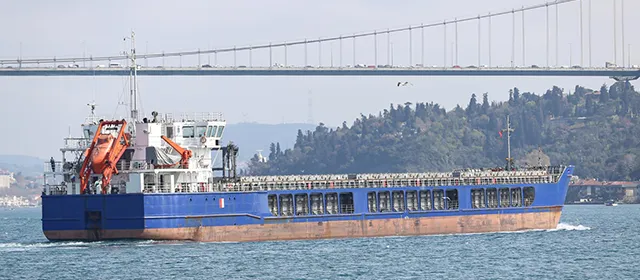
Barge transportation plays a vital role in global logistics by enabling the efficient movement of bulk goods through inland waterways. Known for its high cargo capacity, lower fuel consumption, and reduced emissions, it is increasingly viewed as a sustainable and economical alternative to road-based freight.
As governments invest in modernizing waterway infrastructure and businesses prioritize greener logistics, barge transport continues to gain strategic importance in supply chains. According to Kings Research, the global barge transportation market is set to generate a revenue of $30.95 billion by 2032.
This blog covers how barge transportation delivers cost-efficient movement of bulk commodities, supports sustainable freight transport, benefits from infrastructure upgrades, and integrates with multimodal logistics systems.
What is Barge Transportation?
Barge transportation refers to the use of flat-bottomed vessels (barges), often towed by tugboats or self-propelled, to carry cargo on rivers, canals, and other inland or coastal waterways. Because barges can carry very large loads in a single trip, they are especially suited for bulk commodities such as grains, coal, minerals, petroleum, chemicals, ores, and heavy raw materials. This mode contrasts with trucks (road) and rail transport and often serves as a backbone for bulk freight logistics where scale, cost, and efficiency matter.
In many parts of the world, barges form a critical segment of the logistics network, especially in regions with navigable rivers, canals, or inland waterways.
Why Barge Transportation is So Efficient?
Fuel and cost efficiency
One of the strongest advantages of barge transport is its fuel efficiency, translating into lower cost per ton-mile for bulk goods. For example, on U.S. inland waterways, barges can move one ton of cargo about 647 miles per gallon of fuel, compared with roughly 477 miles for rail and only 145 miles for trucks. This stark difference underscores why barges are much more efficient than over-the-road or rail transport for bulk, heavy, low-unit-value commodities. (Source: www.fhwa.dot.gov)
Moreover, a typical 15-barge tow has a cargo capacity equivalent to what would need about 1,050 semi-trailer trucks, or 216 railcars plus six locomotives, to carry the same load. This large capacity drastically reduces the number of trips, and hence fuel and labor, needed to transport a given volume of freight.
Thus, for bulk agricultural produce, minerals, petroleum, chemicals, and similar commodities, barges offer a clearly lower cost per ton-mile compared with trucks or rail, which is a powerful driver for industries relying on high-volume transport at scale.
Economies of scale and volume handling
Because a single barge or a barge convoy can carry many times the load of a truck or a single railcar, barge transportation benefits from economies of scale. For industries that regularly move large quantities, this means lower per-unit transport costs, fewer shipments, and simplified logistics scheduling.
Barges shine when cargo volumes are large, distances are moderate to long, and unit value is low, which is precisely where road or rail transport becomes inefficient or cost-prohibitive.
Environmental and Sustainability Advantage
Beyond cost and fuel efficiency, barge transportation offers important environmental benefits, supporting sustainability goals.
Inland waterways emit far fewer greenhouse gases per ton-mile compared with road or rail transport. Because barges move large loads with less fuel per ton, the carbon footprint per transported ton is substantially lower.
Barge transport helps reduce highway congestion. By shifting freight from trucks to waterways, road traffic pressure decreases, which reduces air pollution, noise, and accident risk.
Waterway transport tends to generate fewer spills and less environmental disruption than road or rail transport of hazardous materials, making it safer and more community-friendly.
For companies and governments aiming to meet climate-reduction targets, barge transport offers a viable, lower-impact alternative to heavy reliance on trucks or rail.
Thus, barge transportation aligns well with sustainable freight transport strategies.
Infrastructure’s Role: Upgrading Waterways, Locks, Terminals
A robust and well-maintained waterway infrastructure is critical to unlocking the full potential of barge transportation. This includes dredged canals and rivers, maintained locks and dams, terminals and quays, and efficient port or terminal operations.
In regions where inland waterways are actively maintained and upgraded, barge transport becomes a dependable, high-throughput backbone for freight logistics. Modernization ensures that barges can reliably operate regardless of seasonal water-level fluctuations, asset wear, or capacity constraints.
Sustained cargo volumes on inland waterways suggest that continued investment in infrastructure, such as locks, dredging, terminal modernization, and intermodal ports, can yield significant pay-offs in throughput, reliability, and long-term cost efficiency.
Evidence from Recent Usage — Inland Waterway Freight Trends
Recent data from Europe shows that freight transport via inland waterways rose in 2024, with total inland waterway freight in the European Union (EU) increasing by about 4.5% year-on-year, reversing a period of decline. Among commodities transported, metal ores and other mining/quarrying products accounted for the largest share (23.2%), followed by coke and refined petroleum products (16.3%), and a substantial share for chemicals, rubber, plastics, and nuclear fuel.
This variety shows that inland waterways are not limited to traditional bulk commodities but are increasingly used for petrochemical and mineral products, supporting complex supply chains.
The rebound signals growing demand and reinforces the case for more investment in inland waterway infrastructure and modern logistics integration.
These trends also indicate rising utilization of barge-based transport not just for raw commodities but for processed, petroleum, and chemical cargo, broadening the role of barges in modern freight logistics.
Multimodal Integration: Barge, Rail, and Road
One of the most strategic advantages of barge transport is its ability to integrate with other transport modes in a multimodal logistics chain. Goods might begin their journey on a river barge, be transferred at a port or terminal onto rail or road for final delivery, or vice versa. This flexibility maximizes efficiency, reduces overall transport cost, and ensures that each mode is used where it is most efficient.
For example, bulk minerals or refined petroleum transported via barge to a coastal or river port, then loaded onto containerized ships or rail freight for export, can significantly lower cost and emissions compared with road-only transport.
As inland waterway systems expand and terminals modernize, this multimodal connectivity is becoming more critical, especially for industries needing reliable door-to-door logistics for heavy, bulky, or hazardous cargo.
Rising Demand in Key Sectors: Minerals, Petrochemicals, Bulk Commodities
The data on EU inland waterway freight in 2024 reveals that the largest commodity group transported by tonne-kilometres was metal ores and other mining/quarrying products. Another substantial share was coke and refined petroleum products. A significant share was also held by chemicals, rubber, plastics, and nuclear-fuel-related cargo.
This pattern shows that demand for barge-based transport remains strong in sectors such as mining, minerals, petrochemicals, refined oil products, and chemical manufacturing.
Such heavy-duty, bulk-commodity cargo is ideally suited to barge transport because of the weight, volume, and often hazardous or sensitive nature of the materials. The high volume and heavy nature of these goods make barge transport, with its large capacity and efficiency, a logical and competitive choice.
As these sectors grow or remain stable, barge transportation capacity and demand are likely to stay strong or increase, especially where inland waterways and modern multimodal links exist.
Challenges and Considerations
While barge transportation offers many advantages, some challenges remain, especially depending on geographic context, waterway infrastructure, and logistics planning:
- Dependence on waterway conditions. Water levels, dredging schedules, lock capacity, and seasonal variations, such as droughts or floods, can affect barge operations. Without adequate water depth or maintained channels, barges may need to reduce load or delay shipments.
- Last-mile connectivity. Even if barges handle the bulk haul, final delivery often needs road or rail transport. Without efficient terminal infrastructure, cranes, handling equipment, and intermodal coordination, the benefits of barge transport may be eroded.
- Regional applicability. Barge transport is most effective where navigable rivers or canals exist. Regions lacking such waterways, or with low waterway density, may not be able to fully leverage barges.
- Awareness and adoption. Many shippers remain committed to road or rail logistics because they are familiar, have existing contracts, or perceive those as more reliable. Convincing stakeholders to adopt inland waterway transport sometimes requires demonstrating long-term cost and sustainability benefits.
- Investment and maintenance. Keeping waterways, locks, terminals, and infrastructure in good shape requires consistent investment. Without public or private investment, waterway transport can become less reliable or even unviable.
These challenges highlight why barge transportation, while offering clear advantages, must be supported by strategic infrastructure investments, strong policy, and coordinated multimodal logistics planning.
Why Barge Transportation Matters for the Future
As the world grapples with rising freight demand, supply chain pressures, and climate change commitments, barge transportation offers an attractive solution, especially for bulk, heavy, or low-unit-value commodities.
For industries transporting minerals, fuels, chemicals, agricultural produce, and heavy raw materials, barges deliver cost savings and lower carbon emissions.
Waterway freight can relieve pressure on roads and rails, reducing traffic congestion, accidents, and infrastructure wear.
Integration with rail, road, and sea in multimodal logistics can provide efficient end-to-end transport solutions, particularly when ports and terminals are modernized.
As governments and companies push for greener supply chains, lower-emission freight modes such as barges will become increasingly attractive.
In many economies, expanding inland-waterway capacity and modernizing infrastructure should be a strategic priority. Not only does this enhance freight efficiency and reduce costs, but it also helps meet environmental goals and ensures long-term logistics resilience.
Conclusion
Barge transportation stands out as a highly cost-efficient, fuel-efficient, and environmentally favorable mode of freight movement, especially for large volumes of bulk commodities. Its ability to carry large loads, fuel economy per ton-mile, and lower emissions compared with rail or road make it an ideal choice for many industries.
With increasing demand in sectors such as minerals, petrochemicals, agricultural produce, and bulk materials, combined with rising emphasis on sustainability, barge transport holds significant promise as part of modern freight logistics.

.webp&w=3840&q=75&dpl=dpl_DPva2LrvfsBdTJm1XZj67UTrvMHL "Recreational Boating Trends Shaping Outboard Engine Demand")