



Launching a product in today’s dynamic market demands a precise understanding of customer needs, competition, and timing. A go-to-market (GTM) strategy provides the structured roadmap for how a business introduces its products or services to the right audience through optimal channels. However, the success of any GTM plan depends heavily on its foundation, accurate and data-driven forecasting.
Integrating market forecasting with GTM planning empowers organizations to anticipate future demand, evaluate market potential, and allocate resources efficiently. When market entry strategies are informed by forecasting insights, companies can minimize risk, accelerate decision-making, and ensure measurable growth outcomes.
At Kings Research, we integrate rigorous forecasting with GTM strategy development to transform data into actionable insights, enabling clients to enter markets confidently and achieve sustainable performance.
Understanding a GTM Strategy Backed by Forecasting
A go-to-market (GTM) strategy outlines how a business offers its products, interacts with target consumers, and gains a competitive edge. Market segmentation, pricing, distribution, marketing, and sales enablement are common components.
In contrast, forecasting uses historical data, trend analysis, and statistical modeling to predict future outcomes, such as market demand, income potential, and adoption rates. Every business decision is strengthened when forecasting is incorporated into the GTM strategy, transforming market assumptions into quantifiable estimates.
For instance, if forecasting reveals strong growth potential in digital channels within a specific region, the GTM plan can prioritize digital campaigns and partnerships in that area. This alignment ensures that strategic actions are not just ambitious but evidence-based and achievable.
Why Forecasting is Essential for GTM Planning
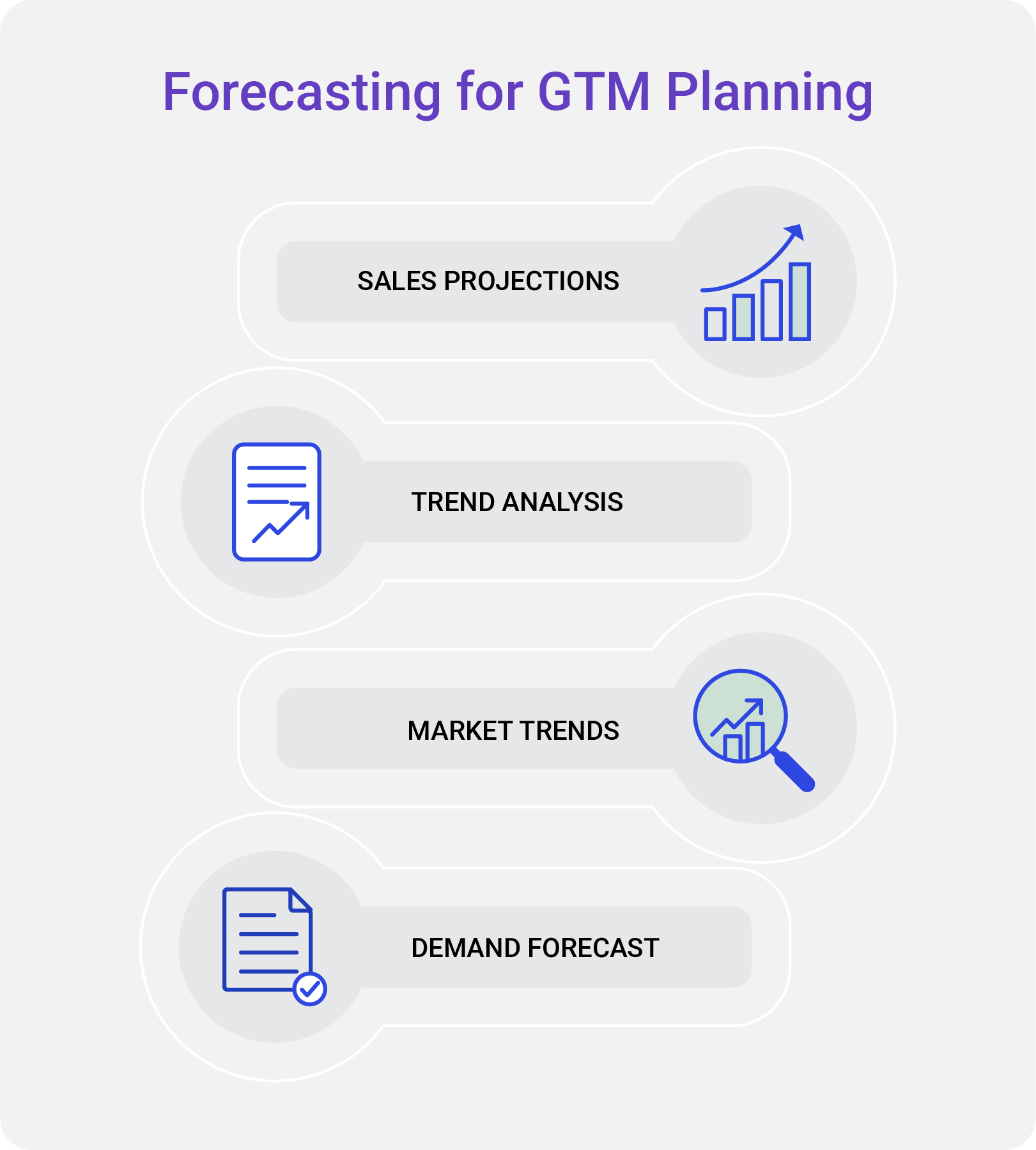
Businesses can go beyond speculation by combining forecasting with GTM strategy. It helps businesses maximize execution and provide a quantifiable, data-driven basis for decision-making.
Among the main benefits are:
- Demand Forecasting for Better Planning: Enables companies to predict product demand and modify logistics and production as necessary.
- Risk Mitigation: By seeing possible market shifts early on, forecasts lessen uncertainty.
- Resource Optimization: Allocating marketing funds, sales initiatives, and inventory investments to high-potential categories is guided by resource optimization.
- Faster Market Adaptation: Makes it possible to modify pricing, message, and targeting more quickly when market conditions change.
This coordination between forecast-backed execution and strategic intent improves accuracy, lowers risk, and promotes long-term growth.
Core Components of a Forecast-Driven GTM Strategy
- Market Definition and Segmentation
The process begins by defining the Total Addressable Market (TAM), Serviceable Available Market (SAM), and Serviceable Obtainable Market (SOM) through forecasting models. This quantification helps identify the most profitable segments to target.
- Value Proposition and Positioning
Customer pain points serve as the foundation for a compelling value proposition, which is supported by projected data on spending patterns and adoption likelihood.
- Channel Strategy and Sales Model
By projecting client acquisition costs, conversion rates, and revenue per channel, forecasting aids in channel optimization.
- Pricing and Revenue Model
Long-term revenue estimates, ideal pricing bands, and price sensitivity are all determined with the aid of data-backed forecasting.
- Execution Roadmap
Forecasting establishes timelines and milestones for rollout activities, ensuring that every stage of the GTM process aligns with realistic demand projections.
How the Process Works in Practice
A systematic multi-phase method is necessary to successfully include forecasting into GTM development:
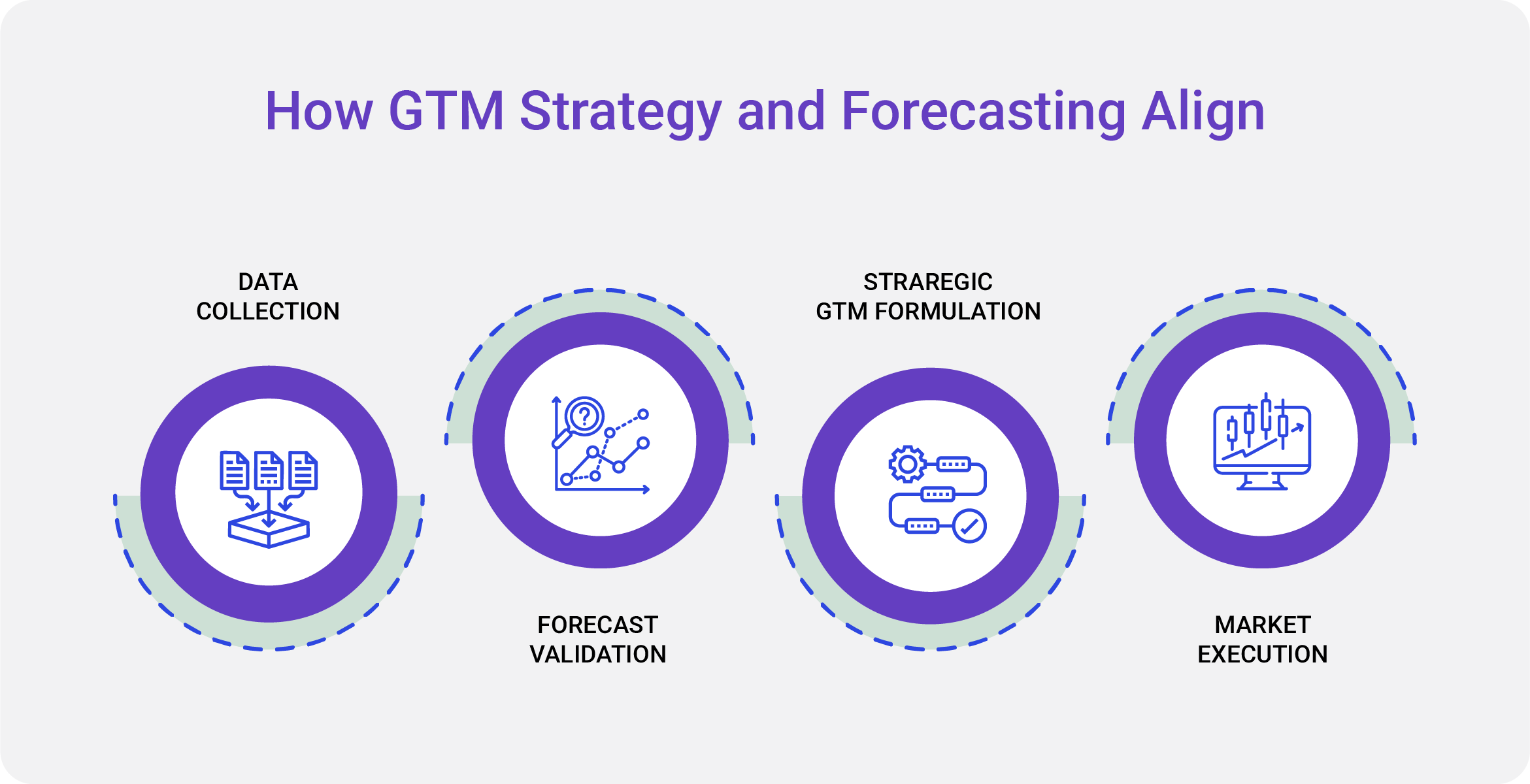
1. Data Collection and Market Assessment
To guarantee data accuracy, verified datasets are gathered from corporate documents, consumer research, and public sources.
2. Forecast Modeling and Validation
To assure accuracy, analysts use top-down and bottom-up forecasting models, cross-compare outcomes, and evaluate assumptions.
3. Strategic GTM Formulation
The team determines consumer segmentation, channel mix, pricing, and marketing tactics that are in line with projected potential based on verified data.
4. Performance Tracking and Optimization
Reliability and long-term scalability are improved by constant monitoring against projected parameters, which guarantees a quick response to changes in the market.
Benefits for Clients
|
Benefit |
Client Value |
|
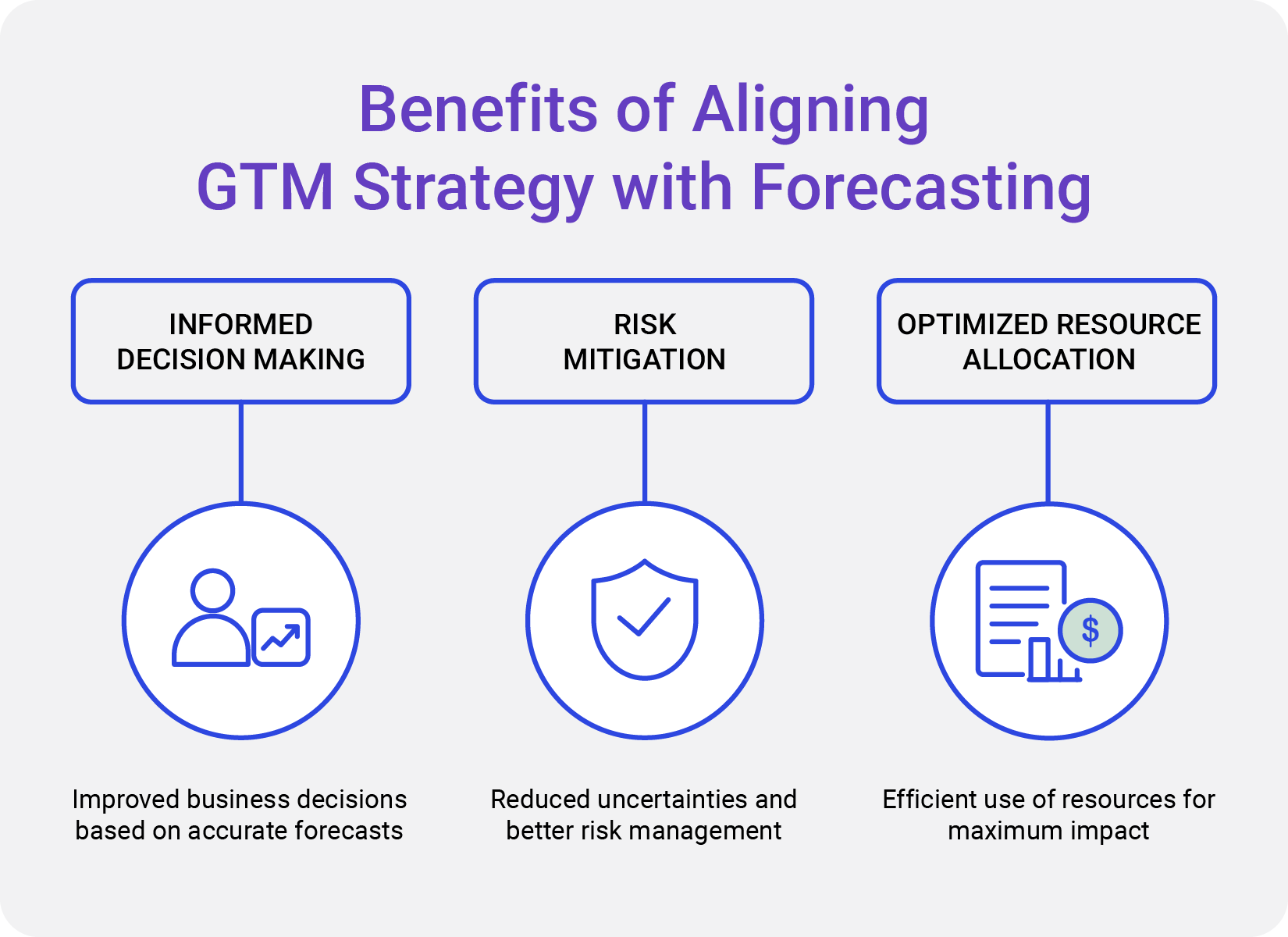
Accurate Decision-Making |
Clients gain data-driven insights, improving strategic and operational outcomes. |
|
Reduced Market Entry Risk |
Forecast validation minimizes uncertainty during product launches. |
|
Efficient Resource Allocation |
Data-based forecasting aligns budgets and resources with projected growth. |
|
Enhanced Investor Confidence |
Transparent, forecast-supported plans boost stakeholder credibility. |
|
Scalable Growth |
Businesses can plan expansion strategies based on measurable market potential. |
Challenges in Implementation
Although there are many benefits to including forecasting in GTM planning, there may be difficulties when doing so:
- Data Variability: Reliable, high-quality data is essential to forecasts. Projections may be impacted by discrepancies.
- Dynamic Market Conditions: Forecasts may change due to unforeseen external factors like shifts in the economy.
- Cross-Functional Coordination: Clear communication and governance are necessary to align marketing, sales, and finance departments.
Best Practices for a Successful GTM Forecasting Framework
- Integrate qualitative information from expert interviews with quantitative data from reliable databases.
- To validate forecasts utilizing several different sources, use triangulation methods.
- Forecasts should be updated frequently in light of fresh market data to preserve flexibility.
- For precise tracking, make sure that KPIs and projected performance metrics are in line.
- To improve accountability, openly share assumptions with all parties involved.
By following these procedures, forecasting is certain to support and improve each step of the GTM process.
The Role of Predictive Analytics in GTM Optimization
When developing effective go-to-market strategies, predictive analytics has become a game-changer. Before introducing new goods or services, companies may predict consumer behavior, market shifts, and competitor reactions by utilizing sophisticated forecasting models and data-driven simulations. Organizations may more efficiently deploy resources, precisely customize marketing campaigns, and instantly optimize pricing strategies thanks to these predictive insights.
Businesses that incorporate predictive analytics into their GTM planning frequently see quantifiable increases in conversion efficiency and market response. For example, forecasting techniques that examine consumer sentiment or seasonal demand trends might direct launch timing to optimize impact.
Organizations transition from reactive decision-making to proactive market leadership through this analytical foresight. Predictive analytics enhances accuracy and agility when integrated into a larger GTM framework, guaranteeing steady growth even in the face of shifting market conditions.
Conclusion
A go-to-market strategy backed by forecasting provides organizations with the foresight needed to make confident, data-driven decisions. By combining strategic vision with empirical data, businesses can improve accuracy, reduce risk, and achieve sustainable growth.
At Kings Research, our forecasting-backed GTM frameworks deliver measurable value, helping companies define their market position, optimize resources, and build credibility with stakeholders. A well-forecasted GTM strategy is not just a plan for market entry; it is a blueprint for enduring success.