
Inquire Now
Key Strategic Points
According to Kings Research, the global robotaxi market size was valued at USD 4.43 billion in 2025 and is projected to reach USD 381.86 billion by 2033, growing at a CAGR of 74.56% from 2026 to 2033. The market is driven by the commercialization of Level 4 autonomous mobility, advances in AI-based driving systems, declining sensor costs, increasing urban congestion, and the expansion of app-based ride-hailing platforms.
The report covers companies such as Waymo LLC, Baidu Apollo, Zoox, Inc., Tesla, Pony.ai, WeRide.ai, AutoX, Inc., DiDi Chuxing, Motional, Inc., Uber Technologies Inc., BMW Group, Hyundai Motor Company, Aurora Operations, Inc., Avride Inc., and DeepRoute.ai, among others. These companies focus on autonomous driving software, LiDAR- and radar-based sensing systems, vehicle platforms, fleet management solutions, and commercial robotaxi deployments.
The market is also seeing increasing integration of autonomous driving technologies with electric vehicle platforms, enabling manufacturers and mobility providers to develop scalable, cost-efficient robotaxi fleets. Strategic collaborations among autonomous technology developers, automakers, and ride-hailing platforms are further accelerating pilot programs, technology integration, and commercial deployments across major urban markets.
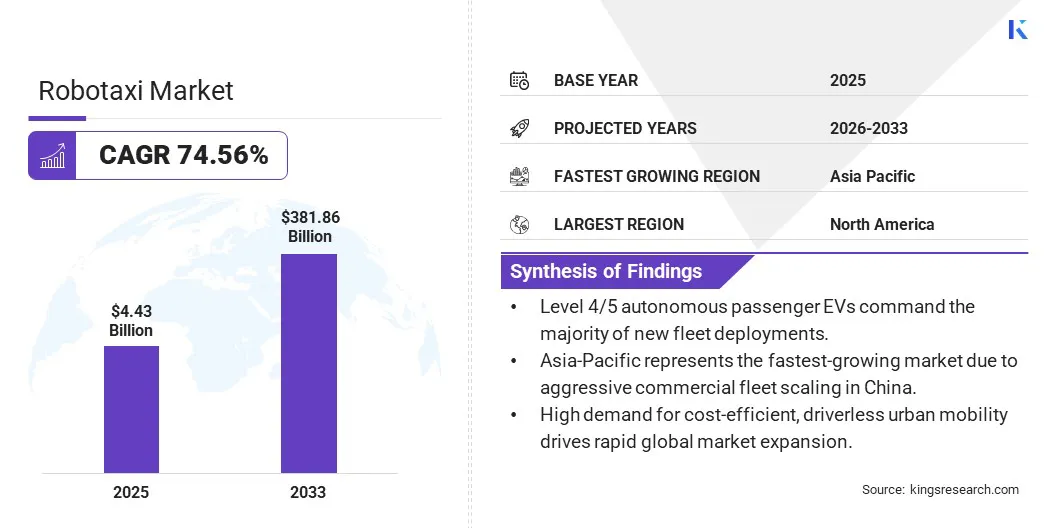
The growth of the robotaxi market is driven by increasing urbanization, traffic congestion, parking constraints, and demand for convenient and scalable transportation. In July 2026, the American Planning Association highlighted that robotaxi fleets are expected to reach approximately 350,000 vehicles by 2035, as autonomous mobility gains traction in cities seeking solutions to congestion, mobility, and parking challenges. The development underscores the growing role of robotaxis in addressing evolving urban transportation needs.
Robotaxis can help address urban transportation challenges by providing on-demand mobility without requiring a human driver. Higher population density and increased vehicle congestion can improve fleet utilization because autonomous vehicles can continuously serve multiple passengers throughout the day.
The expansion of app-based ride-hailing platforms is also supporting adoption by providing established digital infrastructure for passenger booking, vehicle dispatch, route optimization, payment, and fleet management. Furthermore, smart-city investments and congestion-management policies are creating opportunities for autonomous shared mobility.
Regulatory approval and safety compliance remain major challenges for robotaxi commercialization. Autonomous vehicle regulations vary across countries, states, and cities, creating differences in testing requirements, vehicle certification, insurance, liability, safety validation, and driverless operating permissions.
The absence of fully harmonized regulatory frameworks can increase deployment costs and extend commercialization timelines. Companies must also demonstrate that autonomous systems can safely handle complex urban environments, adverse weather, unusual road conditions, pedestrians, cyclists, and other edge cases.
Safety validation and public acceptance are therefore critical to large-scale deployment. Controlled testing programs, geofenced commercial operations, remote assistance systems, and collaboration with regulators are helping operators demonstrate reliability and gradually expand commercial services.
The integration of electric propulsion and autonomous driving is emerging as an important trend in the robotaxi market. Electric vehicles offer lower drivetrain maintenance requirements and operating costs, while eliminating tailpipe emissions, making them suitable for high-utilization urban fleets.
Autonomous driving systems are simultaneously advancing through improvements in AI-based perception, sensor fusion, high-performance computing, mapping, and vehicle control. The combination of cameras, LiDAR, radar, and other sensors provides greater environmental awareness and redundancy.
In July 2025, Uber, Lucid, and Nuro announced a next-generation robotaxi program targeting the deployment of more than 20,000 autonomous Lucid vehicles equipped with Nuro's autonomous driving technology over six years. This demonstrates the increasing integration of electric vehicle platforms, autonomous driving systems, and ride-hailing networks.
|
Segmentation |
Details |
|
By Component |
Camera, LiDAR, Radar, Ultrasonic Sensors, Others |
|
By Vehicle Type |
Passenger Cars, Shuttles/Vans |
|
By Level of Autonomy |
Level 4, Level 5 |
|
By Propulsion |
Electric Vehicle (EV), Hybrid Vehicle, Fuel Cell Vehicle |
|
By Region |
North America: U.S., Canada, Mexico |
|
Europe: France, UK, Spain, Germany, Italy, Russia, Rest of Europe |
|
|
Asia-Pacific: China, Japan, India, Australia, ASEAN, South Korea, Rest of Asia-Pacific |
|
|
Middle East & Africa: Turkey, U.A.E., Saudi Arabia, South Africa, Rest of Middle East & Africa |
|
|
South & Central America: Brazil, Argentina, Rest of South & Central America |
Based on component, the market is categorized into Camera, LiDAR, Radar, Ultrasonic Sensors, and Others. LiDAR represents the leading component category because it provides high-resolution three-dimensional environmental mapping and supports accurate detection of vehicles, pedestrians, road boundaries, and other objects.
LiDAR is particularly valuable in complex urban environments where robotaxis must distinguish multiple objects and road conditions in real time. Falling sensor costs and improvements in solid-state and automotive-grade LiDAR are also improving the feasibility of integrating LiDAR into mass-produced autonomous vehicles.
Radar and camera suites are expected to register strong growth as manufacturers increasingly adopt multi-sensor architectures. The combination of complementary sensing technologies improves redundancy and supports autonomous driving performance under different lighting and environmental conditions.
Based on vehicle type, the market is divided into Passenger Cars and Shuttles/Vans. Passenger cars represent the leading vehicle type because robotaxi services are primarily being commercialized for individual and small-group passenger transportation.
According to Kings Research, this segment benefits from integration with ride-hailing platforms, established passenger vehicle manufacturing infrastructure, and strong consumer familiarity with conventional car-based transportation. Shuttles and vans provide opportunities for airport transfers, campuses, business districts, and first- and last-mile transportation, but passenger cars currently offer broader applicability across urban ride-hailing use cases.
Based on the level of autonomy, the market is segmented into Level 4 and Level 5. Level 4 represents the leading commercial category because vehicles can perform the complete driving task within defined operational design domains without requiring continuous human intervention.
Its commercial readiness is supported by geofenced deployments, defined operating conditions, high-definition mapping, remote assistance, and progressively mature safety validation systems.
Level 5 remains a longer-term opportunity because it requires autonomous operation across virtually all road and environmental conditions. Current commercial strategies therefore focus predominantly on geographically constrained Level 4 deployment.
Based on propulsion, the market is segmented into Electric Vehicle (EV), Hybrid Vehicle, and Fuel Cell Vehicle. Electric vehicles are gaining strong adoption because autonomous fleets typically accumulate high annual mileage, making energy efficiency, maintenance, and operating costs important determinants of fleet economics.
EV platforms also align with urban emissions-reduction policies and zero-emission transportation initiatives. Centralized fleet charging allows operators to coordinate charging schedules with vehicle utilization, potentially reducing downtime.
The growing availability of high-range EV platforms is further supporting robotaxi deployment. The planned Uber, Lucid, and Nuro robotaxi program is an example of combining a dedicated electric vehicle platform with Level 4 autonomy for commercial ride-hailing.
Based on region, the market has been classified into North America, Europe, Asia-Pacific, the Middle East & Africa, and South & Central America.
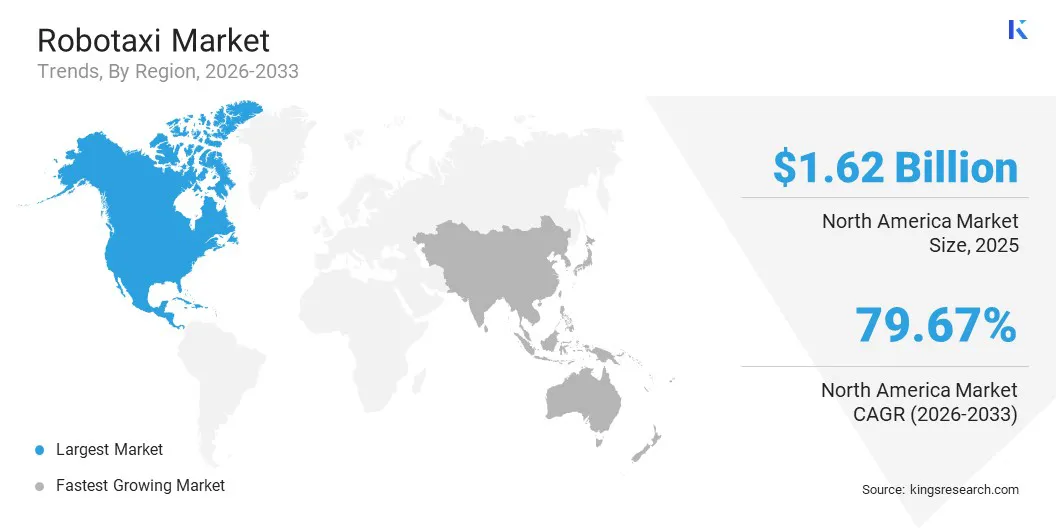 North America held the largest market position in 2025 in the global market. This dominance is primarily reinforced by increasing urbanization, supportive regulatory frameworks, and investments in smart city infrastructure. Furthermore, the rapid expansion of early large-scale deployments led by technology providers and ride-hailing platforms is driving market demand in the region.
Technology providers and automotive manufacturers are advancing AI-driven navigation, sensor systems, and electric propulsion to enhance operational efficiency, safety, and passenger experience. Urban mobility operators are leveraging app-based platforms to manage fleets, optimize routes, and deliver scalable, on-demand transport services in major metropolitan areas.
Asia-Pacific is poised for significant growth at a robust CAGR of 79.67% over the forecast period. This growth is supported by large-scale pilot deployments, high consumer adoption potential, and investments from domestic market players in the region. Countries such as China, Japan, and South Korea are at the forefront of deployment, leveraging advanced 5G networks, AI integration, and vehicle-to-everything (V2X) technologies to accelerate commercialization.
Local ride-hailing platforms and automotive manufacturers are partnering with global technology firms to expand pilot programs and achieve early adoption at scale. Major urban centers in Asia-Pacific are prioritizing autonomous transport to reduce congestion, improve environmental sustainability, and meet the mobility needs of growing populations, thereby contributing to the market growth.
Major players operating in the robotaxi industry are implementing strategic measures to accelerate market expansion. Firms are developing modular and upgradable vehicle platforms to facilitate rapid iteration of autonomous hardware and software. Collaborations with logistics, retail, and last-mile delivery operators are extending fleet utilization beyond passenger transport.
Investments in data-driven predictive maintenance and fleet optimization systems are reducing operational costs and enhancing service reliability. Additionally, companies are establishing cross-border partnerships and conducting international pilot programs to validate technology, expand regional presence, and strengthen consumer demand in autonomous mobility solutions.
How We Gather This Information
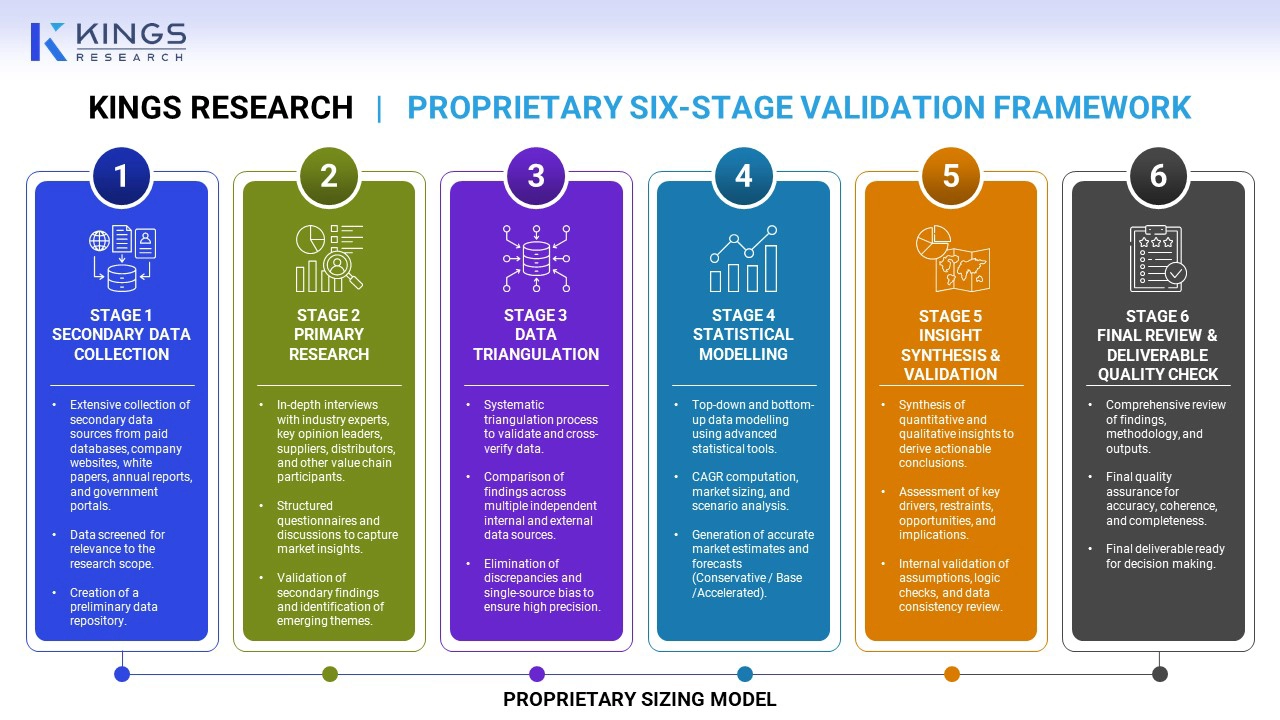
Our methodology triangulates insights from multiple independent and publicly available research databases and is further validated against regulatory filings and public company disclosures. All estimates are cross-verified; no single-source data is presented without validation.
Our custom offerings deliver tailored, data-driven intelligence and strategic guidance to help organizations identify, evaluate, and capitalize on key market opportunities.
Frequently Asked Questions

Swati is a committed research analyst with a passion for optimizing systems and processes across industries, specializing in healthcare but also bringing valuable expertise to sectors such as consumer goods, life sciences, and more. Her cross-domain research approach allows her to generate clear, actionable reports that inform strategic decisions in a variety of fields. Swati is committed to staying ahead of evolving trends, leveraging her broad understanding of different sectors to provide insights that are relevant to a range of industries. In her personal time, she enjoys music and spending quality time with her family, which inspires her creativity and enriches her professional approach. Her systematic methodology ensures that every report is both thorough and practical. Swati's ability to bridge regulatory frameworks with market realities gives her recommendations a distinct edge. She collaborates seamlessly with cross-functional teams, distilling complex data into straightforward narratives. Her proactive monitoring of policy and technological shifts keeps her analysis forward-looking.
Habi is a seasoned research and consulting leader with renowned experience in guiding clients on strategic growth and transformation initiatives across global markets. He has led high-performing research teams that deliver actionable insights on market expansion, M&A strategies, opportunity assessment, new business development, and product launches. His project portfolio spans large petrochemical producers, electronic device manufacturers, lubricants companies, and other leading enterprises across diverse industrial and consumer sectors. He currently heads the research department at Kings Research, where he is responsible for setting the research agenda, mentoring analysts, and ensuring client-ready deliverables that support executive decision-making. With extensive experience in market intelligence, strategic research, and consulting, Habi brings a strong understanding of evolving industry dynamics, competitive landscapes, emerging opportunities, and business growth challenges. His expertise includes developing research frameworks, translating complex market data into actionable strategic recommendations, and working closely with senior stakeholders to address critical business questions. He has also contributed to building research capabilities, strengthening analytical methodologies, and driving a culture of quality and insight-led decision-making within research teams. His cross-industry exposure enables him to connect market trends with broader business implications and provide perspectives that help organizations identify opportunities, mitigate risks, and make informed strategic decisions.