
Inquire Now
Key Strategic Points
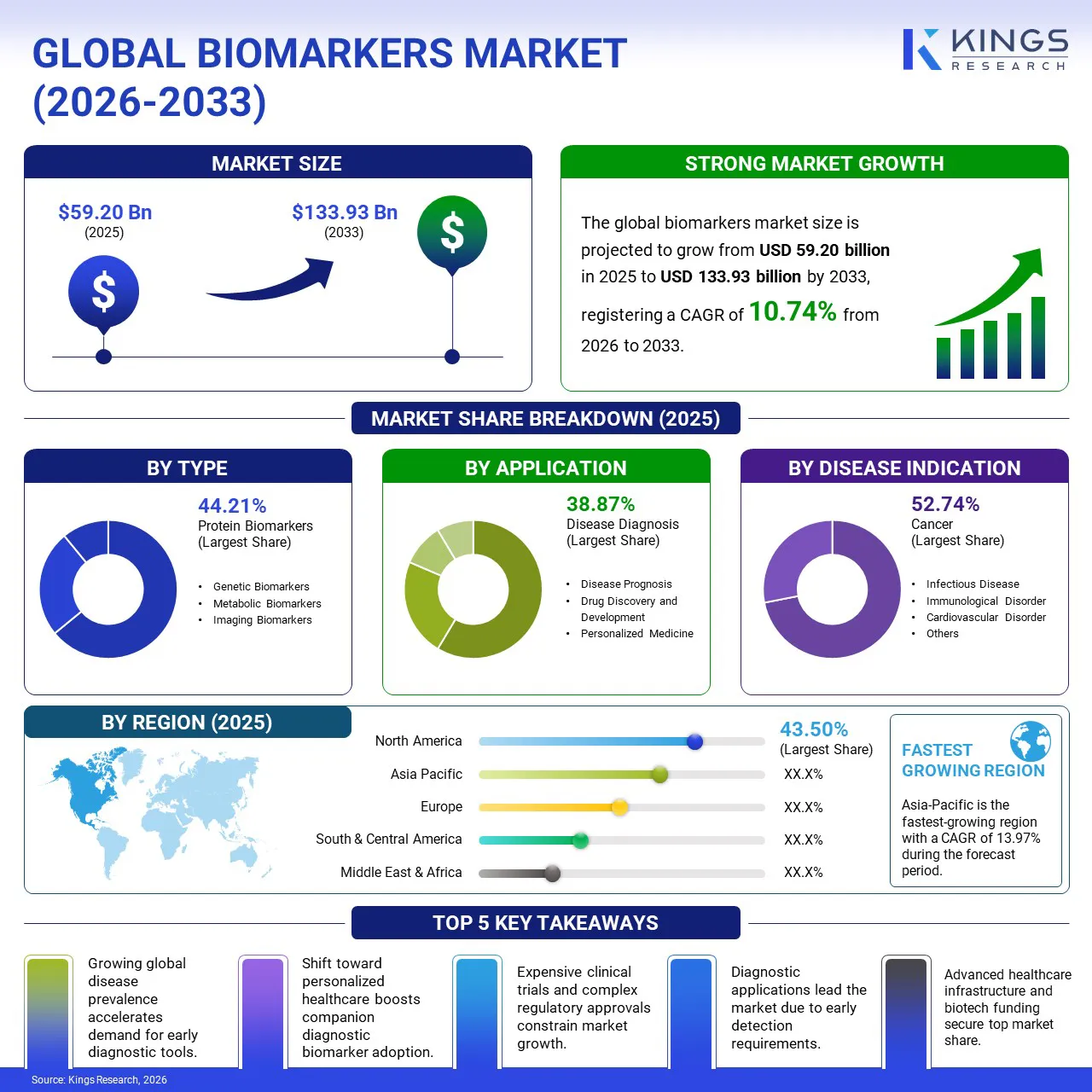
According to Kings Research, the global biomarkers market size was valued at USD 59.20 billion in 2025 and is projected to grow to USD 133.93 billion by 2033, exhibiting a CAGR of 10.74% during the forecast period (2026-2033).
The market involves pharmaceutical companies, biotechnology firms, diagnostic laboratories, and research institutions focused on developing targeted therapeutics and molecular diagnostics. The report explores key drivers of market development, offering detailed regional analysis and a comprehensive overview of the competitive landscape shaping future opportunities.
The market is expanding rapidly, driven by the increasing prevalence of chronic diseases such as cancer, cardiovascular disorders, and neurological conditions. Advances in biotechnology and genomics are accelerating biomarker discovery, enabling earlier disease detection and personalized medicine strategies. Growing R&D investments by pharmaceutical and diagnostic companies further foster innovation in the sector.
Regulatory frameworks have an important role in shaping the market, with organizations like the U.S. FDA and European Medicines Agency (EMA) overseeing the approval and monitoring of biomarker-based diagnostic tests and targeted therapies. Clearer guidelines for companion diagnostics have facilitated the integration of biomarkers into clinical practice, improving patient outcomes and streamlining drug development pipelines.
Major companies operating in the biomarkers market include Thermo Fisher Scientific Inc., Hoffmann-La Roche Ltd, Abbott Laboratories, Danaher Corporation, Agilent Technologies, Inc., QIAGEN N.V., Bio-Rad Laboratories, Inc., Merck KGaA, PerkinElmer Inc., Charles River Laboratories, BIOMÉRIEUX, Epigenomics AG, Eurofins Scientific, Becton, Dickinson and Company, and Caris Life Sciences
In May 2026, Roche announced the acquisition of PathAI to strengthen its AI-powered digital pathology capabilities. The combination of Roche’s companion diagnostics expertise with PathAI’s AI platform is expected to accelerate the discovery of new biomarkers and development of novel diagnostic tools, supporting the shift toward personalized healthcare.
The biomarkers market is experiencing significant growth, driven by the increasing prevalence of chronic diseases such as cancer, cardiovascular disorders, and diabetes. The rising demand for early diagnosis and personalized treatment options has fueled the adoption of biomarkers in clinical settings, as they enable precise disease detection and targeted therapies.
Additionally, advancements in biotechnology and molecular diagnostics, particularly in genomics and proteomics, have enhanced the identification and validation of novel biomarkers. Increased funding for cancer research and government initiatives promoting precision medicine are further propelling market expansion.
In June 2026, Guardant Health announced that the U.S. FDA approved Guardant360 CDx as a companion diagnostic for Boehringer Ingelheim’s HERNEXEOS (zongertinib). The blood-based liquid biopsy identifies patients with HER2 (ERBB2)-mutant advanced non-small cell lung cancer who may be eligible for the targeted therapy, highlighting the growing role of molecular biomarkers in precision oncology.
The high cost of R&D and complex regulatory approval processes pose a major challenge to market growth. Developing and validating biomarkers requires substantial investment in advanced technologies and extensive clinical trials, making it capital-intensive.
Furthermore, stringent regulatory requirements imposed by authorities like the FDA and EMA can delay product launches. Additionally, reimbursement issues, particularly in developing regions, limit the widespread adoption of biomarker-based diagnostic tests and targeted therapies, restraining market expansion.
Non-invasive testing methods are gaining traction, enabling earlier intervention and reducing healthcare costs. Liquid biopsy, in particular, is witnessing rapid adoption for cancer diagnosis and monitoring due to its ability to detect circulating tumor DNA (ctDNA) and other biomarkers with minimal patient discomfort.
Simultaneously, the integration of artificial intelligence (AI) and machine learning (ML) in biomarker discovery is accelerating data analysis, improving the identification of complex biomarker panels. Furthermore, strategic collaborations between pharmaceutical companies and diagnostic developers are expanding the application of biomarkers in drug development and personalized therapies.
| Segmentation | Details |
|
By Type |
Protein Biomarkers, Genetic Biomarkers, Metabolic Biomarkers, Imaging Biomarkers |
|
By Application |
Disease Diagnosis, Disease Prognosis, Drug Discovery and Development, Personalized Medicine |
|
By Disease Indication |
Cancer, Infectious Disease, Immunological Disorder, Cardiovascular Disorder, Others |
|
By Region
|
North America: U.S., Canada, Mexico |
| Europe: France, U.K., Spain, Germany, Italy, Russia, Rest of Europe | |
| Asia-Pacific: China, Japan, India, Australia, ASEAN, South Korea, Rest of Asia-Pacific | |
| Middle East & Africa: Turkey, UAE, Saudi Arabia, South Africa, Rest of Middle East & Africa | |
| South and Central America: Brazil, Argentina, and the rest of South and Central America |
Based on type, the market is segmented into protein, genetic, metabolic, and imaging. Protein biomarkers hold the largest market share of 44.21% in 2025, driven by their extensive use in clinical diagnostics, disease monitoring, and drug development across various therapeutic areas.
Based on application, the market is segmented into disease diagnosis, disease prognosis, drug discovery and development, and personalized medicine. Disease diagnosis holds the largest market share of 38.87% in 2025, supported by increasing demand for early disease detection, growing adoption of non-invasive diagnostic tools, and expanding screening programs globally.
Based on disease indication, the market is segmented into cancer, infectious disease, and others. Cancer holds the largest market share of 52.74% in 2025, owing to the rising incidence of cancer, increasing demand for early diagnostic solutions, and rapid adoption of biomarker-guided targeted therapies.
Based on region, the market has been classified into North America, Europe, Asia Pacific, the Middle East & Africa, and South & Central America.
North America held the largest share of 43.50% in 2025. According to Kings Research, this market dominance is driven by the presence of major pharmaceutical and biotechnology companies, advanced healthcare infrastructure, and high R&D expenditure. The U.S. plays a pivotal role, supported by strong government funding, widespread adoption of precision medicine, and favorable regulatory policies that encourage biomarker discovery and commercialization. Furthermore, the rising incidence of chronic diseases like cancer and cardiovascular disorders further reinforces the region's leading position.
The Asia Pacific biomarkers market is expected to register the fastest growth of 13.97% CAGR over the forecast period. This growth is driven by expanding healthcare infrastructure, rising disposable income, and an increasing prevalence of chronic diseases, contributing significantly to the rapidly increasing cancer burden in the region. Countries like China, Japan, and India are investing heavily in genomic research and personalized medicine, boosting regional market demand. This growth is further supported by increased emphasis on improving healthcare access and quality.
According to Kings Research, Europe accounts for a major share of the global biomarkers market, supported by strong academic research networks, government-funded genomic initiatives, and well-established public healthcare systems across Germany, France, the UK, and Italy. The Middle East & Africa region is witnessing progressive growth in biomarker adoption, supported by strategic healthcare modernization investments across GCC economies and expanding centralized diagnostic reference labs. South & Central America is experiencing steady expansion in the biomarkers market, led by Brazil and Mexico, driven by improving healthcare access, expanding private lab networks, and an increasing focus on early cancer screening.
The biomarkers market is characterized by a large number of participants, including both established corporations and rising organizations. To gain a competitive edge in the rapidly evolving market, organizations are actively engaging in a wide range of strategic initiatives to enhance their market position and drive growth.
Key strategies include developing innovative products, forming strategic collaborations and alliances, expanding through geographic diversification and market penetration, and pursuing mergers and acquisitions to strengthen capabilities, expand product portfolios, and achieve economies of scale.
Additionally, numerous organizations are investing in cutting-edge technologies and enhancing research and development efforts to capitalize on emerging opportunities in personalized medicine, diagnostic advancements, and precision therapies.
In August 2026, Mahajan Imaging & Labs and Neuberg Diagnostics entered into a strategic joint venture to expand pathology, genomics, and advanced diagnostic services across North India. The collaboration is intended to combine their diagnostic capabilities and strengthen access to genomics-driven and personalized healthcare services, reflecting the growing role of molecular diagnostics and biomarker-based testing in clinical practice.
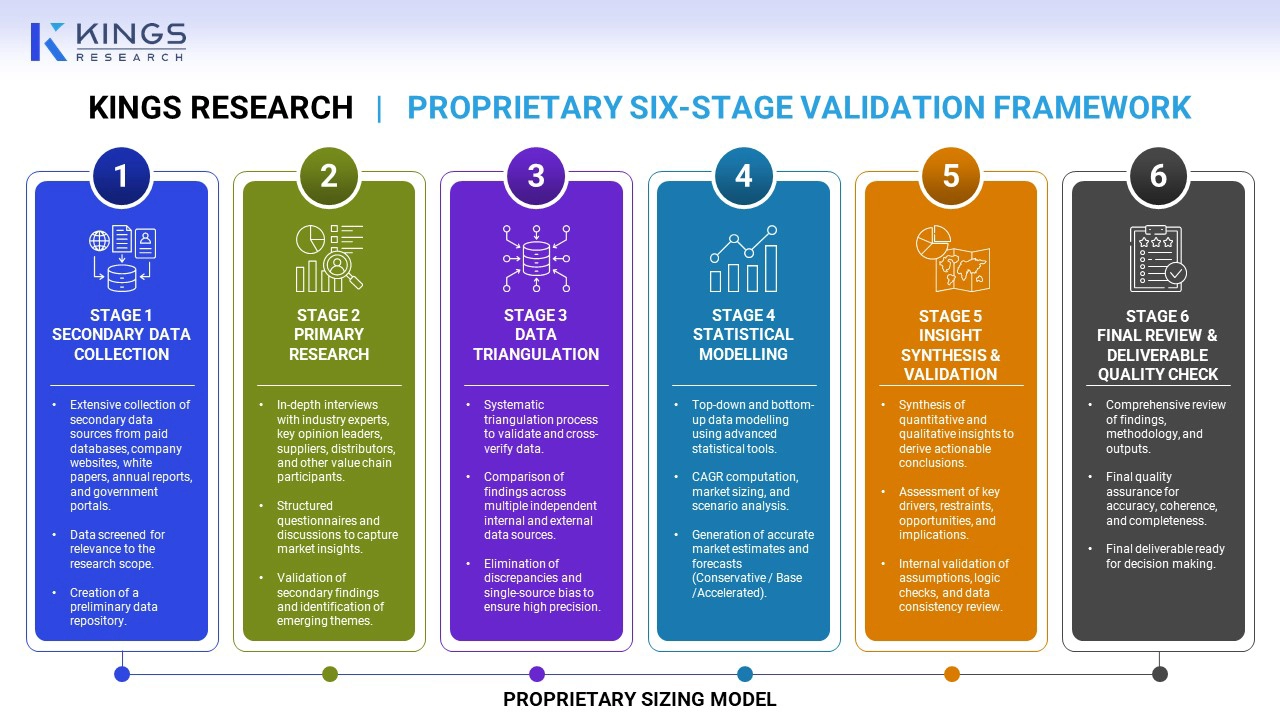
Our methodology triangulates insights from multiple independent and publicly available research databases and is further validated against regulatory filings and public company disclosures. All estimates are cross-verified; no single-source data is presented without validation.
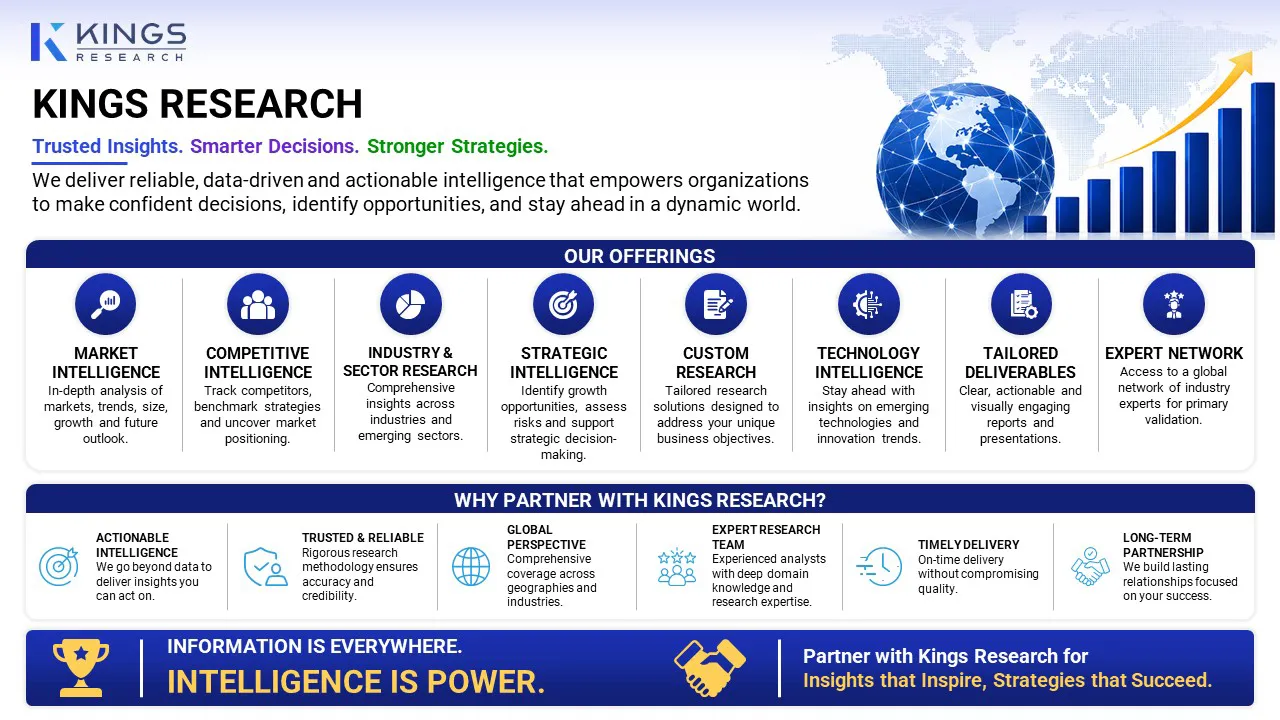
Our custom offerings deliver tailored, data-driven intelligence and strategic guidance to help organizations identify, evaluate, and capitalize on key market opportunities.
Frequently Asked Questions

Over the years, Versha brings over 15 years of experience managing consulting assignments across industries, including Food and Beverage, Consumer Goods, ICT, Aerospace, and more. Her work has spanned diverse sectors. Her cross-domain expertise and adaptability make her a versatile and dependable professional. She is known for her keen business insight and foresight. With sharp analytical skills and a curious mindset, Versha excels at transforming complex data into actionable insights. She has a proven track record of unraveling market dynamics, identifying trends, and delivering tailored solutions to meet client needs. As a skilled leader, Versha has successfully mentored research teams and directed projects with precision, ensuring high-quality outcomes. Her collaborative approach and strategic vision enable her to turn challenges into opportunities and consistently deliver impactful results. Whether analyzing markets, engaging stakeholders, or crafting strategies, Versha draws on her deep expertise and industry knowledge to drive innovation and deliver measurable value.
With many years of consulting experience across global pharma, biotech, and MedTech markets, Minaz brings deep domain expertise, strategic clarity, and analytical rigor to every engagement. She has led 130+ consulting assignments spanning market entry, competitive landscaping, and portfolio prioritization, helping clients navigate complex, high-stakes decisions with confidence. Known for her ability to synthesize primary and secondary research into executive-ready recommendations, Minaz has built forecasting models and market sizing frameworks that have informed multi-million dollar investment decisions in oncology, diagnostics, and peptide therapeutics. Beyond her analytical strength, Minaz is a trusted client partner, translating complex datasets into clear, actionable insights for senior stakeholders. She currently leads a team of research analysts, driving business expansion, and shaping client engagement strategy.


