

The photovoltaic (PV) industry is undergoing evolution driven by the pursuit of higher efficiency, lower cost, and enhanced reliability. Traditional solar cell architectures place metallic contacts on the front surface, which partially shade the active area and limit light absorption. Back contact solar cell architectures relocate all electrical contacts to the rear side, thus maximizing light capture and enabling new design freedoms. Recent advancements in materials, patterning techniques, and manufacturing integration position back contact solar cells as a disruptive force in photovoltaics. This article examines the technology’s principles, performance breakthroughs, challenges, and market trajectories.
According to Kings Research, the global back contact solar cells market is projected to grow from USD 486.1 million in 2024 to USD 781.3 million by 2031, at a CAGR of 7.01%. This steady growth reflects rising demand for higher-efficiency solar technologies that can outperform traditional architectures.
Photovoltaic Efficiency Trends and the Need for Innovation
Commercial solar modules currently approach conversion efficiencies near 25 percent. According to the U.S. Energy Information Administration, module efficiencies increased from under 10 percent in the mid-1980s to approximately 25 percent today.
These gains rest on innovations in passivation, carrier transport, multi-junction architectures, and contact engineering. The Shockley-Queisser limit for a single junction remains a theoretical ceiling near 33 percent; achieving or surpassing that boundary requires reducing parasitic losses, improving optics, and enhancing carrier collection. Back contact architectures address several of these limitations by eliminating shading losses and enabling better rear-side engineering.
Back Contact Architecture: Principles and Variants
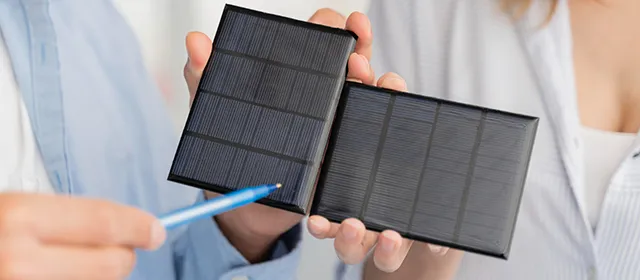
In a back contact solar cell, all electrical contacts (both positive and negative) reside on the rear side of the wafer. This arrangement eradicates front-surface metal grids, allowing unobstructed light incidence. Interdigitated back contact (IBC) designs alternate p- and n-contact zones on the rear side. Quasi-interdigitated back contact (QIBC) variants adjust contact geometry and carrier routing to relax strict interdigitated alignment constraints. Recent reviews categorize current back contact designs into IBC and QIBC families and highlight that electrode alignment, passivation, and recombination control present critical design challenges.
Heterojunction back contact solar cells (HBC), combining heterojunction passivation layers with back contacts, represent a leading variant. A 2024 study produced an HBC device with a certified efficiency of 27.09 percent, using laser patterning to define rear contacts and finely optimize rear interface design. That result demonstrates that back contact designs can rival or exceed leading front-contact architectures when implemented carefully.
Performance Advantages
The chief optical benefit of back contact cells arises from the absence of front-side shading. Eliminating metal fingers and busbars on the front surface allows more light entry and more opportunity for photon absorption. Rear contact designs also permit more aggressive rear reflector or back surface field engineering, potentially improving long-wavelength response and internal light trapping.
Electrical benefits emerge from relaxed constraints on front side passivation, since the entire front surface may be optimized for passivation instead of accommodating contacts. Designers may optimize both contact resistivity and passivation quality on the rear side without tradeoffs imposed by front contact geometry.
Measured improvements underline the promise. In heterojunction back contact devices, researchers report that recombination losses at polarity boundaries and contact resistivity remain the dominant performance constraints. Theoretical models suggest that further optimization of passivation, pattern design, and edge recombination suppression could push HBC efficiencies toward 27.7 percent or beyond in practical cells.
Manufacturing and Metrology Innovations
Back contact architectures demand precise patterning, high alignment accuracy, and rigorous defect control. Laser patterning of rear contacts plays a critical role in production. The 2024 heterojunction back contact study employed laser ablation to define alternating contact regions and insulating boundaries, enabling precise rear interdigitation.
Metrology innovations accompany manufacturing progress. Fraunhofer ISE recently demonstrated a contactless method to determine cell performance in back contact architectures using photoluminescence, electroluminescence, and spectral reflection to reconstruct the current–voltage curve without physical probes. That method can accelerate throughput, reduce mechanical stress during contact, and reduce measurement cost in production (Source: www.ise.fraunhofer.de).
To encourage domestic production in the United States, the Department of Energy (DOE) proposed funding a project with Silfab Solar Cells to develop industrial back contact silicon cells with passivated contacts in a 300 MW pilot line. Further, Silfab announced the acquisition of back contact technology patents from EnPV, integrating self-aligned back contact (SABC) techniques into its design portfolio and expanding its capacity for next-generation cells.
At the module deployment level, Maxeon Solar Technologies commercialized a new IBC panel design, the Maxeon 7, in February 2024, and completed its first customer installation in Spain. That panel design features improved hotspot resistance, reduced degradation (0.25 percent per year), and enhanced shading tolerance relative to prior IBC modules.
Challenges and Technical Barriers
Control of rear-side recombination remains the most critical challenge. Polarity boundaries between electron- and hole-selective contact zones present recombination hotspots. The heterojunction back contact study reported that hole-selective contact areas and boundary edges dominate recombination losses if passivation is not optimal.
Contact resistivity must remain minimal despite complex patterning. Interdigitated zones must balance conduction area, spacing, and minimize shading or electrical shading effects. Wafer edge losses and nonuniform current paths must be suppressed. The study noted that once rear shading effects are mitigated, wafer edge recombination becomes a limiting loss channel.
Yield and defect control are stringent in back contact architectures. The absence of front contacts leaves no room for compensating errors. Alignment tolerances, defect densities, contamination, and photolithographic or laser precision become more crucial. Scaling a research cell into large-area, high-yield manufacturing lines poses risk.
Integration of tandem architectures introduces further complexity. Back contact platforms must remain compatible with perovskite or other top cell layers in two-terminal or multi-terminal stacks. Emerging research reviews emphasize that in back-contact perovskite cells, performance depends heavily on both band alignment and interface defect suppression.
Cost and capital expenditure for new production lines remain considerable. Companies must justify switching or investment in new tooling and processes, given existing mature lines in front-contact or tunnel oxide passivated contact (TOPCon) platforms.
Market Disruption and Strategic Implications
Back contact technology positions itself as a next-generation mainstream architecture, according to industry consensus statements. At Intersolar 2025, LONGi and partners presented a white paper asserting that BC represents the future of PV innovation. Their argument emphasizes that BC’s potential for improved energy yield, cost reductions in equipment, and integration flexibility will accelerate adoption.
Silfab’s acquisition of EnPV’s back contact patents signals strategic adoption by module manufacturers. Integration of SABC techniques may accelerate BC deployment. Maxeon’s deployment of IBC panels in real projects validates commercial viability.
Competition will emerge across architectures. Conventional front-contact, TOPCon, and heterojunction technologies continue to improve, as shown by Trina Solar’s achievement of 25.44 percent efficiency in an n-type passivated heterojunction module. Developers must compare end-to-end energy yield, levelized cost of energy, operational degradation, and system integration benefits.
Geographically, markets with high incentives, premium quality requirements, and limited land for installations may adopt BC more aggressively. Rooftop, building-integrated PV, and aesthetically sensitive applications benefit from a front-contact-free surface.
Future Outlook and Research Directions
Advances in passivation chemistry, nanostructured rear contacts, and patterning precision may mitigate recombination and resistive losses. Research into hybrid back contact (HBC) and perovskite-silicon tandem BC architectures will likely gain traction. LONGi recently announced a hybrid interdigitated back contact (HIBC) device achieving 27.81 percent efficiency, underlining that back contact can interface with tandem innovation.
Metrology advances such as contactless IV reconstruction will support high‐throughput production quality control, decreasing measurement bottlenecks and mechanical stress.
Long-term stability and degradation rates remain crucial. The U.S. Department of Energy’s PV Lifetime Project tracks module degradation across environments. That project reports modules typically lose less than 1 percent of performance annually (Source: www.nrel.gov). Back contact modules must match or exceed that reliability to justify premium investment.
Manufacturing scale and line conversions will decide whether back contact shifts from a niche high-efficiency cell to a mainstream solution. If production equipment costs fall as projected, and yields match expectations, back contact may supplant front-contact architectures over the next decade.
Conclusion
Back contact solar cell architectures offer a compelling pathway to reduce optical losses, enhance carrier collection, and enable seamless tandem integration. Recent demonstrations of 27 percent-class efficiencies in HBC devices, along with metrology breakthroughs and industry adoption steps, support the claim that back contact designs may disrupt the photovoltaic landscape.
Technical challenges remain in recombination control, resistivity management, yield, and cost. Market strategies by companies such as Silfab and Maxeon suggest that deployment is underway. The balance between technology risk and performance promise will determine whether back contact becomes the new standard in next-generation PV systems.