
Inquire Now
Key Strategic Points
The generative AI in healthcare market encompasses the portion of the healthcare industry dedicated to developing, adopting, and utilizing artificial intelligence systems capable of autonomously generating new content, data, or solutions. The market comprises technologies that generate medical images, clinical notes, synthetic patient data, support drug design, and enable diagnostics and personalized treatment planning. These AI tools leverage sophisticated machine learning algorithms, including deep learning and large language models, to boost research and development, optimize clinical processes, improve patient care, and streamline operations across hospitals and healthcare organizations.
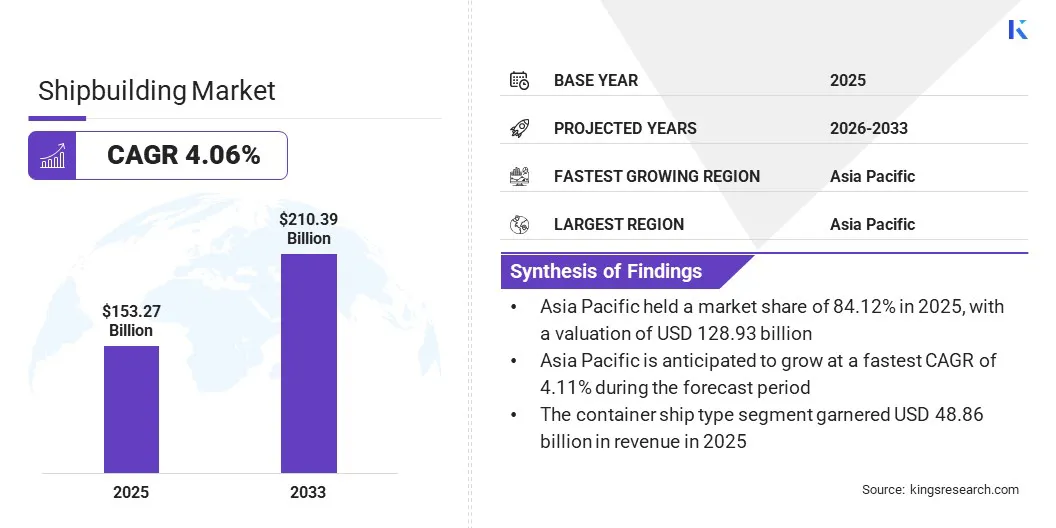
The global generative AI in healthcare market size was valued at USD 2.70 billion in 2025 and is projected to grow from USD 3.57 billion in 2026 to USD 32.72 billion by 2033, exhibiting a CAGR of 37.21% during the forecast period. This rapid growth is driven by the increasing adoption of AI-powered solutions in areas such as drug discovery, clinical documentation, diagnostics, and patient engagement.
Major companies operating in the global generative AI in healthcare market are Microsoft, Google LLC, NVIDIA Corporation, Amazon Web Services, Inc., IBM, Oracle, Abridge AI, Inc., Insilico Medicine, Johnson & Johnson, SAXON INFOSYSTEMS, Tempus AI, Inc., OpenAI, Hippocratic AI, John Snow Labs, Inc., and Aidoc.
The growth of healthcare data, the development of AI technologies, and the increasing demand for enhanced clinical efficiency and improved patient outcomes are further driving market expansion. With the ongoing digital transformation in healthcare, generative AI is poised to reshape the healthcare landscape globally.
Generative AI technologies enable pharmaceutical companies and researchers to rapidly identify promising drug candidates, design new molecules, and predict drug interactions with unprecedented speed and accuracy. By leveraging powerful machine learning models, these tools can analyze vast datasets, simulate biological processes, and generate hypotheses that traditionally would have required years of laboratory work.
Generative AI shortens development times, lowers research costs, and improves the likelihood of successful drug approvals. This expedited process is crucial for responding to emerging diseases and unmet medical needs, making it a transformational force in modern healthcare.
Risk of bias and inaccuracy are a critical challenge impeding the adoption of generative AI in healthcare. AI models can inadvertently perpetuate existing biases or produce inaccurate results if they are trained on unrepresentative, incomplete, or low-quality data. Such errors can negatively impact patient care, leading to misdiagnoses, unequal treatment, and diminished trust in AI systems.
Addressing this challenge requires rigorous validation and continuous monitoring of AI algorithms, as well as the use of diverse, high-quality training data. Additionally, fostering transparency in model development and implementing robust governance frameworks can help ensure that generative AI solutions are fair, accurate, and reliable in healthcare applications.
The rising trend of integrating different data types, such as medical images, laboratory tests, electronic health records, and genetic information, using advanced generative AI models is reshaping the market. These models can combine and analyze different data types simultaneously, allowing for more accurate and comprehensive diagnoses and the development of personalized treatment plans.
The increasing adoption of multimodal diagnostics is enabling physicians to diagnose complex conditions, facilitate early intervention, and enhance clinical workflows. This trend is likely to significantly impact patient outcomes and the overall quality of healthcare services, as a growing number of healthcare providers adopt these solutions.
|
Segmentation |
Details |
|
By Component |
Solution and Services |
|
By Function |
Virtual Nursing Assistants, Robot-Assisted AI Surgery, Administrative Process Optimization, Medical Imaging Analysis, and Others |
|
By End Use |
Clinical Research, Medical Centers, Diagnostic Centers, and Others |
|
By Application |
Clinical and System |
|
By Region |
North America: U.S., Canada, Mexico |
|
Europe: France, UK, Spain, Germany, Italy, Russia, Rest of Europe |
|
|
Asia-Pacific: China, Japan, India, Australia, ASEAN, South Korea, Rest of Asia-Pacific |
|
|
Middle East & Africa: Turkey, U.A.E., Saudi Arabia, South Africa, Rest of Middle East & Africa |
|
|
South America: Brazil, Argentina, Rest of South America |
Based on region, the global generative AI in healthcare market has been classified into North America, Europe, Asia Pacific, Middle East & Africa, and South America.
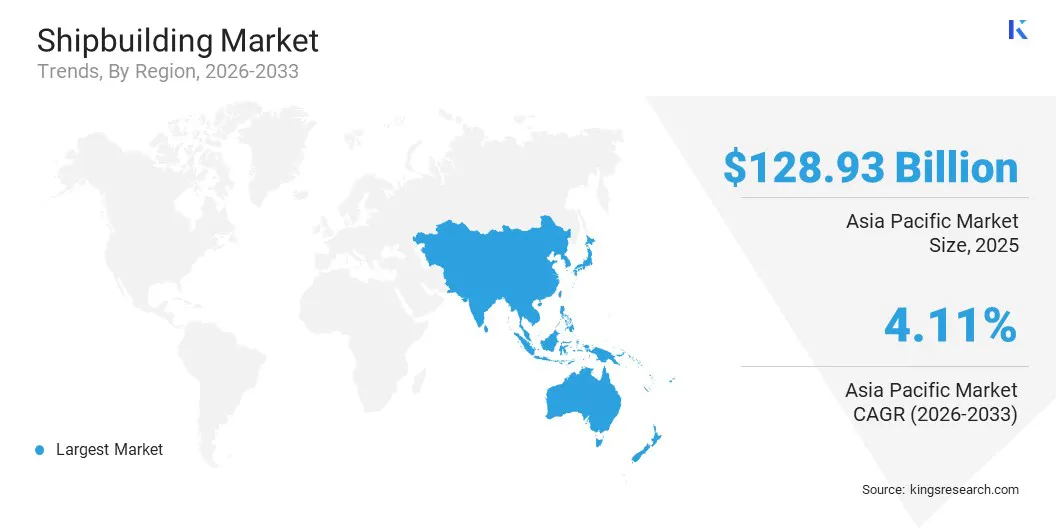
North America generative AI in healthcare market share stood at 40.48% in 2025, with a valuation of USD 1.09 billion. This dominance is reinforced by the surging adoption of advanced healthcare technologies and the investments made by the governments and the private sector. Key factors contributing significantly to domestic market growth include the presence of major AI players, strong regulatory support for digital health innovations, and the increasing demand for improved patient care.
Furthermore, the region’s extensive use of electronic health records and a large pool of skilled professionals facilitate the seamless integration of generative AI technologies into clinical and administrative workflows. Strategic collaborations among technology companies, healthcare providers, and research institutions are also vital in driving innovation and scaling AI solutions in North America.
The Asia Pacific generative AI in healthcare market is set to grow at a CAGR of 39% over the forecast period, largely fueled by digital transformation across healthcare systems and government support for AI-driven innovation. Growing investments in health technology, greater focus on patient-centric care, and rising adoption of electronic health records are driving the demand for generative AI applications.
The region’s large, diverse population generates vast amounts of healthcare data, enabling the development of highly effective AI models. Additionally, advancements in cloud computing and telemedicine, coupled with increased collaboration between technology providers and healthcare organizations, are fostering a dynamic environment for the expansion of generative AI solutions throughout the Asia Pacific healthcare sector.
Major players operating in the generative AI in healthcare market are investing heavily in research and development to enhance AI capabilities and expand their product portfolios. Strategic collaborations between AI firms, pharmaceutical companies, and healthcare providers are common, accelerating the integration of generative AI solutions across clinical workflows.
Startups are driving innovation in areas such as drug discovery, medical imaging, and patient data synthesis, while established firms offer scalable platforms and regulatory expertise. Intense competition is fostering rapid technological advancement, improved solution quality, and the increasing adoption of generative AI throughout the global healthcare sector.
Frequently Asked Questions

Aswathi holds cross-domain expertise, translating market trends and competitive intelligence into decision-ready insights. Her work helps clients interpret evolving market conditions and identify growth opportunities. She brings a focused, insight-led approach to research execution. She translates these findings into clear, prioritized action plans that align with client capabilities. Her research often includes scenario modeling to test growth strategies under varying economic conditions. She maintains a rigorous validation process, cross-checking primary and secondary sources to ensure reliability. Clients value her ability to synthesize noisy data into concise executive summaries that drive board-level discussions. Her sector-specific lens, combined with a pragmatic focus on execution, consistently delivers high-impact, commercially sound recommendations. Her structured yet flexible research frameworks adapt to client timelines without compromising depth. She is known for distilling complex trade-offs into straightforward, defensible positions that facilitate confident decision-making.
With many years of consulting experience across global pharma, biotech, and MedTech markets, Minaz brings deep domain expertise, strategic clarity, and analytical rigor to every engagement. She has led 130+ consulting assignments spanning market entry, competitive landscaping, and portfolio prioritization, helping clients navigate complex, high-stakes decisions with confidence. Known for her ability to synthesize primary and secondary research into executive-ready recommendations, Minaz has built forecasting models and market sizing frameworks that have informed multi-million dollar investment decisions in oncology, diagnostics, and peptide therapeutics. Beyond her analytical strength, Minaz is a trusted client partner, translating complex datasets into clear, actionable insights for senior stakeholders. She currently leads a team of research analysts, driving business expansion, and shaping client engagement strategy.