
Inquire Now
Key Strategic Points
This rapid growth is propelled by the expansion of the global automotive sector along with the increasing demand for energy-efficient solutions in the building and construction sector across the globe. Government initiatives like Housing for All, implemented by the United Nations, which are targeted at providing affordable residential establishments across developing economies, act as a driving factor.
Major companies operating in the global flat glass industry include Asahi India Glass Limited, Taiwan Glass Industries Corp., CSG HOLDING CO., LTD., FUYAO GROUP, Nippon Sheet Glass Co., Ltd., Saint-Gobain, Şişecam, Central Glass Co., Ltd., AGC Inc., Trulite, SCHOTT, Cevital, CHINAGLASSHOLDING, Euro Glass, and Fuyao Glass Industry Group Co., Ltd.
Businesses across diverse end-user industries such as automotive, building and construction, and consumer electronics are adopting flat glass to enhance functionality, safety, and energy efficiency. The rise in the adoption of advanced flat glass products in the automotive sector with advanced safety systems like ADAS windshields, future augmented reality windshields systems, and connectivity with the Internet of Things presents market growth opportunities.
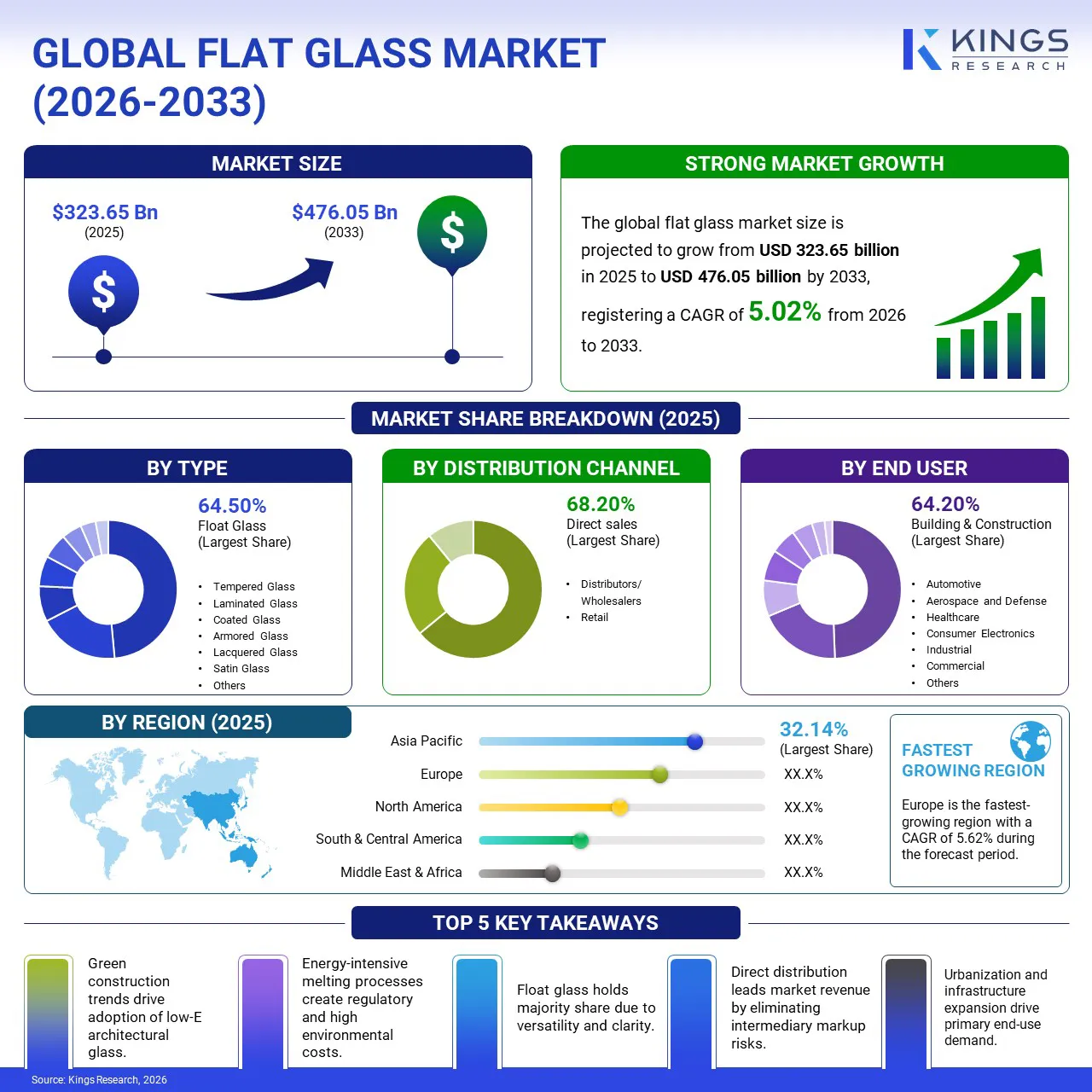
The global surge in population and rapid urbanization is fueling market growth. The property of flat glass to retain heat inside a room or prevent excess heat from entering a room leads to a significant reduction in energy consumption from heating and cooling systems. This, in turn, boosts the demand for flat glass in residential and commercial buildings due to its energy efficiency, thermal insulation, and aesthetic appeal.
Moreover, the increasing emphasis on sustainable construction and green building standards promotes the adoption of advanced glazing solutions that reduce heat loss and energy consumption. Advancements in solar control glass, insulated glazing, and smart glass technologies are supporting market expansion by enhancing energy efficiency, occupant comfort, and environmental sustainability across the construction sector.
The generation of greenhouse gas emissions poses a major challenge to market development avenues. The melting and refining procedures in flat glass manufacturing require high energy utilization, which involves high economic and environmental costs. Additionally, the production processes lead to emissions of combustion by-products, comprising sulphur oxides (SOx), nitrogen oxides (NOx), and carbon dioxide (CO2), which increase global warming potential.
To address this challenge, industry leaders are optimizing POM manufacturing processes and adopting solutions such as carbon capture utilization and storage (CCUS), the inclusion of green hydrogen in manufacturing facilities, and circular economy approaches such as material recycling, process optimization, and closed-loop manufacturing practices.
Low-E (low-emissivity) glass is a specially coated architectural flat glass that enhances energy efficiency, thermal insulation, and indoor comfort in residential and commercial establishments. The thermal insulation property of low-E glass enables the retention of indoor heat during colder months while preventing excess heat from entering during warmer seasons. It further provides effective solar control by reflecting a significant portion of solar heat while maximizing natural light transmission, thereby reducing air-conditioning loads, minimizing glare and blockage of harmful solar ultraviolet (UV) rays, and improving the overall visual comfort and durability of indoor environments. Additionally, low-E glass offers aesthetic flexibility, enabling architects to choose from different colors, transparency levels, and reflective finishes to create visually appealing façades and interiors.
|
Segmentation |
Details |
|
By Type |
Float Glass, Tempered Glass, Laminated Glass, Coated Glass, Armored Glass, Lacquered Glass, Satin Glass, Others |
|
By Distribution Channel |
Direct sales, Distributors / Wholesalers, Retail |
|
By End Use |
Automotive, Aerospace and Defense, Healthcare, Consumer Electronics, Building & Construction, Industrial, Commercial, Others |
|
By Region |
North America: U.S., Canada, Mexico |
|
Europe: France, UK, Spain, Germany, Italy, Russia, Rest of Europe |
|
|
Asia-Pacific: China, Japan, India, Australia, ASEAN, South Korea, Rest of Asia-Pacific |
|
|
Middle East & Africa: Turkey, U.A.E., Saudi Arabia, South Africa, Rest of Middle East & Africa |
|
|
South America: Brazil, Argentina, Rest of South America |
Based on region, the global flat glass market is split into North America, Europe, Asia Pacific, Middle East and Africa, and South America.
The Asia Pacific flat glass market share stood at 32.14% and was valued at USD 104.02 billion in 2025. Rising urbanization and high population growth necessitate development in the construction sector. The ongoing trend of smart city projects in China (like Nanjing, Zhuhai, Shenzhen, Hangzhou, Chongqing, Beijing, Shanghai, Chengdu), India (Smart Cities Missions), South Korea (Incheon smart city plan, Seoul smart city initiatives), and other parts of the region act as significant drivers propelling regional market expansion.
Additionally, the presence of major tech companies, robust IT infrastructure, and investments in AI, cloud computing, and digitization applications in the region further act as significant drivers for the market.
The Europe flat glass market is set to register the fastest CAGR of 5.62% over the forecast period. This rapid growth is fostered by rising emphasis on energy-efficient buildings. Countries in the European Union like the UK, Germany, France, and Spain have set ambitious goals under the European Green Deal, which ensures net-zero greenhouse gas emissions by 2050. The adoption of double-glazed and low-emissivity flat glass in Europe acts as a major contributor to enhancing thermal insulation in commercial and residential buildings, thereby supporting the achievement of climate goals.
Key players in the flat glass market are launching innovative solutions to cater to diverse end-use industries, including the building and construction, automotive, and industrial sectors. Innovations targeted at improving energy efficiency, automation, precision, and production flexibility, while supporting high-performance and lightweight glass applications, are gaining traction in the market.
Additionally, market players are prioritizing the integration of sustainability initiatives, including the reduction of carbon footprints, achieving net-zero effluent emissions, and the adoption of renewable or green energy solutions in flat glass manufacturing.
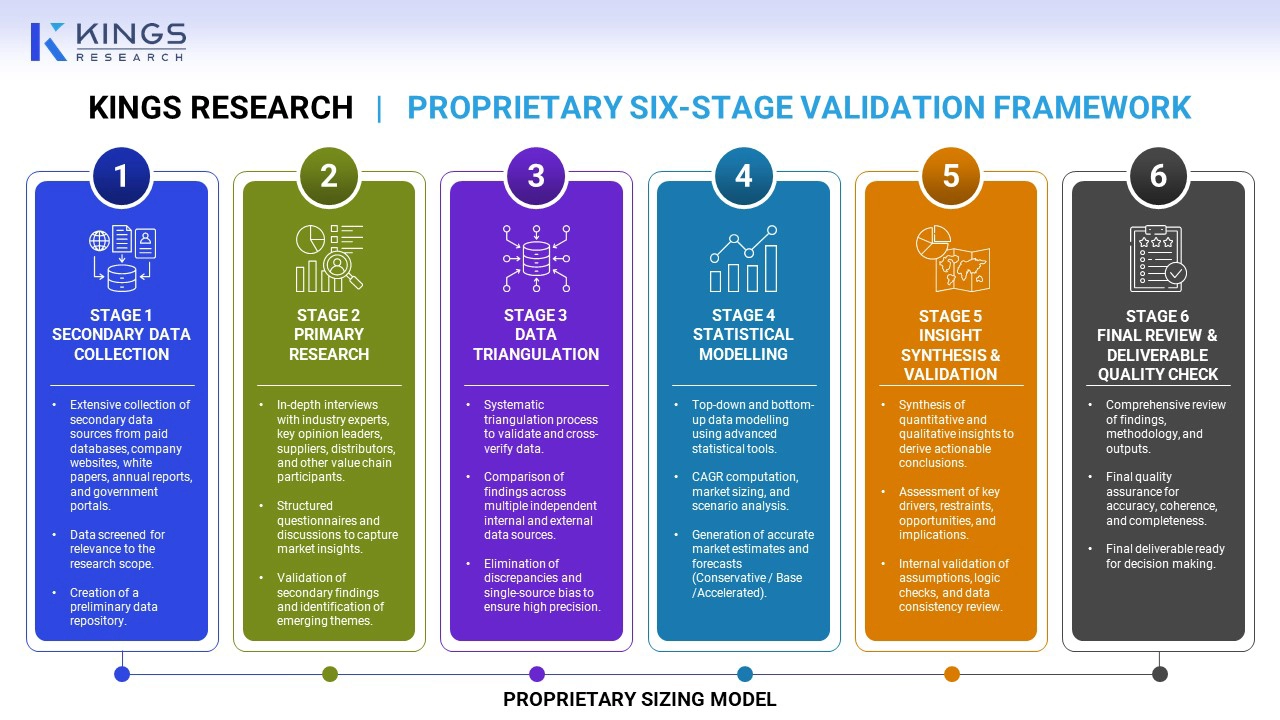
Our methodology triangulates insights from multiple independent and publicly available research databases and is further validated against regulatory filings and public company disclosures. All estimates are cross-verified; no single-source data is presented without validation.
 Why Kings Research?
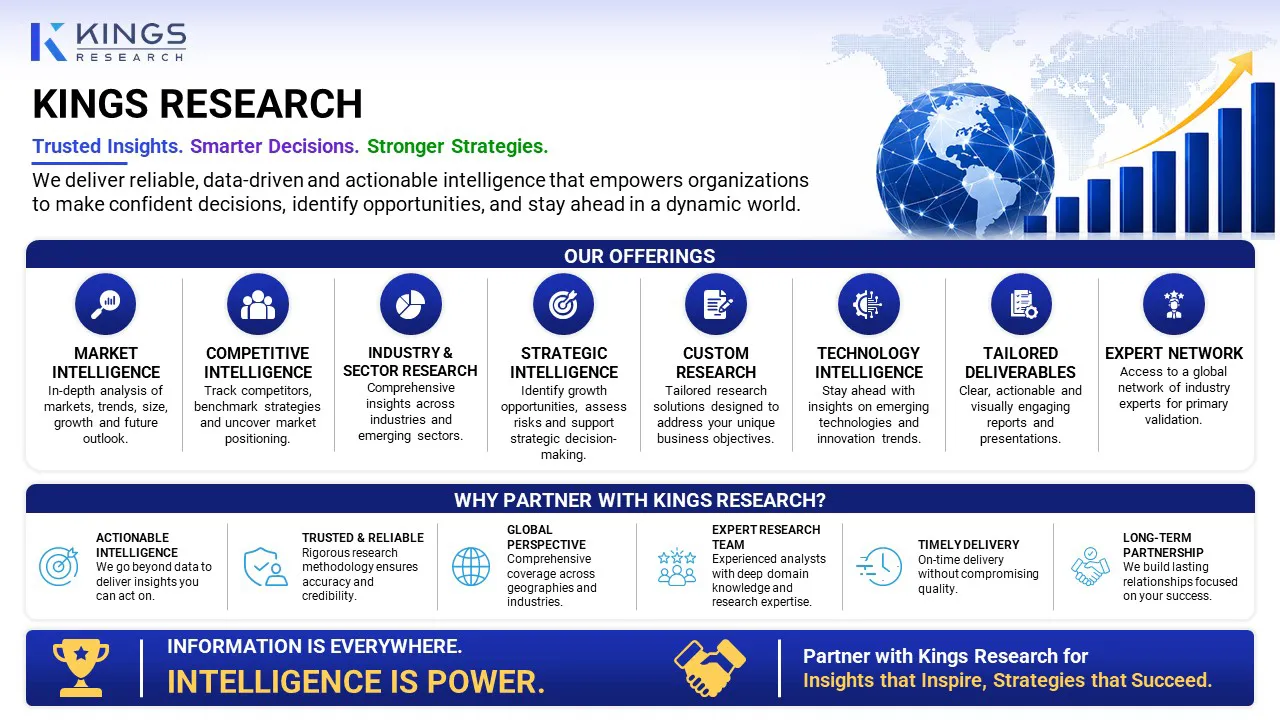
Our custom offerings deliver tailored, data-driven intelligence and strategic guidance to help organizations identify, evaluate, and capitalize on key market opportunities.
Frequently Asked Questions

Faizy brings over four years of experience in market research and consulting, with a proven ability to support strategic engagements across diverse industries and business environments. His work focuses on understanding complex market structures, identifying emerging opportunities, and translating research findings into clear, commercially relevant insights. With strong analytical capabilities and a structured approach to problem-solving, he evaluates industry trends, competitive landscapes, customer dynamics, and evolving business models. His expertise encompasses market research, competitive intelligence, market sizing and forecasting, industry assessment, company benchmarking, and strategic analysis. Faizy combines technical proficiency with a strong research orientation, enabling him to interpret both qualitative and quantitative information effectively. He has contributed to projects that help organizations assess growth potential, strengthen market positioning, and evaluate strategic priorities. His adaptable approach allows him to work across sectors while maintaining a consistent focus on accuracy, relevance, and delivering insights that support informed decision-making for clients and stakeholders.
With many years of consulting experience across global pharma, biotech, and MedTech markets, Minaz brings deep domain expertise, strategic clarity, and analytical rigor to every engagement. She has led 130+ consulting assignments spanning market entry, competitive landscaping, and portfolio prioritization, helping clients navigate complex, high-stakes decisions with confidence. Known for her ability to synthesize primary and secondary research into executive-ready recommendations, Minaz has built forecasting models and market sizing frameworks that have informed multi-million dollar investment decisions in oncology, diagnostics, and peptide therapeutics. Beyond her analytical strength, Minaz is a trusted client partner, translating complex datasets into clear, actionable insights for senior stakeholders. She currently leads a team of research analysts, driving business expansion, and shaping client engagement strategy.