
Inquire Now
Key Strategic Points
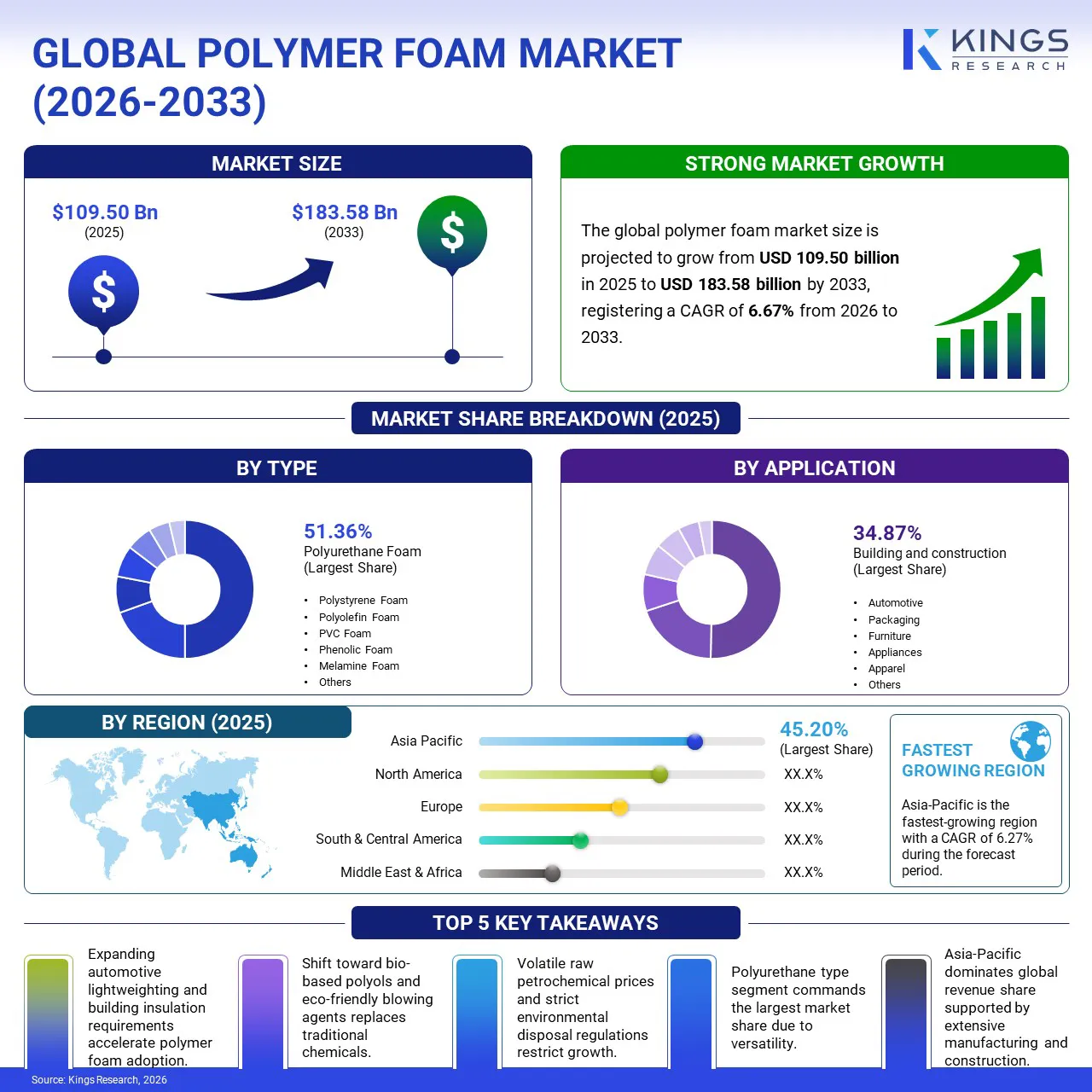
According to Kings Research, the global polymer foam market size was valued at USD 109.50 billion in 2025 and is projected to reach USD 183.58 billion by 2033, exhibiting a CAGR of 6.67% during the forecast period. The market growth is driven by the increasing requirement for advanced fire-resistant casings for electric vehicle batteries across the automotive industry. The adoption of biodegradable polymer materials aimed at replacing conventional petroleum-based products, allowing for better waste management and alignment with circular economy goals, is further propelling market development.
Major companies operating in the global polymer foam industry are BASF, Rogers Corporation, Dow, Sealed Air Corporation, Saint-Gobain, JSP, Huntsman International LLC, SABIC, Recticel, Covestro AG, Carpenter Co., Wanhua, Armacell, Zotefoams plc, and SEKISUI CHEMICAL CO., LTD.
Market players are working on spray polyurethane foam to mimic high-performance insulation seals in building envelopes, which aid in the elimination of energy leakage before it occurs by forming a smooth thermal insulation and reducing air penetration. It further facilitates greater flexibility in filling irregular structural voids, meeting the requirements of different types of building projects, resulting in more accurate and faster construction of energy-efficient buildings.
The polymer foam market is expanding due to the rising need for high-performance protective enclosures for electric vehicle batteries. The material can help manufacturers create lightweight battery housings to reduce the risk of thermal runaway by ensuring a stable flame barrier.
These dedicated foams also ensure thermal regulation and impact resistance, which serve to protect the vulnerable battery cells against external harm and temperature variations. They allow for more effective management of energy storage units and guarantee the viability of the vehicle power system.
Polymer foams can also reduce the total vehicle weight and increase the range of the vehicles, while also improving passenger safety in case of a fire. The material promotes the design of safer and more resilient battery designs that satisfy global safety standards. This practical advantage promotes mass-scale manufacturing of electric transportation, and specialized foams are significant contributors to modern car manufacturing.
Raw materials used in the production of polymer foams, such as isocyanates and polyols, are petrochemicals and are often prone to price fluctuations. Such erratic price fluctuations tend to slow down market growth because producers find it difficult to maintain stable profit margins and cope with complicated supply chain interruptions.
One of the ways to address this is by incorporating sustainable and bio-based solutions into the production process to eliminate dependence on traditional petroleum sources. This approach allows manufacturers to diversify their material sourcing and mitigate the effect of sudden spikes in the oil and gas industry. Another general practice is the investment by organizations in advanced recycling facilities in order to reclaim and reuse scrap material, which reduces waste generation and helps stabilize long-term operational costs.
There is a growing trend toward the adoption of biodegradable polymer materials that aid in mitigating the environmental effects of plastic waste while boosting sustainability. These green foams use vegetable polyols and renewable feedstock, which help manufacturers produce materials that break down naturally at the end of their lifecycle.
This capability enables companies to respond promptly to the increasing demand for green packaging and sustainable construction materials, while also improving brand image and environmental compliance.
The shift to biodegradable polymers indicates a move toward more responsible and sustainable manufacturing practices. These processes aim to reduce reliance on oil-based substances and improve waste management.
In September 2026, von Holzhausen introduced Liquidplant, which is a 100% plant-based polymer designed to produce high-performance foam. The material is primarily targeted at footwear and other high-performance applications.
|
Segmentation |
Details |
|
By Type |
Polyurethane Foam, Polystyrene Foam, Polyolefin Foam, PVC Foam, Phenolic Foam, Melamine Foam, and Others |
|
By Application |
Building and construction, Automotive, Packaging, Furniture, Appliances, Apparel, and Others |
|
By Region |
North America: U.S., Canada, Mexico |
|
Europe: France, UK, Spain, Germany, Italy, Russia, Rest of Europe |
|
|
Asia-Pacific: China, Japan, India, Australia, ASEAN, South Korea, Rest of Asia-Pacific |
|
|
Middle East & Africa: Turkey, U.A.E., Saudi Arabia, South Africa, Rest of Middle East & Africa |
|
|
South and Central America: Brazil, Argentina, Rest of South and Central America |
The polyurethane foam segment earned USD 56.24 billion in 2025, capturing a market share of 51.36%. The high share is attributed to its versatile physical properties and extensive use in comfort and insulation applications. This dominance is supported by the growing demand for high-performance cushioning in the furniture and automotive sectors to enhance user experience and durability. Industries characterized by high-volume production are experiencing a rise in demand for custom polyurethane formulations to achieve specific thermal and acoustic requirements.
The building and construction segment held a share of 34.87% in 2025, driven by the increasing presence of stringent energy efficiency standards and sustainable building codes globally. Polymer foam insulation helps achieve lower energy consumption of energy by stabilizing indoor temperatures and minimizing thermal bridging. Lightweight and moisture-resistant materials are being increasingly preferred in modern construction projects, as they enhance the longevity of structures and minimize the cost of future maintenance.
Based on region, the polymer foam market has been classified into North America, Europe, Asia Pacific, Middle East & Africa, and South and Central America.
Asia Pacific accounted for the highest share of 45.20% in 2025, valued at USD 49.49 billion. This dominance is reinforced by rapid industrialization and urbanization in countries such as China, India, and Japan. The region has a strong manufacturing ecosystem that enables large-scale production across automotive, electronics, and construction industries. In particular, the growth of the building industry in China generates a steady demand for high-performance insulation materials to comply with modern energy efficiency requirements.
The North America polymer foam market is expected to register a steady growth rate over the forecast period. This growth is facilitated by the presence of major industry players and their focus on introducing new products to meet the increasing demand for high-quality, durable materials. To ensure compliance with stringent environmental regulations, these organizations are prioritizing sustainability and low-emission solutions, including bio-based foams.
Significant investments in electric vehicle manufacturing are also promoting the use of specialized foams in battery thermal management and lightweight structural components.
In September 2025, Rogers Corporation launched PORON 40 V0, a high-performance polyurethane foam used for filling and cushioning critical gaps. It has a UL 94 V-0 flame rating and high compression set resistance, ensuring long-term reliability under harsh conditions.
Europe represents a mature polymer foam market which is driven by strong demand from the automotive, construction, and packaging sectors. The focus of European economies on energy efficiency and environmental regulations acts as a significant driver towards the adoption of advanced, low-emission, and recyclable foam solutions.
Expanding construction activities, infrastructure development, and rising demand for thermal insulation materials drive the demand for polymer foam in the Middle East & Africa. Increasing urbanization and investments in commercial and residential projects are poised to create growth opportunities for polymer foam across the region.
South and Central America is witnessing steady growth in polymer foam demand, primarily driven by automotive, packaging, and consumer goods industries. Infrastructure expansion, urban development and rising industrial activities across Brazil, Argentina, and Chile are forecasted to fuel the demand for increasing the need for insulation and lightweight materials. Rising industrial activity and improving manufacturing capabilities are expected to create further market opportunities.
Companies operating in the polymer foam market are developing specialized digital tools to speed up the process of creating sustainable material designs. These enterprises are developing cloud-based modeling systems that are integrated with molecular simulation software to enable virtual experimentation of bio-based polyols and recycled additives.
They are favoring solutions that forecast the environmental impact and structural behavior of new foam formulations prior to the start of physical production.
Firms are focusing on digital twin systems that can be integrated into chemical processing units and used to adjust manufacturing parameters based on real-time flow of materials. These companies are collaborating to enhance the capabilities of life cycle assessment tools. This innovation is a response to the increasing need for transparent data on the carbon footprint of foam products.
How We Gather This Information
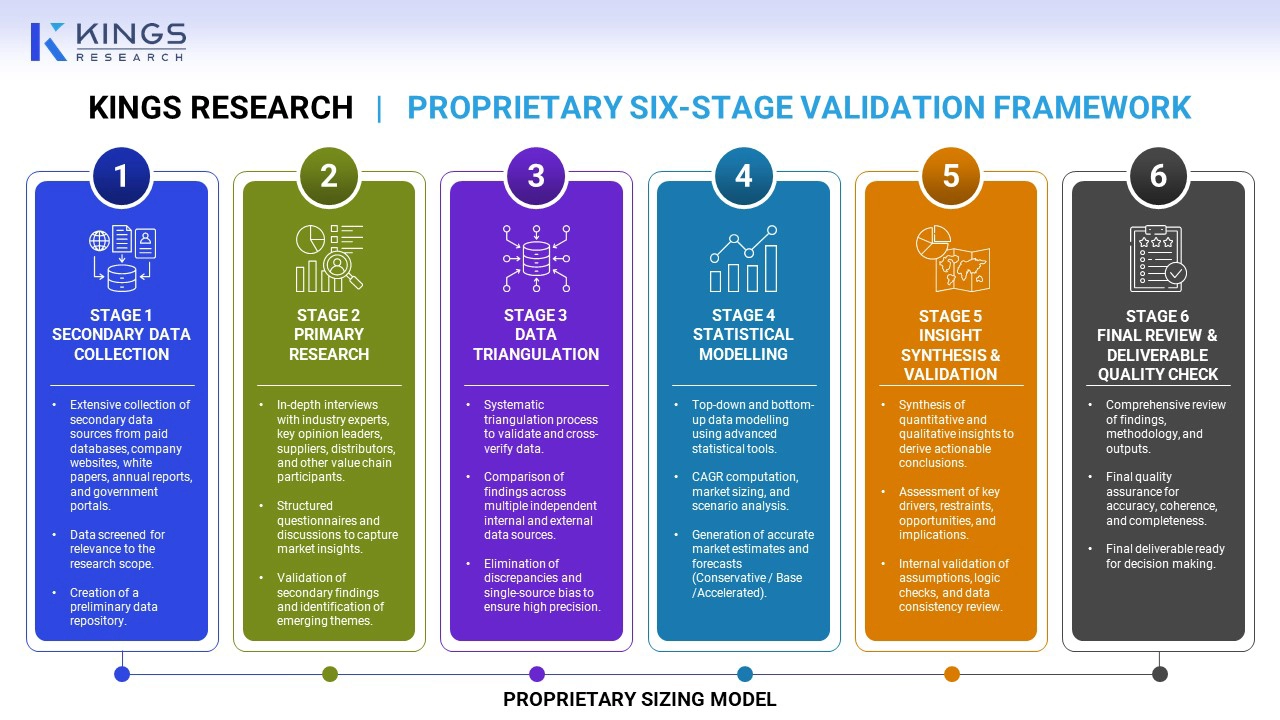
Our methodology triangulates insights from multiple independent and publicly available research databases, which is further validated against regulatory filings and public company disclosures. All estimates are cross-verified; no single-source data is presented without validation.
 Why Kings Research?
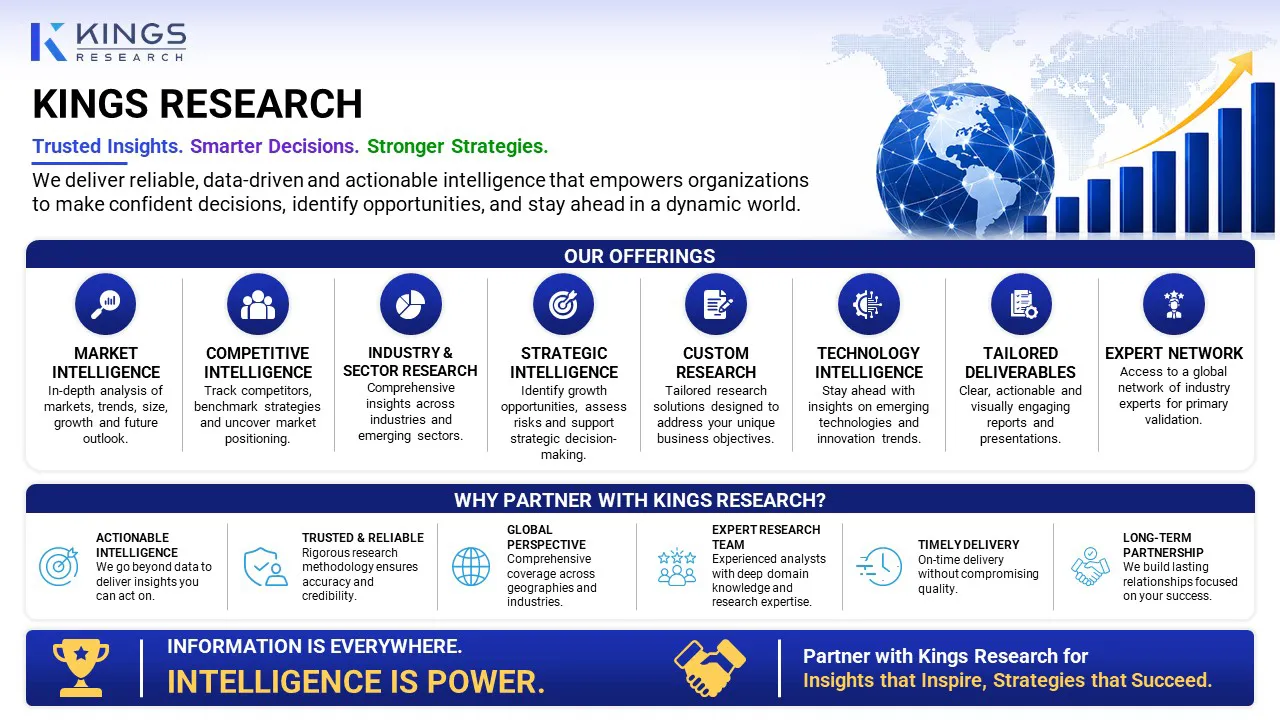
Our custom offerings deliver tailored, data-driven intelligence and strategic guidance to help organizations identify, evaluate, and capitalize on key market opportunities.
Frequently Asked Questions

Tejasv specializes in secondary research and data validation, transforming complex information into clear market insights. He supports multi-industry research initiatives by delivering reliable intelligence that informs planning and strategic direction. With a disciplined and detail-focused approach, he emphasizes analytical clarity and practical application. His interest in geopolitics and history informs his broader market perspective. This unique lens allows him to contextualize industry shifts within larger socio-political frameworks, adding depth to his analyses. He maintains rigorous documentation standards, making his findings auditable and easily reproducible. His ability to distill vast amounts of secondary data into concise, decision-ready summaries has earned him the trust of project leads across multiple verticals. Tejasv actively tracks regulatory changes and economic indicators, which he incorporates into his research to enhance its forward-looking relevance. His methodical work ethic, combined with a calm demeanor under tight deadlines, ensures that his contributions remain both timely and impactful.
Habi is a seasoned research and consulting leader with renowned experience in guiding clients on strategic growth and transformation initiatives across global markets. He has led high-performing research teams that deliver actionable insights on market expansion, M&A strategies, opportunity assessment, new business development, and product launches. His project portfolio spans large petrochemical producers, electronic device manufacturers, lubricants companies, and other leading enterprises across diverse industrial and consumer sectors. He currently heads the research department at Kings Research, where he is responsible for setting the research agenda, mentoring analysts, and ensuring client-ready deliverables that support executive decision-making. With extensive experience in market intelligence, strategic research, and consulting, Habi brings a strong understanding of evolving industry dynamics, competitive landscapes, emerging opportunities, and business growth challenges. His expertise includes developing research frameworks, translating complex market data into actionable strategic recommendations, and working closely with senior stakeholders to address critical business questions. He has also contributed to building research capabilities, strengthening analytical methodologies, and driving a culture of quality and insight-led decision-making within research teams. His cross-industry exposure enables him to connect market trends with broader business implications and provide perspectives that help organizations identify opportunities, mitigate risks, and make informed strategic decisions.