Inquire Now
Key Strategic Points
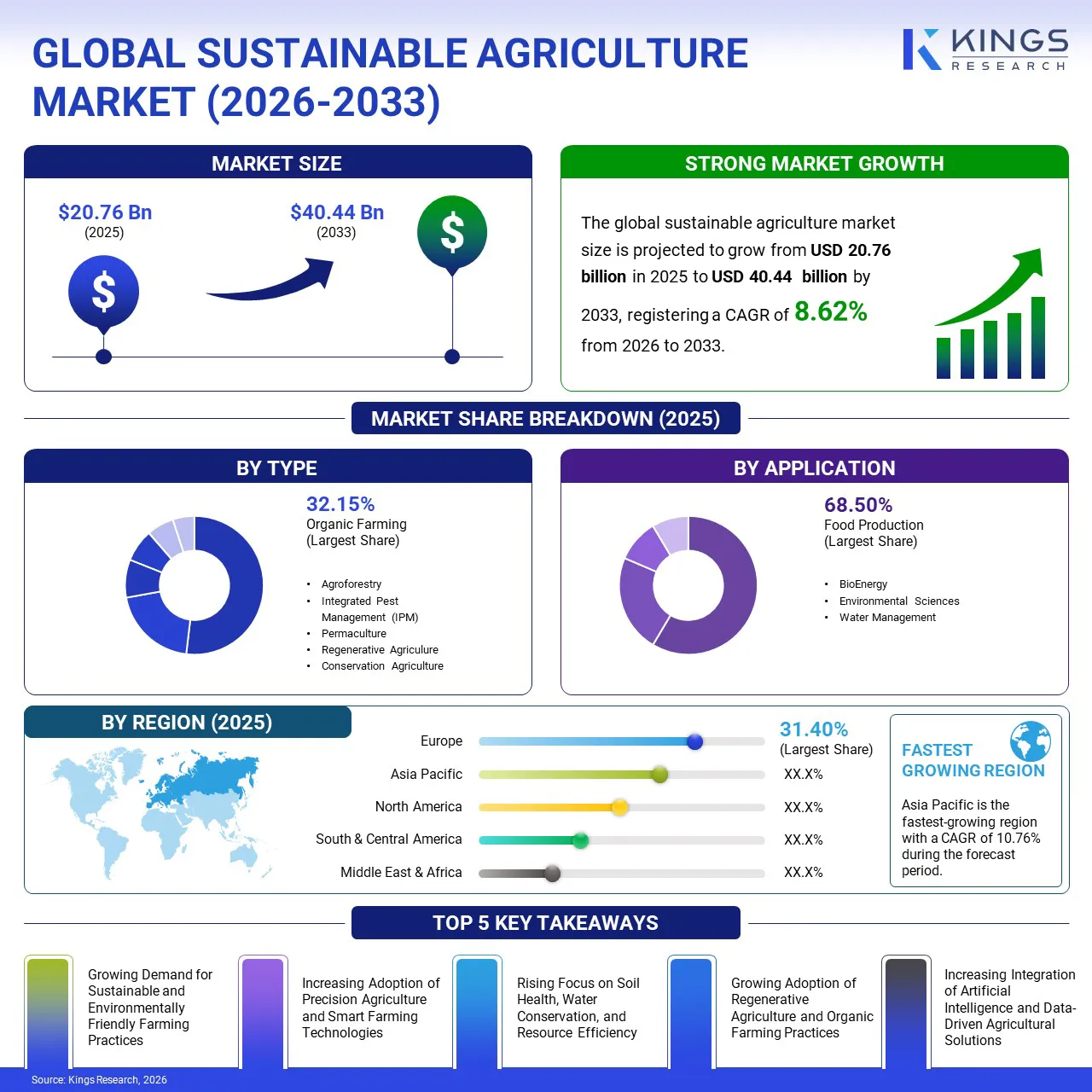
According to Kings Research, the global sustainable agriculture market size was USD 20.76 billion in 2025 and is projected to reach USD 40.44 billion by 2033, growing at an 8.62% CAGR over the forecast period from 2026 to 2033.
The global market is evolving due to environmental concerns, soil degradation, food security challenges, and water scarcity. Agricultural producers and industry stakeholders are progressively transitioning from resource-intensive methods toward sustainable practices, including organic farming, regenerative agriculture, agroforestry, and integrated pest management.
Regulatory frameworks, climate-smart policy mandates, and public-private initiatives are further fueling the global adoption of precision agriculture tools and biological crop protection solutions to improve input efficiency and lower greenhouse gas emissions. Furthermore, artificial intelligence is enabling real-time monitoring, precision spraying, and predictive analytics, improving agrifood supply chain efficiency and creating new growth opportunities.
Water scarcity and increasing food security concerns are creating demand for sustainable agriculture. In semi-arid regions, sustainable agriculture supports efficient water management; particularly, agriculture accounts for 72% of global freshwater withdrawals, according to FAO AQUASTAT Water Data.
According to United Nations 2026 estimates, nearly 645 million people faced hunger in 2025, while approximately 2.1 billion people experienced moderate or severe food insecurity. Weather extremes, including potential El Niño effects in 2026 and 2027, could further disrupt food production. These pressures are encouraging the adoption of effective irrigation and sustainable water-use practices to expand the supply of nutritious foods, reduce losses, and strengthen the resilience of agrifood systems.
Governments are addressing water scarcity through integrated policies combining water-efficient technologies, climate-smart farming, effective groundwater governance, economic incentives, and strong institutional support.
In June 2025, the European Commission introduced the European water resilience strategy, prioritizing sustainable agricultural water management. The strategy leverages Common Agricultural Policy (CAP) Strategic Plans to promote precision farming, drip irrigation, and wastewater reuse and soil water-retention practices across the EU.
In April 2025, India’s cabinet approved the Modernization of Command Area Development and Water Management (M-CADWM) scheme under the Pradhan Mantri Krishi Sinchayee Yojana (PMKSY). The scheme aims to improve irrigation efficiency through pressurized water delivery and micro-irrigation. The scheme covers approximately 69,715 hectares across 23 states/UTs, with central assistance of approximately USD 190 million, promoting sustainable agriculture, water conservation, and improved crop productivity.
The increased usage of pesticides, fertilizers, and other toxic farm chemicals in agriculture and allied activities pollutes freshwater, marine ecosystems, and air, with some substances persisting in the environment for years. These toxic substances are suspected endocrine disruptors that pose a threat to human life and wildlife by entering the food chains, highlighting the need for sustainable agriculture techniques to minimize impact.
Farmers are increasingly adopting agroecology that minimizes synthetic agrochemicals, promotes soil carbon sequestration, and improves nutrient availability for crops. Moreover, the rise in adoption of organic farming, which reportedly uses 45% less energy than conventional farming and avoids synthetic nitrogen fertilizers, can help reduce direct global agricultural emissions by about 20%, according to the Natural Resources Defense Council (NRDC).
Trade disruptions and tariff impositions increase farm input costs, disrupt global supply chains, and trigger retaliatory trade action. Disruptions around the Strait of Hormuz and the Bab-el-Mandeb Strait, a key maritime gateway connecting the Red Sea with the Suez Canal, can affect agricultural input shipments. Meanwhile, disruptions to the Black Sea corridor threaten grain exports. These issues negatively impact the supply of essential agricultural raw materials, fueling the adoption of conventional farming techniques to compensate for losses arising from lower export revenue. Moreover, the imposition of tariffs on fertilizers, farm machinery, and agricultural produce prompts retaliatory trade measures that disrupt global agricultural markets.
For instance, in July 2025, the U.S. adjusted reciprocal tariff rates for 60 countries under the International Emergency Economic Powers Act (IEEPA), establishing a baseline 10% rate and scaling up to 50% for high trade-deficit nations. However, following selective agricultural exemptions late in 2025, the U.S. Supreme Court struck down IEEPA-based reciprocal tariffs in February 2026, ruling that the statute did not authorize the President to impose them.
In response, China reduced agricultural exports, which fell 66% in 2025 to USD 8.4 billion, positioning China as the sixth-largest U.S. agricultural export market. The decline was attributed primarily to the reciprocal tariffs and weaker Chinese demand for U.S. soybeans. Such trade friction and supply chain bottlenecks can squeeze profit margins, compelling producers to deprioritize sustainable capital expenditure in favor of conventional, high-yield farming practices to protect short-term revenue.
Agricultural carbon credits are useful for addressing climate change while supporting sustainable agricultural systems. The adoption of practices, including agroforestry, reduced tillage, and improved soil management, enables farmers to generate carbon credits and earn additional income. This prioritizes sustainable agriculture practices to boost production and facilitate carbon capture and storage in the soil. The surge in corporate demand for carbon offsets and regenerative agriculture investments is further creating new growth opportunities for the development of the sustainable agriculture market.
Market players are developing digital tools and forming partnerships to incentivize sustainable farming practices, reduce agricultural emissions, and generate additional revenue streams. For instance, in October 2026, John Deere expanded its digital tools to help farmers access potential revenue opportunities under the U.S. 45Z Clean Fuel Production Tax Credit. The initiative supports practices such as no-till farming, cover cropping, and improved nutrient management to reduce biofuel feedstock carbon intensity.
In April 2026, the Good Rice Alliance (TGRA) signed a long-term agreement with Amazon to supply over 685,000 tons of CO₂-equivalent carbon credits from methane-reduction initiatives in India. The program supports over 13,000 smallholder farmers across 35,000 hectares in adopting water-efficient practices, including alternate wetting and drying and direct-seeded rice, to reduce emissions and irrigation water use while improving farm economics.
Countries and regions, including the U.S., Australia, and the European Union (EU) member states, are incorporating agricultural practices into national climate mitigation efforts. The European Union (EU) Carbon Removals and Carbon Farming (CRCF) Regulation establishes a voluntary certification framework to standardize carbon capture and emission reductions across Europe. It defines climate-friendly land management practices aimed at sequestering soil carbon, reducing agricultural greenhouse gas emissions, and establishing third-party auditing requirements and standard registry tracking to verify carbon credits.
Similarly, the Australian Carbon Credit Unit (ACCU) Scheme supports eligible projects that reduce greenhouse gas emissions or remove carbon from the atmosphere, enabling agricultural producers to earn credits for eligible emission reductions or carbon storage.
Growing adoption of AI in agriculture to address sustainability challenges, labor shortages, and yield management is creating new growth opportunities for the development of the sustainable agriculture market. AI combines machine learning, computer vision, and predictive analytics to improve farming efficiency through optimized resource allocation. It facilitates targeted use of critical agricultural inputs, including water, fertilizers, labor, and machinery, in alignment with crop growth stages, field-specific requirements, and projected demand, improving supply chain efficiency and streamlining agricultural operations.
AI also supports real-time crop monitoring, intelligent logistics, dynamic resource allocation, and proactive risk management. AI-powered automation is revolutionizing the handling, forecasting, sorting, and packaging across harvesting and post-harvesting processes. Farmers are increasingly using AI to monitor crops, power autonomous robots, and improve supply chain performance.
Key players are leveraging AI, precision agriculture, and digital technologies to improve farm productivity, optimize input usage, and enhance supply chain efficiency. These technologies help reduce operational costs, strengthen crop protection, and promote sustainable agricultural practices.
In May 2026, Wipro Limited completed its acquisition of Mindsprint, combining its AI-powered digital solutions with Mindsprint's expertise in agriculture, supply chain management, and commodity trading. The acquisition aims to accelerate digital transformation, improve operational efficiency, and support sustainable growth across the food and agriculture value chain.
In April 2026, John Deere introduced See and Spray Gen 2, which uses real-time weed detection and precision spraying to improve chemical application efficiency and reduce input costs. The product offers expanded crop coverage and variable-rate application, thereby improving productivity and efficient weed control.
|
Segmentation |
Details |
|
|
By Type |
Organic Farming (Crop-Based, Animal-Based), Agroforestry, Integrated Pest Management (IPM), Permaculture, Regenerative Agriculture, and Conservation Agriculture |
|
|
By Application |
Food Production, BioEnergy, Environmental Sciences, and Water Management |
|
|
By Region |
North America |
U.S., Canada, and Mexico |
|
Europe |
France, UK, Spain, Germany, Italy, Russia, and Rest of Europe |
|
|
Asia-Pacific |
China, Japan, India, Australia, ASEAN, South Korea, and Rest of Asia-Pacific |
|
|
Middle East and Africa |
Turkey, U.A.E., Saudi Arabia, South Africa, and Rest of Middle East & Africa |
|
|
South and Central America |
Brazil, Argentina, Rest of South and Central America |
|
The organic farming segment held the largest share of 32.15% in 2025, valued at USD 6.67 billion. This growth is mainly driven by the growing consumer demand for synthetic chemical-free food, increasing environmental awareness, and the adoption of eco-friendly farming practices. Government initiatives aimed at boosting organic farming and growing concerns regarding effective soil health management and reducing chemical residues further contribute to segmental growth.
The environmental sciences segment is poised to register the fastest CAGR of 11.83% over the forecast period, reaching USD 6.15 billion by 2033. This growth is fueled by increasing environmental concerns, rising demand for sustainable resource management, and the growing adoption of technologies that monitor soil health, water quality, and agricultural emissions. Moreover, strict environmental regulations and climate change mitigation efforts are accelerating investments in environmental monitoring and sustainable agricultural solutions.
The global sustainable agriculture market analysis is segmented into North America, Europe, Asia-Pacific, Middle East & Africa, and South & Central America.
Europe
Europe held the largest share of 31.40% in 2025, registering a valuation of USD 6.52 billion. This dominance is reinforced by the region's emphasis on balancing agricultural productivity with environmental conservation, economic viability, and rural development. The European Union (EU) prioritizes sustainable farming practices to ensure long-term food security while preserving natural resources, biodiversity, soil fertility, and water quality. According to Eurostat, agriculture accounted for 38.1% of the EU’s land area in 2023, highlighting its role in shaping the cultural landscape and supporting rural employment. Initiatives such as the Common Agricultural Policy (CAP) promote environmental compliance, farm sustainability, and rural development.
Moreover, renewable energy adoption enables the utilization of agricultural waste and manure for biogas production and efforts to reduce greenhouse gas emissions. Precision farming, efficient resource management, and agricultural research are further contributing to Europe's large share in sustainable farming.
Asia-Pacific
Asia-Pacific is estimated to register the fastest CAGR of 10.8% between 2026 and 2033, driven by efforts to build more inclusive, resilient, and sustainable agricultural systems through public-private partnerships. Initiatives addressing outdated farming practices and climate risks are supporting regional market growth. Strategic partnerships with global agricultural corporations and private food companies, including Nestlé, BASF, Continental, MARS Food, Danone, and Keith Spicer, help combine public resources with private-sector expertise to advance climate-smart farming, digital traceability, and sustainable supply chains.
Sustainability initiatives undertaken across Southeast Asian countries, including Indonesia, the Philippines, Thailand, and Vietnam, provide smallholder farmers with essential training in sustainable agricultural management, regenerative practices, and integrated pest control. These efforts aim to improve crop yields while protecting local agricultural ecosystems and securing sustainable raw material chains for international markets.
For instance, in 2025, Nestlé’s Nescafé Plan trained over 100,000 farmers across 15 countries and distributed 20.3 million climate-resilient plantlets. This resulted in sourcing 53% of its green coffee from farms using regenerative agriculture practices that improve soil health, boost yields, and reduce GHG emissions, owing to the adoption of regenerative agriculture practices.
North America, South and Central America, and the Middle East & Africa
The sustainable agriculture market in North America is supported by the growing adoption of climate-smart farming, precision agriculture, and resource-efficient production practices. Efforts to reduce greenhouse gas emissions, optimize water use, and improve soil health is expected to support regional market growth.
In South and Central America, public-private partnerships, the adoption of climate-smart farming practices, and efforts to address outdated agricultural methods and climate-related risks support market growth. Initiatives focused on regenerative agriculture, integrated pest management, farmer training, and sustainable supply chains are helping improve productivity and environmental conservation.
In the Middle East, the need to optimize limited water resources, improve soil management, and strengthen food security under challenging climatic conditions supports market growth. Across Africa, investment in sustainable farming is increasing as stakeholders seek to improve productivity, support smallholder farmers, and manage climate risks.
The global sustainable agriculture industry is fragmented, with global and regional players operating across sustainable farming technologies, organic fertilizer and biofertilizers, precision agriculture solutions, agricultural equipment, irrigation, and crop protection.
Key industry players are pursuing strategic acquisitions and collaborations to strengthen their market presence, expand product portfolios, and advance sustainable agricultural practices. These initiatives focus on integrating advanced technologies, developing high-yield and disease-resistant crop varieties, and expanding crop protection solutions to improve agricultural productivity and support sustainable farming.
Companies in the sustainable agriculture market provide solutions across precision farming, sustainable crop protection, biological inputs, seeds, fertilizers, farm machinery, digital agriculture, and organic food supply chains, promoting resource efficiency and environmentally responsible farming. Key players include:
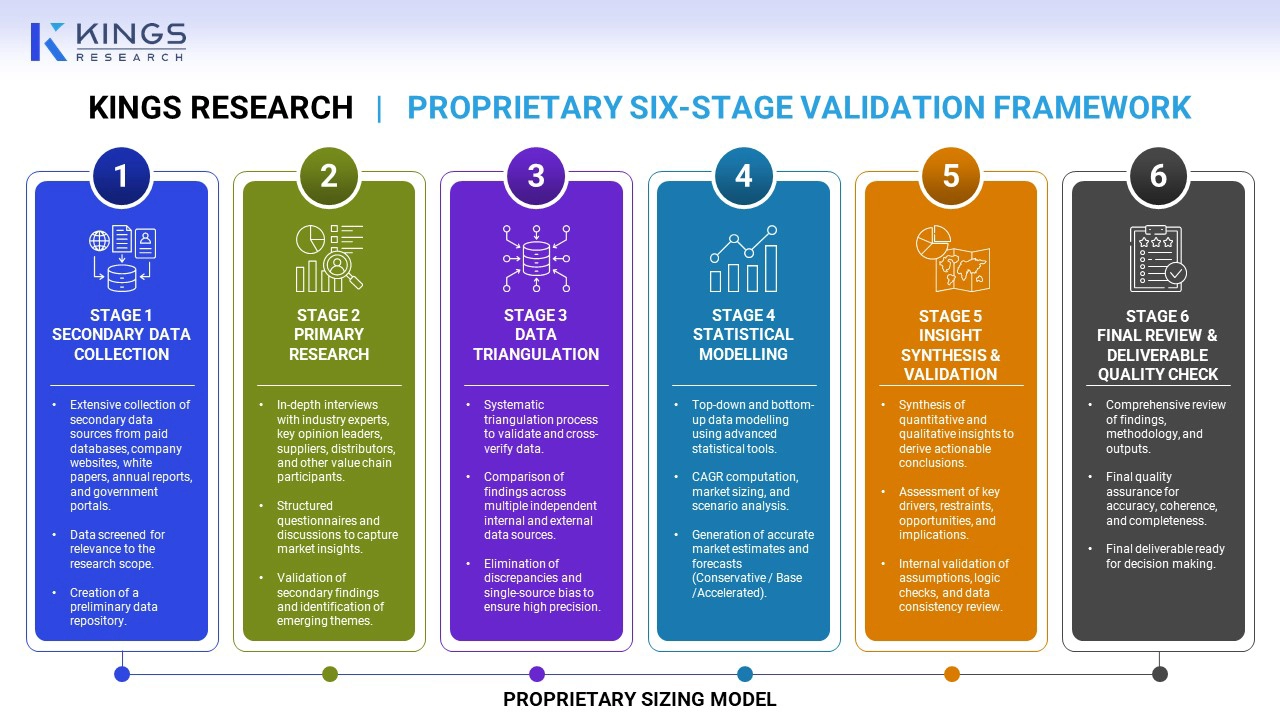
Our methodology triangulates insights from multiple independent and publicly available research databases and is further validated against regulatory filings and public company disclosures. All estimates are cross-verified; no single-source data is presented without validation.
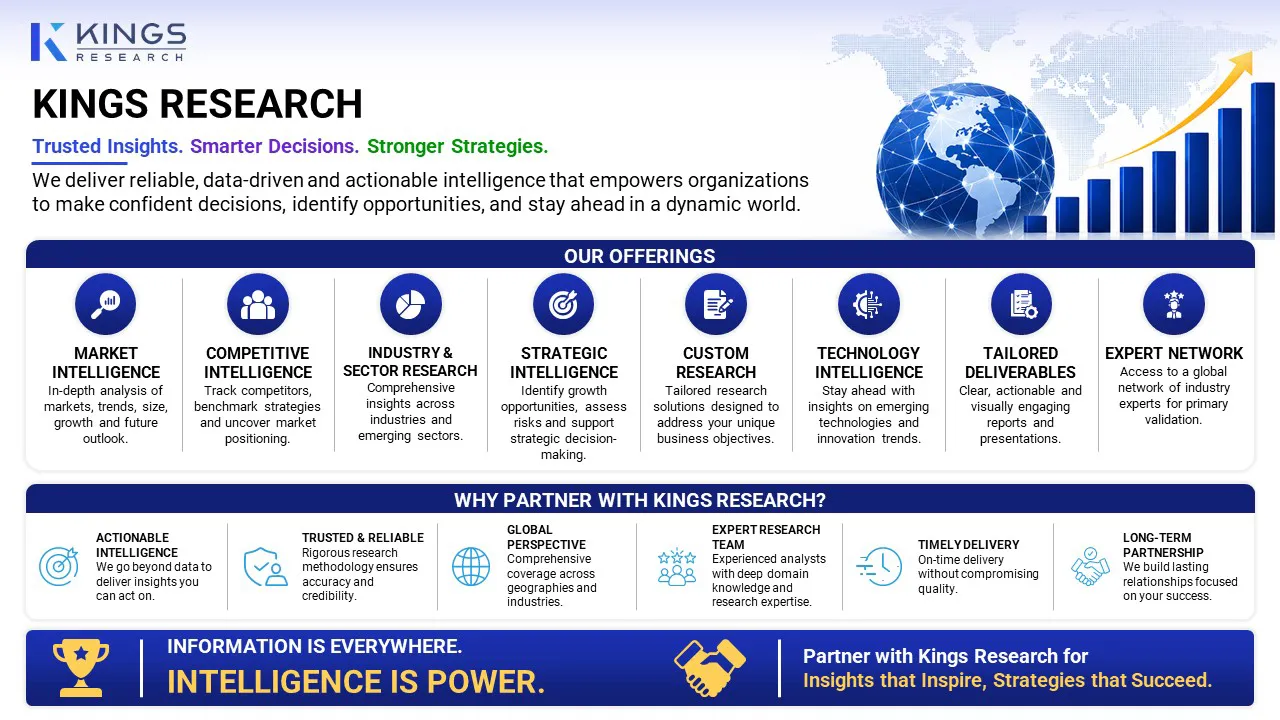
Our custom offerings deliver tailored, data-driven intelligence and strategic guidance to help organizations identify, evaluate, and capitalize on key market opportunities.
Frequently Asked Questions

Faizy brings over four years of experience in market research and consulting, with a proven ability to support strategic engagements across diverse industries and business environments. His work focuses on understanding complex market structures, identifying emerging opportunities, and translating research findings into clear, commercially relevant insights. With strong analytical capabilities and a structured approach to problem-solving, he evaluates industry trends, competitive landscapes, customer dynamics, and evolving business models. His expertise encompasses market research, competitive intelligence, market sizing and forecasting, industry assessment, company benchmarking, and strategic analysis. Faizy combines technical proficiency with a strong research orientation, enabling him to interpret both qualitative and quantitative information effectively. He has contributed to projects that help organizations assess growth potential, strengthen market positioning, and evaluate strategic priorities. His adaptable approach allows him to work across sectors while maintaining a consistent focus on accuracy, relevance, and delivering insights that support informed decision-making for clients and stakeholders.
With many years of consulting experience across global pharma, biotech, and MedTech markets, Minaz brings deep domain expertise, strategic clarity, and analytical rigor to every engagement. She has led 130+ consulting assignments spanning market entry, competitive landscaping, and portfolio prioritization, helping clients navigate complex, high-stakes decisions with confidence. Known for her ability to synthesize primary and secondary research into executive-ready recommendations, Minaz has built forecasting models and market sizing frameworks that have informed multi-million dollar investment decisions in oncology, diagnostics, and peptide therapeutics. Beyond her analytical strength, Minaz is a trusted client partner, translating complex datasets into clear, actionable insights for senior stakeholders. She currently leads a team of research analysts, driving business expansion, and shaping client engagement strategy.