
Inquire Now
Key Strategic Points
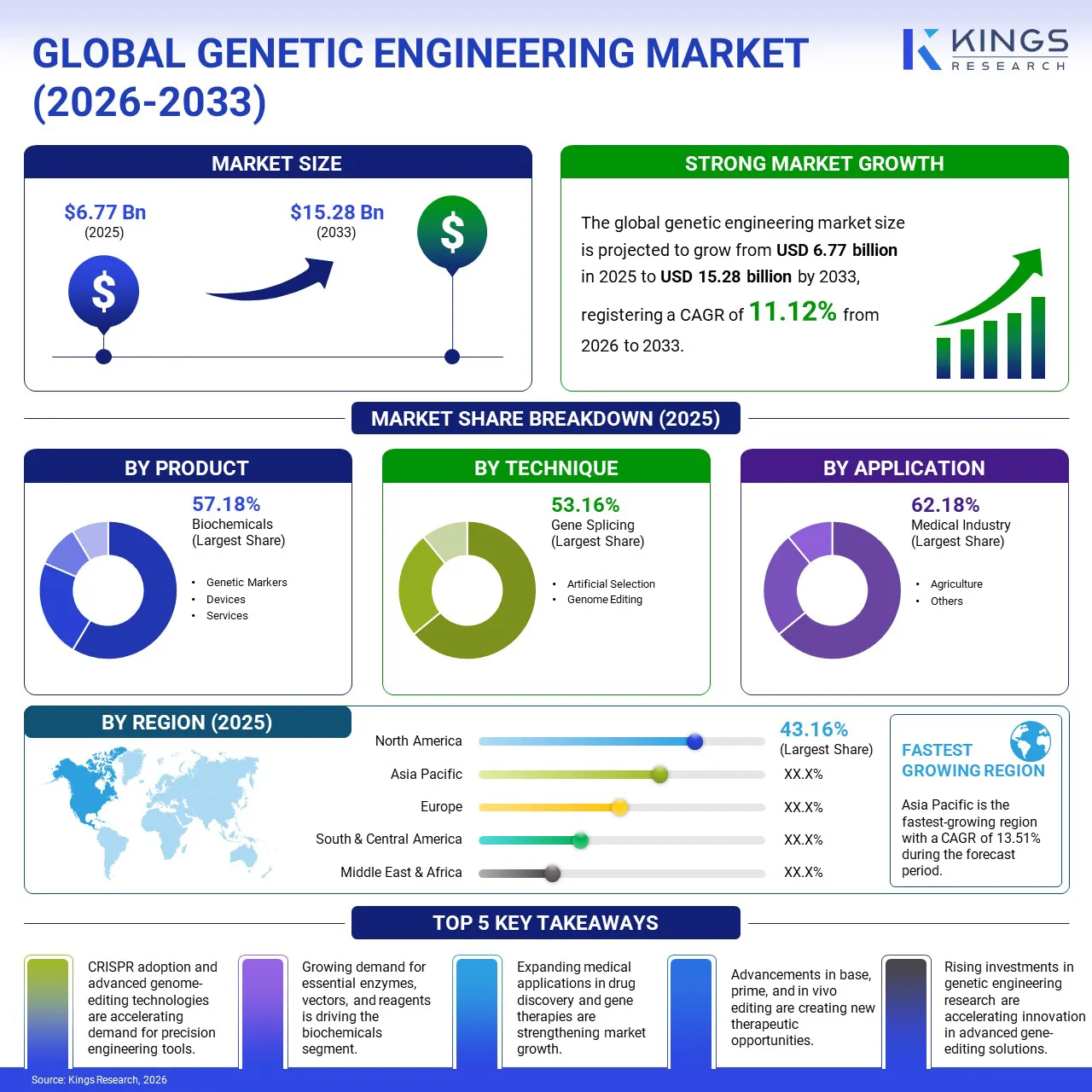
According to Kings Research, the global genetic engineering market size was USD 6.77 billion in 2025 and is projected to grow from USD 7.30 billion in 2026 to USD 15.28 billion by the end of 2033, exhibiting a CAGR of 11.12% during the forecast period (2026-2033).
The market scope encompasses essential products, including biochemicals, genetic markers, devices, and specialized services, designed to modify genetic material. This study evaluates market dynamics across core methodologies, including precision genome editing (CRISPR, TALEN, and ZFN) and gene splicing. Furthermore, the report analyzes commercial adoption across key end-use verticals, primarily the medical industry, agriculture, and industrial biotechnology.
The industry's shift toward precise editing tools such as base and prime editing is transforming the design, testing, and manufacturing of engineered cells and organisms. Tool suppliers are developing integrated offerings combining reagents, gene synthesis, delivery, and manufacturing support to shorten the path from research to clinic.
Market growth is driven by the rising use of CRISPR genome editing in drug discovery and therapy development, increasing demand for enzymes, guide RNAs, synthetic genes, and engineering services. New rules for gene-edited crops in Europe and Asia are creating an additional demand base among plant breeders and agricultural research centers.
Biochemicals form the market's foundation, as genetic engineering workflows rely on essential inputs such as enzymes, vectors, oligonucleotides, gene fragments, and cloning and transfection kits. These consumables generate recurring demand across pharmaceutical companies, academic research institutions, and agricultural breeding organizations, providing the market with a stable and expanding revenue base.
CRISPR (Clustered Regularly Interspaced Short Palindromic Repeats) enables precise gene disruption, modification, and insertion of genetic material for research and therapeutic applications. Its applications extend to epigenetic regulation, disease diagnostics, and targeted treatments for genetic disorders and cancer, supporting advancements in drug discovery and personalized medicine. Pharmaceutical and biotechnology companies increasingly use CRISPR for disease modeling, drug target validation, and cell and gene therapy development, creating demand for associated reagents and services, including guide RNAs, editing enzymes, synthetic DNA, delivery systems, and outsourced genome-editing solutions.
According to the U.S. Food and Drug Administration (FDA), 55 cellular and gene therapy products are approved in the U.S., including CASGEVY (exagamglogene autotemcel), a CRISPR/Cas9 genome-edited cell therapy. This growing portfolio of approved products demonstrates the transition of genetic engineering from research into commercial medicine. Additionally, pharmaceutical companies are investing directly in genome editing to strengthen their genetic medicine pipelines and accelerate the development of one-time treatments for serious diseases.
In July 2025, Eli Lilly and Company completed its acquisition of Verve Therapeutics, Inc., a clinical-stage company developing gene-editing medicines for cardiovascular diseases. The acquisition strengthens Lilly’s genetic medicine portfolio and supports the development of potential one-time treatments aimed at providing long-term cardiovascular risk reduction.
Genetically engineered plants, animals, and therapies must undergo stringent safety assessments and regulatory approval before commercialization. Differences in regulatory frameworks across regions prolong approval timelines for products classified as genetically modified organisms (GMOs), delaying commercialization. Ownership of core gene-editing technologies presents additional intellectual property challenges, as multiple patents cover CRISPR systems and their applications. Developers may need to secure multiple licenses to commercialize a single product, increasing development costs and legal complexities.
These legal complexities and high licensing costs create steep barriers to entry, disproportionately affecting smaller companies and public-sector research programs. Recent regulatory developments underscore the continued impact of these challenges on market adoption and commercialization. In May 2026, the Council of the European Union adopted a revised regulatory framework for new genomic techniques (NGTs), distinguishing between Category 1 plants, which are largely exempt from GMO regulations, and Category 2 plants.
The framework introduces patent transparency measures, although concerns regarding the patentability of genetic traits persist, with implementation expected from mid-2028. Uncertainty surrounding genetic trait patentability and stringent regulatory requirements for Category 2 plants continue to hinder the commercialization of gene-edited crops in parts of Europe.
In vivo genome editing involves delivering gene-editing tools into the body, commonly targeting the liver through lipid nanoparticles (LNPs), to modify target cells. Base editing, a precision-based genome-editing approach, modifies individual DNA nucleotides without introducing double-strand DNA breaks.
Personalized genome-editing therapies developed for individual patients or small patient groups sharing the same genetic mutation offer potential treatment opportunities for thousands of rare genetic disorders that may not be commercially viable for conventional drug development. Each therapy requires customized guide RNAs, messenger RNA (mRNA), and off-target safety assessments, creating demand for specialized genome-editing tools and supporting technologies.
In May 2025, physician-scientists from CHOP (Children's Hospital of Philadelphia) and Penn Medicine, collaborating with partners such as the Innovative Genomics Institute and its research partners, announced the results of developing and administering the first personalized in vivo CRISPR therapy to an infant with a rare genetic disorder within six months. The treatment demonstrated the potential of customized base-editing therapies to address ultra-rare genetic diseases, with early results showing improved symptoms and no serious adverse effects. Additionally, specialized gene-editing tool suppliers are accelerating the development of personalized therapies through rapid manufacturing capabilities.
In May 2025, Danaher Corporation's subsidiaries Aldevron, L.L.C. and Integrated DNA Technologies, Inc. manufactured the mRNA and guide RNA for the world's first personalized CRISPR base-editing therapy in six months, which Aldevron, L.L.C. described as three times faster than the standard timeline for gene-editing drug products. The milestone highlights the role of specialized suppliers in accelerating the development and commercialization of personalized gene-editing therapies.
|
Segmentation |
Details |
|
|
By Product |
Biochemicals, Genetic Markers, Devices (PCR, Gene Gun, Gel Assemblies, and Others), and Services |
|
|
By Technique |
Artificial Selection, Gene Splicing, and Genome Editing |
|
|
By Application |
Agriculture, Medical Industry, and Others |
|
|
By Region |
North America |
U.S., Canada, and Mexico |
|
Europe |
France, UK, Spain, Germany, Italy, Russia, and Rest of Europe |
|
|
Asia Pacific |
China, Japan, India, Australia, ASEAN, South Korea, and Rest of Asia Pacific |
|
|
Middle East & Africa |
Turkey, U.A.E., Saudi Arabia, South Africa, and Rest of Middle East & Africa |
|
|
South & Central America |
Brazil, Argentina, and Rest of South & Central America |
|
The biochemicals segment held the majority share of 57.18% in 2025, driven by the growing use of genetically engineered microorganisms and cells to produce high-value chemicals, enzymes, and other industrial compounds. Their ability to support the cost-effective and sustainable manufacturing of complex products while reducing dependence on conventional chemical synthesis supports their widespread adoption.
The genome editing (CRISPR, TALEN, ZFN) segment is expected to register a CAGR of 14.06% over the forecast period. This growth is mainly attributed to the operational simplicity and cost-efficiency of platforms such as CRISPR compared to conventional transgenic approaches. Precise modifications that replicate naturally occurring traits reduce technical barriers and expand commercial viability. Applications across high-value end-use verticals, including human therapeutics, vector-borne disease control, and agricultural biotechnology, are expected to further fuel segmental growth.
The medical industry segment held the largest share of 62.18% in 2025, supported by the widespread use of genetic engineering in drug discovery, disease modeling, biologics production, and cell and gene therapy development. The technology enables the production of therapeutic proteins, monoclonal antibodies, and insulin while improving drug yield, purity, and manufacturing efficiency. Its growing role in personalized medicine, targeted cancer therapies, and treatments for emerging infectious diseases further drives adoption across pharmaceutical and healthcare applications.
In November 2026, researchers at the University of Cambridge and its spin-out DIOSynVax Ltd. developed an AI-guided technique to engineer super-antigens from global viral genetic sequences for a broad-spectrum bird flu vaccine. In animal trials, the vaccine provided complete protection against diverse bird flu variants, outperforming existing government-stockpiled vaccines, which protected approximately 50% of animals. The genomic design platform aims to support the development of broadly protective vaccines against emerging viral threats.
The global genetic engineering market is segmented into North America, Europe, Asia Pacific, Middle East & Africa, and South & Central America.
North America
North America held the largest share of 43.16% in 2025. The U.S. leads the region with the largest concentration of biotechnology companies, academic research centers, and suppliers of reagents, gene synthesis, and editing services. Strong public research funding and venture investment support a steady base of genetic engineering projects.
The country benefits from well-established research institutions, skilled scientific talent, strong public- and private-sector funding, and a favorable innovation environment that accelerates commercialization. Its leadership in biopharmaceutical development, gene editing, agricultural biotechnology, and AI-driven biological research strengthens its competitive position. The U.S. is also at the forefront of clinical genome editing, with regulators creating new pathways for therapies tailored to individual patients. Canada and Mexico contribute to regional demand through academic research, agricultural biotechnology, and growing biomanufacturing activity.
Growing clinical adoption of personalized gene-editing approaches is strengthening U.S. healthcare institutions' role in advancing precision medicine. In February 2026, Children's Hospital of Philadelphia (CHOP) reported clinical progress in the world's first personalized CRISPR-based gene therapy recipient, with the infant demonstrating improved health outcomes and no serious treatment-related side effects. Building on this success, CHOP and Penn Medicine are designing umbrella clinical trials that extend beyond single-patient treatments.
Asia Pacific
The Asia Pacific genetic engineering market is expected to register the highest CAGR of 13.51% over the forecast period. Rising public investment in biotechnology across China, Japan, India, and South Korea, coupled with regulatory frameworks that distinguish certain gene-edited crops from conventional GMOs, is supporting this growth. Additionally, the expanding network of gene synthesis companies and research reagent suppliers is strengthening the region’s capacity to meet domestic and international demand.
Large agricultural sectors in China and India are boosting the adoption of gene-edited crops with improved yield potential and greater tolerance to environmental stresses, including drought and soil salinity. These initiatives are generating demand for gene-editing tools, genetic markers, and advanced breeding services across the region.
In May 2025, the Indian Council of Agricultural Research (ICAR) developed India’s first two genome-edited rice varieties, DRR Rice 100 (Kamla) and Pusa DST Rice 1, using CRISPR-Cas technology. These varieties exhibit the potential to increase yields by up to 19%, enhance climate resilience, reduce water consumption, lower greenhouse gas emissions by 20%, and save approximately 7,500 million cubic meters of irrigation water. This development marks a significant step toward integrating genome-editing technology into national crop improvement programs.
Europe, Middle East & Africa, and South & Central America
Germany, France, and the UK lead demand for genetic engineering across Europe, supported by an established pharmaceutical research ecosystem, reagent manufacturers, and academic and institutional research bases. The evolving regulatory landscape for gene-edited plants is expected to create growth opportunities, particularly for seed companies and plant breeding programs, supporting the adoption of genome-editing technologies and associated reagents.
In June 2026, Euroseeds welcomed the EU's final adoption of the Regulation on New Genomic Techniques, marking a milestone for plant breeding in Europe. The regulation is expected to encourage breeders to invest in genome editing to develop climate-resilient and higher-quality crop varieties. Countries such as Saudi Arabia, the U.A.E., and South Africa in the Middle East & Africa are strengthening investments in genomics research infrastructure, national genome initiatives, and agricultural biotechnology to address food security and advance precision medicine. Expanding academic research capabilities and international collaborations are expected to support the gradual adoption of genetic engineering technologies across the region.
In September 2026, Saudi Arabia outlined targets to strengthen its biotechnology ecosystem through strategic investments, research collaborations, and workforce development initiatives. The 2026 Riyadh Global Medical Biotechnology Summit reported over 40 agreements and initiatives valued at more than SAR 5 billion (USD 1.33 billion). Key developments include genomics research partnerships, vaccine manufacturing expansion, clinical research capabilities, and cell and gene therapy training programs. These initiatives are anticipated to accelerate the Kingdom's life sciences sector and support its National Biotechnology Strategy target of contributing USD 34.6 billion to non-oil GDP by 2040.
Brazil and Argentina lead demand in South & Central America, supported by established agricultural biotechnology industries and regulatory frameworks that fuel demand for genetically modified seeds.
Chile is emerging as a key hub for genetically modified and gene-edited seed development. Its counter-seasonal climate allows seed companies to multiply and field-test northern hemisphere varieties during their off-season, and its regulatory framework permits genetically engineered seeds to be multiplied for re-export and grown in controlled research trials. Gene-editing research in the country is also gaining ground. In July 2025, Chile's Agricultural and Livestock Service (SAG) authorized NeoCrop Technologies to begin experimental cultivation of a gene-edited, high-fiber wheat variety, while the University of Chile and AquaChile are using CRISPR/Cas9 to study disease resistance in coho salmon.
According to ChileBIO CropLife, Chile has exported more than USD 2.39 billion worth of biotech seeds over the past two decades, and all genetically modified corn, soybean, and canola sold commercially have passed through the country for field research or seed multiplication. This established seed export base, combined with growing gene-editing research, is expected to create opportunities for suppliers of genetic engineering tools and services in South & Central America.
The genetic engineering market is moderately consolidated, with large life science tool companies competing alongside specialist providers of gene synthesis, electroporation systems, editing reagents, and contract engineering services. Competition centers on product quality and accuracy, turnaround time, regulated clinical work, workflow integration from design to manufacturing, and pricing for high-volume customers. Market participants are strengthening their capabilities through strategic acquisitions, partnerships, product launches, and technology investments.
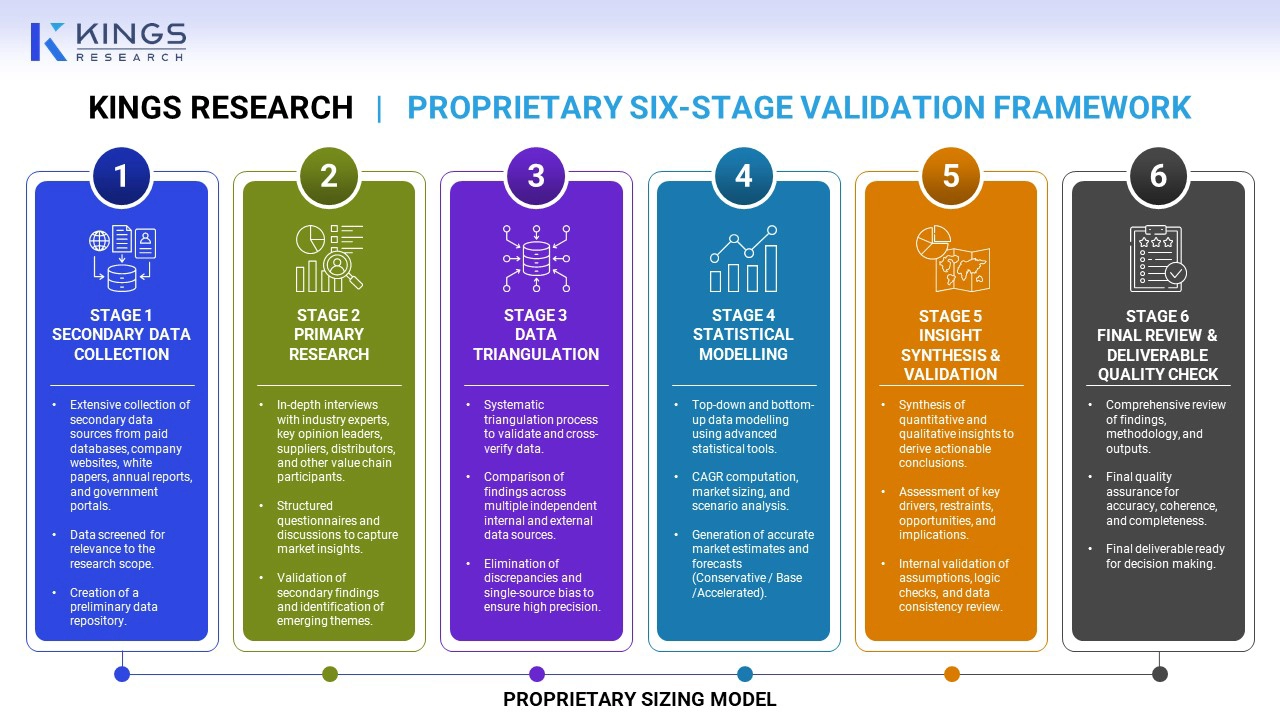
Our methodology triangulates insights from multiple independent and publicly available research databases, validated against regulatory filings and public corporate disclosures. All estimates are cross-verified; no single-source data is published without rigorous validation.
 Custom Offerings
We deliver tailored, data-driven intelligence and strategic guidance to help organizations identify, evaluate, and capitalize on core market opportunities.
Frequently Asked Questions

Faizy brings over four years of experience in market research and consulting, with a proven ability to support strategic engagements across diverse industries and business environments. His work focuses on understanding complex market structures, identifying emerging opportunities, and translating research findings into clear, commercially relevant insights. With strong analytical capabilities and a structured approach to problem-solving, he evaluates industry trends, competitive landscapes, customer dynamics, and evolving business models. His expertise encompasses market research, competitive intelligence, market sizing and forecasting, industry assessment, company benchmarking, and strategic analysis. Faizy combines technical proficiency with a strong research orientation, enabling him to interpret both qualitative and quantitative information effectively. He has contributed to projects that help organizations assess growth potential, strengthen market positioning, and evaluate strategic priorities. His adaptable approach allows him to work across sectors while maintaining a consistent focus on accuracy, relevance, and delivering insights that support informed decision-making for clients and stakeholders.
With many years of consulting experience across global pharma, biotech, and MedTech markets, Minaz brings deep domain expertise, strategic clarity, and analytical rigor to every engagement. She has led 130+ consulting assignments spanning market entry, competitive landscaping, and portfolio prioritization, helping clients navigate complex, high-stakes decisions with confidence. Known for her ability to synthesize primary and secondary research into executive-ready recommendations, Minaz has built forecasting models and market sizing frameworks that have informed multi-million dollar investment decisions in oncology, diagnostics, and peptide therapeutics. Beyond her analytical strength, Minaz is a trusted client partner, translating complex datasets into clear, actionable insights for senior stakeholders. She currently leads a team of research analysts, driving business expansion, and shaping client engagement strategy.