
Inquire Now
Key Strategic Points
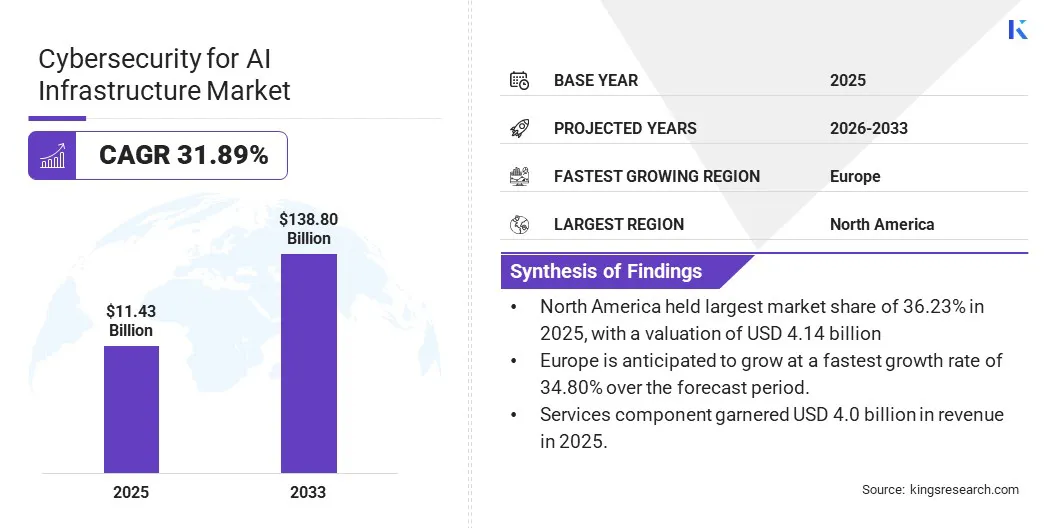
According to Kings Research, the global cybersecurity for AI infrastructure market size was valued at USD 11.43 billion in 2025 and is projected to reach USD 138.76 billion by 2033, growing at a CAGR of 37.21% from 2026 to 2033. The market is being driven by the rapid adoption of AI across enterprises, increasing exposure of AI models and data pipelines to cyber threats, and the growing need to secure AI applications, infrastructure, and runtime environments.
Additionally, stringent regulatory frameworks like GDPR, NIS2, and emerging AI‑specific standards are compelling market players to invest in specialized AI security solutions that ensure compliance and protect sensitive infrastructure data.
Major companies operating in the global cybersecurity for AI infrastructure industry are CrowdStrike, Inc., Palo Alto Networks Inc., Bitdefender, IBM Corporation, Cisco Systems, Inc., Fortinet, Inc., Check Point Software Technologies Ltd., SentinelOne, Darktrace Holding Limited, Wiz, Inc., Vectra AI, Inc., Cyera, Abnormal AI, Inc., Proofpoint, and Nozomi Networks Inc.
Market players are moving beyond traditional perimeter-based defenses, actively innovating AI-native, agentic security platforms that autonomously detect and investigate potential cyber threats. Leading vendors are converging observability and security into unified platforms, deploying tools such as AI Security Posture Management (AI-SPM) and Data Security Posture Management (DSPM) to address critical visibility gaps across cloud-native AI infrastructure.
The rise in cyberattacks specifically targeting AI infrastructure has emerged as a primary catalyst driving investments in AI-focused cybersecurity solutions. The widespread inclusion of artificial intelligence in critical operations across diverse end-use sectors makes them vulnerable to cyberattacks carried out on machine learning pipelines, agentic AI models, and autonomous execution environments.
Adversarial manipulation of AI agents, model poisoning, and data exfiltration targeting AI systems expose enterprises to unprecedented operational and reputational risks, compelling them to adopt purpose-built security frameworks that extend well beyond conventional IT defenses.
Companies are evolving defensive tools to handle cyber threats and safeguard critical infrastructure systems. The process involves the integration of operational technology and industrial control systems to enhance real-time threat detection and enable counter-responses. AI-driven, edge-based security solutions aid in maintaining operational performance and uptime while strengthening security across different end-use sectors.
Large Language Models (LLMs) deployed within organizations rely on vast amounts of training data, including sensitive enterprise information, which creates significant risks related to data privacy. The ability of LLMs to unintentionally reproduce parts of their training data can lead to the exposure of confidential data and make them vulnerable to threats such as data interception and poisoning attacks.
Such processes can result in the manipulation of model behavior and model exfiltration, where attackers steal model weights and replicate or exploit the system. The growth in the AI user base is further increasing the complexity of handling sensitive data, managing attacks, thereby making the security of AI infrastructure a complex challenge.
To address this challenge, market players are developing AI-native cybersecurity solutions, including LLM firewalls, real-time threat detection systems, and comprehensive AI security platforms. These approaches enable organizations to focus on securing models, data, and applications through continuous monitoring, vulnerability scanning, and protection against threats like prompt injection, data leakage, and model exfiltration.
Innovations such as the adoption of agentic AI are revolutionizing cybersecurity by deploying autonomous, multi-agent systems that autonomously detect and mitigate threats within Security Operations Centers (SOCs). AI agents analyze vast threat intelligence datasets and reduce false positives via contextual insights from specialized models. The integration of agents in cybersecurity enables faster mitigation of emerging threats while adapting personalized protocols to specific vulnerabilities.
These innovations support proactive defenses such as dynamic access management aligned with zero-trust principles, continuous anomaly monitoring for insider threats, and automated vulnerability remediation throughout the software development lifecycle, thus fueling growth opportunities.
|
Segmentation |
Details |
|
By Component |
Hardware, Software, Services |
|
By Security Type |
Network Security, Endpoint Security, Cloud Security, Application Security, Others |
|
By Organization Size |
Large Enterprises, Small and Medium Enterprises (SMEs) |
|
By Deployment Mode |
Cloud-based, On-Premises |
|
By End-User Industry |
Banking, Financial Services, and Insurance (BFSI), Government & Defense, Healthcare, Industrial, IT & Telecommunications, Others |
|
By Region |
North America: U.S., Canada, Mexico |
|
Europe: France, UK, Spain, Germany, Italy, Russia, Rest of Europe |
|
|
Asia-Pacific: China, Japan, India, Australia, ASEAN, South Korea, Rest of Asia-Pacific |
|
|
Middle East & Africa: Turkey, U.A.E., Saudi Arabia, South Africa, Rest of Middle East & Africa |
|
|
South & Central America: Brazil, Argentina, Rest of South & Central America |
The market is segmented into Hardware, Software, and Services. According to Kings Research, the hardware segment held the largest share in 2025, generating USD 2.51 billion in revenue. Hardware solutions support secure AI infrastructure through security appliances, computing devices, GPUs, industrial systems, and other infrastructure components.
The software segment is gaining importance as enterprises require scalable tools for vulnerability scanning, threat detection, AI model protection, and continuous monitoring across increasingly complex AI environments.
The market is classified into Network Security, Endpoint Security, Cloud Security, Application Security, and Others. Network security is projected to register the fastest CAGR of 39.51% during the forecast period. The increasing connectivity of AI systems, cloud environments, APIs, and enterprise networks is expanding the attack surface and creating demand for advanced network monitoring and threat-detection solutions.
The market is segmented into Large Enterprises and Small and Medium Enterprises (SMEs). Large enterprises represent a major portion of demand due to their extensive AI infrastructure, large volumes of sensitive data, and complex security requirements. The large enterprises segment is projected to reach USD 72.47 billion by 2033.
SMEs are also increasingly adopting scalable cybersecurity solutions as cloud-based AI infrastructure lowers implementation barriers and enables smaller organizations to deploy advanced security capabilities without extensive on-premises investments.
The market is divided into Cloud-based and On-Premises deployment. The cloud-based segment accounted for 52.07% of the market in 2025. Cloud deployment enables organizations to scale cybersecurity infrastructure, access security tools remotely, integrate AI workloads, and respond to threats across distributed environments.
On-premises deployment continues to serve organizations requiring greater control over sensitive AI workloads, data, and security infrastructure, particularly in regulated and mission-critical environments.
The market is segmented into Banking, Financial Services, and Insurance (BFSI), Government & Defense, Healthcare, Industrial, IT & Telecommunications, and Others. The BFSI segment held the largest share in 2025, supported by the extensive use of AI for fraud detection, risk assessment, automated decision-making, and real-time transaction processing. The segment is projected to grow at a CAGR of 42.03% and reach USD 35.61 billion by 2033.
Healthcare, government and defense, industrial, and IT & telecommunications organizations are also increasing investments in AI cybersecurity as sensitive data and mission-critical AI applications become increasingly exposed to cyber threats.
Based on region, the cybersecurity for AI infrastructure market has been classified into North America, Europe, Asia-Pacific, Middle East & Africa, and South & Central America.
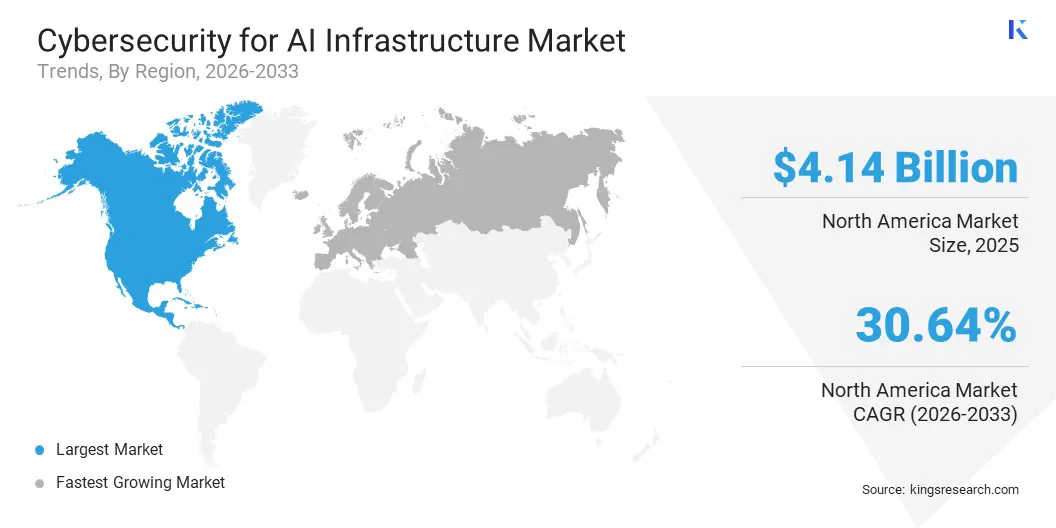 North America accounted for a substantial market share of 36.23% in 2025, valued at USD 4.14 billion. This high share is attributable to the U.S.’s position as a global leader in AI-driven cybersecurity, along with the high volume of financial transactions, which gives rise to a critical cyber threat environment. The interconnected economy in the region, which spans power grids, manufacturing end-use verticals, and supply chain operations, fuels the demand for cyber-resilient infrastructure.
Market players in the region are developing advanced solutions comprising AI-powered security platforms and cloud-native AI assistants to manage high volumes of attacks such as ransomware and web compromises. The U.S. accounts for the largest share in North America, propelled by its advanced technological capabilities, significant investments in cybersecurity infrastructure, and a high concentration of leading tech firms developing AI-driven security solutions.
The Europe market is anticipated to register the fastest growth, with a projected CAGR of 40.68% over the forecast period. This rapid growth is fueled by strategic investments under the European Defense Fund (EDF) 2025. This program funds cutting-edge research in AI-powered threat detection, autonomous cybersecurity solutions, and post-quantum cryptography.
The dual-use nature of these technologies strengthens cyber resilience across critical infrastructure, including energy grids, healthcare networks, banking systems, and transportation. Additionally, the rise in cyberattacks, sophisticated ransomware, and state-sponsored threats accelerates the demand for AI-driven security solutions, thereby positioning Europe as a cyber-secure ecosystem for AI infrastructure.
Asia-Pacific represents a significant growth opportunity due to rapid AI adoption, expanding cloud infrastructure, digital transformation, and increasing cybersecurity requirements across China, Japan, India, South Korea, and other economies. Middle East & Africa is supported by increasing digitalization, cloud adoption, critical-infrastructure modernization, and government investments in cybersecurity and AI technologies. South & Central America is witnessing increasing demand for AI cybersecurity as financial institutions, enterprises, and government organizations expand digital infrastructure and adopt AI-based applications.
Key players operating in the cybersecurity for AI infrastructure market are strengthening their capabilities through strategic mergers and acquisitions in order to capture a significant market share. Large technology firms and cybersecurity providers are acquiring niche AI security startups to enhance expertise in areas such as threat detection, data protection, and model security. This move further contributed to the rising complexity of AI ecosystems and the need for end-to-end security solutions.
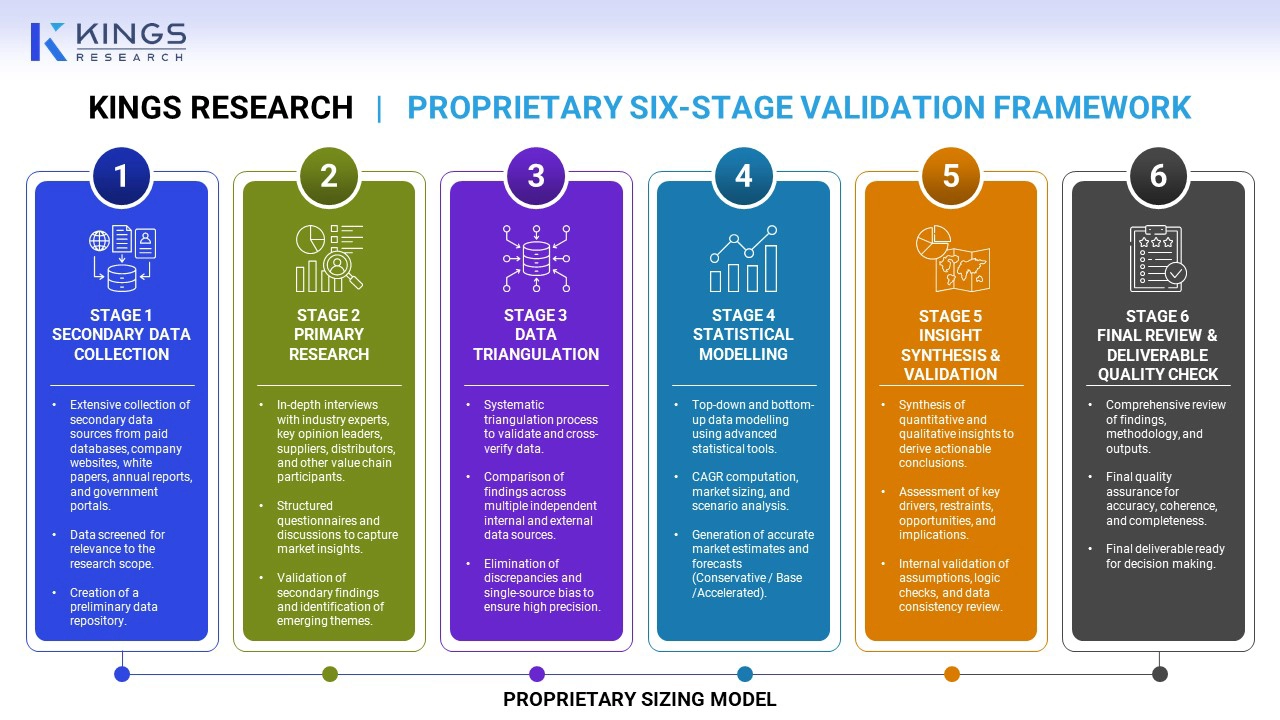
How We Gather This Information
Our methodology triangulates insights from multiple independent and publicly available research databases and is further validated against regulatory filings and public company disclosures. All estimates are cross-verified; no single-source data is presented without validation.
Our custom offerings deliver tailored, data-driven intelligence and strategic guidance to help organizations identify, evaluate, and capitalize on key market opportunities.
Frequently Asked Questions

Faizy brings over four years of experience in market research and consulting, with a proven ability to support strategic engagements across diverse industries and business environments. His work focuses on understanding complex market structures, identifying emerging opportunities, and translating research findings into clear, commercially relevant insights. With strong analytical capabilities and a structured approach to problem-solving, he evaluates industry trends, competitive landscapes, customer dynamics, and evolving business models. His expertise encompasses market research, competitive intelligence, market sizing and forecasting, industry assessment, company benchmarking, and strategic analysis. Faizy combines technical proficiency with a strong research orientation, enabling him to interpret both qualitative and quantitative information effectively. He has contributed to projects that help organizations assess growth potential, strengthen market positioning, and evaluate strategic priorities. His adaptable approach allows him to work across sectors while maintaining a consistent focus on accuracy, relevance, and delivering insights that support informed decision-making for clients and stakeholders.
Habi is a seasoned research and consulting leader with renowned experience in guiding clients on strategic growth and transformation initiatives across global markets. He has led high-performing research teams that deliver actionable insights on market expansion, M&A strategies, opportunity assessment, new business development, and product launches. His project portfolio spans large petrochemical producers, electronic device manufacturers, lubricants companies, and other leading enterprises across diverse industrial and consumer sectors. He currently heads the research department at Kings Research, where he is responsible for setting the research agenda, mentoring analysts, and ensuring client-ready deliverables that support executive decision-making. With extensive experience in market intelligence, strategic research, and consulting, Habi brings a strong understanding of evolving industry dynamics, competitive landscapes, emerging opportunities, and business growth challenges. His expertise includes developing research frameworks, translating complex market data into actionable strategic recommendations, and working closely with senior stakeholders to address critical business questions. He has also contributed to building research capabilities, strengthening analytical methodologies, and driving a culture of quality and insight-led decision-making within research teams. His cross-industry exposure enables him to connect market trends with broader business implications and provide perspectives that help organizations identify opportunities, mitigate risks, and make informed strategic decisions.