
Inquire Now
Key strategic points
According to Kings Research, the global composites market size was valued at USD 45.76 billion in 2025 and is projected to grow from USD 47.53 billion in 2026 to USD 63.64 billion by 2033, registering a CAGR of 4.26% during the forecast period. The market growth is primarily supported by increasing demand for lightweight and durable materials across aerospace, automotive, wind energy, construction, and other industries where performance, fuel efficiency, durability, and emission reduction are key priorities.
The market encompasses the production, distribution, and application of composite materials engineered from two or more constituent materials with different physical or chemical properties. These materials offer advantages such as high strength-to-weight ratios, corrosion resistance, durability, and design flexibility. The composites ecosystem includes raw material suppliers, manufacturers, distributors, and end users across aerospace, automotive, construction, wind energy, marine, electronics, and other industries.
Major companies operating in the global composites industryare TORAY INTERNATIONAL, INC., Solvay, Owens Corning, Hexcel Corporation, TEIJIN LIMITED, SGL Carbon, Mitsubishi Chemical Group of companies, China Jushi Co., Ltd., Saint-Gobain, BASF, TPI Composites, Inc., Gurit Services AG, Avient Corporation, and Nippon Electric Glass Co., Ltd., among others.
In addition to traditional composite formulations, market players are actively innovating with advanced manufacturing techniques, such as automated fiber placement, 3D printing, and smart composites that incorporate sensors for real-time performance monitoring. Leading vendors are widening their offerings to include custom solutions for specific end-use applications, with a drive toward product differentiation and advanced capabilities that meet changing market needs.
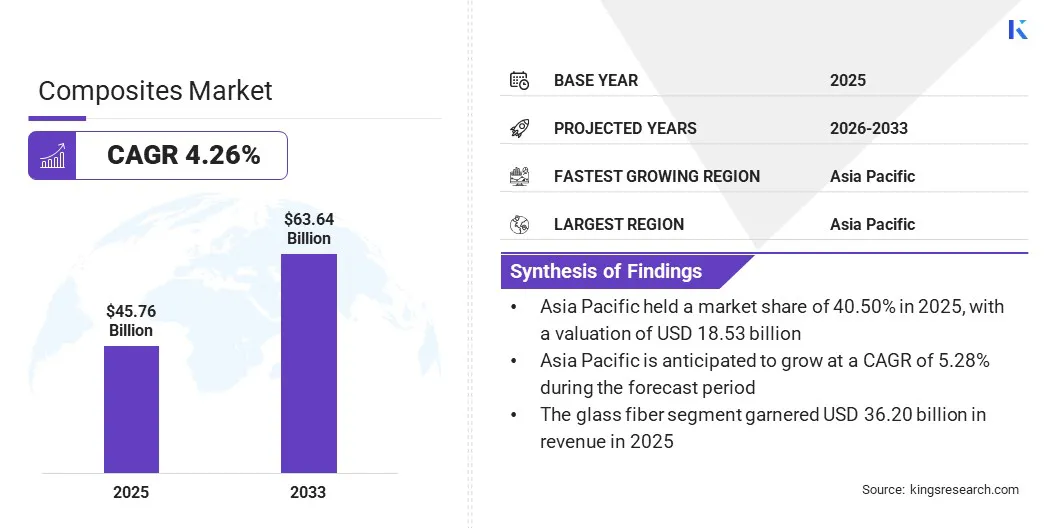
The automotive, aerospace, and wind energy industries are increasingly demanding materials that are significantly lighter and offer superior strength, which composites can deliver more effectively than traditional materials such as metal or wood.
Such a transition enables manufacturers to achieve improved fuel economy, lower emissions, and adhere to strict regulatory mandates. The market is anticipated to grow at a rapid pace, driven by the growing preference for advanced composite materials, as global trends continue to emphasize sustainability and operational efficiency.
One of the major challenges impeding market progress is the recycling and disposal of composite materials. This issue is especially significant in the carbon fiber composite industry, where conventional carbon fiber-reinforced materials are difficult to recycle and reuse because of their complex structure and chemical composition. With the increase in the use of composites in various industrial sectors, concerns about landfill waste and the environment are also on the rise.
Regulatory pressure and growing consumer awareness are fueling the need for sustainable end-of-life solutions. Companies are investing in research to develop recyclable resins and bio-based composites. Furthermore, new recycling techniques such as mechanical grinding and chemical recovery are being explored to make composite waste management more efficient and environmentally friendly.
The growing adoption and utilization of sustainable and recyclable composites are emerging as major market trends. With increasing environmental concerns and regulations, industries are transitioning to environmentally friendly materials that help reduce waste and support circular economy principles. The use of bio-based resins, natural fibers, and innovative manufacturing processes is increasing for the production of recyclable and environmentally friendly composites.
Corporate sustainability goals and rising consumer demand are boosting the adoption of sustainable composites across the automotive, construction, and consumer goods sectors. Continued R&D to create scalable solutions is expected to present new market opportunities and increase the adoption of sustainable composites.
|
Segmentation |
Details |
|
By Fiber Type |
Glass Fiber, Carbon Fiber, Natural Fiber, and Others |
|
By Process |
Injection Molding, Lay-Up, Filament Winding, Compression Molding, Pultrusion, RTM, and Others |
|
By Resin Type |
Thermoset Composites and Thermoplastic Composites |
|
By End-Use Industry |
Automotive & Transportation, Construction & Infrastructure, Wind Energy, Electrical & Electronics, Aerospace & Defense, Sporting and Consumer Goods, Oil and Gas, Marine, and Others |
|
By Region |
North America: U.S., Canada, Mexico |
|
Europe: France, UK, Spain, Germany, Italy, Russia, Rest of Europe |
|
|
Asia-Pacific: China, Japan, India, Australia, ASEAN, South Korea, Rest of Asia-Pacific |
|
|
Middle East & Africa: Turkey, U.A.E., Saudi Arabia, South Africa, Rest of Middle East & Africa |
|
|
South and Central America: Brazil, Argentina, and the rest of South and Central America |
Based on fiber type, the market is classified into glass fiber, carbon fiber, natural fiber, and others. The glass fiber segment captured the largest market share in 2025, supported by strong demand for lightweight reinforcement across industrial applications.
Glass fiber offers corrosion resistance, ease of processing, electrical insulation properties, and cost advantages compared with several alternative reinforcement materials. These characteristics make it suitable for electrical components, marine products, sports equipment, construction applications, automotive components, and other industrial products. According to Kings Research, the glass fiber segment generated USD 36.20 billion in revenue in 2025.
Based on process, the market is classified into injection molding, lay-up, filament winding, compression molding, pultrusion, RTM, and others. The injection molding segment held the largest market share in 2025.
The process enables manufacturers to produce complex composite components efficiently, consistently, and at relatively low costs in high production volumes. It is particularly suitable for automotive and consumer goods applications where manufacturers require shorter production lead times, consistent product quality, and efficient material utilization.
Based on resin type, the market is divided into thermoset composites and thermoplastic composites. Thermoset composites account for a significant portion of the market due to their structural integrity, chemical resistance, and thermal stability.
These characteristics make thermoset composites suitable for aircraft, marine, wind energy, and other applications where durability and resistance to harsh operating conditions are important. The segment is projected to reach USD 35.53 billion by 2033.
At the same time, thermoplastic composites are expected to register the fastest growth during the forecast period, supported by their recyclability, processing flexibility, and increasing use in lightweight mobility and aerospace applications.
Based on end-use industry, the market is classified into automotive & transportation, construction & infrastructure, wind energy, electrical & electronics, aerospace & defense, sporting and consumer goods, oil and gas, marine, and others.
The aerospace & defense segment is expected to register a CAGR of 6.97% during the forecast period. Growth is supported by increasing use of advanced composites in aircraft and defense systems where lightweight construction, fuel efficiency, structural performance, and stringent safety requirements are important.
The use of composite materials in aircraft structures, defense components, unmanned systems, and other high-performance applications is supporting increased adoption across the aerospace and defense industry.
Based on region, the global composites market has been classified into North America, Europe, Asia Pacific, Middle East & Africa, and South & Central America.
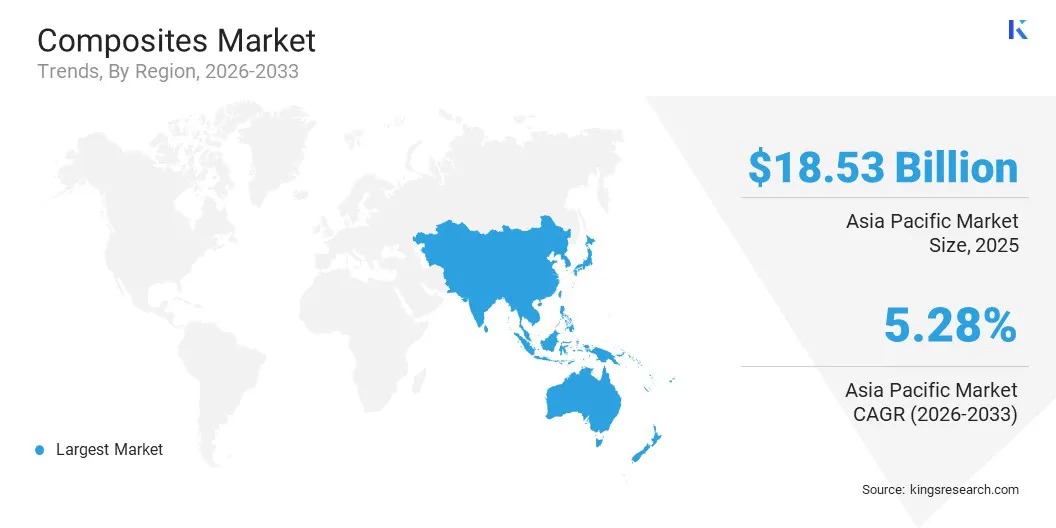
Asia Pacific composites market share stood at 40.50% in 2025, with a valuation of USD 18.53 billion. This dominance is reinforced by the robust growth of its industrial sector, urbanization, and demand from key industries such as automotive, construction, and wind energy. Increasing investments in large-scale projects and a focus on lightweight, high-performance solutions have substantially propelled the demand for composites.
The presence of a strong manufacturing ecosystem and constant advancements in production technologies further support regional market growth. As industries in the region continue to emphasize innovation and efficiency, the region is expected to witness significant growth in the foreseeable future.
The Middle East & Africa composites market will grow at a CAGR of 4.50% over the forecast period. Increasing infrastructure modernization, expanding construction activities, and a rising focus on diversifying industrial sectors are driving this growth. The growth of composites in oil & gas, automotive, and water management applications is driven by their lightweight, corrosion-resistant properties and durability.
Moreover, the adoption of composite solutions in renewable energy projects, especially wind and solar, is further adding to market growth. Strategic partnerships and investments in local manufacturing are enhancing technological capabilities, while educational initiatives and training programs are building expertise in advanced materials, contributing significantly to regional market growth.
North America’s strong aerospace, automotive, and wind-energy manufacturing supports increasing use of composites in lightweight and high-performance applications. Europe benefits from established aerospace, automotive, energy, and mobility industries, alongside initiatives promoting recyclable and bio-based advanced materials. South & Central America is witnessing growth through expanding industrial, transportation, construction, and renewable-energy applications, with Brazil serving as a key regional manufacturing market. Overall, lightweighting, renewable-energy deployment, advanced manufacturing, and sustainability requirements drive regional demand.
The composites market features established global players and new regional manufacturers. Competition among the major companies centers on innovation, product quality, and the ability to deliver cost-effective, high-performance solutions for various end-use industries such as aerospace, automotive, and wind energy. Strategic partnerships, mergers, and acquisitions are common as companies seek to enhance their product offerings and global footprint.
In addition, continuous investment in research and development is important to stay ahead of the competition, particularly with the growing demand for sustainable and recyclable composites. Customer preferences continue to change, and technology is constantly evolving, which keeps the market dynamic and competitive.
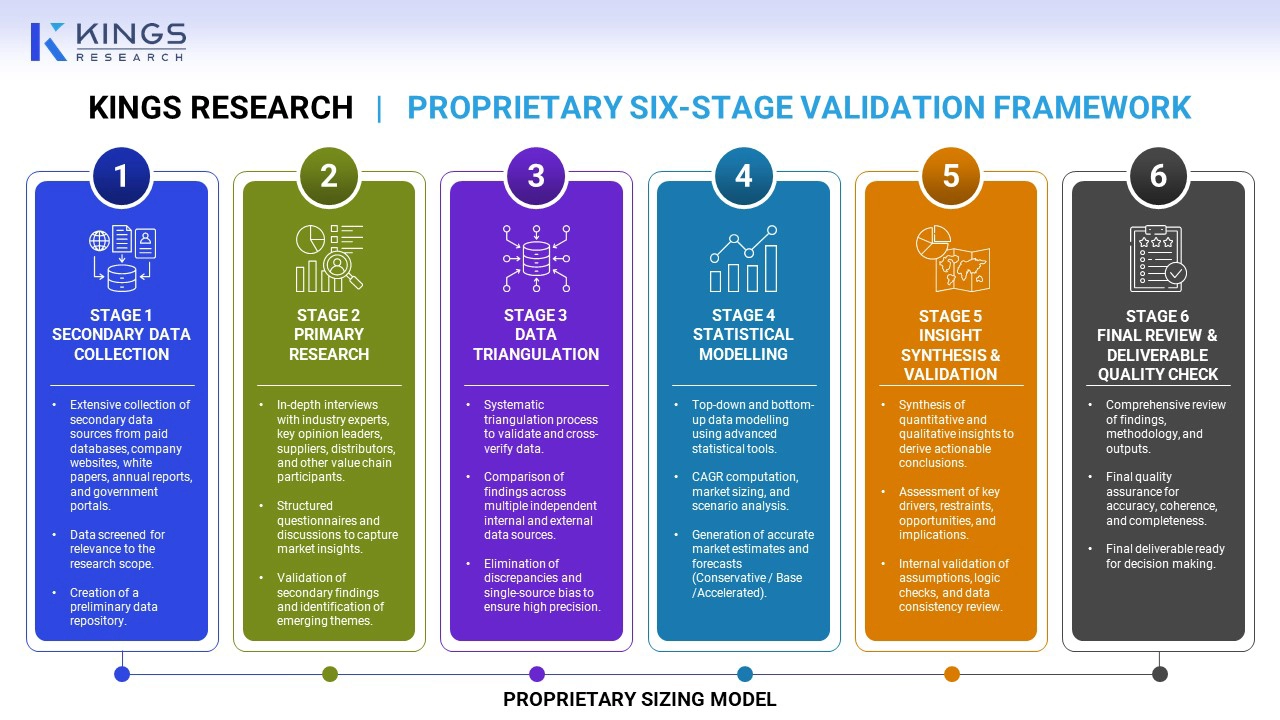
Our methodology triangulates insights from multiple independent and publicly available research databases and is further validated against regulatory filings and public company disclosures. All estimates are cross-verified; no single-source data is presented without validation.
Our custom offerings deliver tailored, data-driven intelligence and strategic guidance to help organizations identify, evaluate, and capitalize on key market opportunities.
Frequently Asked Questions

Aswathi holds cross-domain expertise, translating market trends and competitive intelligence into decision-ready insights. Her work helps clients interpret evolving market conditions and identify growth opportunities. She brings a focused, insight-led approach to research execution. She translates these findings into clear, prioritized action plans that align with client capabilities. Her research often includes scenario modeling to test growth strategies under varying economic conditions. She maintains a rigorous validation process, cross-checking primary and secondary sources to ensure reliability. Clients value her ability to synthesize noisy data into concise executive summaries that drive board-level discussions. Her sector-specific lens, combined with a pragmatic focus on execution, consistently delivers high-impact, commercially sound recommendations. Her structured yet flexible research frameworks adapt to client timelines without compromising depth. She is known for distilling complex trade-offs into straightforward, defensible positions that facilitate confident decision-making.
Habi is a seasoned research and consulting leader with renowned experience in guiding clients on strategic growth and transformation initiatives across global markets. He has led high-performing research teams that deliver actionable insights on market expansion, M&A strategies, opportunity assessment, new business development, and product launches. His project portfolio spans large petrochemical producers, electronic device manufacturers, lubricants companies, and other leading enterprises across diverse industrial and consumer sectors. He currently heads the research department at Kings Research, where he is responsible for setting the research agenda, mentoring analysts, and ensuring client-ready deliverables that support executive decision-making. With extensive experience in market intelligence, strategic research, and consulting, Habi brings a strong understanding of evolving industry dynamics, competitive landscapes, emerging opportunities, and business growth challenges. His expertise includes developing research frameworks, translating complex market data into actionable strategic recommendations, and working closely with senior stakeholders to address critical business questions. He has also contributed to building research capabilities, strengthening analytical methodologies, and driving a culture of quality and insight-led decision-making within research teams. His cross-industry exposure enables him to connect market trends with broader business implications and provide perspectives that help organizations identify opportunities, mitigate risks, and make informed strategic decisions.