
Inquire Now
Key Strategic Points
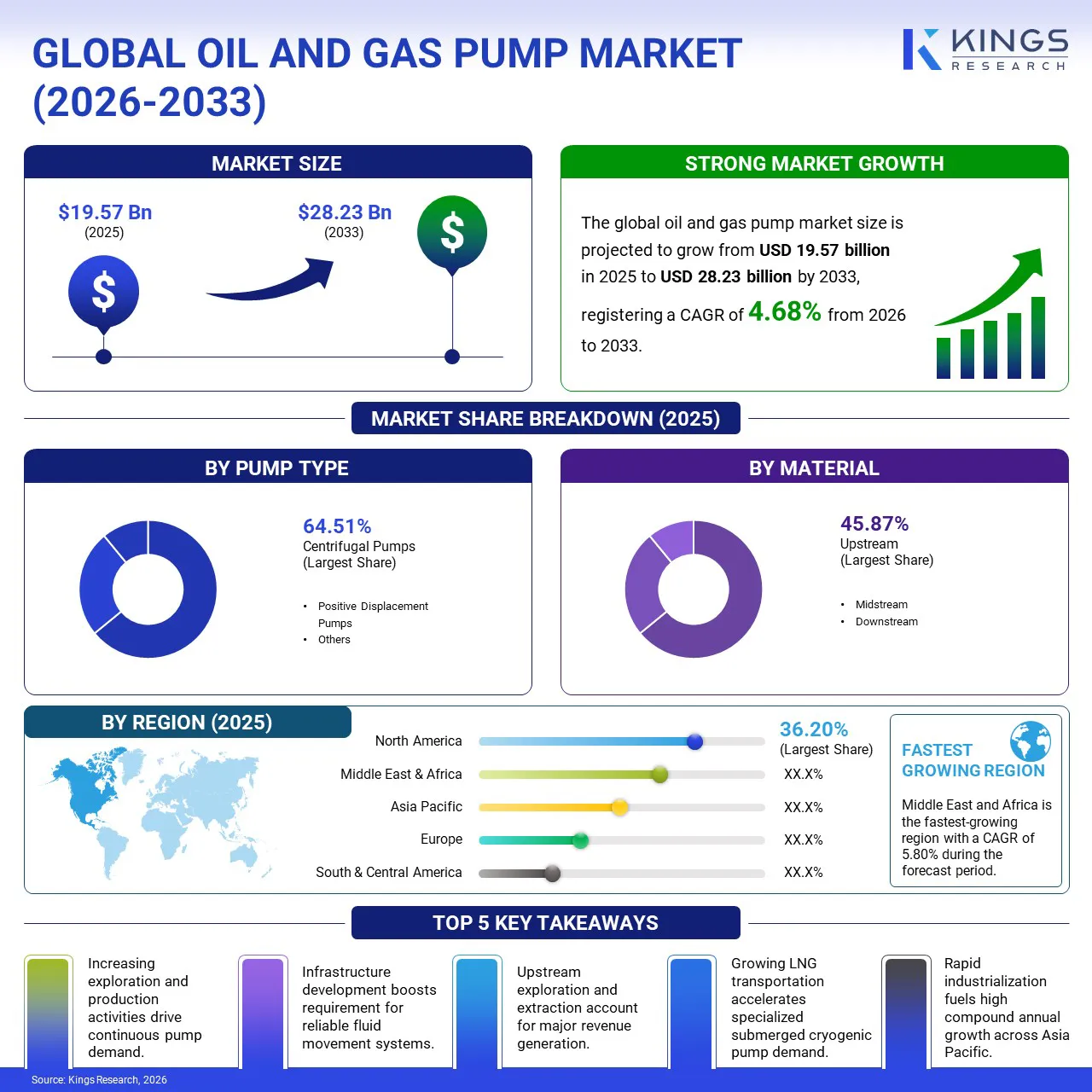
According to Kings Research, the global oil and gas pump market size was valued at USD 19.57 billion in 2025 and is projected to grow to USD 28.23 billion by 2033, exhibiting a CAGR of 4.68% during the forecast period. The market encompasses equipment and systems designed to facilitate the movement of fluids, including crude oil, natural gas, refined products, and other related materials, across various stages of the petroleum value chain. Key pump types include centrifugal and positive displacement pumps, each serving distinct operational requirements.
Rising global energy demand, particularly from emerging economies, is driving market growth and increasing exploration, production, transportation, and refining activities. The expansion of pipeline infrastructure for transporting crude oil, natural gas, and refined products is further supporting market expansion, creating an ongoing need for high-performance and reliable pump systems.
Technological advancements, including the integration of IoT, automation, predictive maintenance, and real-time monitoring, are also contributing to market growth by improving pump efficiency, reducing downtime, and lowering maintenance expenses. As investments in traditional and unconventional energy sources continue, demand for oil and gas pumps is expected to remain supported throughout the forecast period.
Major companies operating in the oil and gas pump industry include Ingersoll Rand, The Gorman-Rupp Company, EBARA Corporation, KSB Limited, Halliburton, Nikkiso Co., Ltd., Xylem, Atlas Copco AB, Baker Hughes Company, Flowserve Corporation, Sulzer Ltd., ITT Inc., TRILLIUM FLOW TECHNOLOGIES, and Leistritz Pumpen GmbH.
The continued expansion of global pipeline infrastructure primarily fuels the growth of the oil and gas pump market. As demand for efficient and cost-effective transportation of crude oil, natural gas, and refined products increases, there is a growing need to develop new pipeline routes and upgrade existing networks.
This expansion requires a wide range of pumping systems to maintain consistent flow, pressure control, and operational safety across diverse terrains and long distances. Pumps are essential for maintaining the integrity and efficiency of these networks as energy companies aim to minimize downtime and reduce losses during transit. Rising investments in pipeline infrastructure are also supporting the adoption of advanced and durable oil and gas pumps.
A major challenge affecting the global oil and gas pump market is ensuring the longevity of pump systems in extreme operating environments.
Pumps used in oil and gas extraction, transportation, and refining often operate under high pressure, fluctuating temperatures, and exposure to corrosive fluids. These demanding environments can lead to premature wear and equipment failure, resulting in costly downtime and increased maintenance requirements.
Manufacturers are addressing these challenges through advancements in materials science and the development of corrosion-resistant, high-performance alloys and coatings for pump components. Regular monitoring through smart technologies and predictive maintenance systems can also help identify potential issues before they result in failures, extending pump operating life and reducing overall maintenance expenses.
The adoption of smart pumping technologies is an important trend influencing the oil and gas pump market. The integration of Internet of Things technologies, automation, sensors, and data analytics enables operators to monitor pump performance in real time, identify potential failures, and optimize energy consumption.
Predictive maintenance systems can reduce downtime and maintenance expenses across upstream, midstream, and downstream operations. Smart pump systems are also supporting remote monitoring in offshore facilities, pipeline booster stations, terminals, refineries, and petrochemical facilities.
|
Segmentation |
Details |
|
By Pump Type |
Centrifugal Pumps, Positive Displacement Pumps, Others |
|
By Application |
Upstream, Midstream, Downstream |
|
By Region |
North America: U.S., Canada, Mexico |
|
Europe: France, UK, Spain, Germany, Italy, Russia, and the rest of Europe |
|
|
Asia-Pacific: China, Japan, India, Australia, ASEAN, South Korea, Rest of Asia-Pacific |
|
|
Middle East & Africa: Turkey, UAE, Saudi Arabia, South Africa, Rest of Middle East & Africa |
|
|
South and Central America: Brazil, Argentina, and the rest of South and Central America |
Based on pump type, the market is classified into centrifugal pumps, positive displacement pumps, and others. Centrifugal pumps hold the largest share of the market, supported by their high efficiency, ability to handle large fluid volumes, and widespread use across pipeline transportation, refining, and other oil and gas applications.
Based on application, the market is classified into upstream, midstream, and downstream. The upstream segment holds the largest share of the market, supported by increasing exploration and production activities, particularly across offshore fields and shale reserves. Pumps are widely used for crude oil extraction, artificial lift, enhanced oil recovery, fluid transfer, and other production processes.
Based on the region, the market has been classified into North America, Europe, Asia Pacific, the Middle East & Africa, and South & Central America.
North America has the highest market share of 36.20% in 2025, supported by extensive upstream production, shale activities, pipeline infrastructure, and refining capacity. The Middle East & Africa oil and gas pump market has the highest CAGR in the forecast period. This dominance is primarily attributed to the region's substantial oil and gas reserves, ongoing investments in upstream exploration and production activities, and the presence of major oil-producing nations such as Saudi Arabia, the UAE, and Kuwait.
National oil companies and global players continue to invest heavily in infrastructure development, enhanced oil recovery projects, and pipeline expansions, creating a strong demand for high-performance pumping systems across all operational stages.
The Asia Pacific oil and gas pump industry is poised to grow at a CAGR of 4.00% during the forecast period. This growth is bolstered by increasing energy demand, rapid industrialization, and growing investments in refining and petrochemical infrastructure across countries such as China, India, and Southeast Asian nations.
The region's expanding oil and gas distribution networks and government initiatives to enhance domestic production capacity foster the adoption of advanced pump technologies to support both upstream and downstream operations.
Refinery modernization, energy security initiatives, pipeline infrastructure, and replacement of aging equipment drive Europe. South & Central America offer growth opportunities through upstream exploration, refining investments, and pipeline development. Brazil remains a key regional market due to its strong offshore oil production and continued deepwater energy investments. Across regions, equipment replacement, energy efficiency, and infrastructure modernization further support demand.
Companies operating in the oil and gas pump industry are heavily investing in R&D to enhance pump efficiency, durability, and adaptability in extreme operating conditions.
There is a strong emphasis on developing advanced technologies such as smart and automated pumping systems to support remote monitoring, predictive maintenance, and improved operational control.
Strategic partnerships and collaborations with oilfield service providers and engineering firms are being adopted to expand project reach and offer integrated solutions.
Additionally, several participants are prioritizing capacity expansion and localization strategies to better serve regional markets, reduce lead times, and align with country-specific regulatory and technical standards. Acquisitions and mergers remain critical for portfolio diversification and access to new customers or specialized technologies.
Our methodology triangulates insights from multiple independent and publicly available research databases and is further validated against regulatory filings and public company disclosures. All estimates are cross-verified; no single-source data is presented without validation.
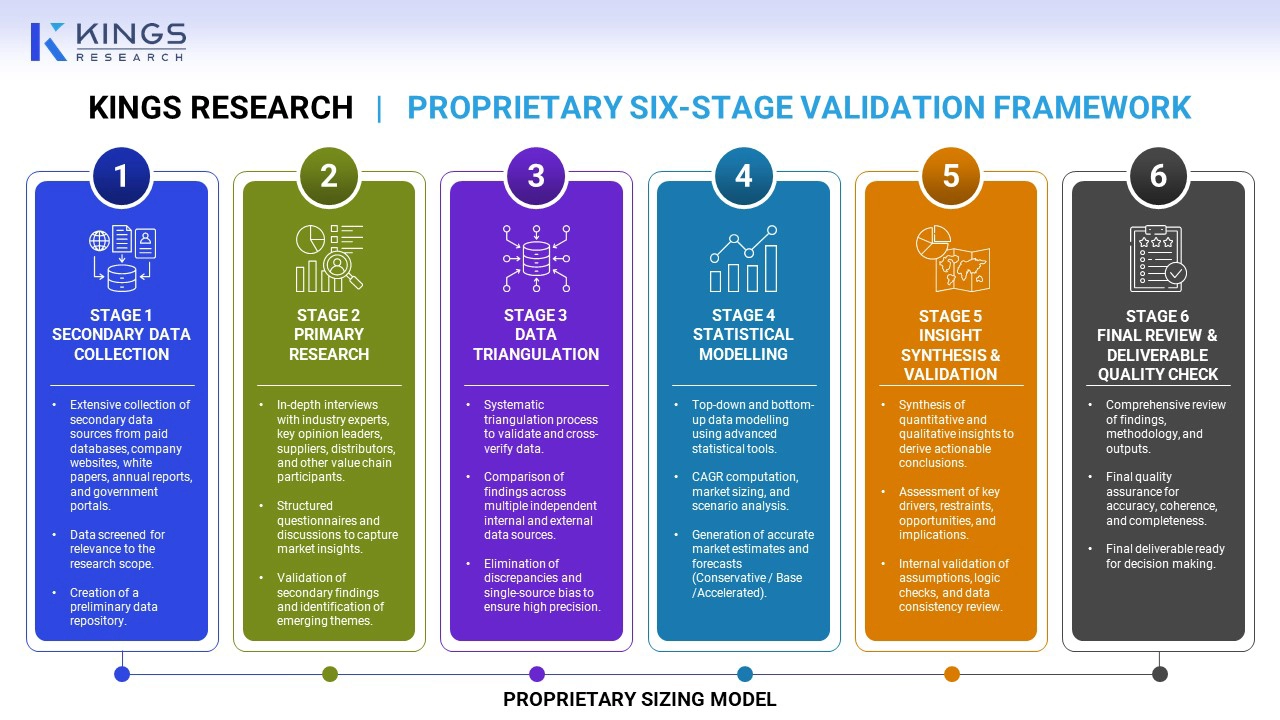
Our custom offerings deliver tailored, data-driven intelligence and strategic guidance to help organizations identify, evaluate, and capitalize on key market opportunities.
Frequently Asked Questions

Over the years, Versha brings over 15 years of experience managing consulting assignments across industries, including Food and Beverage, Consumer Goods, ICT, Aerospace, and more. Her work has spanned diverse sectors. Her cross-domain expertise and adaptability make her a versatile and dependable professional. She is known for her keen business insight and foresight. With sharp analytical skills and a curious mindset, Versha excels at transforming complex data into actionable insights. She has a proven track record of unraveling market dynamics, identifying trends, and delivering tailored solutions to meet client needs. As a skilled leader, Versha has successfully mentored research teams and directed projects with precision, ensuring high-quality outcomes. Her collaborative approach and strategic vision enable her to turn challenges into opportunities and consistently deliver impactful results. Whether analyzing markets, engaging stakeholders, or crafting strategies, Versha draws on her deep expertise and industry knowledge to drive innovation and deliver measurable value.
Habi is a seasoned research and consulting leader with renowned experience in guiding clients on strategic growth and transformation initiatives across global markets. He has led high-performing research teams that deliver actionable insights on market expansion, M&A strategies, opportunity assessment, new business development, and product launches. His project portfolio spans large petrochemical producers, electronic device manufacturers, lubricants companies, and other leading enterprises across diverse industrial and consumer sectors. He currently heads the research department at Kings Research, where he is responsible for setting the research agenda, mentoring analysts, and ensuring client-ready deliverables that support executive decision-making. With extensive experience in market intelligence, strategic research, and consulting, Habi brings a strong understanding of evolving industry dynamics, competitive landscapes, emerging opportunities, and business growth challenges. His expertise includes developing research frameworks, translating complex market data into actionable strategic recommendations, and working closely with senior stakeholders to address critical business questions. He has also contributed to building research capabilities, strengthening analytical methodologies, and driving a culture of quality and insight-led decision-making within research teams. His cross-industry exposure enables him to connect market trends with broader business implications and provide perspectives that help organizations identify opportunities, mitigate risks, and make informed strategic decisions.



.webp&w=128&q=75&dpl=dpl_DTCDzuzZgrG9H8b9yf8P7a1CSdCK)
