
Inquire Now
Key Strategic Points
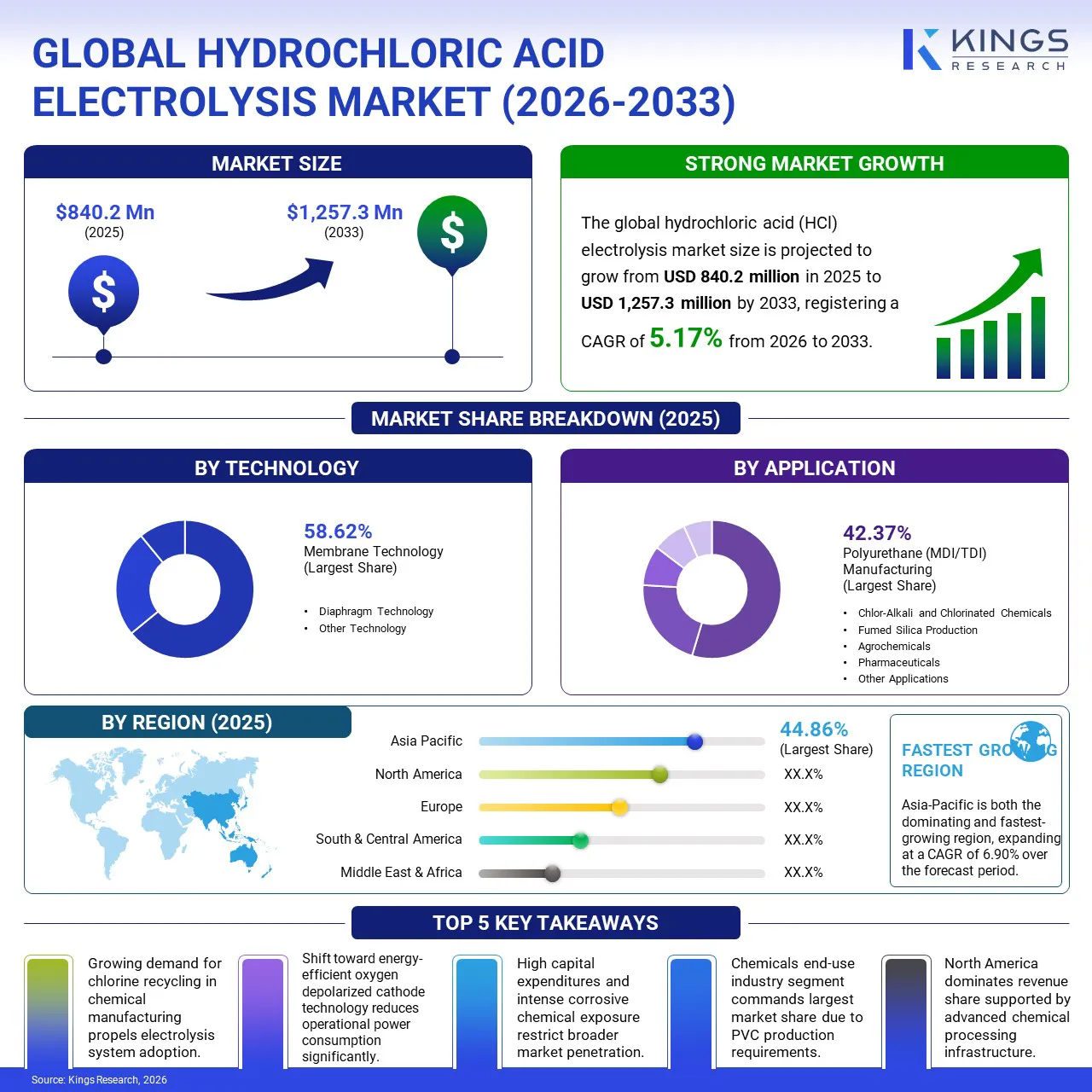
According to Kings Research, the global market for hydrochloric acid electrolysis was valued at USD 840.2 million in 2025 and is projected to reach USD 1,257.3 million by 2033, exhibiting a CAGR of 5.17% during the forecast period (2026-2033).
The market encompasses advanced electrochemical recycling systems, membrane electrolysis units, and oxygen depolarized cathode (ODC) technologies designed to recover chlorine and hydrogen gas from hydrochloric acid streams that are industrial byproducts. The report explores key drivers of market development, offering detailed regional analysis and a comprehensive overview of the competitive landscape shaping future opportunities.
The market is experiencing substantial growth, mainly driven by increasing demand for chlorine and hydrogen across chemical manufacturing, polyurethanes, and water treatment sectors. Hydrochloric acid electrolysis allows chemical producers to recycle waste aqueous HCl back into high-purity chlorine gas, lowering raw material procurement costs and minimizing environmental neutralization discharges.
Major companies operating in the hydrochloric acid electrolysis market include Thyssenkrupp Uhde GmbH, De Nora Permelec S.p.A., DuPont, Covestro AG, Bluestar (Beijing) Chemical Machinery Co., Ltd., and Mitsui Chemicals, Inc.
In May 2025, Thyssenkrupp Nucera showcased its electrolysis technologies at the International Chlor-Alkali Technology Conference in Barcelona, highlighting solutions for chlorine and hydrogen production and reinforcing industry efforts to improve resource efficiency and advance sustainable electrochemical processing.
The global hydrochloric acid electrolysis market is witnessing robust expansion, largely attributable to the increasing demand for chlorine and hydrogen in chemical synthesis, plastics manufacturing, and metallurgical processing. Hydrochloric acid is generated as a major byproduct in large-scale chemical operations, such as polyurethanes, isocyanates (MDI/TDI), and chlor-alkali production.
Directly converting byproduct HCl back into chlorine gas enables manufacturers to establish closed-loop recycling systems, significantly reducing reliance on fresh chlorine shipments and mitigating hazardous chemical transportation risks. Furthermore, rising environmental regulations restricting waste acid disposal compel chemical facilities to adopt high-efficiency recycling technologies.
A primary restraint facing the hydrochloric acid electrolysis market involves the substantial capital investment required to install membrane electrolysis cells, specialized noble metal-coated titanium anodes, and power transformation systems. Setting up an industrial-scale HCl electrolysis plant involves significant engineering complexity and high upfront infrastructure costs.
Additionally, the process is highly energy-intensive. Fluctuations in industrial electricity tariffs and energy availability directly impact operational processing costs, posing an economic barrier for small and medium-sized chemical enterprises considering technology adoption.
The market is undergoing a major technological evolution driven by the rapid commercialization of Oxygen Depolarized Cathode (ODC) technology. ODC technology reduces electrical power consumption by up to 30% compared to traditional diaphragm or conventional membrane HCl electrolysis cells by replacing hydrogen evolution at the cathode with oxygen reduction.
Innovations such as high-efficiency gas-diffusion electrodes, optimized cell designs, and corrosion-resistant ion-exchange membranes are markedly improving system longevity and operational throughput. Furthermore, chemical plant operators are increasingly integrating digital twin monitoring and smart cell voltage tracking to optimize energy efficiency and schedule predictive maintenance.
|
Segmentation |
Details |
|
By Technology |
Membrane Technology, Diaphragm Technology, and Other Technology |
|
By Application |
Polyurethane (MDI/TDI) Manufacturing, Chlor-Alkali and Chlorinated Chemicals, Fumed Silica Production, Agrochemicals, Pharmaceuticals, and Other Applications |
|
By Region |
North America: U.S., Canada, Mexico |
|
Europe: France, UK, Spain, Germany, Italy, Russia, and the rest of Europe |
|
|
Asia-Pacific: China, Japan, India, Australia, ASEAN, South Korea, Rest of Asia-Pacific |
|
|
Middle East & Africa: Turkey, UAE, Saudi Arabia, South Africa, Rest of Middle East & Africa |
|
|
South & Central America: Brazil, Argentina, and the rest of South & Central America |
Based on technology, the hydrochloric acid electrolysis market is categorized into membrane technology, diaphragm technology, and other technology. The membrane technology segment has the highest market share of 58.62% in 2025, supported by its ability to recycle hydrochloric acid into valuable chlorine and hydrogen while enabling efficient, closed-loop chemical processing.
Based on application, the hydrochloric acid electrolysis market is categorized into polyurethane (MDI/TDI) manufacturing, chlor-alkali and chlorinated chemicals, fumed silica production, agrochemicals, pharmaceuticals, and other applications. The polyurethane (MDI/TDI) manufacturing segment garnered the highest revenue of 42.37% in 2025. Rising adoption of closed-loop chlorine recovery in MDI/TDI production supports HCl electrolysis demand, as recovered chlorine can be reused in polyurethane precursor manufacturing, reducing waste and raw-material requirements.
Based on region, the global market is classified into North America, Europe, Asia-Pacific, MEA, and South and Central America.
The Asia Pacific hydrochloric acid electrolysis market share stood at around 44.86% in 2025 in the global market. Moreover, Asia Pacific is anticipated to register the fastest CAGR during the forecast period from 2026 to 2033. According to Kings Research, it is driven by rapid urbanization, expanding infrastructure development, and massive chemical production capacity expansions across China, India, and South Korea.
The North America region is driven by a well-established chemical manufacturing sector, strong demand for polyurethanes in construction and automotive manufacturing, and stringent environmental regulations governing hazardous waste neutralization. High industrial investments in energy-efficient processing technologies further accelerate market growth across the United States and Canada.
According to Kings Research, Europe accounts for a major share of the global market, supported by strict European Union industrial emissions directives, high energy costs that incentivize energy-saving ODC technology adoption, and major chemical production hubs in Germany, Belgium, and the Netherlands.
The Middle East & Africa region is witnessing progressive growth, supported by national industrial diversification plans, expanding petrochemical complexes, and growing adoption of industrial water treatment technologies across GCC economies. South and Central America is experiencing steady market expansion, led by Brazil and Mexico, propelled by growing chemical manufacturing, mining operations, and expanding industrial infrastructure.
The hydrochloric acid electrolysis market report will provide valuable insight with an emphasis on the fragmented nature of the industry. Prominent players are focusing on several key business strategies such as partnerships, mergers and acquisitions, product innovations, and joint ventures to expand their product portfolio and increase their market shares across different regions.
Companies are implementing impactful strategic initiatives, such as expanding services, investing in research and development (R&D), establishing new service delivery centers, and optimizing their service delivery processes, which are likely to create new opportunities for market growth.
Key Industry Development
How We Gather This Information
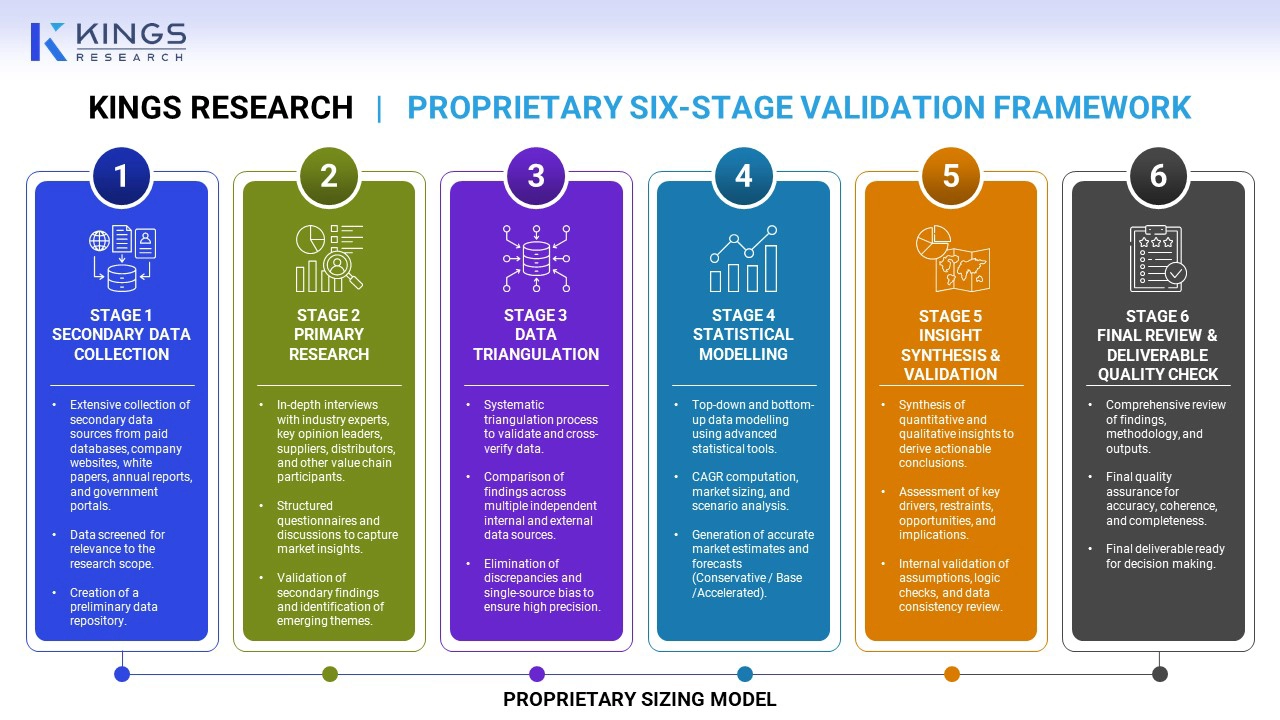
Our methodology triangulates insights from multiple independent and publicly available research databases and is further validated against regulatory filings and public company disclosures. All estimates are cross-verified; no single-source data is presented without validation.
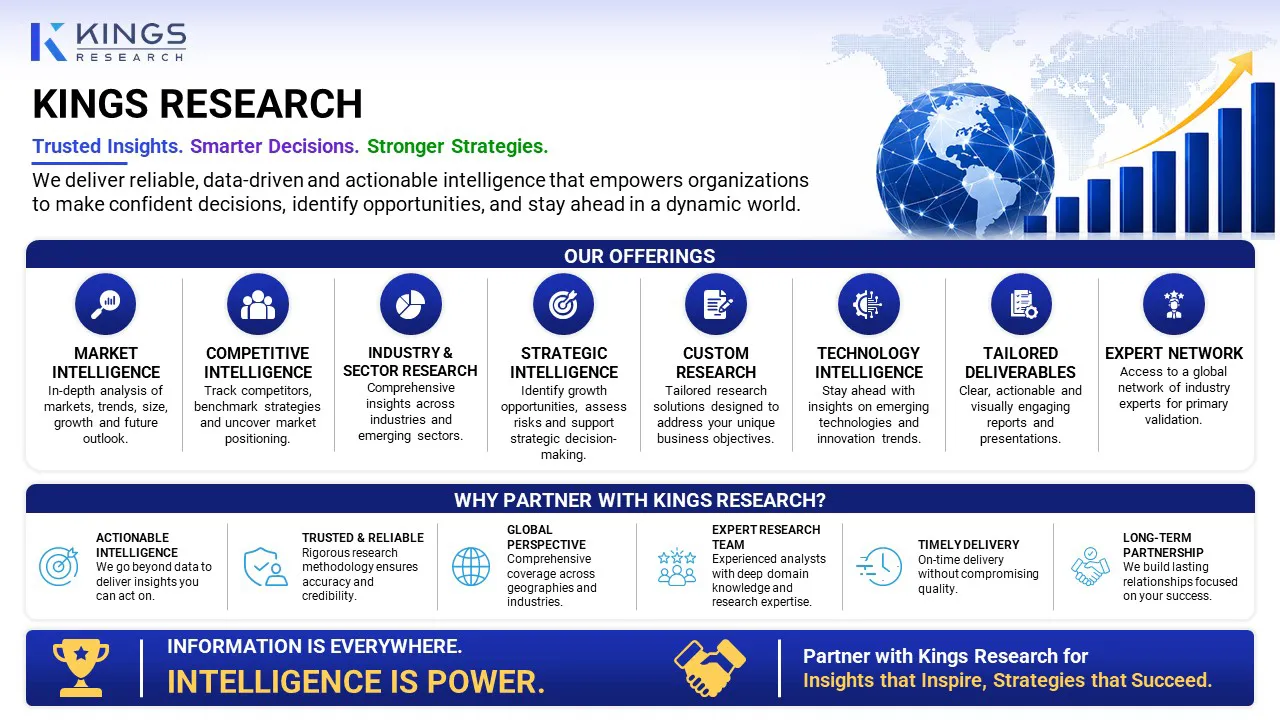
Our custom offerings deliver tailored, data-driven intelligence and strategic guidance to help organizations identify, evaluate, and capitalize on key market opportunities.
Frequently Asked Questions

Swati is a committed research analyst with a passion for optimizing systems and processes across industries, specializing in healthcare but also bringing valuable expertise to sectors such as consumer goods, life sciences, and more. Her cross-domain research approach allows her to generate clear, actionable reports that inform strategic decisions in a variety of fields. Swati is committed to staying ahead of evolving trends, leveraging her broad understanding of different sectors to provide insights that are relevant to a range of industries. In her personal time, she enjoys music and spending quality time with her family, which inspires her creativity and enriches her professional approach. Her systematic methodology ensures that every report is both thorough and practical. Swati's ability to bridge regulatory frameworks with market realities gives her recommendations a distinct edge. She collaborates seamlessly with cross-functional teams, distilling complex data into straightforward narratives. Her proactive monitoring of policy and technological shifts keeps her analysis forward-looking.
Habi is a seasoned research and consulting leader with renowned experience in guiding clients on strategic growth and transformation initiatives across global markets. He has led high-performing research teams that deliver actionable insights on market expansion, M&A strategies, opportunity assessment, new business development, and product launches. His project portfolio spans large petrochemical producers, electronic device manufacturers, lubricants companies, and other leading enterprises across diverse industrial and consumer sectors. He currently heads the research department at Kings Research, where he is responsible for setting the research agenda, mentoring analysts, and ensuring client-ready deliverables that support executive decision-making. With extensive experience in market intelligence, strategic research, and consulting, Habi brings a strong understanding of evolving industry dynamics, competitive landscapes, emerging opportunities, and business growth challenges. His expertise includes developing research frameworks, translating complex market data into actionable strategic recommendations, and working closely with senior stakeholders to address critical business questions. He has also contributed to building research capabilities, strengthening analytical methodologies, and driving a culture of quality and insight-led decision-making within research teams. His cross-industry exposure enables him to connect market trends with broader business implications and provide perspectives that help organizations identify opportunities, mitigate risks, and make informed strategic decisions.