
Inquire Now
Key Strategic Points
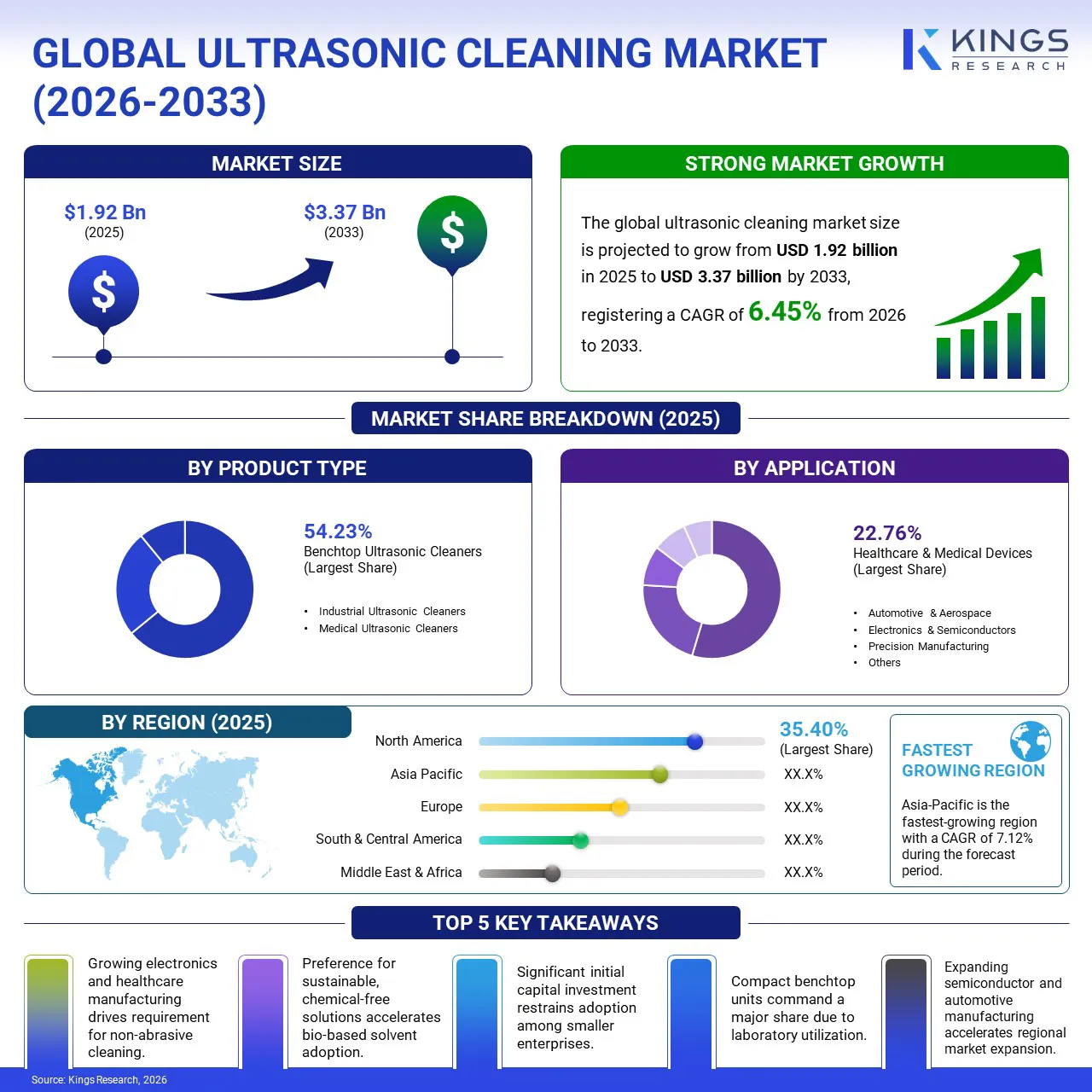
According to Kings Research, the global ultrasonic cleaning market size was valued at USD 1.92 billion in 2025 and is projected to reach USD 3.37 billion by 2033, exhibiting a CAGR of 6.45% during the forecast period (2026-2033).
The market encompasses the development, production, and application of ultrasonic cleaning systems that utilize high-frequency sound waves to remove contaminants from surfaces. The market is driven by the increasing demand for precision cleaning across diverse end-use verticals comprising healthcare, automotive, precision manufacturing, and aerospace, where stringent cleanliness standards are essential.
The market expansion is further driven by the increasing demand for precision cleaning in the electronics and semiconductor industry. The demand for high-precision cleaning of Printed Circuit Boards (PCBs), semiconductor chips, and microelectronic components, which require non-invasive cleaning solutions to eliminate flux residues and microscopic debris without causing damage, is creating new market growth opportunities. Additionally, the growing complexity of electronic devices, including miniaturized components in consumer electronics and industrial equipment, is driving the need for advanced cleaning technologies.
Growing emphasis on performance efficiency and maintenance in the automotive and aerospace sectors is fueling the ultrasonic cleaning market. Engine components, fuel injectors, and precision parts require thorough cleaning to maintain optimal functionality. The ability to remove carbon deposits, grease, and microscopic contaminants enhances the durability of critical parts. Amid rising production volumes and demand for high-performance vehicles and aircraft, manufacturers are integrating ultrasonic cleaning systems to improve component reliability and extend operational life.
The growth of the ultrasonic cleaning market is challenged by the high initial investment required for advanced ultrasonic cleaning systems, particularly for industries with budget constraints. The cost of high-frequency transducers, precision control systems, and customized cleaning solutions can be a barrier to adoption, especially for small and medium-sized enterprises.
Companies are developing modular and scalable ultrasonic cleaning systems, allowing businesses to invest gradually based on their needs. Additionally, manufacturers are focusing on energy-efficient designs and automation to enhance cost-effectiveness while offering leasing and financing options to make these technologies more accessible.
The luxury goods industry relies on high-quality cleaning solutions to maintain the aesthetics and longevity of watches, jewelry, and precious metals. The ultrasonic cleaning market is expanding due to increasing consumer preference for professional cleaning methods that restore the shine and remove dirt from intricate designs without damaging delicate materials. Market players are innovating novel ultrasonic cleaning machines to enhance service offerings and ensure product preservation, further creating new growth opportunities in the market.
|
Segmentation |
Details |
|
|
By Product Type |
Benchtop Ultrasonic Cleaners, Industrial Ultrasonic Cleaners, Medical Ultrasonic Cleaners |
|
|
By Application |
Healthcare & Medical Devices, Automotive & Aerospace, Electronics & Semiconductors, Precision Manufacturing, Others |
|
|
By Region |
North America |
U.S., Canada, Mexico |
|
Europe |
France, the UK, Spain, Germany, Italy, Russia, and the rest of Europe |
|
|
Asia Pacific |
China, Japan, India, Australia, ASEAN, South Korea, and the rest of Asia-Pacific |
|
|
Middle East and Africa |
Turkey, U.A.E., Saudi Arabia, South Africa, Rest of Middle East & Africa |
|
|
South and Central America |
Brazil, Argentina, and the rest of South and Central America |
|
The benchtop ultrasonic cleaners segment captured the highest market share of 54.23% in 2025, which is driven primarily by their compact design, ease of use, and suitability for a wide range of cleaning applications. Their rising adoption across laboratories, healthcare facilities, and industrial settings further acts as a catalyzing factor towards their high share.
The electronics & semiconductors segment is poised for significant growth at a CAGR of 7.68% through the forecast period. The high growth rate is attributed to the stringent cleanliness standards across electronics manufacturing and semiconductor fabrication facilities, which require precise and contamination-free cleaning of delicate components such as circuit boards, microchips, and semiconductor wafers to ensure optimal performance and reliability.
Based on region, the market has been classified into North America, Europe, Asia Pacific, Middle East & Africa, and South and Central America.
The North America ultrasonic cleaning market accounted for a share of around 35.40% in 2025, with a valuation of USD 0.68 billion. The rapid expansion of Electric Vehicle (EV) manufacturing in North America, driven by major automotive manufacturers and aerospace companies, contributes significantly to the rising demand for ultrasonic cleaning solutions. The need for high-precision cleaning technologies is growing due to the increasing government incentives and private investments in EV production, fueling the market.
According to an Environmental Defense Fund (EDF) report released on January 8, 2025, U.S. EV manufacturing facilities are projected to be capable of producing approximately 4.7 million new electric vehicles each year by 2028. Production has commenced at multiple facilities as federal initiatives have catalyzed USD 197.6 billion in investments in EV manufacturing over the last decade. A total of 229 distinct manufacturing investments have been announced across 208 facilities nationwide. This is poised to create demand prospects for ultrasonic cleaning equipment across the region over the forecast period.
Additionally, the presence of leading ultrasonic cleaning equipment manufacturers and R&D centers is leading to product advancements, increasing adoption across diverse end-use industry verticals. The push for automation and smart ultrasonic cleaning systems is further strengthening the market growth in the region.
The ultrasonic cleaning industry in Asia Pacific is poised for significant growth at a CAGR of 7.12% over the forecast period. Asia Pacific is a global leader in electronics and semiconductor manufacturing, with China, Taiwan, and South Korea housing some of the world’s largest chip producers and electronics companies.
The demand for precision cleaning technologies is rising due to increasing investments in semiconductor fabrication and display panel production, further strengthening the market in the region. Furthermore, the adoption of ultrasonic cleaning systems is expanding due to the rising Foreign Direct Investment (FDI) in industrial manufacturing and the relocation of production from China to Southeast Asia, supporting market growth across the region.
The key market players are actively focusing on advancing precise cleaning technologies to enhance efficiency and meet industry-specific requirements.
Companies are integrating innovative solutions that optimize ultrasonic frequency and power monitoring, ensuring superior cleaning performance in sectors such as semiconductor manufacturing, medical devices, and high-precision engineering. These advancements not only improve process reliability but also support compliance with stringent industry standards. Businesses are strengthening their market position by adopting cutting-edge measurement techniques and automation-driven cleaning systems.
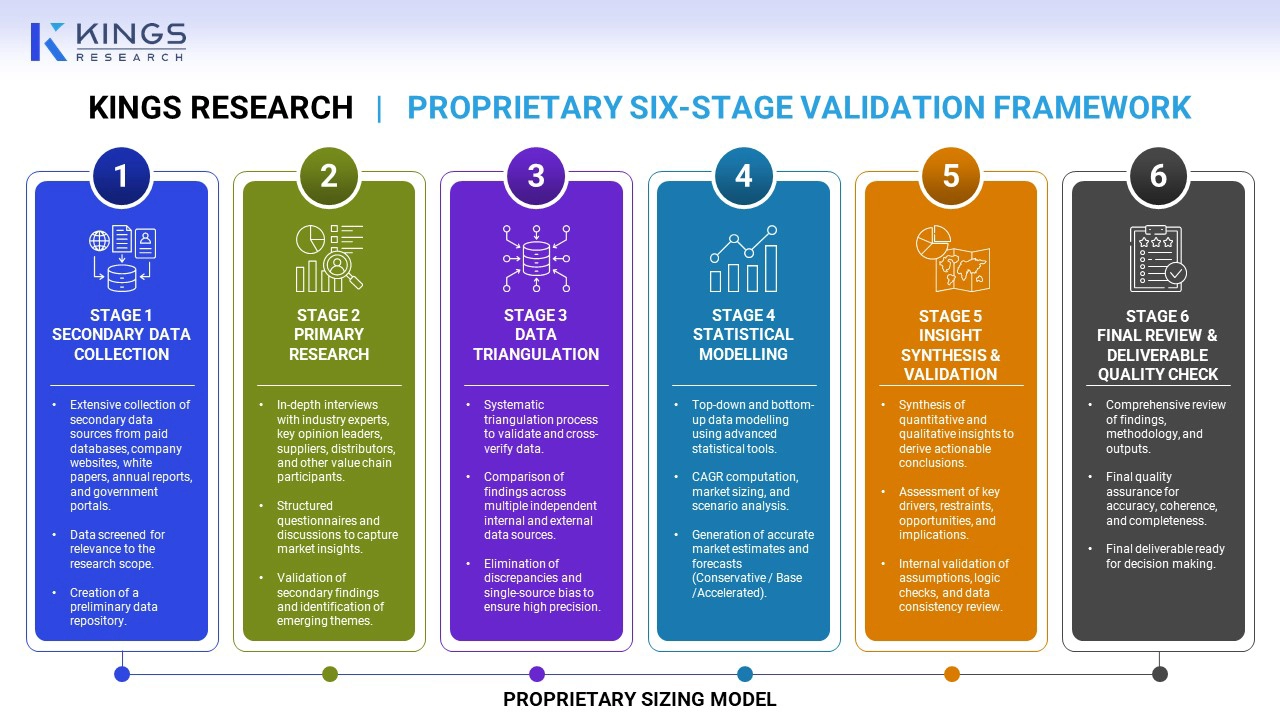
Our methodology triangulates insights from multiple independent and publicly available research databases, which is further validated against regulatory filings and public company disclosures. All estimates are cross-verified; no single-source data is presented without validation.
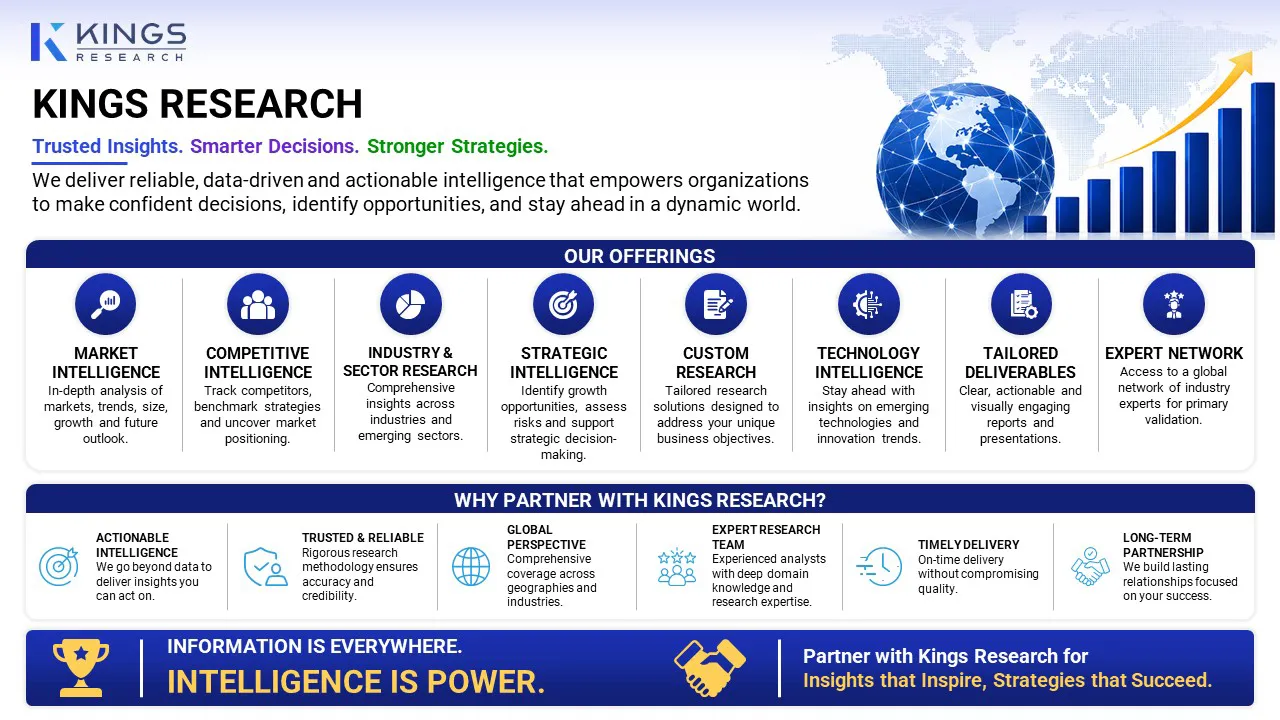
We deliver tailored, data-driven intelligence and strategic guidance to help organizations identify, evaluate, and capitalize on key market opportunities.
Frequently Asked Questions

Sunanda is a proficient research analyst with strong cross-domain expertise, excelling in identifying market trends and delivering insightful analyses across various industries, including consumer goods, food & beverages, healthcare, and more. Her ability to connect insights from diverse sectors enables her to offer actionable recommendations that support strategic decision-making in a range of business contexts. Sunanda's research is driven by thorough data analysis and her commitment to providing relevant, data-driven insights. Her keen eye for patterns allows her to spot emerging opportunities before they become mainstream. Sunanda's synthesis of cross-sector learnings often reveals unconventional solutions that clients find invaluable. She adapts her analytical frameworks to suit each industry's unique nuances, ensuring reports are both accurate and contextually relevant. Clients appreciate her ability to deliver crisp, actionable findings under tight deadlines, consistently exceeding expectations with her thoroughness and insight.
Habi is a seasoned research and consulting leader with renowned experience in guiding clients on strategic growth and transformation initiatives across global markets. He has led high-performing research teams that deliver actionable insights on market expansion, M&A strategies, opportunity assessment, new business development, and product launches. His project portfolio spans large petrochemical producers, electronic device manufacturers, lubricants companies, and other leading enterprises across diverse industrial and consumer sectors. He currently heads the research department at Kings Research, where he is responsible for setting the research agenda, mentoring analysts, and ensuring client-ready deliverables that support executive decision-making. With extensive experience in market intelligence, strategic research, and consulting, Habi brings a strong understanding of evolving industry dynamics, competitive landscapes, emerging opportunities, and business growth challenges. His expertise includes developing research frameworks, translating complex market data into actionable strategic recommendations, and working closely with senior stakeholders to address critical business questions. He has also contributed to building research capabilities, strengthening analytical methodologies, and driving a culture of quality and insight-led decision-making within research teams. His cross-industry exposure enables him to connect market trends with broader business implications and provide perspectives that help organizations identify opportunities, mitigate risks, and make informed strategic decisions.


