
Inquire Now
Key Strategic Points
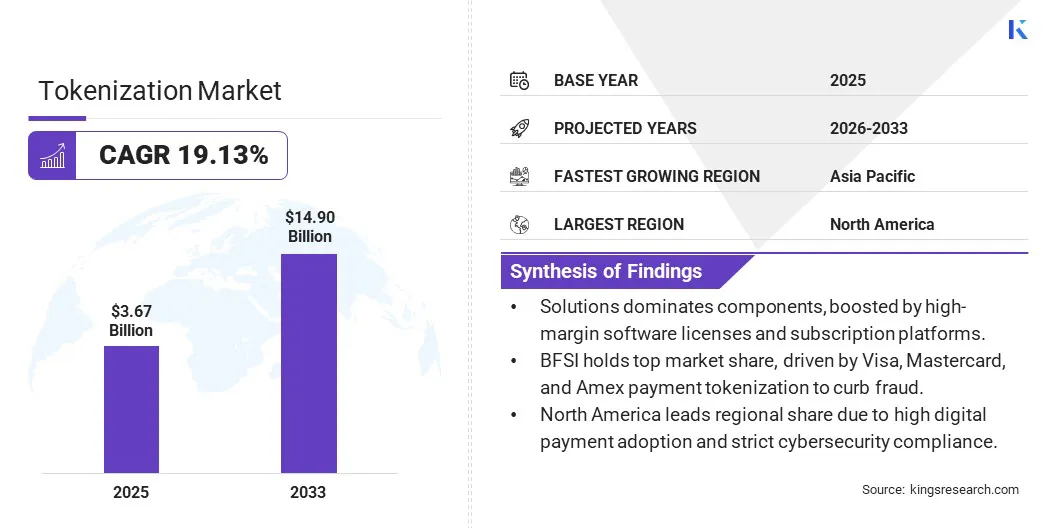
According to Kings Research, the global tokenization market size was recorded at USD 3.67 billion in 2025 and is projected to reach USD 14.90 billion by 2033, growing at a CAGR of 19.13% from 2026 to 2033. The shift toward cloud-based solutions is a significant driver propelling the growth of the tokenization market. In this study, the report covers companies such as Fiserv, Inc.; Visa; Entrust Corporation; American Express Company; MONET+ (Switchio); Mastercard; Thales; TokenEx, Inc.; Worldpay, LLC; among others.
Cloud computing is accelerating the adoption of tokenization solutions by offering scalable, flexible, and cost-effective infrastructure without requiring extensive on-premises hardware investments. Cloud-based tokenization platforms enable seamless integration with existing systems and applications, facilitating interoperability and data exchange across diverse assets, payment data, and digital transactions. Additionally, robust security measures and compliance frameworks provided by cloud providers help organizations address data privacy and regulatory requirements. These advantages make cloud-based infrastructure an attractive option for businesses seeking secure, scalable, and adaptable solutions to protect and digitize sensitive data and assets, thereby supporting the growth of the global tokenization market.
Tokenization is the process of converting rights to an asset into a digital token on a blockchain. These tokens represent ownership of physical assets such as real estate, art, or commodities, or they signify rights to access services or products.
Tokenization solutions involve the issuance, management, and transfer of these digital tokens using blockchain technology. The applications of tokenization are diverse and span across various industries. In finance, tokenization facilitates the fractional ownership of high-value assets, enabling broader access to investments and increased liquidity in traditionally illiquid markets.
In the real estate sector, tokenization allows for the fractional ownership of properties, making real estate investment more accessible to a wider range of investors. Moreover, tokenization finds applications in supply chain management, where it enhances transparency and traceability by tokenizing assets and tracking their movement throughout the supply chain. Industries such as healthcare, gaming, and intellectual property rights are exploring tokenization as a means to streamline processes, enhance security, and unlock new business models.
The rapid proliferation of digital payment methods, including mobile wallets, contactless payments, and online checkout, is encouraging merchants and issuers to adopt PCI DSS-compliant tokenization to replace sensitive cardholder data with non-sensitive tokens. According to the Payment Card Industry Security Standards Council, tokenization can significantly reduce PCI DSS compliance scope, lowering audit complexity and exposure to payment data breaches.
Growing institutional adoption of real-world asset (RWA) tokenization is driving demand as financial institutions and investors increasingly tokenize real estate, private equity, and fixed-income instruments to enable fractional ownership, improve liquidity, and facilitate faster settlement. The continued expansion of institutional tokenized-fund initiatives further demonstrates growing demand for RWA tokenization infrastructure.
The expansion of the decentralized finance (DeFi) ecosystem is further supporting market growth, as platforms increasingly use tokenization for stablecoins, synthetic assets, and decentralized financial instruments. Growing demand for interoperability and standardized token frameworks is creating opportunities for tokenization infrastructure providers.
The escalating frequency and cost of data breaches across BFSI, healthcare, and retail are encouraging organizations to adopt tokenization to protect sensitive information. By replacing sensitive data with non-sensitive tokens, organizations can reduce the value of compromised data and strengthen data protection across storage and transmission environments.
The absence of harmonized global regulations remains a key challenge for the tokenization market, as rules governing custody, securities classification, and anti-money-laundering requirements vary across major jurisdictions. This regulatory fragmentation creates uncertainty for investors and enterprises pursuing cross-border tokenization initiatives, as solutions compliant in one market may require modifications to meet requirements elsewhere.
Legacy-system integration and technical interoperability challenges also restrain market expansion. Many BFSI and enterprise systems were not designed to support token-based data flows, making integration with tokenization platforms complex and costly. In addition, blockchain deployments face scalability constraints and inconsistent token standards across platforms, slowing large-scale enterprise adoption.
The expansion of the decentralized finance ecosystem continues to be a prominent trend shaping the tokenization market. DeFi platforms rely on tokenization to create and exchange digital assets representing financial instruments, which is broadening access to financial services and reducing dependence on traditional intermediaries. At the same time, rising institutional demand for regulated custody and settlement, evidenced by continued bank-grade tokenized-asset activity at firms such as Sygnum Bank, is pulling tokenization further into mainstream capital markets infrastructure rather than leaving it confined to payments use cases alone.
|
Segmentation |
Details |
|
By Component |
Solution and Services |
|
By Deployment |
Cloud-based and On-Premises |
|
By Application |
Payment Security, User authentication, Compliance Management, and Others |
|
By End Use |
BFSI, Retail & E-Commerce, Healthcare, IT & Telecommunications, Government, and Others |
|
By Region |
North America: U.S., Canada, Mexico |
|
Europe: France, UK, Spain, Germany, Italy, Russia, Rest of Europe |
|
|
Asia-Pacific: China, Japan, India, Australia, ASEAN, South Korea, Rest of Asia-Pacific |
|
|
Middle East & Africa: Turkey, UAE, Saudi Arabia, South Africa, and the Rest of Middle East & Africa |
|
|
South & Central America: Brazil, Argentina, Rest of South & Central America |
The global tokenization market is segmented based on component, deployment, application, end-use, and geography.
What is powering demand for tokenization solutions?
Based on the component, the market is categorized into solutions and services. The solution segment captured the largest market share in 2025, driven by rising enterprise demand for comprehensive tokenization platforms that handle token issuance, management, transfer, and integration with existing systems. Growing adoption of digital assets and blockchain technology is increasing the need for solutions that can tokenize a diverse range of assets, from financial instruments to real estate and intellectual property rights, while emerging interoperability protocols are fueling demand for solutions that integrate cleanly across platforms and ecosystems.
Why is payment security the largest application segment?
Based on application, the market is classified into payment security, user authentication, compliance management, and others. The payment security segment represented the largest application share in 2025, driven by the need to protect cardholder and transaction data across digital commerce.
The widespread adoption of digital payments, mobile wallets, contactless transactions, and online checkout is increasing demand for tokenization solutions that replace sensitive payment information with non-sensitive tokens, reducing data exposure and strengthening transaction security.
Moreover, the proliferation of digital payment methods and the rise of decentralized finance (DeFi) platforms are contributing to the increased demand for innovative authentication solutions that provide seamless and secure access to tokenized assets while protecting against fraud, unauthorized access, and identity theft.
Which industries are leading tokenization adoption?
Based on end-use, the market is segmented into BFSI, retail & e-commerce, healthcare, IT & telecommunications, government, and others. The BFSI segment garnered the highest market share in 2025, propelled by the adoption of tokenization for securities, derivatives, and digital currencies, enabling fractional ownership and faster settlement across financial instruments and processes such as payments, remittances, and settlements. Retail and e-commerce are the second-largest end-use segments, driven by merchant demand to protect cardholder data during checkout. Healthcare is expanding at an above-average pace as providers tokenize patient records and payment data to meet data-privacy regulations, while IT and telecommunications and government end users are adopting tokenization primarily for identity and access management use cases.
Based on region, the global tokenization market is classified into North America, Europe, Asia-Pacific, MEA, and South & Central America.
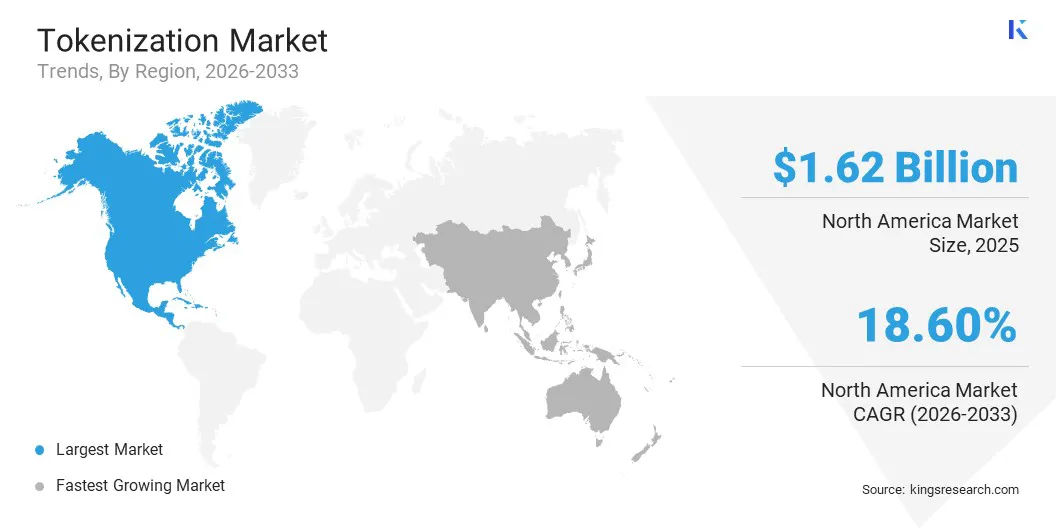
North America secured the highest market share in 2025, driven by robust technological infrastructure, early blockchain adoption, and a strong concentration of key players. The region's advanced regulatory environment and supportive frameworks for digital innovation, together with widespread digital-payment adoption and a large base of financial institutions actively piloting tokenization initiatives, have reinforced its leading position.
Asia Pacific is poised to experience significant growth in the foreseeable future. Growth is underpinned by rapid digital-payment penetration in China and India, expanding fintech investment, and government-backed digital-identity and financial-inclusion programs across the region.
Europe's market growth is supported by increasing focus on digital transformation and regulatory initiatives aimed at fostering innovation and cybersecurity. Growing interest from financial institutions, government agencies, and enterprises in blockchain-based solutions for asset digitization, supply-chain management, and DeFi applications is expected to further support regional growth.
The global tokenization market report will provide valuable insight with an emphasis on the fragmented nature of the industry. Prominent players are focusing on several key business strategies such as partnerships, mergers and acquisitions, product innovations, and joint ventures to expand their product portfolio and increase their market shares across different regions.
Companies in this sector are adopting expansion and investment as their major strategic initiatives. Industry players are investing extensively in R&D activities, building new manufacturing facilities, and optimizing supply chains.
How We Gather This Information
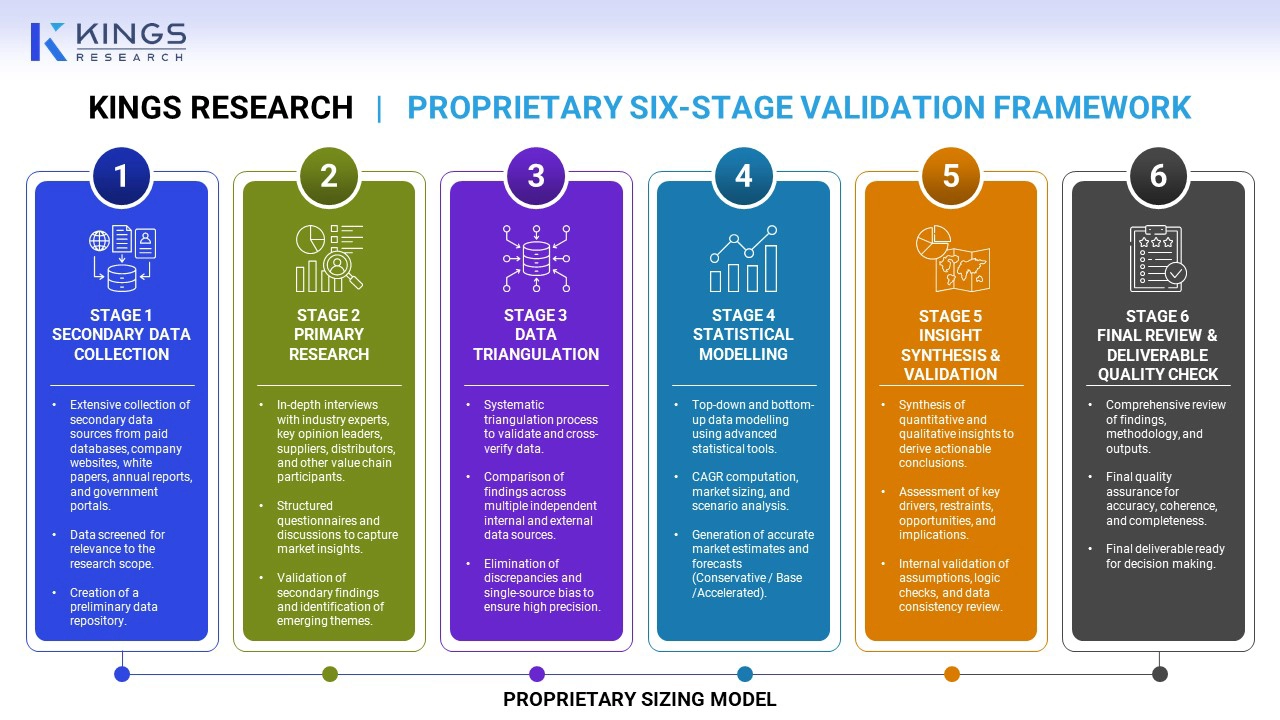
Our methodology triangulates insights from multiple independent and publicly available research databases and is further validated against regulatory filings and public company disclosures. All estimates are cross-verified; no single-source data is presented without validation.
Our custom offerings deliver tailored, data-driven intelligence and strategic guidance to help organizations identify, evaluate, and capitalize on key market opportunities.
Frequently Asked Questions

Antriksh is an experienced analyst specializing in cross-domain research across diverse industries. With a strong foundation in data analysis and statistical interpretation, he delivers insightful market reports that guide strategic decision-making. Antriksh excels in conducting primary research, with a focus on identifying trends and understanding consumer behavior. Thriving in dynamic and high-pressure environments, he combines analytical expertise with a commitment to delivering impactful outcomes. Beyond his professional pursuits, Antriksh's passion for travel fuels his curiosity and broadens his perspectives, enriching his ability to uncover unique insights that enhance his research capabilities. He is equally adept at synthesizing quantitative findings with qualitative context, which allows him to present holistic viewpoints to clients. His disciplined work ethic and intellectual agility make him a trusted partner in navigating market uncertainties. He consistently seeks out new methodologies to refine his analytical toolkit, and his ability to communicate complex insights clearly ensures stakeholders act confidently on his recommendations.
Habi is a seasoned research and consulting leader with renowned experience in guiding clients on strategic growth and transformation initiatives across global markets. He has led high-performing research teams that deliver actionable insights on market expansion, M&A strategies, opportunity assessment, new business development, and product launches. His project portfolio spans large petrochemical producers, electronic device manufacturers, lubricants companies, and other leading enterprises across diverse industrial and consumer sectors. He currently heads the research department at Kings Research, where he is responsible for setting the research agenda, mentoring analysts, and ensuring client-ready deliverables that support executive decision-making. With extensive experience in market intelligence, strategic research, and consulting, Habi brings a strong understanding of evolving industry dynamics, competitive landscapes, emerging opportunities, and business growth challenges. His expertise includes developing research frameworks, translating complex market data into actionable strategic recommendations, and working closely with senior stakeholders to address critical business questions. He has also contributed to building research capabilities, strengthening analytical methodologies, and driving a culture of quality and insight-led decision-making within research teams. His cross-industry exposure enables him to connect market trends with broader business implications and provide perspectives that help organizations identify opportunities, mitigate risks, and make informed strategic decisions.



.webp&w=128&q=75&dpl=dpl_9cT76VEyqA3GYX2gzuuRZBM2Vb4x)
