
Inquire Now
Key Strategic Points
According to Kings Research, the global SD-WAN market size was recorded at USD 23.79 billion in 2025 and is projected to reach USD 42.82 billion by 2033, growing at a CAGR of 19.80% from 2026 to 2033. The market is expanding as enterprises migrate workloads to multi-cloud environments, replace legacy MPLS connections with flexible broadband and 5G networks, and adopt centralized software-defined network management.
Enterprise demand for secure and scalable connectivity across distributed branches, cloud platforms, and remote work environments is increasing adoption of SD-WAN solutions. The integration of intelligent traffic management, cloud-native networking, and security capabilities is further strengthening the value proposition of SD-WAN across large enterprises and small and medium enterprises.
The shift toward integrated SASE architectures is also reshaping the competitive landscape, as vendors increasingly combine SD-WAN with security capabilities such as Zero Trust Network Access (ZTNA), Secure Web Gateway (SWG), and Cloud Access Security Broker (CASB). This convergence enables enterprises to manage connectivity and security through unified platforms while reducing dependence on fragmented network infrastructure.
Major companies operating in the SD WAN industry are Cisco Systems, Inc.; Oracle; Hewlett Packard Enterprise Development LP; Nokia; Broadcom; Huawei Technologies Co., Ltd.; Juniper Networks, Inc.; Fortinet, Inc.; Citrix Systems, Inc.; Epsilon Telecommunications; Palo Alto Networks, Inc.; Riverbed Technology, Inc.; Telefonaktiebolaget LM Ericsson; Colt Technology Services Group Limited; and Tata Communications Limited.
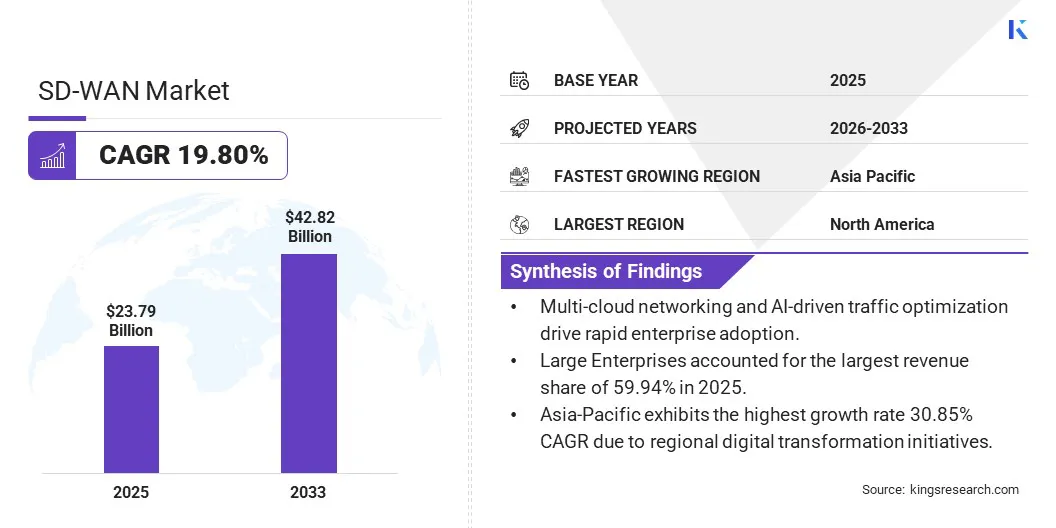
The rapid adoption of multi-cloud and cloud-native applications is increasing the need for reliable and secure connectivity across distributed enterprise environments. SD-WAN enables centralized network orchestration, application-aware routing, and dynamic traffic management across broadband, LTE, 5G, MPLS, and cloud connections, allowing enterprises to optimize network performance while controlling connectivity costs.
Enterprises are also replacing expensive MPLS circuits with hybrid connectivity models that combine broadband, LTE, and 5G. This transition reduces network operating costs while providing greater flexibility for branch offices and distributed workforces. The rise of remote and hybrid work is further increasing demand for secure connectivity between employees, branch locations, cloud applications, and data centers.
AIOps and machine learning are increasingly being integrated into SD-WAN platforms to automate traffic routing, identify network anomalies, predict performance issues, and optimize application delivery. These capabilities enable enterprises to reduce manual network management and improve operational efficiency across complex distributed environments.
Integration with legacy network infrastructure remains a key restraint, as enterprises often operate complex environments involving MPLS, traditional routers, firewalls, and multiple network management platforms. Migrating these systems to SD-WAN can require substantial configuration, interoperability testing, and investment in network modernization.
Direct internet connectivity can also increase cybersecurity exposure when SD-WAN architectures do not integrate appropriate security controls. Enterprises must strengthen firewall, encryption, zero-trust, and access-control capabilities to protect branch-to-cloud traffic. In addition, inconsistent broadband availability and bandwidth quality across regions can limit SD-WAN performance, particularly in developing markets.
AI and machine learning are transforming SD-WAN platforms from centrally managed connectivity tools into intelligent networking environments capable of automated traffic optimization, predictive monitoring, and fault detection. Vendors are increasingly embedding AIOps capabilities into SD-WAN platforms to improve application performance and reduce manual intervention.
At the same time, SD-WAN is increasingly converging with SASE architectures. Enterprises are upgrading standalone SD-WAN deployments with ZTNA, SWG, CASB, and other security capabilities to create unified connectivity and security environments. This convergence is increasing demand for integrated platforms capable of managing secure branch-to-cloud and user-to-application connectivity.
|
Segmentation |
Details |
|
By Component |
Solution Services |
|
By Deployment |
On-premises, cloud-based |
|
By Organization Size |
Small and Medium Enterprises, Large Enterprises |
|
By Vertical |
IT & Telecommunications, BFSI, Manufacturing, Retail, Healthcare, Government, Transport & Logistics, Energy & Utilities |
|
By Region |
North America: U.S., Canada, Mexico |
|
Europe: France, UK, Spain, Germany, Italy, Russia, and the rest of Europe |
|
|
Asia-Pacific: China, Japan, India, Australia, ASEAN, South Korea, Rest of Asia-Pacific |
|
|
Middle East & Africa: Turkey, U.A.E., Saudi Arabia, South Africa, Rest of Middle East & Africa |
|
|
South and Central America: Brazil, Argentina, and the rest of South and Central America |
Based on the component, the market is categorized into solutions and services. The solutions segment held the largest share in 2025, supported by increasing enterprise demand for centralized network management, application-aware routing, traffic visibility, and integrated security capabilities. Enterprises are increasingly deploying SD-WAN solutions to manage connectivity across branch offices, data centers, cloud environments, and remote users. The growing integration of SASE, AI-driven network optimization, and multi-cloud management capabilities is further strengthening demand for comprehensive SD-WAN platforms. The services segment is expected to register the fastest growth, driven by rising demand for managed SD-WAN deployment, network monitoring, configuration, maintenance, and technical support. Enterprises increasingly rely on managed service providers to reduce internal skill requirements and simplify SD-WAN implementation.
Based on deployment, the market is segmented into on-premises and cloud-based. The on-premises segment accounted for the largest share in 2025, primarily due to enterprise preference for greater control over network infrastructure, security policies, data management, and network performance.
Large organizations and highly regulated industries continue to maintain on-premises infrastructure to meet internal security and compliance requirements. However, the cloud-based segment is expected to grow at the fastest pace as enterprises increasingly adopt cloud-native networking, managed SD-WAN, and subscription-based infrastructure models.
Cloud-based SD-WAN also enables faster deployment, centralized management, and flexible scaling across distributed locations, making it particularly attractive to organizations expanding their cloud and hybrid-work infrastructure.
Based on organization size, the market is categorized into large enterprises and small & medium enterprises (SMEs). Large enterprises held the largest share in 2025, supported by their extensive branch networks, complex IT infrastructure, multi-cloud requirements, and higher demand for centralized network management.
Large organizations are increasingly migrating from MPLS to hybrid connectivity models to reduce networking costs while improving application performance across geographically distributed operations.
The SME segment is expected to grow at the fastest rate as managed SD-WAN services and cloud-based deployment models reduce the technical complexity and upfront infrastructure requirements associated with SD-WAN adoption. Flexible subscription models are also making enterprise-grade networking capabilities more accessible to smaller organizations.
Based on region, the global SD-WAN market is classified into North America, Europe, Asia-Pacific, the Middle East & Africa, and South & Central America.
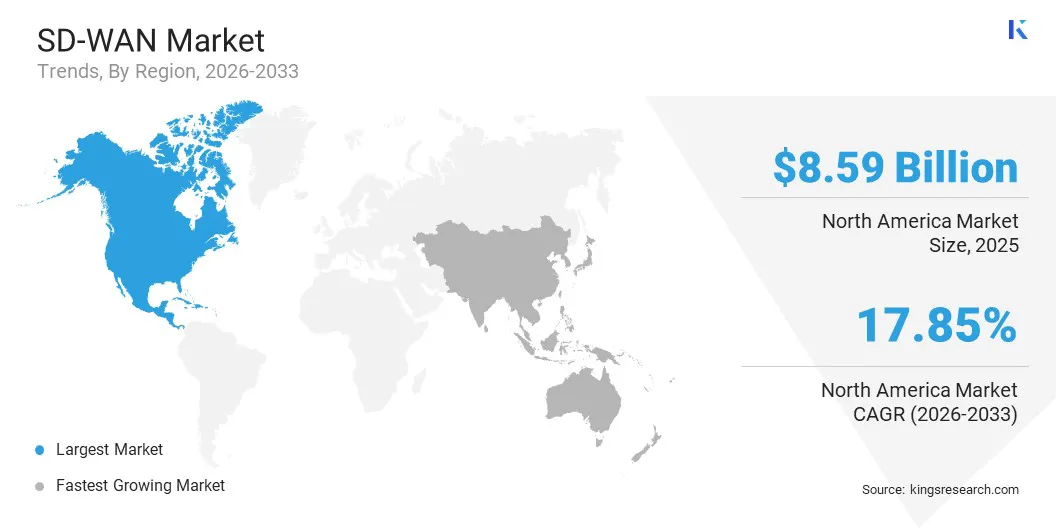
According to Kings Research, North America held the largest share of the global SD-WAN market in 2025, accounting for 36.10% and generating approximately USD 5.34 billion in revenue. The region's leadership stems from the presence of major networking and cybersecurity vendors, high enterprise cloud adoption, and extensive deployment of distributed IT infrastructure.
Enterprises across the U.S. and Canada are increasingly transitioning from traditional MPLS networks toward broadband, 5G, and cloud-based connectivity. The integration of SD-WAN with SASE and AI-driven network management is further supporting regional adoption.
The region also benefits from a mature managed-services ecosystem, strong cybersecurity investment, and early adoption of cloud-native enterprise technologies.
The Asia-Pacific region is projected to record the fastest growth during the forecast period. Rapid digital transformation, expanding cloud infrastructure, growing enterprise mobility, and increasing adoption of 5G are creating strong demand for flexible and scalable networking solutions.
China, India, Japan, Australia, and Southeast Asian economies are investing in cloud infrastructure and digital enterprise platforms. The expansion of distributed operations and increasing adoption of software-based networking are creating additional opportunities for SD-WAN providers.
Europe, the Middle East & Africa, and South & Central America are witnessing increasing SD-WAN adoption, driven by digital transformation, cloud migration, telecommunications modernization, and enterprise network upgrades. Hybrid-work adoption, data sovereignty requirements, and demand for secure cloud connectivity are supporting Europe, with Germany, the UK, and France representing key markets. The Middle East & Africa market is benefiting from smart infrastructure initiatives and investments in digital and cloud infrastructure, particularly in the UAE and Saudi Arabia. South & Central America is experiencing growing demand as enterprises replace costly legacy connectivity with broadband and LTE-based networks, with Brazil and Argentina emerging as important markets.
The competitive landscape of the SD-WAN industry remains dynamic, characterized by continuous product innovations and strategic enhancements. Leading vendors are introducing AI-driven capabilities, integrated security frameworks, and cloud-native features to strengthen portfolio differentiation.
Frequent launches of scalable, intent-based networking solutions are addressing rising enterprise demands for agility and operational efficiency. Moreover, providers are advancing platform upgrades to support hybrid and multi-cloud environments, aiming to enhance customer retention and market presence.
How We Gather This Information
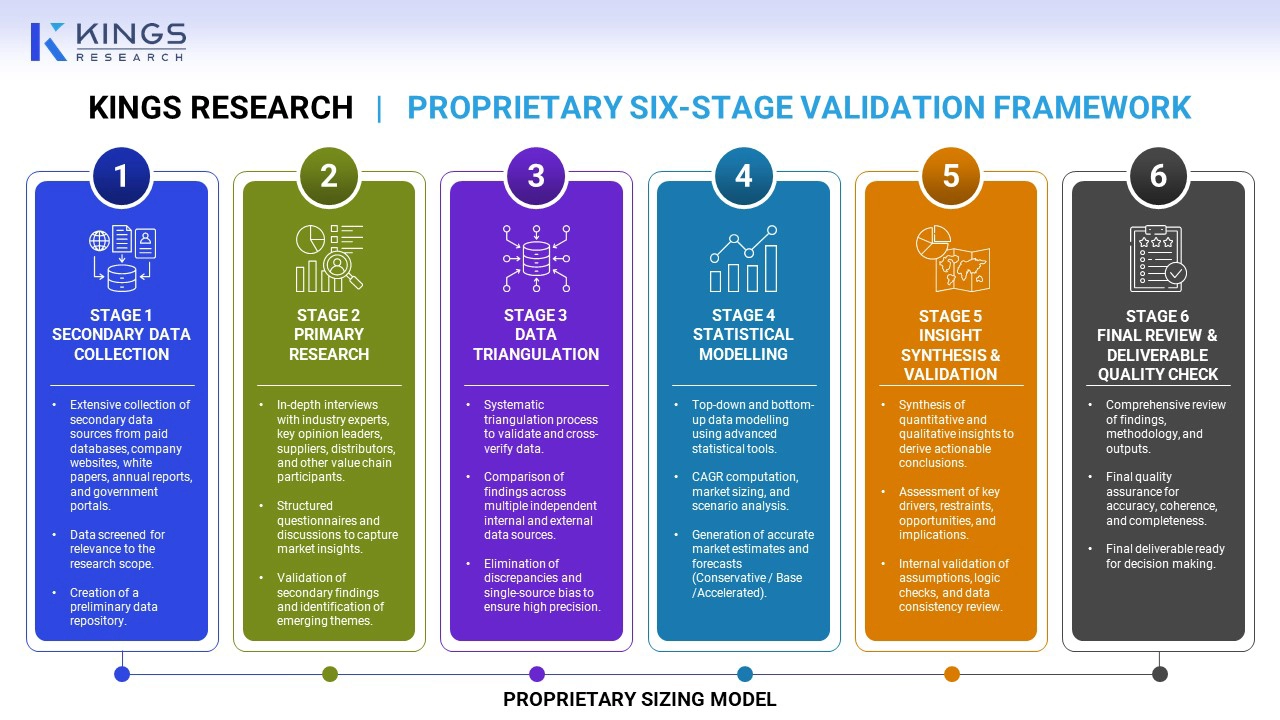
Our methodolcombinesates insights from multiple independent and publicly available research databases and is further validated against regulatory filings and public company disclosures. All estimates are cross-verified; no single-source data is presented without validation.
Our custom offerings deliver tailored, data-driven intelligence and strategic guidance to help organizations identify, evaluate, and capitalize on key market opportunities.
Frequently Asked Questions

Over the years, Versha brings over 15 years of experience managing consulting assignments across industries, including Food and Beverage, Consumer Goods, ICT, Aerospace, and more. Her work has spanned diverse sectors. Her cross-domain expertise and adaptability make her a versatile and dependable professional. She is known for her keen business insight and foresight. With sharp analytical skills and a curious mindset, Versha excels at transforming complex data into actionable insights. She has a proven track record of unraveling market dynamics, identifying trends, and delivering tailored solutions to meet client needs. As a skilled leader, Versha has successfully mentored research teams and directed projects with precision, ensuring high-quality outcomes. Her collaborative approach and strategic vision enable her to turn challenges into opportunities and consistently deliver impactful results. Whether analyzing markets, engaging stakeholders, or crafting strategies, Versha draws on her deep expertise and industry knowledge to drive innovation and deliver measurable value.
Habi is a seasoned research and consulting leader with renowned experience in guiding clients on strategic growth and transformation initiatives across global markets. He has led high-performing research teams that deliver actionable insights on market expansion, M&A strategies, opportunity assessment, new business development, and product launches. His project portfolio spans large petrochemical producers, electronic device manufacturers, lubricants companies, and other leading enterprises across diverse industrial and consumer sectors. He currently heads the research department at Kings Research, where he is responsible for setting the research agenda, mentoring analysts, and ensuring client-ready deliverables that support executive decision-making. With extensive experience in market intelligence, strategic research, and consulting, Habi brings a strong understanding of evolving industry dynamics, competitive landscapes, emerging opportunities, and business growth challenges. His expertise includes developing research frameworks, translating complex market data into actionable strategic recommendations, and working closely with senior stakeholders to address critical business questions. He has also contributed to building research capabilities, strengthening analytical methodologies, and driving a culture of quality and insight-led decision-making within research teams. His cross-industry exposure enables him to connect market trends with broader business implications and provide perspectives that help organizations identify opportunities, mitigate risks, and make informed strategic decisions.



.webp&w=128&q=75&dpl=dpl_DPva2LrvfsBdTJm1XZj67UTrvMHL)
