
Inquire Now
Key Strategic Points
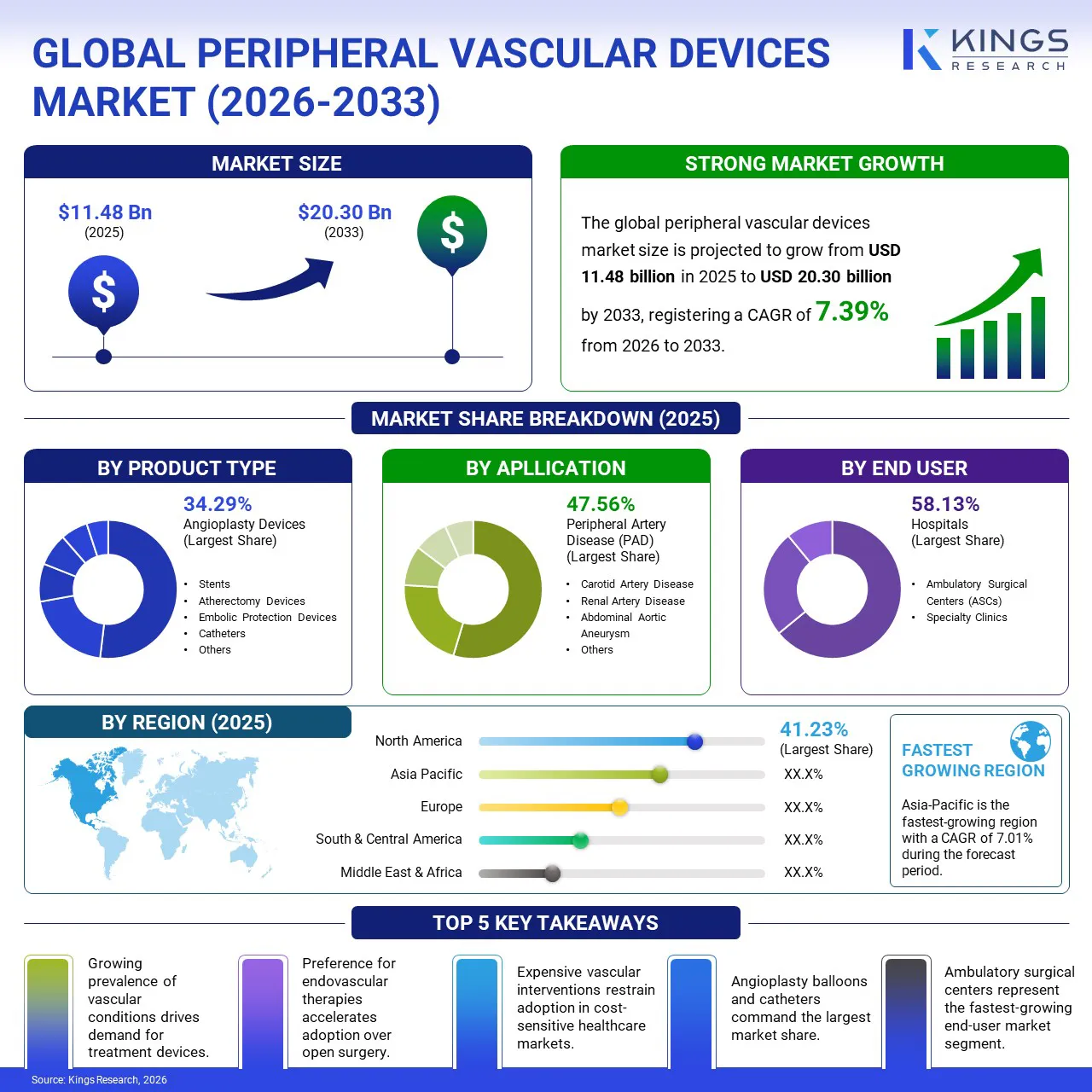
According to Kings Research, the global peripheral vascular devices market size was valued at USD 11.48 billion in 2025 and is projected to reach USD 20.30 billion by 2033, exhibiting a CAGR of 7.39% during the forecast period (2026-2033).
Market expansion is driven by the rising prevalence of peripheral artery disease, increasing adoption of minimally invasive endovascular procedures, and technological advancements in angioplasty, stent, and atherectomy devices. Expansion of outpatient care settings and ongoing improvements in vascular intervention infrastructure are further driving this growth.
Kings Research estimates that these drivers, together with rising disease awareness and expanding reimbursement coverage in key markets, are jointly reinforcing procedure volumes across hospital and outpatient settings.
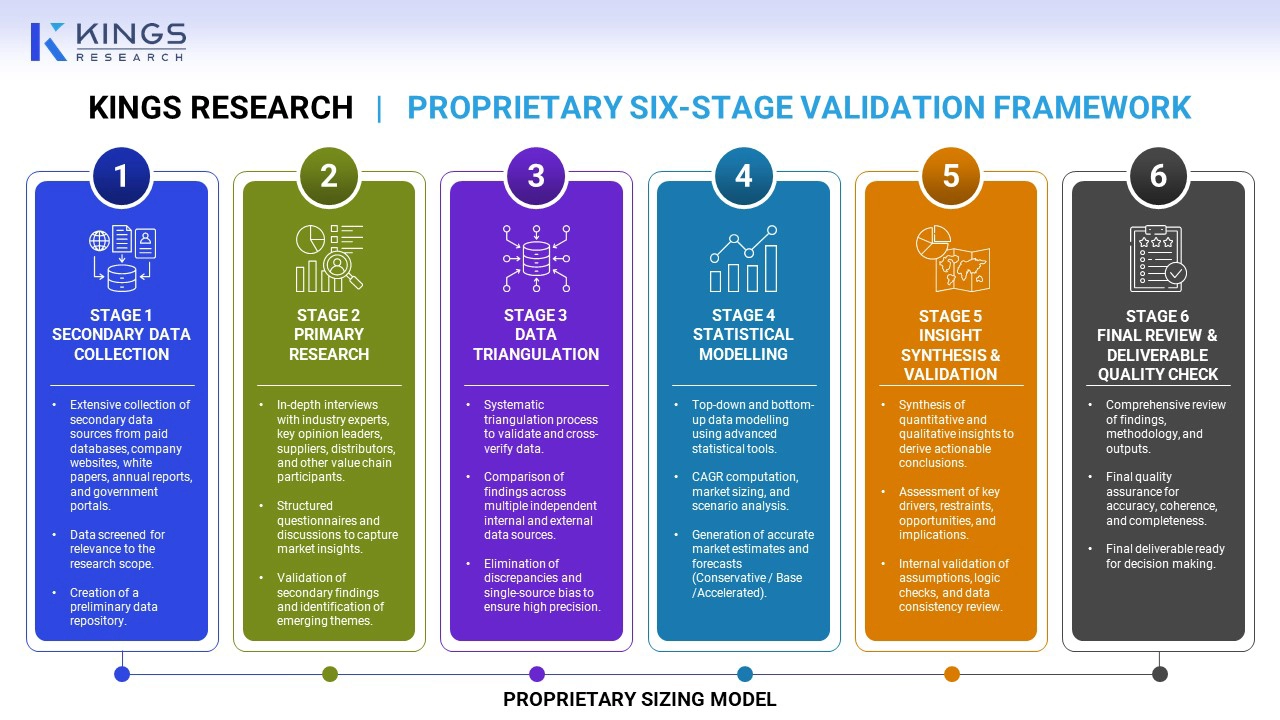
These estimates are based on Kings Research’s proprietary research methodology, which combines primary interviews with industry participants, secondary research across published market reports and regulatory filings, and validation against public company disclosures.
The rising prevalence of peripheral artery disease and other vascular disorders boosts demand for peripheral vascular devices, driven by increasing rates of diabetes, obesity, hypertension, smoking, and an aging population.
The growing incidence of arterial occlusions, aneurysms, and venous complications is raising the demand for angioplasty balloons, stents, and atherectomy systems to restore blood flow and reduce procedural risks. Improving disease awareness, earlier diagnosis, and the growing adoption of minimally invasive endovascular treatments are further supporting market growth.
According to the U.S. Centers for Disease Control and Prevention (CDC), peripheral artery disease affects approximately 6.5 million adults aged 40 years and older in the U.S., with prevalence increasing significantly among individuals aged 60+, diabetics, and those with a history of smoking.
A key challenge restraining the growth of the peripheral vascular devices market is the high cost and procedural complexity associated with advanced endovascular interventions. Adoption of next-generation stents, atherectomy systems, imaging-guided devices, and specialty catheters requires significant capital investment, specialized infrastructure, and highly trained interventional specialists.
Additionally, procedural variability, reimbursement limitations, and device selection complexity increase operational burden for healthcare providers. These factors limit adoption among smaller hospitals, ambulatory surgical centers, and healthcare systems in cost-sensitive and emerging markets.
To address this challenge, market participants are focusing on device miniaturization, simplified delivery systems, and integrated platform designs that reduce procedural complexity. Manufacturers are also expanding physician training programs, clinical education initiatives, and partnerships with healthcare providers to improve procedural efficiency, support skill development, and enable broader adoption of peripheral vascular devices across diverse care settings.
Continued innovation in device design, drug delivery, lesion preparation, and procedural guidance to improve treatment precision, durability, and patient safety is transforming the market. Healthcare providers are increasingly adopting next-generation stents, drug-coated balloons (DCBs), atherectomy systems, thrombectomy devices, and endovascular aneurysm repair (EVAR) technologies incorporating advanced materials, drug-delivery coatings, improved catheter designs, and enhanced delivery and imaging capabilities.
These innovations are intended to improve device navigability and deployment accuracy, optimize lesion preparation and drug delivery, reduce vessel trauma and procedural complications, and improve longer-term vessel patency. As these technologies become more integrated into routine endovascular workflows, they are supporting more predictable minimally invasive treatment and expanding the use of peripheral vascular interventions across hospital and outpatient settings.
|
Segmentation |
Details |
|
By Product Type |
Angioplasty Devices, Stents, Atherectomy Devices, Embolic Protection Devices, Catheters, Others |
|
By Application |
Peripheral Artery Disease (PAD), Carotid Artery Disease, Renal Artery Disease, Abdominal Aortic Aneurysm, Others |
|
By End User |
Hospitals, Ambulatory Surgical Centers (ASCs), Specialty Clinics |
|
By Region |
North America: U.S., Canada, Mexico |
|
Europe: France, UK, Spain, Germany, Italy, Russia, and the rest of Europe |
|
|
Asia-Pacific: China, Japan, India, Australia, ASEAN, South Korea, Rest of Asia-Pacific |
|
|
Middle East & Africa: Turkey, U.A.E., Saudi Arabia, South Africa, Rest of Middle East & Africa |
|
|
South and Central America: Brazil, Argentina, and the rest of South and Central America |
The angioplasty devices segment earned USD 3.83 billion in 2025, mainly due to high peripheral artery disease procedure volumes and the widespread adoption of drug-coated balloons to reduce restenosis and improve long-term outcomes. The Others product-type category includes guidewires, vascular closure devices, and introducer sheaths used to support angioplasty, stenting, and atherectomy procedures.
The peripheral artery disease segment held a share of 45.32% in 2025, driven by the high prevalence of PAD globally and the frequent need for repeat endovascular interventions using angioplasty, stenting, and atherectomy devices. The Others application category includes iliac artery disease and other less-prevalent peripheral vascular conditions treated using similar endovascular device types.
The hospital's end-use segment is projected to reach USD 10.63 billion by 2033. The high growth rate is attributed to a high volume of complex peripheral vascular procedures, advanced interventional infrastructure, and specialized vascular care teams.
Based on region, the market has been classified into North America, Europe, Asia Pacific, the Middle East & Africa, and South and Central America.
North America's peripheral vascular devices market share stood at 41.23% in 2025, with a valuation of USD 4.73 billion. This dominance is reinforced by a high prevalence of peripheral artery disease, well-established interventional infrastructure, and strong adoption of advanced endovascular technologies.
The U.S. leads regional demand, propelled by an aging population, a high burden of diabetes and cardiovascular risk factors, and broad access to minimally invasive treatments. Favorable reimbursement coverage for peripheral interventions and early adoption of drug-coated balloons, atherectomy systems, and advanced catheter technologies further support domestic market growth.
The Asia-Pacific peripheral vascular devices industry is set to grow at a CAGR of 6.89% over the forecast period. This rapid growth is propelled by an expanding patient population and improving access to interventional vascular care.
The rising prevalence of peripheral artery disease, diabetes, and lifestyle-related cardiovascular risk factors is increasing demand for peripheral interventions across major economies such as China, India, and Japan. Ongoing investments in hospital infrastructure, expansion of catheterization laboratories, and growing adoption of minimally invasive endovascular procedures are further supporting regional market expansion.
For instance, in February 2025, Shanghai Tendfo Medical Device Co., Ltd. received approval from the China National Medical Products Administration (NMPA) for its Tendvia Pulmonary Artery Thrombectomy System. The device is indicated for transcatheter thrombectomy in patients with acute high-risk or intermediate-risk pulmonary embolism, offering a minimally invasive option for critically ill patients.
Europe is forecasted to witness steady market growth, driven by the rising prevalence of peripheral artery disease, an aging population, and increasing adoption of minimally invasive vascular procedures.
The Middle East & Africa market is projected to grow at a steady pace, supported by the increasing burden of diabetes and cardiovascular diseases, improving healthcare infrastructure, and greater access to advanced vascular interventions. South and Central America is anticipated to experience moderate growth, fueled by rising cardiovascular risk factors, improving healthcare access, and increasing adoption of minimally invasive peripheral vascular procedures.
Leading players operating in the peripheral vascular devices industry are focusing on technological innovation, portfolio expansion, and procedural efficiency to strengthen their competitive position. Major manufacturers are investing in next-generation stents, drug-coated balloons, atherectomy systems, and specialty catheters to improve deliverability, durability, and clinical outcomes in complex peripheral interventions.
Companies are increasingly integrating imaging compatibility, enhanced coatings, and advanced materials into device design to support minimally invasive procedures and reduce complication rates.
Our methodology triangulates insights from multiple independent and publicly available research databases, which is further validated against regulatory filings and public company disclosures. All estimates are cross-verified; no single-source data is presented without validation.
Data collection combines primary interviews with industry participants, including device manufacturers, clinicians, and channel partners, with secondary research across published market reports, regulatory filings, and proprietary databases, applying a combined bottom-up and top-down approach with additional validation from subject matter experts before final quality review.
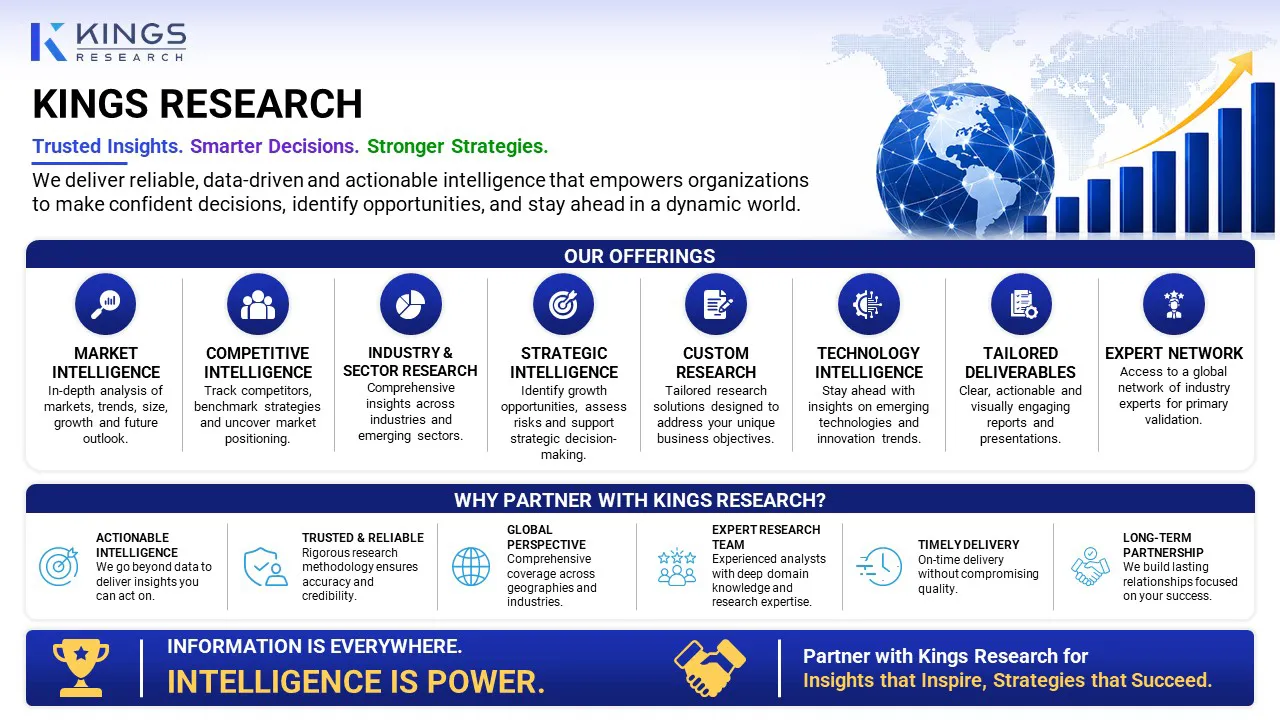
Our custom offerings deliver tailored, data-driven intelligence and strategic guidance to help organizations identify, evaluate, and capitalize on key market opportunities.
Frequently Asked Questions

Swati is a committed research analyst with a passion for optimizing systems and processes across industries, specializing in healthcare but also bringing valuable expertise to sectors such as consumer goods, life sciences, and more. Her cross-domain research approach allows her to generate clear, actionable reports that inform strategic decisions in a variety of fields. Swati is committed to staying ahead of evolving trends, leveraging her broad understanding of different sectors to provide insights that are relevant to a range of industries. In her personal time, she enjoys music and spending quality time with her family, which inspires her creativity and enriches her professional approach. Her systematic methodology ensures that every report is both thorough and practical. Swati's ability to bridge regulatory frameworks with market realities gives her recommendations a distinct edge. She collaborates seamlessly with cross-functional teams, distilling complex data into straightforward narratives. Her proactive monitoring of policy and technological shifts keeps her analysis forward-looking.
With many years of consulting experience across global pharma, biotech, and MedTech markets, Minaz brings deep domain expertise, strategic clarity, and analytical rigor to every engagement. She has led 130+ consulting assignments spanning market entry, competitive landscaping, and portfolio prioritization, helping clients navigate complex, high-stakes decisions with confidence. Known for her ability to synthesize primary and secondary research into executive-ready recommendations, Minaz has built forecasting models and market sizing frameworks that have informed multi-million dollar investment decisions in oncology, diagnostics, and peptide therapeutics. Beyond her analytical strength, Minaz is a trusted client partner, translating complex datasets into clear, actionable insights for senior stakeholders. She currently leads a team of research analysts, driving business expansion, and shaping client engagement strategy.