
Inquire Now
Key strategic points
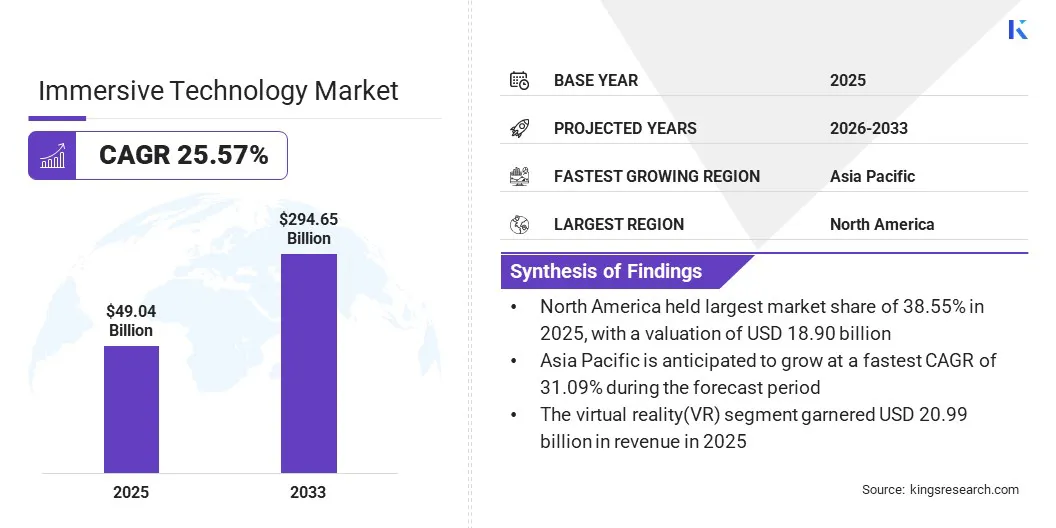
According to Kings Research, the global immersive technology market size was valued at USD 49.04 billion in 2025 and is projected to reach USD 294.65 billion by 2033, growing at a CAGR of 25.57% during the 2025-2033 forecast period. This rapid expansion is fueled by growing use across sectors such as gaming, healthcare, education, and retail, as organizations and consumers increasingly seek interactive, realistic, and engaging digital experiences.
Major companies operating in the global immersive technology industry include Meta, Apple Inc., Sony Electronics Inc., Samsung, Microsoft, Alphabet Inc. (Google LLC), NVIDIA Corporation, Qualcomm Technologies, Inc., Unity Technologies, Epic Games, Inc., Varjo Technologies Oy, HTC Corporation, Magic Leap, Inc., Snap Inc., and PTC.
Kings Research estimates that the development of hardware and artificial intelligence, together with rising adoption of applications in remote collaboration and training, is driving market growth. As immersive technologies become more accessible and affordable, adoption is expanding across both enterprise and consumer use cases, positioning the market for continued expansion through the forecast period.
The growing demand for enhanced user engagement and interactive experiences across industries is a call to immersive technology. Organizations are increasingly trying to identify ways to capture attention, enhance learning outcomes, and create memorable experiences for their audiences. Immersive technologies such as virtual reality (VR), augmented reality (AR), and mixed reality (MR) offer unique opportunities to deeply engage users by simulating real-world scenarios, enabling interactive training, and providing dynamic visualizations.
This heightened level of engagement benefits sectors like gaming and entertainment while also transforming education, healthcare, retail, and enterprise training. The use of immersive technologies is continually gaining momentum and influencing market expansion, as consumers and businesses increasingly prefer more interactive, richer digital interactions over less engaging ones.
The lack of standardization and interoperability presents challenges for various devices and platforms to function seamlessly together. The fast-changing ecosystem contains a variety of hardware, software, and content formats, usually created in isolation by various manufacturers and developers. This results in several issues regarding compatibility between these products, creating barriers to the adoption of such technologies.
As a result, users and organizations face hurdles in adopting solutions that require integration with existing infrastructure or cross-platform deployment. To mitigate these obstacles, industry stakeholders are collaborating to develop common standards and protocols. Increased collaboration and more open systems help different technologies connect more easily, streamline development for creators, and support market growth.
A major trend shaping the future of the market is the integration of artificial intelligence (AI) with virtual, augmented, and mixed reality solutions. AI contributes to immersive experiences, enriching them with intelligent, adaptive, and personalized interactions, including responsive virtual characters, real-time language translation, and dynamic content generation driven by user behavior.
This integration improves the realism and interactivity of virtual environments while also expanding the potential for applications in education, healthcare, retail, and enterprise training. AI-powered immersive technologies will use automated processes and customized experiences based on user needs to increase user interaction, streamline workflows, and speed up the implementation of immersive solutions across multiple industries.
|
Segmentation |
Details |
|
By Technology |
Virtual Reality (VR), Augmented Reality (AR), Mixed Reality (MR), and Others |
|
By Industry |
Gaming & Entertainment, Healthcare & Life Sciences, Retail & E-commerce, Industrial & Manufacturing, Automotive, Education & Training, Aerospace & Defense, Tourism & Hospitality, and Others |
|
By Region |
North America: U.S., Canada, Mexico |
|
Europe: France, UK, Spain, Germany, Italy, Russia, Rest of Europe |
|
|
Asia-Pacific: China, Japan, India, Australia, ASEAN, South Korea, Rest of Asia-Pacific |
|
|
Middle East & Africa: Turkey, U.A.E., Saudi Arabia, South Africa, Rest of Middle East & Africa |
|
|
South & Central America: Brazil, Argentina, Rest of South & Central America |
Based on technology, the market is categorized into virtual reality (VR), augmented reality (AR), mixed reality (MR), and others. According to Kings Research, the virtual reality (VR) segment held the largest share of the market in 2025, accounting for USD 20.99 billion, primarily driven by its widespread adoption across gaming, entertainment, and training applications. The immersive nature of VR is generating strong demand among both consumers and enterprises, supported by continuous advancements in VR hardware and software. Furthermore, increasing investments in VR-based education, medical simulations, and virtual collaboration tools are expanding the technology's applications across various industries, thereby supporting the growth of the VR segment.
Based on industry, the market is categorized into gaming & entertainment, healthcare & life sciences, retail & e-commerce, industrial & manufacturing, automotive, education & training, aerospace & defense, tourism & hospitality, and others. According to Kings Research, the gaming & entertainment segment held the largest share of the market in 2025, accounting for 31.45%, primarily due to the early adoption and continuous innovation in immersive technologies. Growing consumer interest in interactive and realistic experiences is driving demand for immersive solutions across gaming and entertainment. In addition, the introduction of new VR/AR-enabled games and increasing content delivery are supporting segment growth, encouraging both gamers and entertainment providers to invest in advanced immersive technology solutions.
By region, the global market is classified into North America, Europe, Asia-Pacific, Middle East & Africa, and South & Central America.
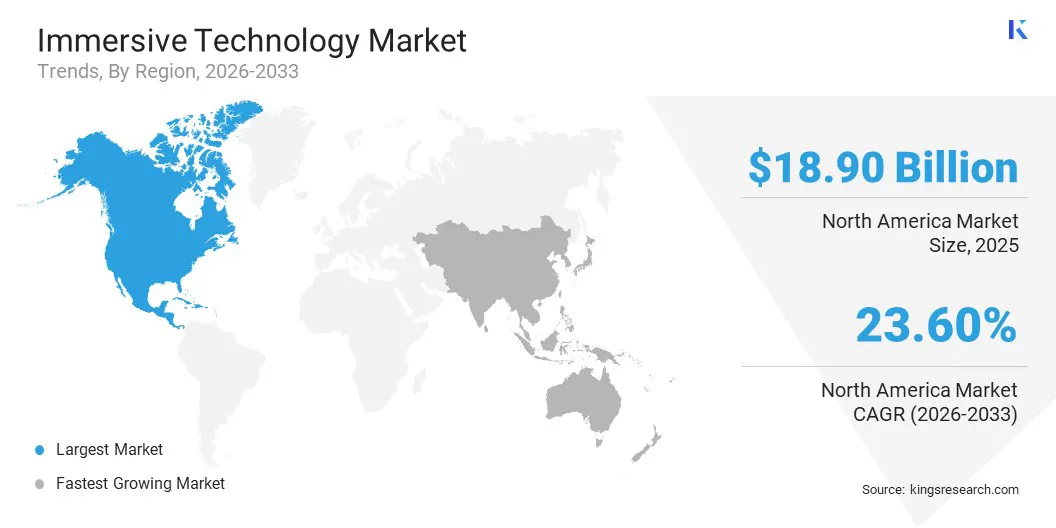
North America's immersive technology market share stood at 38.55% in 2025, valued at USD 18.90 billion. A robust ecosystem of major technology firms, significant R&D investment, and early adoption across gaming, healthcare, education, and retail reinforce this dominance. Well-established players and numerous startups have driven constant innovation in hardware and software solutions.
Government support, access to digital infrastructure, and a focus on innovation have encouraged businesses and consumers to adopt immersive technologies more rapidly. As demand for advanced digital engagement rises, North America is expected to maintain its leadership in setting industry trends.
The Asia-Pacific immersive technology market will grow at a CAGR of 31.09% over the forecast period. Digital transformation, rapid urbanization, and widespread smartphone and internet adoption are driving this strong growth. Countries such as China, Japan, South Korea, and India are investing heavily in next-generation technologies and fostering innovation through government initiatives and public-private partnerships.
Growing adoption of immersive applications in entertainment, education, manufacturing, and retail is driving regional market expansion. Asia-Pacific is rapidly establishing itself as a key center for developing, commercializing, and adopting immersive technology solutions through collaboration between local enterprises and global technology leaders.
Europe is advancing immersive technology through EU-backed virtual-world initiatives, XR research, digital twins, and applications across healthcare, education, manufacturing, and public services. The Middle East & Africa is seeing growing adoption through digital transformation, smart-city development, tourism, entertainment, and immersive public experiences, supported by initiatives such as Saudi Arabia’s Quality of Life Program. South and Central America are gradually adopting AR, VR, and immersive solutions alongside broader digital transformation and technology-infrastructure development, particularly in larger economies such as Brazil. Across these regions, applications are expanding beyond entertainment toward industrial training, education, healthcare, tourism, design, and virtual collaboration. Overall, improving digital infrastructure, government-backed technology programs, and expanding enterprise use cases are expected to support continued adoption of immersive technologies.
The competitive landscape of the immersive technology market is dynamic, with a mix of established technology leaders, agile startups, and specialized solution providers competing for market share. Companies are investing in research and development to maximize the potential of virtual reality, augmented reality, mixed reality, and extended reality technologies. Strategic partnerships, mergers and acquisitions, and collaborations are also prevalent as companies aim to broaden their product portfolio and explore new markets.
Additionally, IoT providers are increasingly focusing on developing industry-specific solutions, improving user experiences, and delivering advanced connected applications to differentiate their offerings in a competitive market. Rapid innovation and evolving consumer and business demands continue to drive intense competition throughout the market.
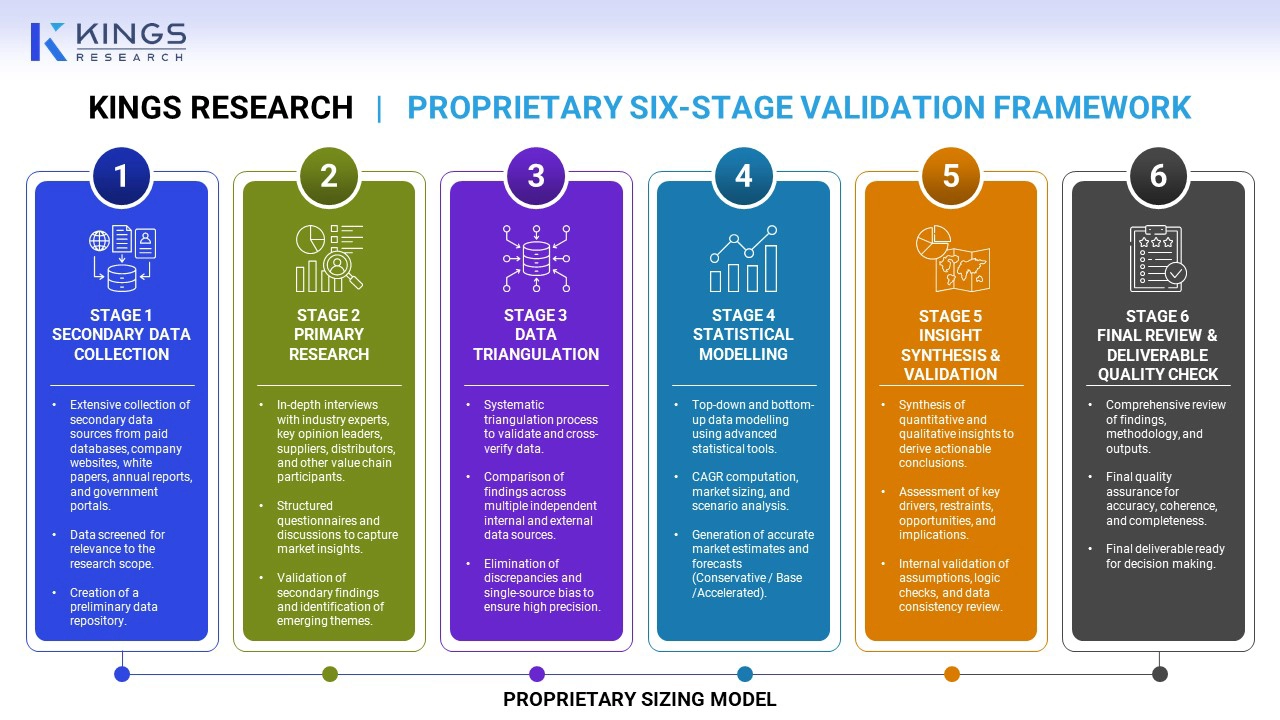
How We Gather This Information
Our methodology combines insights from multiple independent and publicly available research databases and is further validated against regulatory filings and public company disclosures. All estimates are cross-verified; no single-source data is presented without validation.
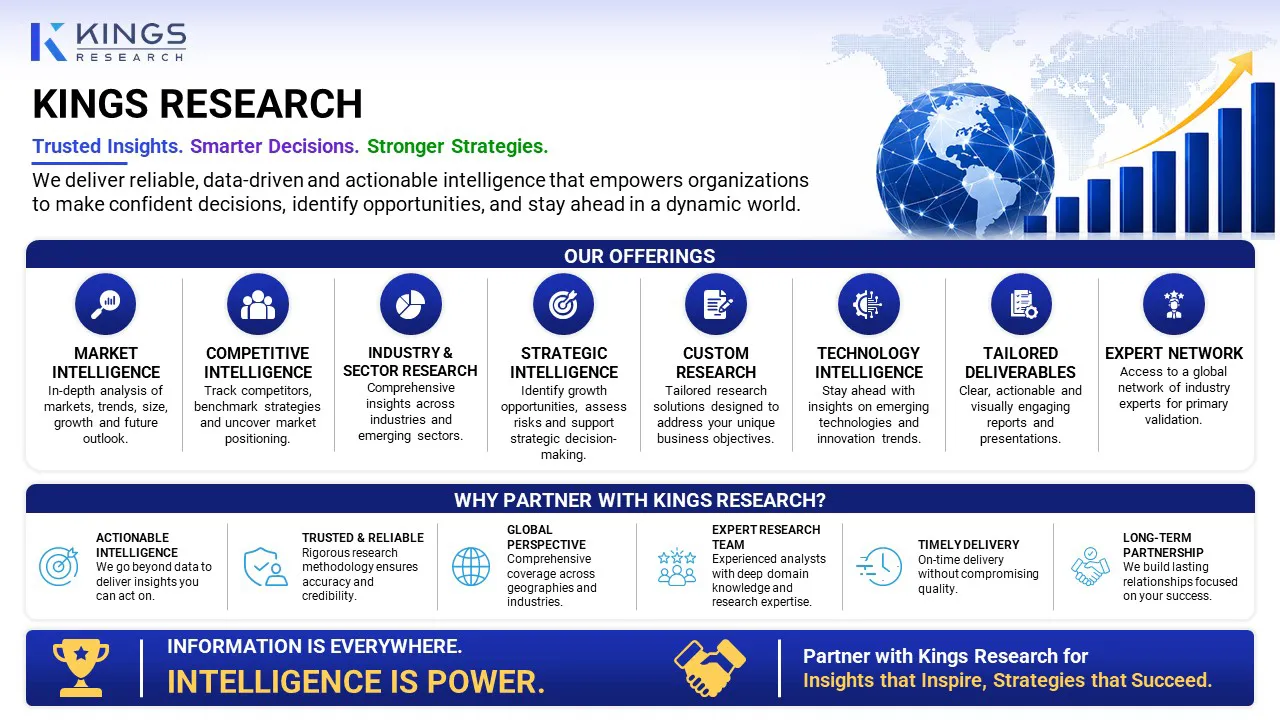
Our custom offerings deliver tailored, data-driven intelligence and strategic guidance to help organizations identify, evaluate, and capitalize on key market opportunities.
Frequently Asked Questions

Aswathi holds cross-domain expertise, translating market trends and competitive intelligence into decision-ready insights. Her work helps clients interpret evolving market conditions and identify growth opportunities. She brings a focused, insight-led approach to research execution. She translates these findings into clear, prioritized action plans that align with client capabilities. Her research often includes scenario modeling to test growth strategies under varying economic conditions. She maintains a rigorous validation process, cross-checking primary and secondary sources to ensure reliability. Clients value her ability to synthesize noisy data into concise executive summaries that drive board-level discussions. Her sector-specific lens, combined with a pragmatic focus on execution, consistently delivers high-impact, commercially sound recommendations. Her structured yet flexible research frameworks adapt to client timelines without compromising depth. She is known for distilling complex trade-offs into straightforward, defensible positions that facilitate confident decision-making.
Habi is a seasoned research and consulting leader with renowned experience in guiding clients on strategic growth and transformation initiatives across global markets. He has led high-performing research teams that deliver actionable insights on market expansion, M&A strategies, opportunity assessment, new business development, and product launches. His project portfolio spans large petrochemical producers, electronic device manufacturers, lubricants companies, and other leading enterprises across diverse industrial and consumer sectors. He currently heads the research department at Kings Research, where he is responsible for setting the research agenda, mentoring analysts, and ensuring client-ready deliverables that support executive decision-making. With extensive experience in market intelligence, strategic research, and consulting, Habi brings a strong understanding of evolving industry dynamics, competitive landscapes, emerging opportunities, and business growth challenges. His expertise includes developing research frameworks, translating complex market data into actionable strategic recommendations, and working closely with senior stakeholders to address critical business questions. He has also contributed to building research capabilities, strengthening analytical methodologies, and driving a culture of quality and insight-led decision-making within research teams. His cross-industry exposure enables him to connect market trends with broader business implications and provide perspectives that help organizations identify opportunities, mitigate risks, and make informed strategic decisions.