
Inquire Now
Key Strategic Points
Human nutrition refers to the intake of essential nutrients necessary to support growth, development, and overall health. It includes vitamins, minerals, proteins, amino acids, probiotics, carbohydrates, and fats that provide energy and maintain body functions.
Nutrition products are sold through prescription and over-the-counter channels to meet diverse consumer needs. Their major applications include dietary supplements, functional foods, medical nutrition, sports nutrition, and infant nutrition, focusing on preventive health and specific dietary requirements.
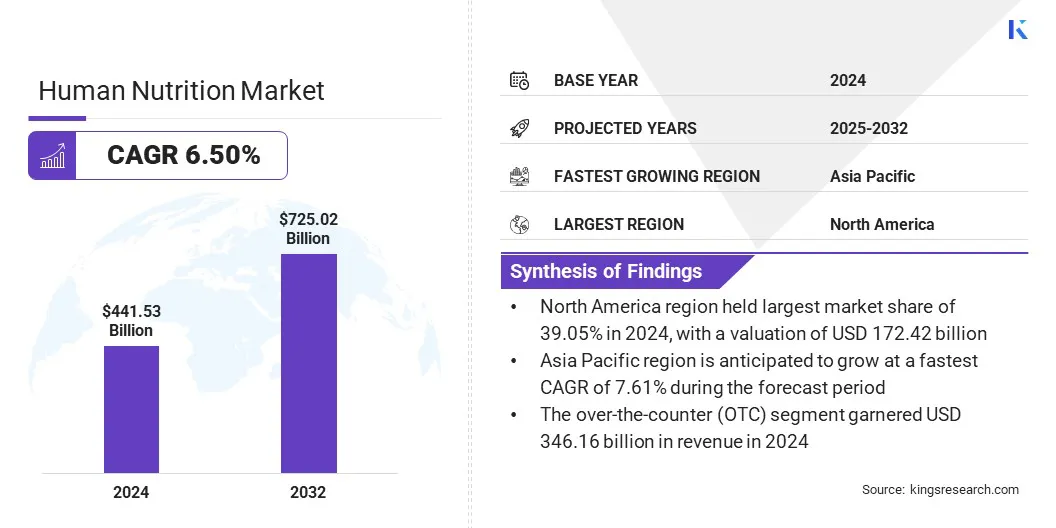
According to Kings Research, the global human nutrition market size was valued at USD 441.53 billion in 2024 and is projected to grow from USD 466.52 billion in 2025 to USD 725.02 billion by 2032, exhibiting a CAGR of 6.50% over the forecast period. This growth is driven by rising undernutrition-linked health risks, which is increasing the demand for dietary supplements, protein-rich products, and targeted nutrition solutions.
The market is witnessing a major trend of innovative multivitamin solutions, as a result of technological advancements driving the development of formulations that combine multiple essential nutrients to meet diverse health and lifestyle requirements.
Major companies operating in the human nutrition market are Abbott, Nestlé, Glanbia PLC, Herbalife International, Inc., Amway, BASF, dsm-firmenich, DuPont de Nemours, Inc., Kerry, Pfizer Inc., Sanofi, Unilever, Meyer Organics Pvt Ltd (Vitabiotics India), AbbVie Inc., and ADM.
Companies are developing a number of plant-based protein blends. These variants combine multiple protein sources to offer complete amino acid profiles, improved digestibility, and superior functional properties in supplements and functional foods. These innovations address the increasing demand for high-protein, sustainable, and plant-based nutrition options across diverse consumer segments. The development of these convenient and targeted nutrition solutions allow consumers to meet protein requirements efficiently.
Rising Undernutrition-Linked Health Risks
The human nutrition market is primarily driven by the rise in undernutrition-linked medical issues and associated fatalities globally. Nutrient deficiencies, including insufficient intake of vitamins, minerals, and proteins, are contributing to higher rates of illness and mortality, fueling the demand for targeted nutritional solutions.
According to the World Health Organization (March 2024), 2.5 billion adults were overweight, including 890 million with obesity, while 390 million were underweight. Among children under five, 149 million were stunted, 45 million were wasted, and 37 million were overweight or obese.
Nearly half of the deaths in this age group were associated with undernutrition, primarily in low- and middle-income countries. This growing burden is driving the adoption of dietary supplements, fortified foods, and specialized nutrition products designed to address specific health needs.
Quality and Safety Compliance
A significant challenge in the human nutrition market is the need for consistent quality and regulatory compliance across diverse product categories, including vitamins, minerals, and protein supplements. Variability in ingredient sourcing, manufacturing practices, and regional regulations increase the risk of non-compliance and may impact consumer confidence.
This challenge can limit market growth as companies face potential recalls, regulatory interventions, and reputational risks. In response, manufacturers are implementing rigorous quality control at par with Good Manufacturing Practices (GMP), and investing in advanced testing and traceability technologies to ensure product safety and compliance.
Technological Advancements Driving Innovative Multivitamin Solutions
The human nutrition market is experiencing a notable trend toward innovative multivitamin solutions. Technological advancements in formulation and nutrient delivery are allowing the development of products that integrate multiple essential nutrients to address the health and lifestyle requirements of consumers.
These products are designed to support specific health goals, such as immunity enhancement, cognitive function, or energy management, across age groups, activity levels, and dietary preferences.
|
Segmentation |
Details |
|
By Product Type |
Vitamins, Minerals, Proteins & Amino Acids, Probiotics, Carbohydrates, Fats & Fatty Acids, Others |
|
By Distribution Channel |
Over-the-Counter (OTC), Prescription |
|
By Application |
Dietary Supplements, Functional Foods, Medical Nutrition, Sports Nutrition, Infant Nutrition |
|
By Region |
North America: U.S., Canada, Mexico |
|
Europe: France, UK, Spain, Germany, Italy, Russia, Rest of Europe |
|
|
Asia-Pacific: China, Japan, India, Australia, ASEAN, South Korea, Rest of Asia-Pacific |
|
|
Middle East & Africa: Turkey, U.A.E., Saudi Arabia, South Africa, Rest of Middle East & Africa |
|
|
South America: Brazil, Argentina, Rest of South America |
The market has been classified into North America, Europe, Asia Pacific, Middle East & Africa, and South America, based on region.
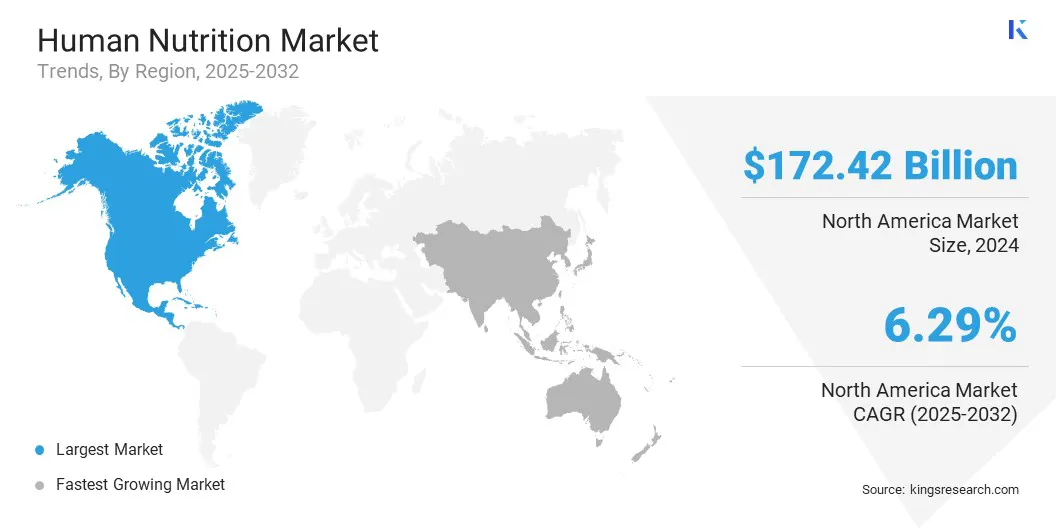
The North America human nutrition market share stood at around 39.05% in 2024, with a valuation of USD 172.42 billion in the global market. This dominance is driven by government initiatives and strong R&D in nutritional sciences, supporting innovation and evidence-based formulations. These initiatives improve product efficiency and safety, strengthen consumer trust, and allow companies to launch advanced nutrition solutions, supporting the region's dominance in the market.
Asia Pacific human nutrition industry is poised to grow at a significant CAGR of 7.61% over the forecast period. This growth is driven by product launches by key players to meet the rising demand for high-protein nutrition across the region. These launches aim to provide protein-rich supplements, functional foods, and sports nutrition products catering to local dietary preferences and active lifestyles.
Expanding the availability of high-protein products increases consumer adoption and addresses nutritional gaps, which accelerates market penetration and drives sustained growth across Asia Pacific.
Key players in the human nutrition industry are focusing on geographic expansion and product innovation to strengthen their competitive positioning. Companies are entering new regional markets through strategic collaborations, distribution networks, and localized production facilities to broaden their presence.
They are introducing specialized nutrition products aimed at active millennials, including protein supplements, functional foods, and probiotic-based offerings tailored to fitness-oriented lifestyles. Market participants are also diversifying their portfolios with plant-based and clean-label formulations to address regional demand shifts and strengthen global competitiveness.
Frequently Asked Questions

Over the years, Versha brings over 15 years of experience managing consulting assignments across industries, including Food and Beverage, Consumer Goods, ICT, Aerospace, and more. Her work has spanned diverse sectors. Her cross-domain expertise and adaptability make her a versatile and dependable professional. She is known for her keen business insight and foresight. With sharp analytical skills and a curious mindset, Versha excels at transforming complex data into actionable insights. She has a proven track record of unraveling market dynamics, identifying trends, and delivering tailored solutions to meet client needs. As a skilled leader, Versha has successfully mentored research teams and directed projects with precision, ensuring high-quality outcomes. Her collaborative approach and strategic vision enable her to turn challenges into opportunities and consistently deliver impactful results. Whether analyzing markets, engaging stakeholders, or crafting strategies, Versha draws on her deep expertise and industry knowledge to drive innovation and deliver measurable value.

Ganapathy Subramaniam Suresh
With over a decade of research leadership across global markets, Ganapathy brings sharp judgment, strategic clarity, and deep industry expertise. Known for precision and an unwavering commitment to quality, he guides teams and clients with insights that consistently drive impactful business outcomes.



.webp&w=128&q=75&dpl=dpl_DPva2LrvfsBdTJm1XZj67UTrvMHL)