Inquire Now
Key Strategic Points
Graphite electrodes are essential carbon conductors in steelmaking and metallurgical operations. They are primarily used in electric arc furnaces and ladle furnaces for scrap steel melting and refining processes. Their applications extend to basic oxygen furnaces and non-steel processes such as ferroalloy and silicon metal production.
Available in ultra-high power, high power, and regular power grades, these electrodes meet varying energy demands while ensuring consistent performance in energy-intensive industrial processes.
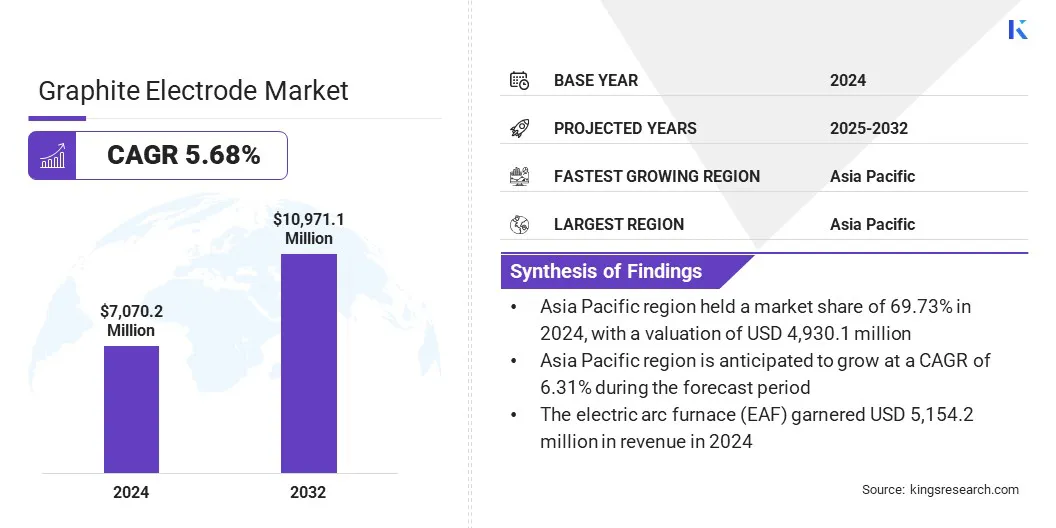
The global graphite electrode market size was valued at USD 7,070.2 million in 2024 and is projected to grow from USD 7,451.4 million in 2025 to USD 10,971.1 million by 2032, exhibiting a CAGR of 5.68% during the forecast period.
This growth is fueled by the growing demand for graphitized electrodes in electric arc furnaces (EAFs) to enhance efficiency and output in steel production. Additionally, the market is witnessing a trend toward natural graphite in electric vehicle (EV) batteries to meet rising energy storage and conductivity requirements.
Major companies operating in the graphite electrode market are GrafTech International, Tokai Carbon Co., Ltd., SGL Carbon, Resonac Holdings Corporation, Fangda Carbon New Materials Technology Co., Ltd., Graphite India (GIL), HEG Limited, BENHONG GRAPHITE, KAIFENG CARBON CO., LTD, Nippon Carbon Co Ltd., Suzhou Xiangyun Platform Information Technology Co., Ltd, El 6, Sangraf International, Nantong Yangzi Carbon Co., Ltd, and Ameri-Source Specialty Products.
Companies are developing large-diameter graphite electrodes that provide higher current carrying capacity, improved thermal stability, and longer service life. These solutions address the rising demand for high-capacity electrodes in electric arc furnaces (EAFs) and other steelmaking applications.
The adoption of large-diameter electrodes enables more efficient steel production, reduces operational interruptions, and supports continuous high-volume melting processes. This approach allows manufacturers to cater to evolving industry requirements and strengthens the overall supply capabilities.
Growing Demand for Graphitized Electrodes in Electric Arc Furnaces
The progress of the graphite electrode market is driven by the growing demand for graphitized electrodes in new-generation electric arc furnaces (EAFs). EAF technology is increasingly adopted by steelmakers for scrap-based steel production due to its efficiency and lower carbon footprint compared to traditional blast furnaces.
Graphitized electrodes are essential for conducting high electric currents required to melt scrap steel in these furnaces. The rising adoption of EAFs increases the consumption of high-quality electrodes, prompting manufacturers to expand production capacity to meet industrial demand.
High Energy Consumption
A major challenge impeding the expansion of the graphite electrode market is the high energy consumption in manufacturing. Production involves energy-intensive graphitization and baking processes, leading to increased operational costs and pricing pressures.
To address this challenge, companies are investing in energy-efficient technologies and optimizing furnace operations. Market players are also exploring alternative energy sources and improving process automation to reduce energy consumption and stabilize production costs.
Notable Shift toward Natural Graphite in EV Battery Applications
The graphite electrode market is witnessing a notable shift toward the use of natural graphite in electric vehicle (EV) battery applications. Rising demand for EVs is boosting the need for high-quality, energy-efficient electrodes that can support battery performance and longevity.
Manufacturers are increasingly developing electrodes from natural graphite to meet strict energy density and conductivity requirements. This shift is promoting advancements in electrode manufacturing processes and fueling the adoption of sustainable materials.
|
Segmentation |
Details |
|
By Grade |
Ultra High Power (UHP), High Power (HP), Regular Power (RP) |
|
By Application |
Electric Arc Furnace (EAF), Ladle Furnace (LF), Basic Oxygen Furnace (BOF), Non-steel Applications |
|
By Region |
North America: U.S., Canada, Mexico |
|
Europe: France, UK, Spain, Germany, Italy, Russia, Rest of Europe |
|
|
Asia-Pacific: China, Japan, India, Australia, ASEAN, South Korea, Rest of Asia-Pacific |
|
|
Middle East & Africa: Turkey, U.A.E., Saudi Arabia, South Africa, Rest of Middle East & Africa |
|
|
South America: Brazil, Argentina, Rest of South America |
Based on region, the market has been classified into North America, Europe, Asia Pacific, Middle East & Africa, and South America.
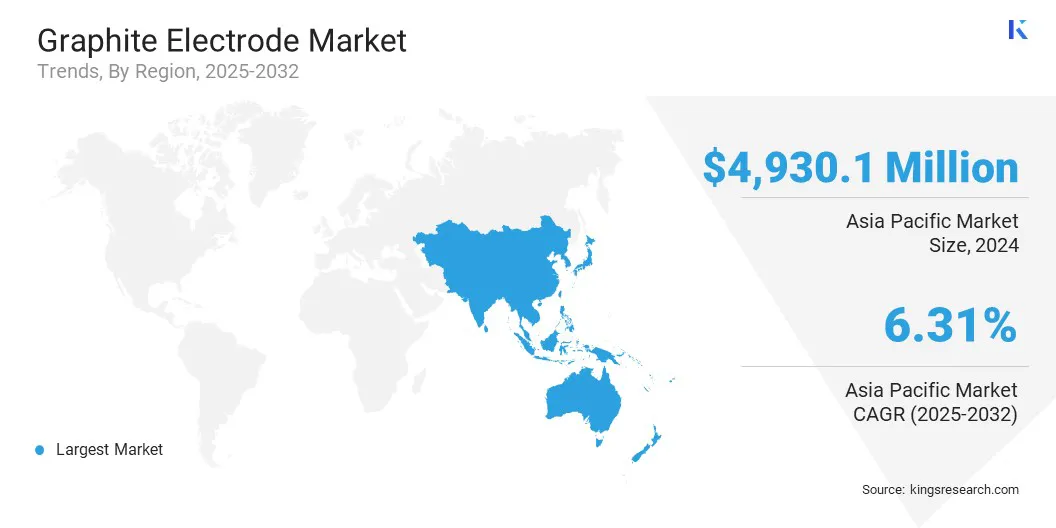
Asia Pacific graphite electrode market share stood at 69.73% in 2024, valued at USD 4,930.1 million. This dominance is reinforced by growing demand for high-quality graphite from electric vehicle (EV) and consumer electronics manufacturers.
Regional players are expanding production facilities and investing in advanced manufacturing technologies and capacity enhancement. These private-sector investments enable increased output of premium-grade graphite electrodes, ensuring a stable supply for the rapidly growing EV and electronics sectors. This strategic expansion supports Asia Pacific’s global dominance.
The North America graphite electrode industry is poised to grow at a significant CAGR of 4.21% over the forecast period. This growth is propelled by the rising adoption of electric arc furnace (EAF) steelmaking, which increases the demand for high-performance graphite electrodes.
Key regional players emphasize advanced steel production technologies and modernization of existing steel plants, supporting the higher consumption of electrodes. Continuous focus on process efficiency and quality standards in steel manufacturing nd reinforces North America’s position as a key market for graphite electrodes.
Key players in the graphite electrode industry are focusing on acquisitions and geographic expansions to strengthen their competitive position. They are acquiring smaller regional manufacturers to enhance production capacity and secure access to key raw materials. They are also expanding operations into emerging markets to increase their global footprint and meet regional demand.
Strategic establishment of new manufacturing facilities in high-growth regions is being used to optimize supply chains. Additionally, firms are forming joint ventures and partnerships to accelerate market entry and broaden their operational reach.
Frequently Asked Questions

Swati is a committed research analyst with a passion for optimizing systems and processes across industries, specializing in healthcare but also bringing valuable expertise to sectors such as consumer goods, life sciences, and more. Her cross-domain research approach allows her to generate clear, actionable reports that inform strategic decisions in a variety of fields. Swati is committed to staying ahead of evolving trends, leveraging her broad understanding of different sectors to provide insights that are relevant to a range of industries. In her personal time, she enjoys music and spending quality time with her family, which inspires her creativity and enriches her professional approach. Her systematic methodology ensures that every report is both thorough and practical. Swati's ability to bridge regulatory frameworks with market realities gives her recommendations a distinct edge. She collaborates seamlessly with cross-functional teams, distilling complex data into straightforward narratives. Her proactive monitoring of policy and technological shifts keeps her analysis forward-looking.

Ganapathy Subramaniam Suresh
With over a decade of research leadership across global markets, Ganapathy brings sharp judgment, strategic clarity, and deep industry expertise. Known for precision and an unwavering commitment to quality, he guides teams and clients with insights that consistently drive impactful business outcomes.