
Inquire Now
Key strategic points
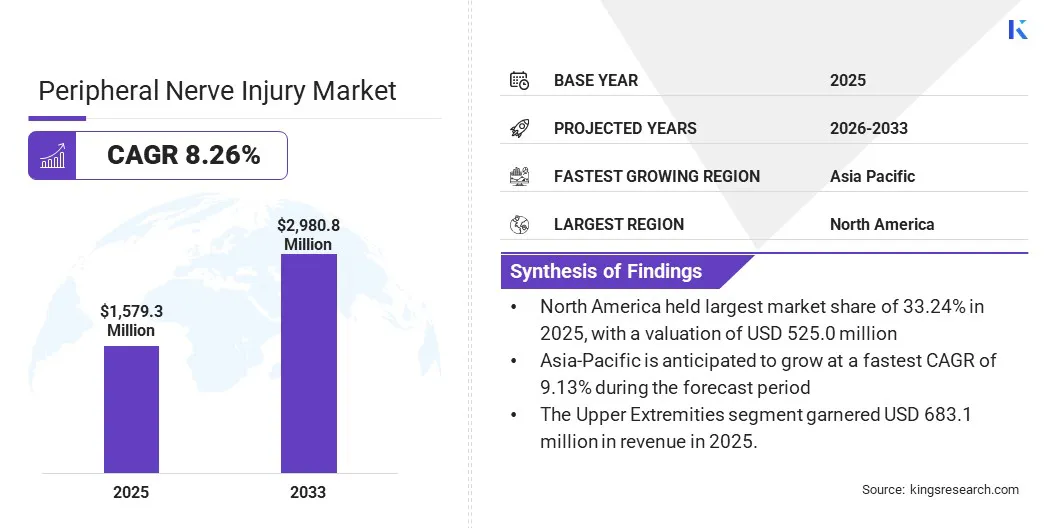
According to Kings Research, the global peripheral nerve injury market size was valued at USD 1,579.3 million in 2025 and is expected to reach USD 2,980.8 million by 2033, growing at a CAGR of 8.26% from 2026 to 2033.
The rising geriatric population, which is susceptible to nerve injuries due to age-related factors like reduced mobility and frailty, is a significant driver of growth. This demographic shift is increasing the demand for treatments and therapies in the peripheral nerve injury market.
Major companies operating in the peripheral nerve injury industry are Medtronic plc, Stryker, Abbott, Boston Scientific Corporation, Baxter International Inc., Integra LifeSciences Corporation, Axogen Corporation, Orthocell Ltd., Neuraptive Therapeutics, Inc., NervGen Pharma Corp., BioCircuit Technologies, Epineuron Technologies Inc., Renerva, TOYOBO CO., LTD., and Newrotex.
The market is evolving rapidly, driven by technological advancements that offer less invasive, more efficient treatment options. The rise of innovative solutions, such as sutureless repair devices, is transforming nerve repair procedures by enhancing precision, reducing surgical time, and improving patient recovery.
Recent advancements are meeting the growing demand for innovative treatments as the incidence of peripheral nerve injuries continues to rise due to trauma, surgical procedures, and age-related health conditions. This trend is propelling market growth as new technologies make therapies more accessible and effective.
The global aging population is a major driver of the peripheral nerve injury market, as older individuals are more prone to nerve injuries due to decreased bone density, reduced muscle mass, and slower healing processes. According to an October 2025 update from the WHO, 1 in 6 people will be aged 60 or older by 2030. By 2050, this figure will double to 2.1 billion, including 426 million individuals aged 80 years or older.
The risk of falls, fractures, and conditions such as diabetes or neuropathy increases as people age, which often leads to peripheral nerve damage. This growing demographic demands more specialized treatments, including surgical interventions, neurostimulation therapies, and rehabilitation services, fueling the market.
A key challenge in the peripheral nerve injury market is the variability in treatment outcomes, primarily due to the complexity of nerve injuries. The diversity of nerve damage severity makes achieving consistent results challenging.
However, research and advancements in personalized treatment approaches offer solutions to improve outcomes. Additionally, tailoring treatments to specific injury types and patient needs helps in overcoming this challenge.
The peripheral nerve injury market is experiencing a significant shift toward bioelectronic therapies—innovative, non-invasive treatments that use electrical stimulation to support nerve regeneration. Recent progress in bioelectronic devices is moving the field beyond traditional surgical interventions, offering more accessible and efficient solutions for patients.
This trend is driven by the desire to minimize patient recovery time, reduce surgical complexity, and enhance long-term outcomes. As a result, bioelectronic therapy is emerging as a promising alternative to conventional nerve repair methods.
|
Segmentation |
Details |
|
By Product |
Nerve Conduit, Nerve Protector, Nerve Connector, Nerve Wraps |
|
By Surgery |
Direct Nerve Repair, Nerve Grafting, Stem Cell Therapy |
|
By Application |
Upper Extremities, Lower Extremities |
|
By Region |
North America: U.S., Canada, Mexico |
|
Europe: France, UK, Spain, Germany, Italy, Russia, Rest of Europe |
|
|
Asia-Pacific: China, Japan, India, Australia, ASEAN, South Korea, Rest of Asia-Pacific |
|
|
Middle East & Africa: Turkey, U.A.E., Saudi Arabia, South Africa, Rest of Middle East & Africa |
|
|
South & Central America: Brazil, Argentina, Rest of South & Central America |
Based on region, the global market has been classified into North America, Europe, Asia Pacific, Middle East & Africa, and South & Central America.
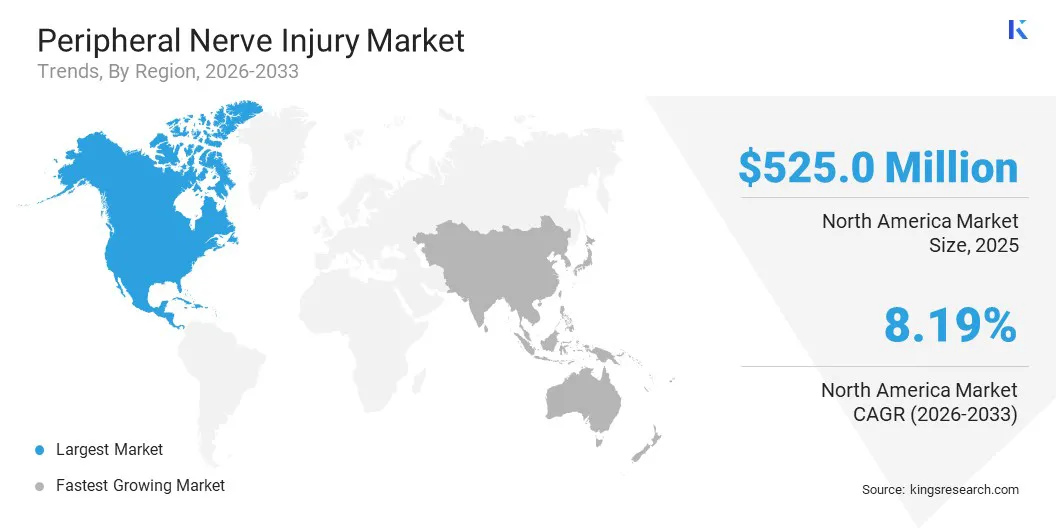
North America accounted for a market share of around 33.24% in 2025, with a valuation of USD 524.9 million. North America remains the leading region in the peripheral nerve injury market, supported by advanced healthcare infrastructure, strong adoption of innovative medical technologies, and robust regulatory support. The market continues to register steady growth, supported by a large patient pool and increased awareness of treatment options.
Regulatory approvals for advanced PNI treatments in the U.S. and Canada further bolster the market's expansion. Additionally, significant research funding for innovative nerve repair solutions is leading to widespread adoption and market growth.
The market in Asia Pacific is poised for significant growth at a robust CAGR of 9.13% over the forecast period. This growth is fueled by an expanding healthcare infrastructure, increasing medical tourism, and rising demand for advanced nerve repair solutions.
The need for innovative therapies to address nerve damage is growing as countries in the region continue to focus on improving patient care and enhancing surgical outcomes. Additionally, regulatory advancements are supporting the rapid introduction of cutting-edge medical devices, attracting significant investment.
Companies in the peripheral nerve injury industry are increasingly investing in research and development to innovate and improve nerve repair treatments.
These investments are driving innovation in medical devices, bioelectronic therapies, and regenerative solutions by supporting clinical trials, product development, and regulatory approvals. This increased financial commitment is accelerating the availability of advanced therapies and improving patient outcomes worldwide.
How We Gather This Information
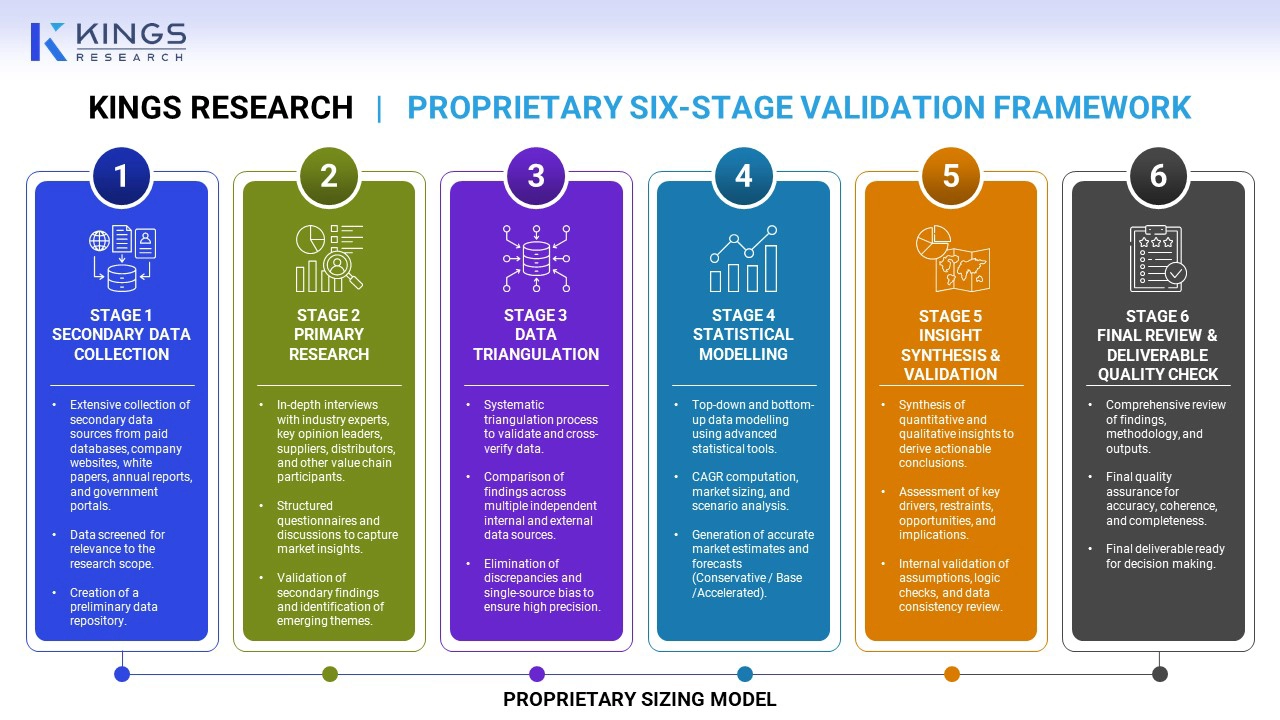
Our methodology triangulates insights from multiple independent and publicly available research databases and is further validated against regulatory filings and public company disclosures. All estimates are cross-verified; no single-source data is presented without validation.
Frequently Asked Questions

Sharmishtha is a budding research analyst with a strong commitment to achieving excellence in her field. She brings a meticulous approach to every project, delving deep into details to ensure comprehensive and insightful outcomes. Passionate about continuous learning, she strives to enhance her expertise and stay ahead in the dynamic world of market research. Beyond work, Sharmishtha enjoys reading books, spending quality time with friends and family, and engaging in activities that foster personal growth. Her dedication to precision ensures that no critical detail is overlooked, and her analytical rigor consistently produces reliable, evidence-based conclusions. Sharmishtha's proactive curiosity drives her to explore emerging research methodologies, which she readily applies to deliver fresh perspectives on complex market questions. Her collaborative nature and openness to constructive feedback make her a dependable team player. She balances technical accuracy with clear communication, ensuring her insights are actionable for clients and stakeholders alike.
With many years of consulting experience across global pharma, biotech, and MedTech markets, Minaz brings deep domain expertise, strategic clarity, and analytical rigor to every engagement. She has led 130+ consulting assignments spanning market entry, competitive landscaping, and portfolio prioritization, helping clients navigate complex, high-stakes decisions with confidence. Known for her ability to synthesize primary and secondary research into executive-ready recommendations, Minaz has built forecasting models and market sizing frameworks that have informed multi-million dollar investment decisions in oncology, diagnostics, and peptide therapeutics. Beyond her analytical strength, Minaz is a trusted client partner, translating complex datasets into clear, actionable insights for senior stakeholders. She currently leads a team of research analysts, driving business expansion, and shaping client engagement strategy.